Author name: editor

Rich People During the Great Depression | American Upper-Middle Class During the Great Depression
1933, New Outlook Magazine, The Great Depression

The Formerly Rich
(New Outlook Magazine, 1933)

The last report of the Bureau of Internal Revenue furnishes conclusive evidence that many of the families who were maintaining our social front during the delirious decade ending in 1930 have been reduced to incomes that are negligible… Well-worn suits, cobbled shoes and re-enforced linen is what the quondam well-dressed man of 1929 is now wearing, even when he appears at such country clubs as have managed to survive by waiving dues rather than close their doors.


The wealthy were targeted for high taxation…

mood of the american people during the great depression | feelings of the american people during the great depression
1933, New Outlook Magazine, The Great Depression

The Temper of the Times
(New Outlook Magazine, 1933)

Columnist George Sokolosky (1893 – 1962), writing from the road, reported that a general uneasiness had fallen across the land as a result of the economic stagnation:

Wherever I go, I am told of how many families live on the city and country. In Williamsport, Pa., a delightfully intelligent young woman explained to me how this year was different from last in that many of those who contributed to charities are now, rather quietly, taking charity.

Advertisement

Use shortcode [oma_ad position="summary_top"] (or other position) in your theme or widgets to display OMA Promotions here.

Iva Toguri of California (Yank Magazine, 1945)
1945, American Traitors, Yank Magazine

Iva Toguri of California
(Yank Magazine, 1945)

Throughout the course of the war in the Pacific, there were as many as twelve Japanese female radio commentators broadcasting assorted varieties of demoralizing radio programming to the American and Allied forces from Japan. However the Americans knew nothing of this collective and simply assumed that all the broadcasts were hosted by one woman, who they dubbed, Tokyo Rose.


The story told in this article begins in the late summer of 1945 when:

…one of the supreme objectives of American correspondents landing in Japan was Radio Tokyo. There they hoped to find someone to pass off as the one-and-only Rose and scoop their colleagues. When the information had been sifted a little, a girl named Iva Toguri (Iva Toguri D’Aquino: 1916 – 2006), emerged as the only candidate who came close to filling the bill. For three years she had played records, interspersed with snappy comments, beamed to Allied soldiers on the Zero Hour…Her own name for herself was Orphan Ann.

The Fabulous Brazil Nuts (Coronet Magazine, 1956)
1956, Coronet Magazine, Food and Wine

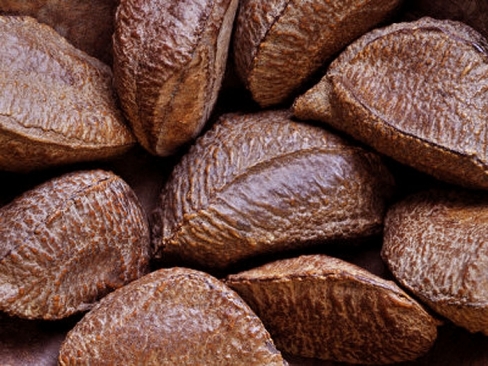
The Fabulous Brazil Nuts
(Coronet Magazine, 1956)

In 1956 the editors of CORONET Magazine saw fit to print this three page history of the Brazil nut; a fruit that has been popular in much of Europe for centuries but seldom known by the Brazilians or their neighbors:

The Brazil nut is the world’s most fabulous nut, fabulous in the manner of its growth, its gathering, its distribution and the perils associated with bringing it out of the Amazon jungle where it thrives.

The nut has been consistently exported to Great Britain, Germany and other European countries since 1633. After W.W. II, a large share of the annual crop was shipped to the United States, as well, where the raw nuts were shelled and reshipped throughout the world.
Licorice History | Licorice Used in Science and Industry | Licorice Innovations
1954, Coronet Magazine, Food and Wine

Licorice
(Coronet Magazine, 1954)

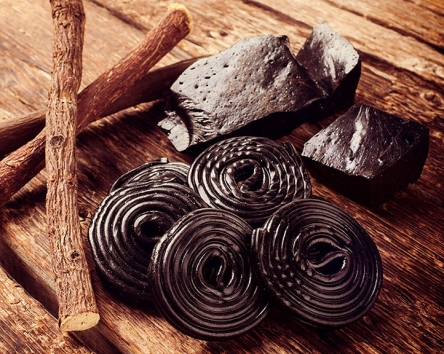
Licorice – it ain’t just for watching movies any more because in the mid-to-late Forties scientists [had] found that there is a black magic in licorice, a versatile chemical which is already playing a considerable part in your life. Licorice has been harnessed as a fire retardant, weather insulation, medicine and a moisturizer for a few agriculture products. The ancient Egyptians were the first to discover it and they recognized its benefits from the start.

Advertisement

Use shortcode [oma_ad position="summary_top"] (or other position) in your theme or widgets to display OMA Promotions here.

James Beard on Champagne (Gentry Magazine, 1955)
1955, Food and Wine, Gentry Magazine

James Beard on Champagne
(Gentry Magazine, 1955)

This article, by celebrated chef James Beard (1903 – 1985), walks us through the history of Champagne as only a true lover of food and wine can do:

Not until around 1670 was a way discovered to imprison those tantalizing bubbles in every bottle, and keep the bottle from exploding. Credit for inventing sparkling Champagne is attributed, inaccurately perhaps, to a Benedictine monk named Dom Perignon…It is said that as an old, blind man, Dom Perignon could sniff a glass of Champagne, sip it, swish it about his mouth, and then unfailingly say from what hillside the grapes had come…

The Grand Cognac Taster (Gentry Magazine, 1956)
1956, Food and Wine, Gentry Magazine

The Grand Cognac Taster
(Gentry Magazine, 1956)

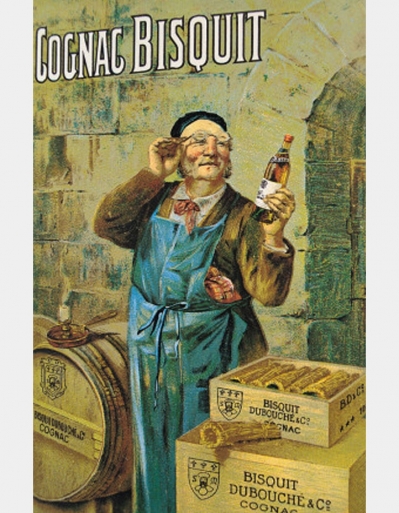
Here is an article from GENTRY MAGAZINE on the delightful day and high expectations of a French cognac taster:

This is how it works: each morning, from about ten o’clock until lunch, at one, the taster receives in his office those farmers and distillers who have come to offer him samples of their cognac. The taster has eaten only a very small breakfast hours before. His stomach is practically empty…The taster never fills the glass with cognac, for that way the bouquet is lost . Instead, he pours in the cognac until the glass is one-third or at most half filled. Then he turns the glass so that the cognac is twirled in the glass and it’s vapors mix even more with the air of the glass…

A fascinating read.

Advertisement

Use shortcode [oma_ad position="summary_top"] (or other position) in your theme or widgets to display OMA Promotions here.

A Brief History of Pepper in America (Coronet Magazine, 1956)
1956, Coronet Magazine, Food and Wine

A Brief History of Pepper in America
(Coronet Magazine, 1956)

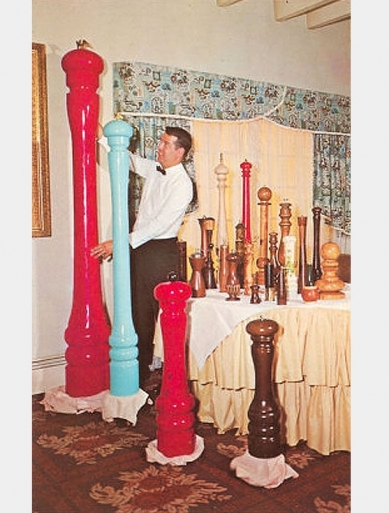
Told in this three page article is the story concerning the rise of the global pepper trade and the subsequent spread of that spice throughout the kitchens of the world:

Although Americans use more than one third of the world’s annual supply of nearly 90,000,000 pounds, it has been estimated that the average American family shakes only 7.1 ounces into their food a year. The balance is used by the makers of baked and canned goods, and meat-packing houses.

A Pox on Both Your Houses... (Pathfinder Magazine, 1950)
1950, China - Twentieth Century, Pathfinder Magazine

A Pox on Both Your Houses…
(Pathfinder Magazine, 1950)

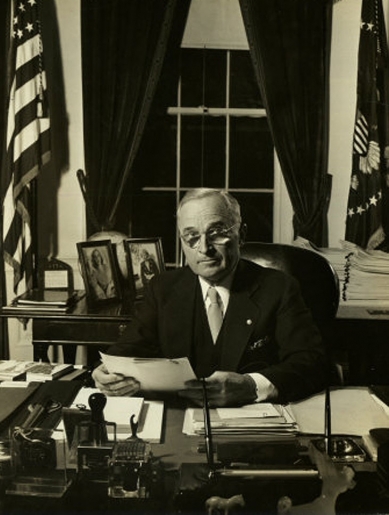
Washington’s growing impatience and distrust with both Chiang Kai-shek’s island nation and the communist thugs on the mainland was reaching the high-water mark during the earliest days of 1950 when President Truman’s Secretary of State Dean Acheson (1893 – 1971) presented that administration’s China policy:

No official military aid for Generalissimo Chiang Kai-shek’s Chinese Nationalist government, either on the island of Formosa [Taiwan] or anywhere else. No hasty recognition of the Communist Chinese government of Mao Zedong. No attempt to stop further Russian advances in Asia except through ‘friendly encouragement’ to India, French Indo-China, Siam, Burma and the new United States of Indonesia…

Proclamation Number 2525 (U.S. Government Document, 1943)
1943, Japanese-American Internment, The U.S. Government Document

Proclamation Number 2525
(U.S. Government Document, 1943)

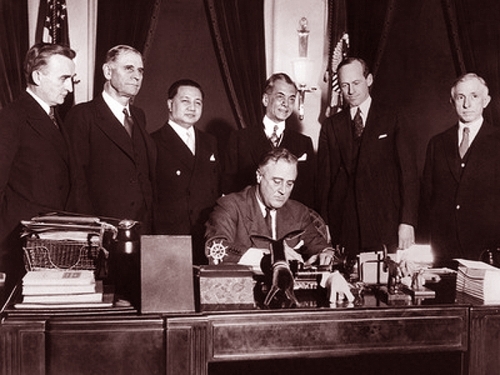
Signed by President Roosevelt on December 7, 1941, Proclamation 2525 enabled the U.S. government to relocate anyone it chose from all areas believed to be of military value.

…the President makes public proclamation of the event, all natives, citizens, denizens, or subjects of of the hostile nation or government, being of the age of fourteen years and upward, who shall be within the United States and not actually naturalized, shall be liable to be apprehended, restrained, secured, and removed as alien enemies.


Dance at Tule Lake.

Advertisement

Use shortcode [oma_ad position="summary_top"] (or other position) in your theme or widgets to display OMA Promotions here.

A Rift in the Containment Policy (Pathfinder Magazine, 1950)
1950, Pathfinder Magazine, The Cold War

A Rift in the Containment Policy
(Pathfinder Magazine, 1950)

Washington’s growing distaste for the Chinese Nationalist dictator Chiang Kai-shek was reaching fever-pitch that last week in January, 1950, when President Truman’s Secretary of State Dean Acheson (1893 – 1971) presented the administration’s Asia policy:

No official military aid for Generalissimo Chiang Kai-shek’s Chinese Nationalist government, either on the island of Formosa [Taiwan] or anywhere else.

WW2 German Remote-Control Mini-Tank
1944, Weapons and Inventions, Yank Magazine

The Doodlebug Tank?
(Yank Magazine, 1944)

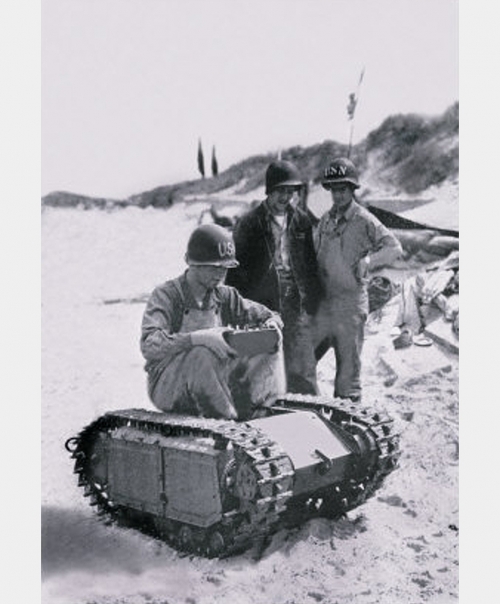
That crack team of linguists who loaf-about our Los Angeles offices here at OldMagazineArticles.com have assured us that the Doodlebug was not the name assigned by the Nazi engineers for this minute, remote-control tank that made it’s appearance on the Anzio beachhead in 1944, but rather a NICKNAME that was authored by the stalwart G.I.s who opposed it. The gizmo packed with explosives in order to destroy Allied tanks.


Click here to read about the Patton Tank in the Korean War…

Advertisement

Use shortcode [oma_ad position="summary_top"] (or other position) in your theme or widgets to display OMA Promotions here.

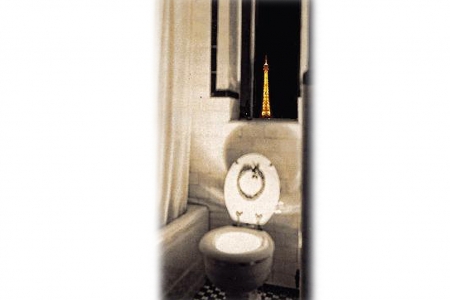
Lady Duff Gordon on Paris Bathrooms | Lady Duff Gordon magazine article 1922 |
1922, Fashion, Harper's Bazaar Magazine

Are We Our Bathrooms?
(Harper’s Bazaar, 1922)

Most people, and you might very likely be one of them, tend to believe the old adage, Show me your friends, and I’ll tell you what you are; but fashion diva Lady Duff Gordon (aka: ‘Lucile’) was of the mind, Show me your bathroom, and I’ll tell you who and what you are and in 1922 she went out to prove it by scampering all over Paris in search of the finest bathrooms. Upon reading of the expedition, the editors of HARPER’S BAZAAR remarked:

It makes one realize that many of us who fatuously remarked, ‘So this is Paris’, were really not at the party at all.

Click here to read a 1937 article about feminine conversations overheard in the best New York nightclub bathrooms.

Beauticians Without Borders (Click Magazine, 1938)
1938, Click Magazine, Cosmetics

Beauticians Without Borders
(Click Magazine, 1938)

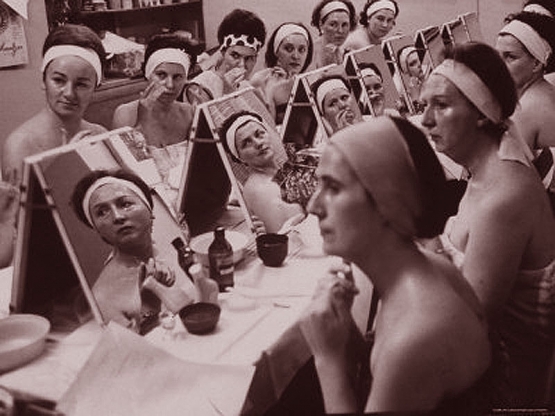
This is the story of the Jacob A. Riis Settlement beauty clinic which was funded by a well-heeled New Yorker in order that the impoverished women from the down-trodden quarters of New York might come to know all the relaxation that comes with electrolysis and eyebrow-plucking (sadly, anal bleaching was not offered at the time).

1950s Fashion, 1953, Quick Magazine

The Prominent Color
(Quick Magazine, 1953)

Red is the color which is going to add excitement to the fall scene. In a season when black is everywhere, the woman who wants to stand out is going to turn to red to express her own sense of drama. Red will be seen in suits, in coats, in after-dark dresses. The color itself is so dramatic that designers rely on cut and line for interest.

Advertisement

Use shortcode [oma_ad position="summary_top"] (or other position) in your theme or widgets to display OMA Promotions here.

Scroll to Top