Author name: editor

1933, Interviews: 1912 - 1960, The Saturday Review of Literature

Walter Lippmann: Columnist
(Saturday Review of Literature, 1933)

Attached is a 1933 interview of Walter Lippmann (1889 – 1974) that covers many of the successes and influences of his career up to that time. Lippmann was, without a doubt, one of the most respected Pulitzer Prize winning American columnists of the Twentieth Century and a sharp critic of FDR’s New Deal.


Working as one of the earliest associate editors at The New Republic, he was there at the magazine’s birth (1914), and returned to those offices following his service as a captain in army intelligence and aid to the U.S. Secretary of War when the First World War ended. It was at this point that his career as columnist took flight when he assumed the position as lead commentator at The New York World. The article was written by historian James Truslow Adams (1879 – 1940) who wrote of him:

This phenomenon of Walter Lippmann is, it seems to me, a fact of possibly deep significance, and the remainder of his career will teach us not a little as to what sort of world we are living into…his intellectualism is tempered for the ordinary reader by his effort to be fair and by his fearlessness.

A Profile of George Lansbury (Rob Wagner's Script Magazine, 1945)
1945, Interviews: 1912 - 1960, Rob Wagner's Script Magazine

A Profile of George Lansbury
(Rob Wagner’s Script Magazine, 1945)

The attached article is disguised as a Hollywood fluff piece about actress Angela Lansbury (b. 1925), who at that time was about to earn her first and only Academy Award, but journalist Peter Churchill devoted the majority of column space to the life and career of her socialist grandfather George Lansbury (1859 – 1940), one time Member of Parliament and star of the British Labor Party:

Old George was born, bred, lived and died among the poor of London, and never had any money, and yes, that goes for the time he was a member of His Britanic Majesty’s Cabinet, too. But the folks down at the less desirable parts (we don’t talk of slums) of the Bow and Bromley district of London where he lived could tell you what a difference it made to have a Cabinet Minister for a neighbor.


Click here to read George Lansbury’s account of time he met Lenin…


You Might Also Want to Read an Article About Lady Nancy Astor, M.P.


Click here to read about an American woman who grew heartily sick of the socialists who loitered on every street corner during the Great Depression…

Advertisement

Use shortcode [oma_ad position="summary_top"] (or other position) in your theme or widgets to display OMA Promotions here.

American Playwright Lillian Hellman (Stage Magazine, 1939)
1939, Interviews: 1912 - 1960, Stage Magazine

American Playwright Lillian Hellman
(Stage Magazine, 1939)

The attached profile of playwright Lillian Hellman (1905 – 1984) is accompanied by a rare photo of the thirty-four year old American writer, snapped shortly after the opening of her play, The Little Foxes:

Four seasons ago when ‘The Children’s Hour’ was produced, that labeling which is the destiny of every important new playwright began. Second Ibsen…American Strindberg…1934 Chekhov…the rumors ran. In this finest example of Miss Hellman’s highly individual contribution to the current theater, the Ibsen heritage seems most likely to win out.

In 1945 Hellman wrote about much of what she had seen on the W.W. II Soviet front; click here to read it

A Monopoly on Radio Talent? (Pic Magazine, 1941)
1941, Pic Magazine, Radio History

A Monopoly on Radio Talent?
(Pic Magazine, 1941)

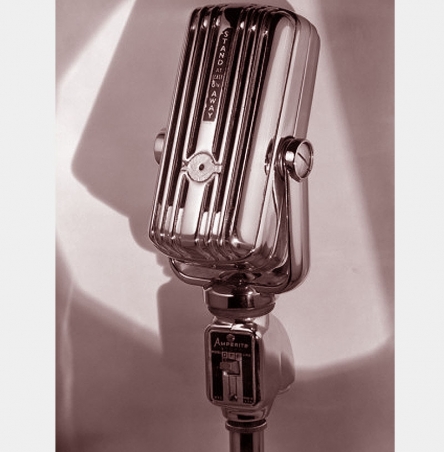
This article will cue you in to a 1941 dust-up between the FCC and the biggest radio broadcasters in America.

Apparently CBS, NBC and the Mutual Broadcasting System were in cahoots, united behind a scheme to fix the prices they had to cough-up in order to pay all the various assorted musicians and acting talents they needed to hire if they were to attract their radio audiences. The feds got wind of the plan and smelled a rat:

The big radio networks are currently worried by the Federal Communication Commission’s accusation that they are talent monopolists, part of the FCC’s blanket charge that the radio chains constitute a trust within the broadcasting industry…

Advertisement

Use shortcode [oma_ad position="summary_top"] (or other position) in your theme or widgets to display OMA Promotions here.

Bob and Ray Radio Comedy Team
1952, Quick Magazine, Radio History

The Timeless Comedy of Bob and Ray
(Quick Magazine, 1952)

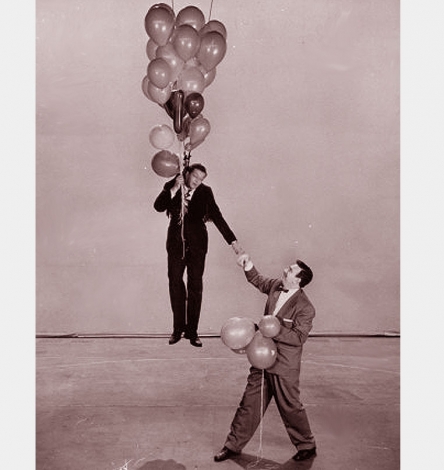
A single page from the petite pages of the short-lived magazine QUICK, heralding the arrival of the Bob and Ray radio show:

Two young fugitives from from a Boston radio station (W.H.D.H.) ,Bob Elliott (b. 1923) and Ray Goulding (1922 – 1990) were proving that radio – and some 15 million listeners – could take anything. In exchange for lampooning radio’s most sacred cows – soap operas and commercials – Bob and Ray now have four separate radio shows (two on NBC’s network; two on NBC’s New York station), were on the air five days a week…

1930s Economic Misery | 1930s Pain | 1933 Economic Distress
1933, New Outlook Magazine, The Great Depression

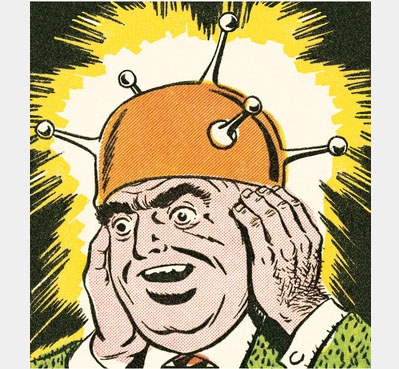
Establishing A Misery Index
(New Outlook Magazine, 1933)

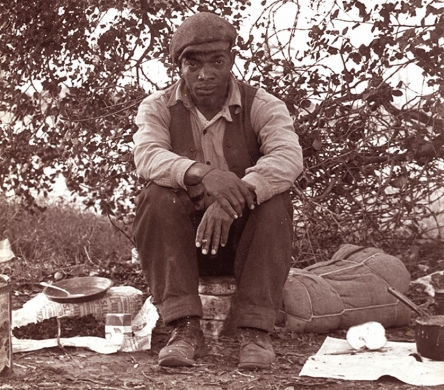
A great observer of the Washington merry-go-round, columnist Jay Franklin (1897 – 1967) pointed out in this article that there are Federal agencies entrusted with the sorts of information that, when analyzed properly, will serve both as an indicator of prosperity and of misery as they spread or recede across the land. …if one wished to know whether the people were desperate and suffering there were certain matters which would demonstrate it:

the number of evictions, the number of illegitimate births, the number of articles pawned or redeemed, the growth or decline of unnatural vice, the number of suicides. Information on these points, if currently accessible, in compact statistical form, would show whether the people were socially happy or economically satisfied.

Military Buildup in Switzerland (Literary Digest, 1937)
1937, The Literary Digest

Military Buildup in Switzerland
(Literary Digest, 1937)

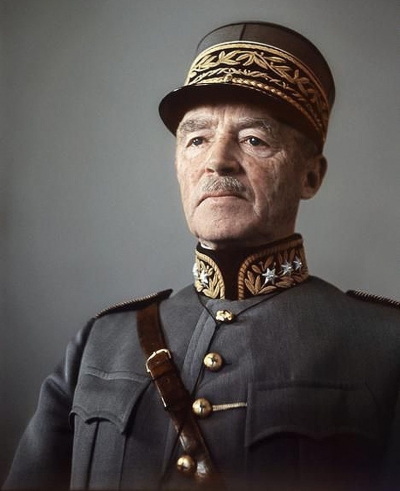
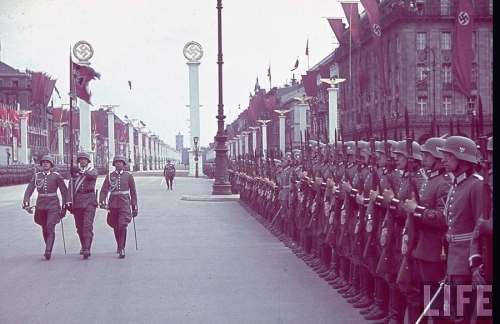
Little Switzerland will not be caught as Belgium was in 1914. The ‘Isle of Peace’, home of the League of Nations that was to forge all nations of the world together into a chain of amity, is fortifying her frontiers to the tune of war-rumbles. The army and air forces are being expanded in preparation for that ‘inevitable’ war Europe seems to be resigned to. She realizes that the only way to preserve her peace is to be prepared to fight for it.

A Swiss statesman, in an interview with correspondents, summed up his individual reaction, which probably holds good for the majority of the population, when he said:
War will come. We will try to stay out at any price, save our liberty. The moment a foreign soldier crosses our border, we will fight.
And you may rest assured that we shall fight to the last man.

Advertisement

Use shortcode [oma_ad position="summary_top"] (or other position) in your theme or widgets to display OMA Promotions here.

New Orleans 1945 |New Orleans 1945 VJ-Day
1945, VJ Day, Yank Magazine

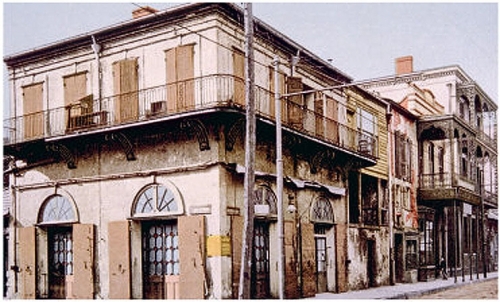
VJ Day in New Orleans
(Yank Magazine, 1945)

In a city prone to revelry, New Orleans had prematurely celebrated the end of World War Two on three previous occasions; not willing to go down that path a fourth time, the residents were in a state of disbelief when the news of the Japanese surrender began to circulate all over again. However, when it was understood that this time the rumor proved true everyone seemed grateful for the rehearsal time.

The Cold War Began with Igor Gouzenko (Coronet Magazine, 1953)
1953, Coronet Magazine, Spies

The Cold War Began with Igor Gouzenko
(Coronet Magazine, 1953)

On September 5, 1945, N.K.V.D. cipher clerk Igor Gouzenko (1919 – 1982) severed ties with his masters at the Soviet Embassy in Ottawa and high-tailed it over to the Royal Canadian Mounted Police with tales of extensive Soviet espionage throughout all of North America. The news of this defection and the intelligence he delivered sent shock waves throughout Washington, London, Moscow, and Ottawa – historians insist that this was the event that sparked the Cold War and altered the course of the Twentieth Century.

Advertisement

Use shortcode [oma_ad position="summary_top"] (or other position) in your theme or widgets to display OMA Promotions here.

Public Works Administration 1937 | Federal Public Housing During the Great Depression
1937, Pathfinder Magazine, The Great Depression

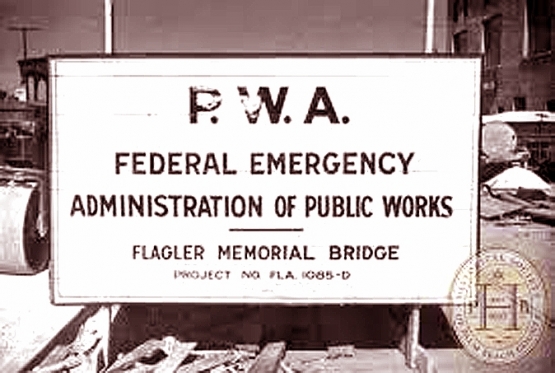
Federal Housing
(Pathfinder Magazine, 1937)

At present the Federal Housing Administration is sponsoring the building of more than 1,000 small demonstration houses in as many cities, with the cost to range from $2,500 to $3,500. It is the belief of the belief of the FHA that 71.2 percent of American families have incomes permitting the purchase of homes costing less than $5,000.


Yet, regardless of the degradation of the Great Depression, the United States was still an enormously wealthy nation…

President Hoover and the Bonus Marchers (Collier's Magazine, 1952)
1952, Collier's Magazine, The Great Depression

President Hoover and the Bonus Marchers
(Collier’s Magazine, 1952)

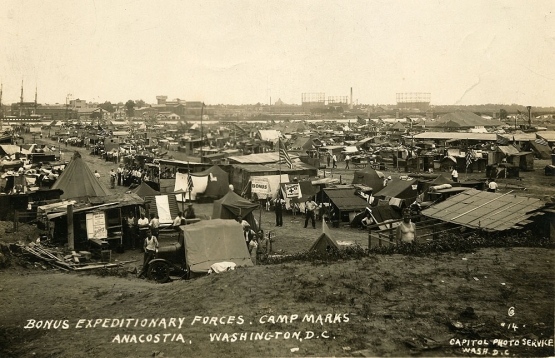
This is President Herbert Hoover’s recollection as to how his administration addressed the mass demonstrations of W.W. I veterans in need of relief. It is very different from the version recalled in high school history books in that Hoover stated that the order to burn the Anacostia shacks came from General MacArthur, not him.


Read about the the mood of the Great Depression and how it was reflected in the election of 1932 – click here…

Advertisement

Use shortcode [oma_ad position="summary_top"] (or other position) in your theme or widgets to display OMA Promotions here.

US Deficit Growth During the Great Depression | 1930s US Deficit Growth
1932, Pathfinder Magazine, The Great Depression

The Growth of the Deficit
(Pathfinder Magazine, 1932)

This short column refers to the growth of the U.S. deficit that was bloated during the Hoover Administration (1929 – 1933) – which up to that time was the largest ever incurred during peace time. When FDR assumed the mantel of the Presidency, it would grow considerably larger.


Click here to read an article about 1930s government spending.


Yet, despite the growing deficits, the United States was still an enormously wealthy nation…

Advertisement

Use shortcode [oma_ad position="summary_top"] (or other position) in your theme or widgets to display OMA Promotions here.

Scroll to Top