Author name: editor

Kosaku Yamada: The First Japanese Composer of Operas (Vanity Fair, 1919)
1919, Music History, Vanity Fair Hall of Fame

Kosaku Yamada: The First Japanese Composer of Operas
(Vanity Fair, 1919)

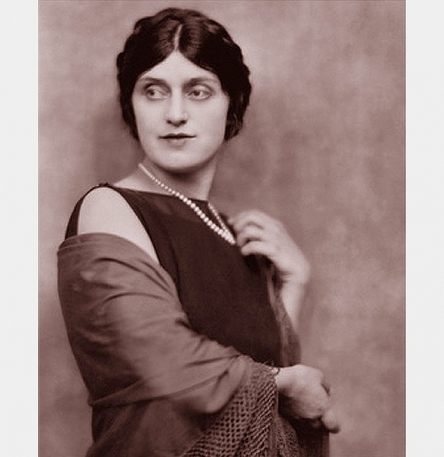
Attached, you will find a small profile of Kosaku Yamada (1886 – 1965) published shortly after his New York debut in 1919. Classicly trained in Europe, Yamada organized the first symphonic orchestra of native players to perform the music of Occidental composers under a Japanese conductor, which later became the Tokyo Philharmonic Orchestra. This article outlines some of his various accomplisments up to 1919, while deleting others. Prior to his two year sojurn in the United States, he had composed three Japanese operas: Reisho (1909), Ochitaru Tennyo (1913) and Shichinin No Oujo (1916).

Third Symphony' by Aaron Copland (Rob Wagner's Script, 1948)
1948, Music History, Rob Wagner's Script Magazine

Third Symphony’ by Aaron Copland
(Rob Wagner’s Script, 1948)

A review of Aaron Copland’s Third Symphony written in 1948 by the respected Los Angeles music critic and historian Lawrence Morton (1908 – 1987):

…there can be no mistake about the Third. It is a solid structure, exceedingly rich and varied in expressiveness, large in concept, masterful in execution, completely unabashed and outspoken.

No wonder that Sergi Koussevitsky called it ‘the greatest American symphony.’

Tamaki Miura (Vanity Fair, 1915)
1915, Music History, Vanity Fair Hall of Fame

Tamaki Miura
(Vanity Fair, 1915)

Tamaki Miura (1884 – 1946) was a Japanese opera singer most often remembered for having performed in over 2,000 stagings of Madame Butterfly. At the time this short notice appeared she was only one year into her opera career, yet the Vanity Fair music critic recognized talent when he saw it and nominated her for the Vanity Fair Hall of Fame. It was her inclusion in that august body that serves as the the subject for this short paragraph, which is accompanied by a photograph.

Advertisement

Use shortcode [oma_ad position="summary_top"] (or other position) in your theme or widgets to display OMA Promotions here.

Alma Gluck Magazine Article 1938 | American Soprano Alma Gluck
1938, Music History, Stage Magazine

Remembering Alma Gluck
(Stage Magazine, 1938)

Marking the occasion of the untimely death of American soprano Alma Gluck (born Reba Feinsohn; 1884 – 1938), music critic Samuel Chotzinoff wrote this essay in which he recalled witnessing the first meeting between Gluck and her (second) husband Efrem Zimbalist, Sr. (1890 – 1985) at the absolute height of her fame in 1911. The remembrance continues as Chotzinoff labels that era as being the ‘golden age of vocalists’ and recalls many of the finest qualities of her talent.

Otto Klemperer Conducts Stravinsky (Rob Wagner's Script, 1947)
1947, Music History, Rob Wagner's Script Magazine

Otto Klemperer Conducts Stravinsky
(Rob Wagner’s Script, 1947)

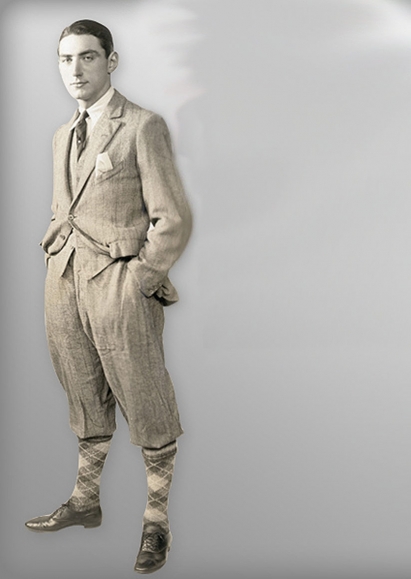
A printable music review by Lawrence Morton (1904 – 1987), long time advocate of modern music and habitual contributor to MUSICAL QUARTERLY and MODERN MUSIC. One of Morton’s greatest interests was the music of Stravinsky, and it is Stravinsky’s Symphony in Three Movements that was discussed in this 1947 review:

The symphony opens in full orchestra with a mighty affirmation of confidence and resolution. Then the horns state the main problem with which the composer would confront us: other instruments reiterate it, as if to show it to us from new angles and with new perspectives…

This particular performance was conducted in Los Angeles by Otto Klemperer (1885 – 1973), who was singled out for high praise in this article.

Advertisement

Use shortcode [oma_ad position="summary_top"] (or other position) in your theme or widgets to display OMA Promotions here.

A Post-War Interview With Ike (Yank, 1945)
1945, General Eisenhower, Yank Magazine

A Post-War Interview With Ike
(Yank, 1945)

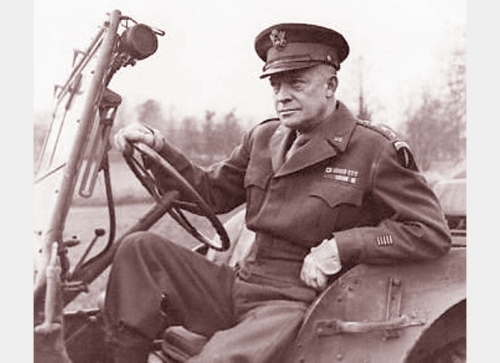
This is a conversational General Eisenhower article that primarily concerns the plans for the Allied occupation of Germany, coupled with every American soldier’s wish to simply get in boats and go home:

I’m just as bad off as any GI today, General Eisenhower said quietly. I don’t want to be here. I’m 54 years old and I lead a kind of lonely life.


The third paragraph makes reference to a pretty British secretary named Lt. Kay Summersby.


Recommended Reading: Past Forgetting: My Love Affair with Dwight Eisenhower_by_Kay Summersbystyle=border:none

George Duncan and Abe Mitchell at the Columbia Country Club (Vanity Fair Magazine, 1921)
1921, Golf History, Vanity Fair Magazine

George Duncan and Abe Mitchell at the Columbia Country Club
(Vanity Fair Magazine, 1921)

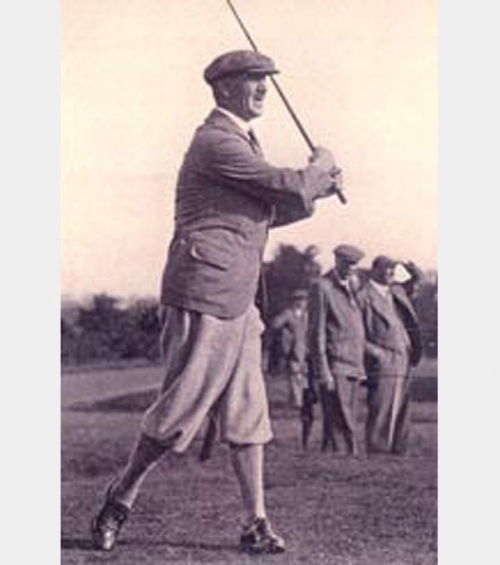
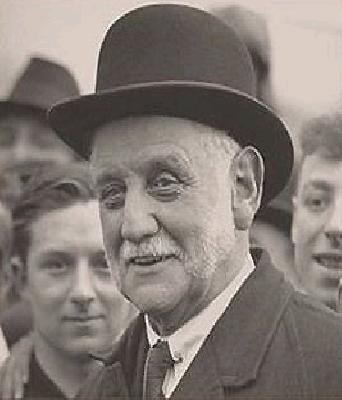
Now our golfing cousins from the land of the Thistle and Rose are sending another pair, who might well be christened the New Mandarins of Golf. One is is George Duncan of Scotland. The other is Abe Mitchell of England. And in addition to giving battle in our in our Open Championship at Columbia, Washington, D.C., they will display their wares in exhibition matches before 250,000 of our golfing citizens in another one of those extended tours that bring in a lot of kale and almost as many blisters.

Advertisement

Use shortcode [oma_ad position="summary_top"] (or other position) in your theme or widgets to display OMA Promotions here.

Golf Gets Easier... (People Today, 1954)
1954, Golf History, People Today Magazine

Golf Gets Easier…
(People Today, 1954)

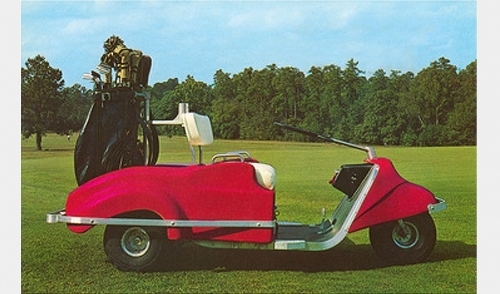
The Golfmobile provides an ideal solution for two new golfing problems: a growing shortage of caddies and a crop of time-pressed golf lovers, headed by President Eisenhower, who frequently uses a Golfmobile to cut playing time in half.

The Tamarisk Country Club in Palm Springs, California was one of the first to employ a fleet of the ‘bugs’ and now many courses throughout the country are doing the same.

League of Women Voters History | First 25 Years of Women Voting in U.S. Elections
1946, Pathfinder Magazine, Women's Suffrage

25 Years of Women Voting
(Pathfinder Magazine, 1946)

Attached herein are two articles that tell the history of an organization that is still with us today: The League of Women Voters. At its birth, in 1869, it was a bi-partisan organization composed of women who made no stand as to which of the two political parties was superior – preferring instead to simply remind all ambitious candidates that American women were voiceless in all matters political and that this injustice had deprived them of a vibrant demographic group. Since women began voting in 1920, the League of Women Voters began promoting candidates from the Democratic party almost exclusively, while continuing to promote themselves with their pre-suffrage bi-partisan street hustle. No doubt, the League of Women Voters is an interesting group worthy of the news but it hasn’t been bi-partisan in over seventy years.

Advertisement

Use shortcode [oma_ad position="summary_top"] (or other position) in your theme or widgets to display OMA Promotions here.

Italian Fascist Secret Police 1938 |
1938, Benito Mussolini, Ken Magazine

‘Steel Ring Around Mussolini”
(Ken Magazine, 1938)

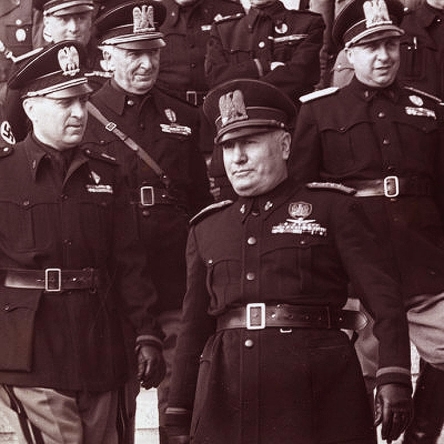
One thousand men are charged with the personal responsibility of seeing that Il Duce doesn’t meet with an untimely death. Their frenzied precautions make him the best protected of all contemporary dictators – a protection which is sorely needed. Sixteen years after the victorious March on Rome a special tribunal dealing with the ‘enemies of fascism’ is still working along at exceptionally high pressure.


Click here to read about Mussolini’s departure from the League of Nations.

Is Hollywood Red? (Photoplay Magazine, 1947)
1947, Blacklisting, Photoplay Magazine

Is Hollywood Red?
(Photoplay Magazine, 1947)

Despite the catchy title, Novelist James M. Cain, did not even attempt to answer the question as to how lousy Hollywood was with dirty Reds, however he did spell out that there were enough of them in the industry to bring production to a halt, if they ever cared to do so. Cain’s article encourages both the executive class and the pinko-wordsmiths to walk the middle path and keep the cameras rolling.

Click here to read a review of James M. Cain’s novel, The Butterfly.

Advertisement

Use shortcode [oma_ad position="summary_top"] (or other position) in your theme or widgets to display OMA Promotions here.

1941, Jane Russell, Pic Magazine

One Editor’s Obsession
(Pic Magazine, 1941)

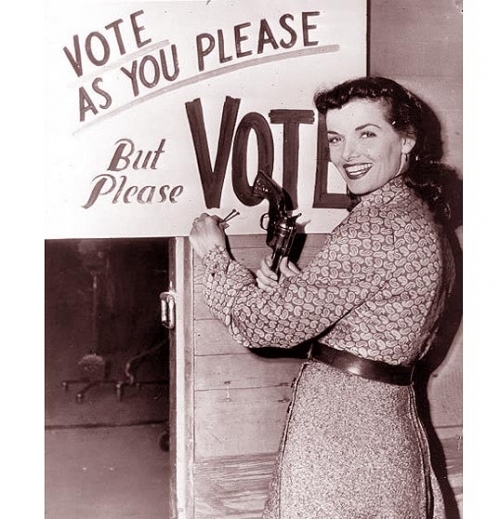
It seemed to have made no difference to the editors of PIC MAGAZINE how dark and thick the clouds of war were that encircled the United States one month prior to the Pearl Harbor attack – they ran yet another puff piece on Jane Russell five months after they had published their last puff piece on Jane Russell.

Communist Teachers in American Classrooms
1934, New Outlook Magazine, The Great Depression

Unlikely Communists & Red Teachers
(New Outlook Magazine, 1934)

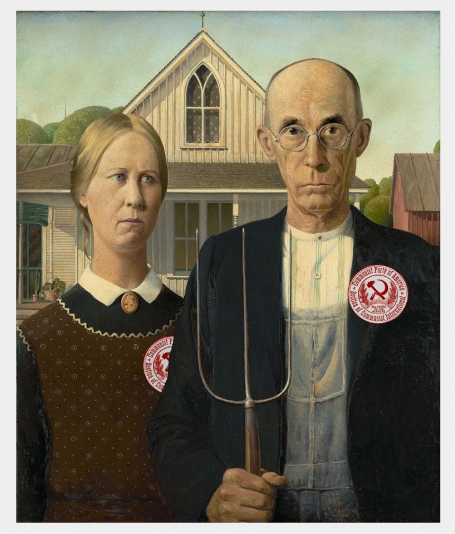
This article starts out discussing that during the Great Depression communism was beginning to appeal to a small number of unlikely Americans of the country club variety; by the fifth page, however, it heats up considerably when the subject turns to the number of communists who are charged with the instruction of American youth:

Although no accurate statistics on the subject are available, surveys and various reports indicate that there are 150,000 enthusiastic, thinking young Communists in the public schools and state universities of the United States today. Not nearly that many men are enrolled in the American Army. And the figure is a minimum – some estimates place the scholastic communists at 250,000.


The favorite newspaper among American communists was THE DAILY WORKERread about it here…

Advertisement

Use shortcode [oma_ad position="summary_top"] (or other position) in your theme or widgets to display OMA Promotions here.

Scroll to Top