Author name: editor

Serge De Diaghilev's Balet Russe (Vanity Fair, 1915)
1915, Dance Magazine Articles, Vanity Fair Hall of Fame

Serge De Diaghilev’s Balet Russe
(Vanity Fair, 1915)

A one page review by Edward Louis Bernays (1891 – 1995) writing under the nom du flak Ayhern Edwards in order to remove all suspicion that he was in reality the P.R. man who had been hired by Serge De Diaghilev (1872 – 1929) to smooth the way for his troupe as they toured the fruited plain throughout 1915. Strangely, he had nothing terribly critical to point out.

Germany and the Next War (Collier's Magazine, 1951)
1951, Collier's Magazine, The Cold War

Germany and the Next War
(Collier’s Magazine, 1951)

No sooner had the curtain descended on the tragedy that was World War II when the Allied nations found themselves having to put together a coalition of nations that would be willing to contain Soviet expansion throughout Europe. A COLLIER’S journalist wandered among the rubble of West Germany and found that a great number of draft-age men simply replied nein when asked if they would be willing to fight alongside the Americans, French and British. One of the wiser observers opined:

Remember that Germany is a convalescent country…These people have lost two world wars in a generation. The last one cost them nearly 3,000,000 dead and another 1,000,000 or so still missing, to say nothing of some 4,000,000 wounded. They just don’t want to take a chance of being on the losing side again.


The West Germans joined NATO in 1955.

Advertisement

Use shortcode [oma_ad position="summary_top"] (or other position) in your theme or widgets to display OMA Promotions here.

The Spirit of the War at Eton (Cornhill Magazine, 1918)
1918, Cornhill Magazine, World War One

The Spirit of the War at Eton
(Cornhill Magazine, 1918)

Published during the closing months of the war, the following five page article is a beautifully written account, by an Old Etonian illustrating the strange atmosphere felt on the Eton campus as a result of the Great War with all it’s sadness and uncertainty.


Click here if you would like to read a magazine article about World War I as it was experienced on the Harrow campus.

Cosmetic Surgery in 1930s Hollywood (Photoplay Magazine, 1930)
1930, Cosmetic Surgery, Photoplay Magazine

Cosmetic Surgery in 1930s Hollywood
(Photoplay Magazine, 1930)

Published in a 1930 fan magazine, this article tells the story of the earliest days of cosmetic surgery in Hollywood:

Telling the actual names of all the stars who have been to the plastic surgeon is an impossible task. They won’t admit it, except in a few isolated instances…It is only lately that a few of them are beginning, not only to to admit that they’ve had their faces bettered, but to even go so far as to publicly announce it.


Click here to read more articles from PHOTOPLAY MAGAZINE.


Click here to read about feminine conversations overheard in the best New York nightclubs of 1937.
Advertisement

Use shortcode [oma_ad position="summary_top"] (or other position) in your theme or widgets to display OMA Promotions here.

Charlie Chaplin and His Imposters (Motion Picture Magazine, 1916)
1916, Charlie Chaplin Articles, Motion Picture Magazine

Charlie Chaplin and His Imposters
(Motion Picture Magazine, 1916)

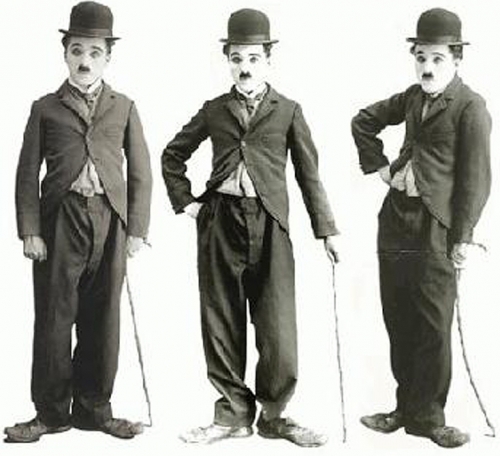
With the popularity of Charlie Chaplin (1889 – 1977) came a large number of artificial, bootlegged Charlie Chaplin movies and a host of fraudulent ‘Charlies’. All the fake Chaplins were clad the same and all answered to the same name yet all had different biographies and were not terribly funny in the slightest degree. Chaplin No. 1 did not care for this one bit and did not hold back while talking to this correspondent from Motion Picture Magazine.

The American Half-Track (Yank Magazine, 1943)
1943, Weapons and Inventions, Yank Magazine

The American Half-Track
(Yank Magazine, 1943)

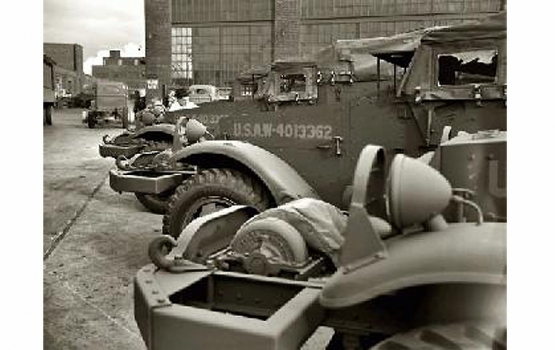
This YANK MAGAZINEarticle was written shortly after the U.S. Army’s triumphant performance during the Battle of El Guettar in Tunisia (March 23 – April 7, 1943) and rambles on with much enthusiasm regarding the admirable performance of the M2 Half Tracks. Half Tracks were used on many fronts throughout the war and in many ways, yet as this article makes clear these armored vehicles at El Guettar were mounted with a field gun and used to devastating effect as tank-destroyers against the German 10th Panzer Division.

The writer, Ralph G. Martinstyle=border:none

/
went on in later years to become a prolific historian and biographer.

Click here to read an article about German half-tracks.

Advertisement

Use shortcode [oma_ad position="summary_top"] (or other position) in your theme or widgets to display OMA Promotions here.

Fashion (WWII)

Hello, Denim
(Collier’s Magazine, 1942)

The editors at COLLIER’S MAGAZINE could not have known the significance of this subject back in 1942, yet to those Americans born after 1960 who read these old columns, it seems like a sign post that pointed the way to the sportswear of the future. Verily, few are the Americans who tread the fruited plane today who do not see at least one pair of jeans every day. Blue jeans have become the symbol of the nation, just as much as the flag.


This 1940s article pointed out that more and more Americans are waking up to denim. They found that it suited them and deemed it a sensible fabric in light of the new agricultural and industrial toil that needed to be finished if the fascists were to be beaten. However, denim was not some newfangled wartime invention; denim has been on the American scene since 1853 – in the Western gold mines and barnyards, roundhouses and cattle ranges.

Some seven years before this article hit the newsstands American teenagers began wearing jeans, but it was W.W. II that created a market for women’s jeans, and for good or ill, the course of American sportswear was forever altered.

A far more thorough fashion history of blue jeans can be read here.

Heinrich Himmler Death | Heinrich Himmler Suicide Article
1947, Coronet Magazine, The Nazis

‘The Strange Death of Heinrich Himmler”
(Coronet Magazine, 1947)

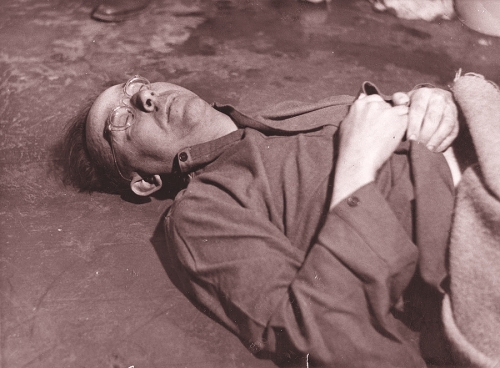
Here is an eyewitness account of the suicide of Heinrich Himmler as told by Major John C. Schwarzwalder, a former member of the intelligence division of the U.S. Army Services Forces:

…At the end of the search an army doctor told Himmler to open his mouth. The prisoner did so, but Himmler bit down. The doctor withdrew his finger hastily. Himmler then ground his teeth together and swallowed hard. Some say he smiled grimly. In another second he was on the floor writhing in agony…

Naval Aviation as a Concept (Popular Mechanics, 1914)
1914, Aviation History, Popular Mechanics Magazine

Naval Aviation as a Concept
(Popular Mechanics, 1914)

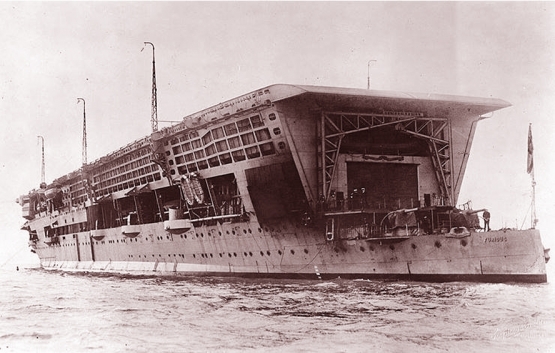
As early as 1914, the dreamers who saw the possibilities in aviation began to envision non fixed-wing aircraft and ships that could carry them out to sea. The attached 1914 article concerns an unnamed ship being constructed at the Blyth Shipyard in England that is designed to transport flying boats at sea, picking-up and lowering to and from the sea by way of cranes. The article is illustrated.

Advertisement

Use shortcode [oma_ad position="summary_top"] (or other position) in your theme or widgets to display OMA Promotions here.

The Battle Against Alcohol Dependence (Pathfinder Magazine, 1944)
1944, First Nations, Pathfinder Magazine

The Battle Against Alcohol Dependence
(Pathfinder Magazine, 1944)

Here are five letters to the editor written in response to an article that appeared in one of the Spring, 1944, issues of PATHFINDER MAGAZINE that pertained to two Native American tribal edicts that forbade the use of alcohol.


<img src=https://oldmagazinearticles.com/image_files/james-collins-otipoby-indian-american-chaplain_333.jpg border=0 height=493 width=333 alt=

How the YMCA Got it Wrong (The Home Sector, 1919)
1919, The Home Sector, World War One

How the YMCA Got it Wrong
(The Home Sector, 1919)

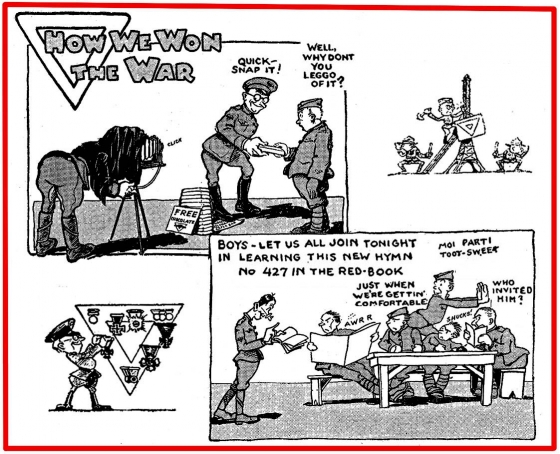
There were many benevolent organizations that volunteered to go abroad and cheer up the American military personnel serving in W.W. I Europe; groups such as the Jewish Welfare Board, the Knights of Columbus, the War Camp Community Service and the Salvation Army – to name just a few, but the Y.M.C.A. (Young Men’s Christian Association) was the only one among them that irked the Doughboys. In this 1919 exposé former STARS and STRIPES reporter Alexander Woollcott (1887 – 1943) levels numerous charges against the Y, believing that they had misrepresented their intentions when they asked the War Department to grant them passage. Woolcott maintains that their primary mission was proselytizing rather than relief work.


Click here to read another article about the YMCA.


From Amazon: My Hut: A Memoir of a YMCA Volunteer in World War Onestyle=border:none

Advertisement

Use shortcode [oma_ad position="summary_top"] (or other position) in your theme or widgets to display OMA Promotions here.

Ten Weeks in the German Cavalry (Leslie's Weekly, 1915)
1915, Leslie's Weekly, World War One

Ten Weeks in the German Cavalry
(Leslie’s Weekly, 1915)

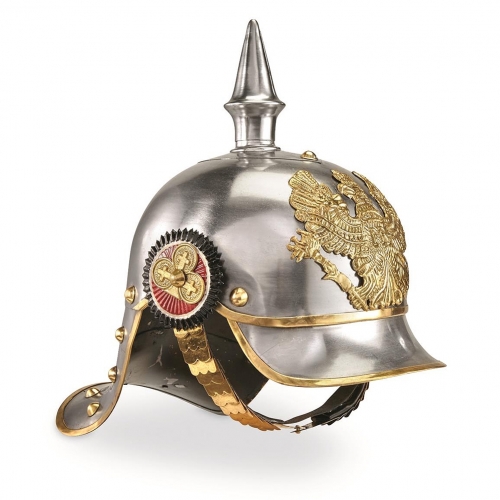
Fritz Arno Wagner (1894 – 1958) is best remembered as a pioneering cinematographer from the earliest days of the German film industry, however before he could gain the experiences necessary to become the director of photography for such films as Nosferatu, and Westfront he had to first fulfill his obligations to the Kaiser. This article is an account of his brief stint in the Hussars (ie. lancers) that he gave to the editor’s of LESLIE’S ILLUSTRATED WEEKLY NEWSPAPER.


Although the article only covers his training period, it does give the reader a sense of what life was like for an enlisted man serving in one of the highly prized regiments in the Imperial German Army.

1937 Moscow Show Trials Newspaper Articles | The Arrest of Karl Radek 1937
1937, Pathfinder Magazine, Purges and Show Trials

The Moscow Show Trials Continue
(Pathfinder Magazine, 1937)

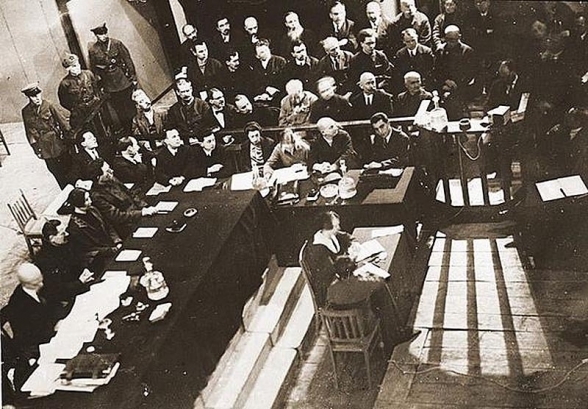
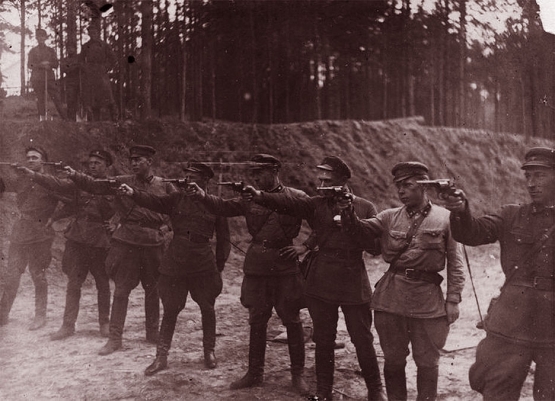
Of the 17 defendants in the Russian ‘circus trial’, four were still alive in Moscow last week. Thirteen others, convicted of having acted on the instigation of exile Leon Trotsky to sabotage Soviet railways, mines and factories, were taken to a cellar of Moscow’s Lubianka Prison, where they were yanked into cells to have have their brains blown out by pointblank pistol shots.


Another article about the show trials can be read here…

He Murdered Trotsky (Coronet Magazine, 1959)
1959, Coronet Magazine, Purges and Show Trials

He Murdered Trotsky
(Coronet Magazine, 1959)

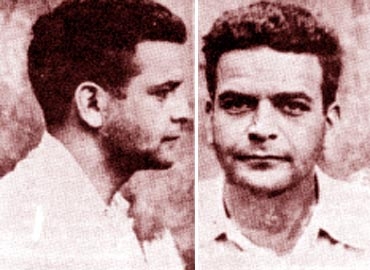
On the afternoon of August 20, 1940, in the Mexico City suburb of Coyoacán, Leon Trotsky (b. 1878) was murdered by Ramón Mercader (1914 – 1978). Mercader (alias Jacques Mornard) was a Spanish Communist and a Moscow-trained agent of Joseph Stalin’s secret police, the NKVD.


The attached article pertains to Mercader’s 20-year incarceration at the Mexican Lecumberri Penitentiary, where he was constrained in semi-luxurious accommodations, complete with a telephone, silk pajamas, a book collection, newspapers and weekly conjugal visits – courtesy of the Worker’s Paradise.


Click here to read a 1938 interview with Leon Trotsky.

Advertisement

Use shortcode [oma_ad position="summary_top"] (or other position) in your theme or widgets to display OMA Promotions here.

Scroll to Top