Author name: editor

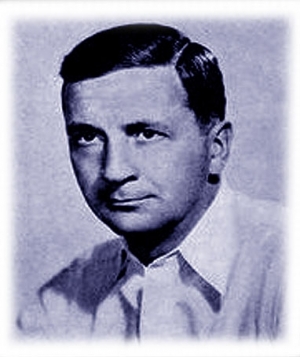
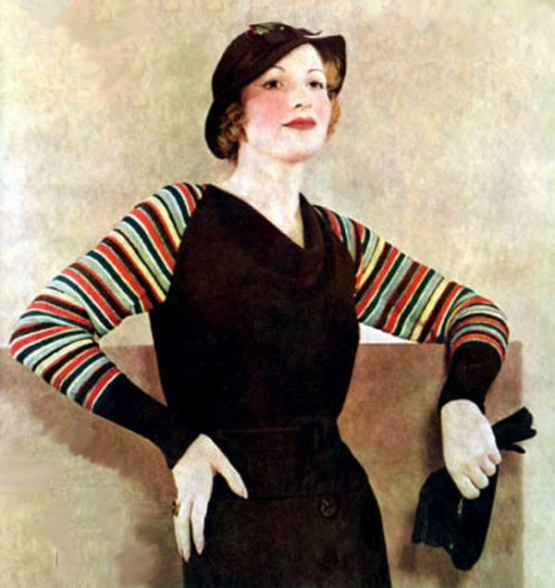
Martha Vickers (Pic Magazine, 1945)
1945, Hollywood History, Pic Magazine

Martha Vickers
(Pic Magazine, 1945)

Perhaps one of the first magazine articles about the beautiful actress Martha Vickers (1925 – 1971) who is best remembered by fans for her performance as the fabulously slutty Carmen Sternwood in the 1946 film The Big Sleep.


This article tells the tale of her early days in 1940s Los Angeles and her work as a photographer’s model, which turned more than a few of the crowned heads of Hollywood.

WW II Ends | New Era Begins 1945
1945, World War Two, Yank Magazine

The Last 125 Days of the War
(Yank Magazine, 1945)

A YANK staff writer Robert Bendiner (1910 – 2009), summed-up the eventful period that began with the death of President Franklin Delano Roosevelt on
April 12, and ended with the Japanese surrender on August 10, 1945. He pointed out that within that period remarkable changes had been made; not merely the deaths of Hitler, Mussolini and the collapse of Imperial Japan, but it was clear to many that the stage was being set for a new world. The foundations were in place for the creation of a durable world security organization and as if that wasn’t enough, there was a new, hideous weapon called the Atomic Bomb that would cast a long shadow across the land and mark this new era as a unique period in world history.

After a streak like that it would not be surprising if a revulsion against big news should set in. It may well be that people long to pick up a paper in which nothing more cosmic is reported than the city’s reception of a visiting channel-swimmer, and nothing more violent than a tie-up on the Magnolia Avenue trolley line.

Click here to read how British women struggled to understand American slang.

Was Allied Air Power Decisive During World War II? (Yank Magazine, 1945)
1945, World War Two, Yank Magazine

Was Allied Air Power Decisive During World War II?
(Yank Magazine, 1945)

A light and breezy review concerning the findings of a U.S. government study regarding the effectiveness of the Allied strategic bombing campaign against Nazi Germany:

…the survey authorities report that although air power might have been more advantageously applied in this case or that, its decisive bearing on the victory was undeniable…At sea, its contribution, combined with naval air power, brought an end to the enemy’s greatest naval threat -the U-boat; on land, it helped turn the tide overwhelmingly in favor of allied ground forces.

Articles about the daily hardships in post-war Germany can be read by clicking here.

Advertisement

Use shortcode [oma_ad position="summary_top"] (or other position) in your theme or widgets to display OMA Promotions here.

The Defense of Bastogne (Combat Studies Group, 1986)
1986, Paratroopers, The U.S. Army Combat Studies Group

The 101st Division at Bastogne
(Combat Studies Group, 1986)

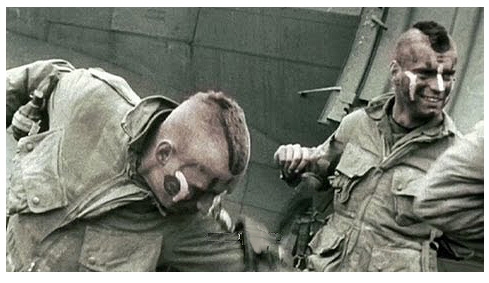
Attached is the concluding essay from a U.S. Army report written in 1986 concerning the spirited defense that was offered by the 101st Airborne Divisionstyle=border:none at the Battle of the Bulge.

At Bastogne, well-coordinated combined arms teams defeated uncoordinated armored and infantry forces committed to an unrealistic plan.


Click here to read more about W.W. II parachute infantry…


Another article about this battle can be read by clicking here…

D-Day Plus Ten With the 82nd Airborne (Yank Magazine, 1944)
1944, D-Day, Yank Magazine

D-Day Plus Ten With the 82nd Airborne
(Yank Magazine, 1944)

The battle of the hedgerows as experienced by the paratroopers of the 82nd Airborne Division:

They all had been fighting since D-Day. Compared with the obstacles at the beginning of their drive, the hill they had just taken was only a minor deal, but it was no push-over. At some places, one paratrooper told me, the fighting was so close the Krauts didn’t even bother to throw their grenades, they just handed them over to us.

WW III Plans | Soviet Schemes for WW III | WW III Article
1950, Pageant Magazine, The Cold War

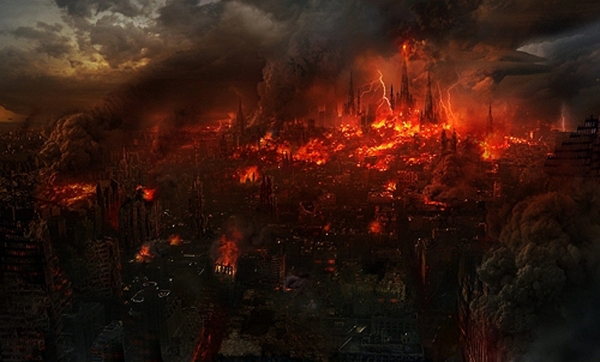
How the Soviets Would Have Attacked
(Pageant Magazine, 1950)

There wouldn’t be any warning.


Long-range Soviet bombers attempt to knock out our key industrial targets by atomic bombing. Some fly the 4,000, miles from Murmansk across the roof of the world to our East Coast; others strike from bases in Eastern Siberia at California and the Midwest… Simultaneously, organized sabotage breaks out in aviation plants, shipyards, power stations, etc., to complement the work of the bombers.

Advertisement

Use shortcode [oma_ad position="summary_top"] (or other position) in your theme or widgets to display OMA Promotions here.

The Biased Military Courts of the U.S. Army (G.I. Joe Magazine, 1945)
1945, G.I. Joe Magazine, World War Two

The Biased Military Courts of the U.S. Army
(G.I. Joe Magazine, 1945)

G.I. JOE MAGAZINE was established shortly after the war by a shrewd, commerce-driven soul who fully recognized that the American veterans of W.W. II would have a good deal to say about their military hardships, and would need a venue in which to do it. The attached article was written by a veteran who preferred to remain anonymous; the righteous indignation can be keenly sensed in his prose as he explained the three-tiered justice system that he believed to have been built into the offices of the U.S. Army military court system. The first tier meted out soft justice for officers, the second dispensed a harsh justice to White enlisted men, and the bottom tier dished-out a far more vile variety to the American soldiers of African descent.


Read an Article about Racial Integration in the U.S. Military

A Review of Memorial by Christopher Isherwood (Rob Wagner's Script, 1947)
1947, Rob Wagner's Script Magazine, Twentieth Century Writers

A Review of Memorial by Christopher Isherwood
(Rob Wagner’s Script, 1947)

A review of Christopher Isherwood’s (1906 – 1986) semi-autobiographical novel, Memorial, which was placed in post-World War I Britain:

The plot of Memorialstyle=border:none can be discussed very briefly: it doesn’t have one. It doesn’t need one. It is entirely fascinating, not a dramatic sequence of events, but an increasingly intimate understanding of a state of affairs…The book proceeds, not forward in time, but inward by layers. Isherwood has a wonderful gift of getting inside people.
Famous Edith Sitwell (Literary Digest, 1927)
1927, The Literary Digest, Twentieth Century Writers

Famous Edith Sitwell
(Literary Digest, 1927)

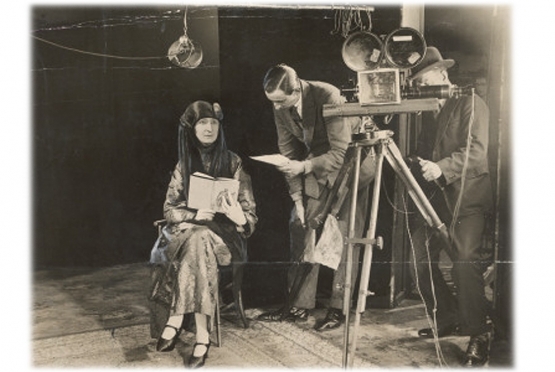
Edith Sitwell (1887 – 1964) had appeared on the literary horizon some fourteen years before this profile was read in the American press and by 1927 all concerned seemed to have decided that she had attained a respectable level of notoriety and was worthy of being labeled famous:

Miss Sitwell is described by THE SKETCH (London) as ‘an author who dislikes simplicity, morris-dancing, a sense of humor, and every kind of sport except reviewer-baiting.’

Advertisement

Use shortcode [oma_ad position="summary_top"] (or other position) in your theme or widgets to display OMA Promotions here.

A 1947 Review of THE BUTTERFLY by James M. Cain (Rob Wagner's Script, 1947)
1947, Rob Wagner's Script Magazine, Twentieth Century Writers

A 1947 Review of THE BUTTERFLY by James M. Cain
(Rob Wagner’s Script, 1947)

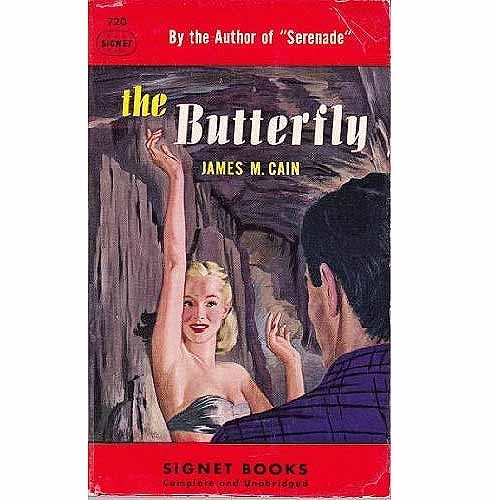
Appearing in the Beverly Hills literary rag, Rob Wagner’s Script was the 1947 review of The Butterfly by James M. Cain (1892 – 1977):

I have not read Cain’s older books to confirm this impression, but offhand I would say that ‘The Butterfly’ is second to ‘The Postman Always Rings Twice’, among his longer things, as an exhibition of his peculiar talents…This work concerns itself with incest. Technically, no incest is committed, but a marriage is made and consummated between two people, one of whom supposes that she is the other’s daughter…


From Amazon: The Butterflystyle=border:none

COMMAND DECISION Book Review (Rob Wagner's Script, 1947)
1947, Rob Wagner's Script Magazine, Twentieth Century Writers

COMMAND DECISION Book Review
(Rob Wagner’s Script, 1947)

Command Decision, the World War II novel by William Wister Haines (1908 – 1989), was written from the point of view of a general officer and the Allied effort to destroy the Nazi jet fighters before the Luftwaffe could muster the initiative and get the upper hand; the novel was based upon the author’s own wartime experiences serving with the American 8th Air Force in Europe during the Second World War. Haines enjoyed much critical and popular success when the book was released; a 1947 Broadway production ran for 409 performances and a film adaptation premiered in 1948 starring Clark Gable (who also served in the 8th Air Force).


Click here to read the 1947 book review of a William Saroyan war novel.

Advertisement

Use shortcode [oma_ad position="summary_top"] (or other position) in your theme or widgets to display OMA Promotions here.

WW II American Traitor Jane Anderson |1940s Propaganda Radio Broadcasts of Jane Anderson
1943, American Traitors, Coronet Magazine

Jane Anderson of Georgia
(Coronet Magazine, 1943)

Jane Anderson began broadcasting from Berlin on April 14, 1941. When Nazi Germany declared war on the United States on December 11, 1941 American citizens were repatriated from Germany but Anderson chose to remain.
She broadcast Nazi propaganda by way of a short wave radio for the German State Radio’s U.S.A. Zone, the Germans named her ‘The Georgia Peach’. Her programs regularly heaped high praise upon Adolf Hitler and ran ‘exposés’ of the ‘communist domination’ of the Roosevelt and Churchill administrations. She conducted numerous on-air interviews, the most famous among them was of her co-worker, the British traitor William Joyce. When Berlin fell she was on the run up until April of 1947, when she was caught in Salzburg, Austria and placed in the custody of the U.S. military.

The Siege of Vicksburg (Famous Events, 1913)
1913, Famous Events Magazine, Vicksburg

The Siege of Vicksburg
(Famous Events, 1913)

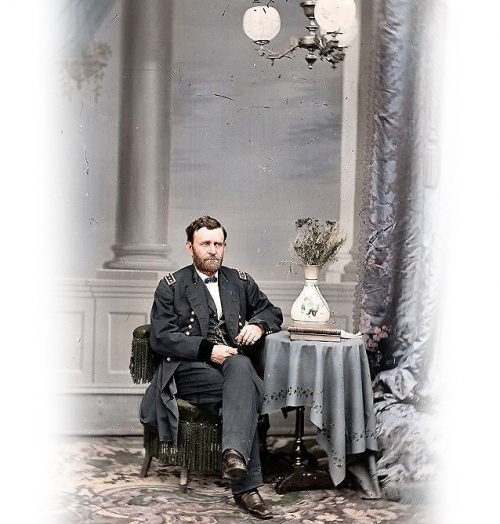
A summary of General Grant’s victory at Vicksburgstyle=border:none, Mississippi, during the summer of 1863. It is made clear to the reader how vital the city was to the Rebel’s defensive strategy in that Vicksburg was the last stronghold remaining which served to protect the Mississippi valley; President Jefferson Davis and his Confederates knew well that if the city fell, Texas, Louisiana and Arkansas would be isolated.
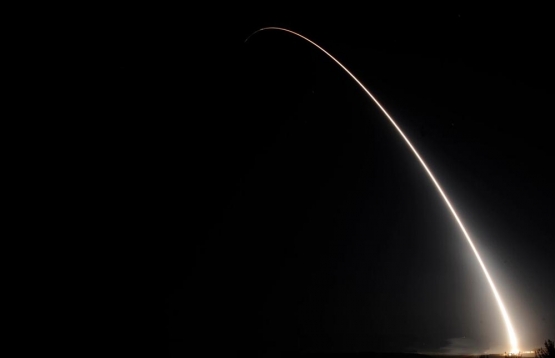
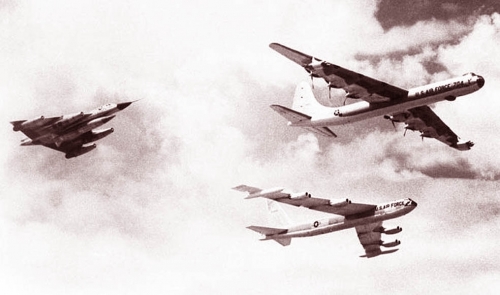
1950s Intercontinental Ballistic Missile | 1956 Atlas Rocket Invention | Cold War Missile Article
1956, Collier's Magazine, The Cold War

The ICBM
(Collier’s Magazine, 1956)

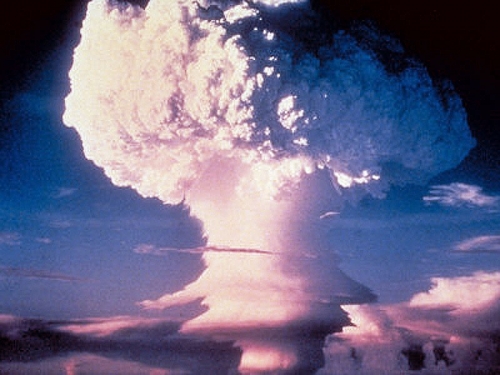
The U.S. and Russia are engaged in a race whose outcome may determine the course of history. The goal: development of the most frightful weapon conceived by man – a virtually unstoppable 16,000-mph intercontinental ballistic missile that can drop a hydrogen warhead on a city 5,000 miles away. At stake is not only the security of the free world , but our position as the world’s most technological and industrial power.

Advertisement

Use shortcode [oma_ad position="summary_top"] (or other position) in your theme or widgets to display OMA Promotions here.

Towards a Nuclear Strategy (Pathfinder Magazine, 1949)
1949, Atomic Bombs, Pathfinder Magazine

Towards a Nuclear Strategy
(Pathfinder Magazine, 1949)

Here is the Pathfinder Magazine article about Air University; established in 1946 by the U.S. Department of War in order to train senior American Air Force officers to serve as strategic thinkers in the realm of national security. In 1949 that meant conceiving of ways to implement a successful strategy in which the Soviet Union would be defeated with nuclear weapons:

At AU’s apex is the Air War College. To its senior officer-students the question of destroying an enemy’s will to resist is grimly real. Killing ten million citizens of an enemy nation is no haphazard problem to the Air War College. In the statistics of modern war, a loss of approximately 4% of a nation’s population saps its will to resist…


Six months after this article was first read, the Soviets tested their first Atomic bomb; click here to read about that event.

The Atomic Bomb (Dept. of the Army, 1956)
1956, Atomic Bombs, The Dept. of the Army

The Atomic Bomb
(Dept. of the Army, 1956)

In ten lines the U.S. Army history section succinctly outlined Japan’s grim situation and the events that led up to the dropping of the bomb:

By the summer of 1945 it was obvious to most responsible leaders in Japan that the end of the war was near. For the first time those who favored ending the war came out in the open and in June, Japan sent out peace feelers through the Soviet Union. The rejection of the Potsdam Declaration of 26 July, however, sealed the doom of Japan…

Click here to read an article about American public opinion during the early Cold War years

The Atomic Crusade (Rob Wagner's Script Magazine, 1948)
1948, Atomic Bombs, Rob Wagner's Script Magazine

The Atomic Crusade
(Rob Wagner’s Script Magazine, 1948)

Attached is a 1948 article by the Nobel laureate Arthur Holly Compton (1892 – 1962) concerning the widespread understanding among nuclear physicists to wrestle control of atomic energy away from the military and firmly in the hands of civil authorities, where it’s benefits can be put to general use and harnessed as positive force in the lives of all mankind.

Awarded the Nobel prize for physics in 1927, the SCRIPT MAGAZINE editors believed that Arthur Compton, more than anyone else, deserved the title Daddy of the Atomic bomb. When the U.S. Government decided to proceed with the research and development of this weapon, Compton was assigned the double task of attempting a nuclear chain reaction and of designing the bomb itself.


Compton is remembered as the senior physicist at the Manhattan Project who hired Dr. Robert Oppenheimer.

Click here to read an article about American public opinion during the early Cold War years.


Click here to read about the invention of the Intercontinental Ballistic Missile

Advertisement

Use shortcode [oma_ad position="summary_top"] (or other position) in your theme or widgets to display OMA Promotions here.

Scroll to Top