Author name: editor

Gloria Swanson biography | Gloria Swanson Magazine article
1930, Photoplay Magazine, Silent Movie History

Gloria Swanson: Hollywood Diva
(Photoplay Magazine, 1930)

A segment from a slightly longer 1930 profile covering the high-life and Hollywood career of La Belle Swanson. Written by actor and theater producer Harry Lang (1894 – 1953), the article concentrates on her triumphs during her lean years, her assorted marriages and her healthy fashion obsessions.


Click here to read about feminine conversations overheard in the best New York nightclubs of 1937.

1910 Diplomatic Disarmament Treaties | Post- Presidency of Theodore Roosevelt 1910
1910, Prelude, The American Review of Reviews

Theodore Roosevelt on the Subject of Disarmament Treaties
(Review of Reviews, 1910)

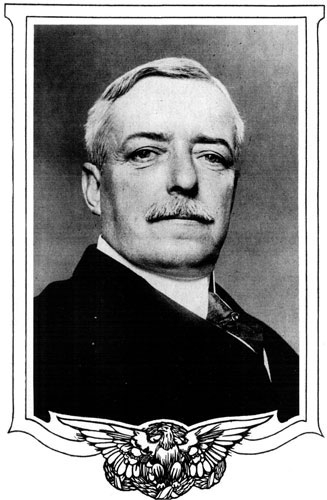
Before there were diplomatic treaties between super powers on thermo-nuclear intercontinental ballistic missiles, there was the age of the Dreadnought: how many battleships should a country have? This article concerns the views of a Norwegian statesman named Erik Vullum (1850 – 1916) and his admiration for former U.S. President Teddy Roosevelt and his understanding of armament arbitration agreements between the major European powers prior to the First World War.

German Military Expansion (The Spectator, 1912)
1912, Prelude, The Spectator Magazine

German Military Expansion
(The Spectator, 1912)

This small piece from THE SPECTATOR magazine concerned the 1912 budget increase mandated by the Imperial German Defense Bills which called for a growth of the German army and navy. The expansion of the fleet was to include eight battleships and nine cruisers of various sizes and provide for further additions later. The German Army was to be furnished with two additional army corps.

Advertisement

Use shortcode [oma_ad position="summary_top"] (or other position) in your theme or widgets to display OMA Promotions here.

The Crown Prince: Saber Rattler (Current Literature, 1912)
1912, Current Literature Magazine, Prelude

The Crown Prince: Saber Rattler
(Current Literature, 1912)

The son and heir of the German Kaiser, Crown Prince Wilhelm III (1882 – 1951) was known well throughout the pre-war era for demonstrating his dislike of the German Government’s peaceful policies and especially for his belligerent, anti-British remarks, which caused tremendous embarrassment to the Imperial German Chancellor, while giving no end of pleasure to the hot-heads of Berlin.

Jew-hater Julius Streicher captured 1945 | Julius Streicher laments | Nazi Jew-baiter Julius Streicher
1945, Collier's Magazine, Jews in the 20th Century

The Nice Jewish Boy and the Nazi
(Collier’s Magazine, 1945)

I have always said that there are no good Jews, but that boy proved me wrong.

-so spake the Nazi king-pin Julius Streicher (1885 – 1946) upon being confronted by the goodness of one American serviceman who went out of his way to be kind and identified himself as a Jew.

This small piece is an excerpt from a longer article; to read the entire magazine article, click here.


Julius Streicher had an IQ that measured 106 – click here to read about the IQs of the other lunatics in Nazi leadership…


Click here to read about the inmate rebellions that took place at Auschwitz, Sobibor and Triblinka.

Advertisement

Use shortcode [oma_ad position="summary_top"] (or other position) in your theme or widgets to display OMA Promotions here.

What Were the Germans Thinking? (Click Magazine, 1943)
1943, Click Magazine, German Home Front

What Were the Germans Thinking?
(Click Magazine, 1943)

We cannot conduct a Gallup poll in Germany, but we can find out by other opinion polls and from other inquiring reporters what the average German is thinking. Our reporters are the Nazis themselves. The poll is tallied daily at short-wave listening stations, among them that of the Columbia Broadcasting System. The C.B.S. corps of engineers monitors and records and interprets the voices of the enemy.

The Nazi propaganda here analyzed is a record of Nazi failure to keep the German people from thinking ‘non-German’ thoughts and failure to prevent the record from being known.

This article is illustrated with fourteen W.W. II photographs.

Sports in Japanese Prison Camps (Yank Magazine, 1944)
1944, POWs, Yank Magazine

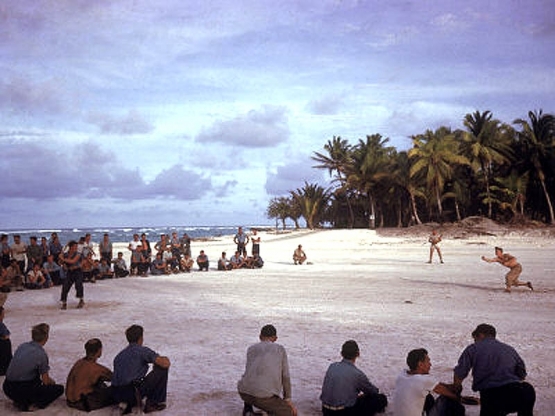
Sports in Japanese Prison Camps
(Yank Magazine, 1944)

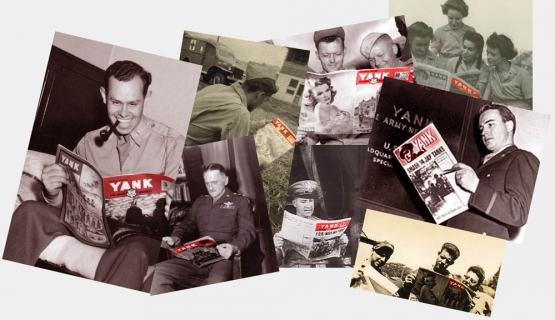
Assorted yarns told by liberated Allied soldiers as to the types of games played in Japanese prison camps between bouts of malaria, dysentery and gangrene:

We had a big fellow with us in camp, a guy named Chris Bell, who was 6 feet 2 and the rocky sort. The Jap guards were having a wrestling tournament at the guardhouse and they wanted Bell to come down and wrestle one of those huge sumo men. These sumo wrestlers weigh about 300 pounds and are very agile…


This was NOT the first time that a Japanese baseball team had faced Americans.

Click here to read about that game.


Suggested Reading:
POW Baseball in World War II: The National Pastime Behind Barbed Wirestyle=border:none

Advertisement

Use shortcode [oma_ad position="summary_top"] (or other position) in your theme or widgets to display OMA Promotions here.

Nazi POWs Repatriated 1945 | Italian POWs Repatriated 1945 | Japanese POWs Returned to Japan 1945
1945, Newsweek, POWs

Repatriating The Axis PoWs
(Newsweek Magazine, 1945)

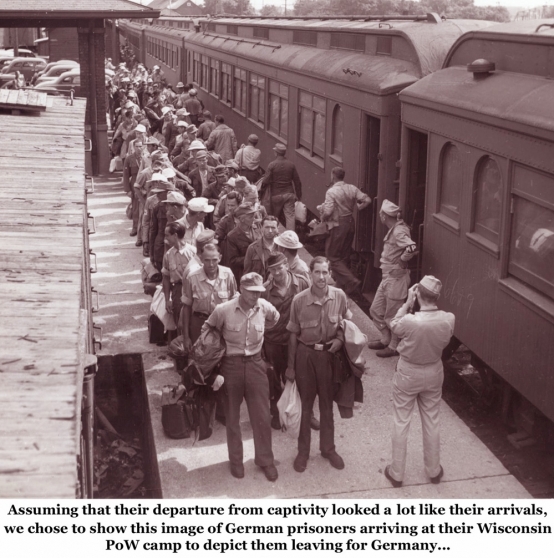
For the 417,034 Axis prisoners of war in this country, the War Department last week had word that repatriation was in sight. The 362,170 Germans and 49,784 Italians definitely would be home by early Spring; the 5,080 Japanese, as soon as General of the Army MacArthur was ready to receive them.

Men's Undergarments: 1921 (Magazine Advertisement, 1921)
1921, Magazine Advertisement, Men's Fashion

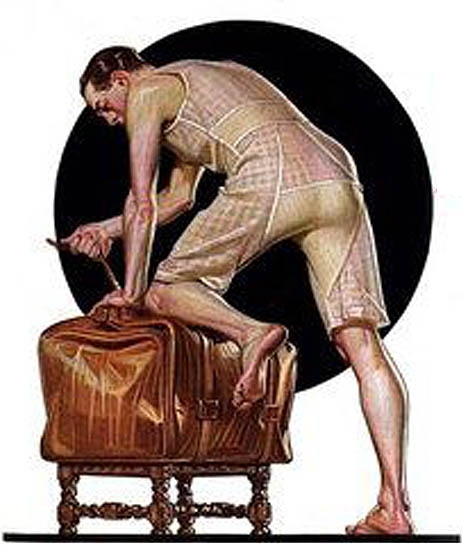
Men’s Undergarments: 1921
(Magazine Advertisement, 1921)

Attached is an illustrated magazine advertisement from a polite, middle class American periodical which depicts two trim bucks in the full flower of youth wearing their under-lovelies so that all the internet gawkers can get a sense of how wildly uncomfortable men’s underwear used to be.

Click here to read about the introduction of the T shirt to the world of fashion.

Advertisement

Use shortcode [oma_ad position="summary_top"] (or other position) in your theme or widgets to display OMA Promotions here.

Tested in War: the Wrist Watch Becomes Fashionable (The Stars and Stripes, 1918)
1918, Men's Fashion, The Stars and Stripes

Tested in War: the Wrist Watch Becomes Fashionable
(The Stars and Stripes, 1918)

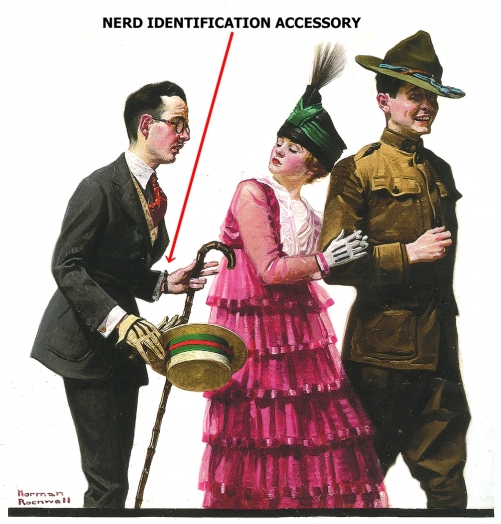
The following must have been some sort of creative writing project for one of the many bored World War One Doughboys, however it clearly spells out how the necessities of modern war demanded that the wrist watch no longer be thought of as a piece of jewelry adorned only by fops and fems and evolved into a useful tool for soldiers on the field and men with masculine responsibilities. The column makes it quite clear that prior to the Great War, a good many wrist watch enthusiasts would have had their noses broken if they had worn the ‘gimmick’ into certain neighborhoods.

WW II German RPG | German Panzerfaust Anti-Tank RPG
1945, Volkischer Beobacher, Weapons and Inventions

The Wonderful World of the Panzerfaust
(Volkischer Beobacher, 1945)

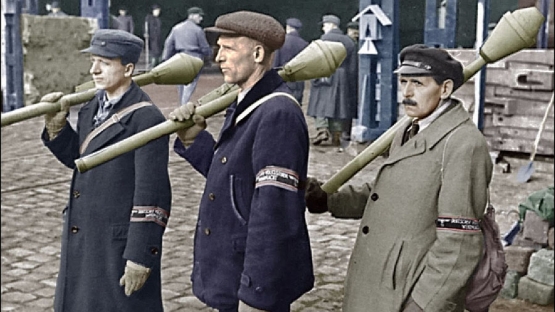
Although the attached cartoon illustrations from Volkischer Beobacher depicts a German soldier using a Panzerfaust anti-tank weapon, the intended readership was actually the old men and under-age boys who made up the out-gunned and under-manned Volkssturm militia units at the close of the war. The panzerfaust (tank fist) has been characterized as the first expendable anti-tank RPG. Also included in this file is the U.S. Army study concerning this weapon.

America's First Shot in WW1 1917 | American Ship USS MONGOLIA Sinks German U-Boat 1917
1917, World War One

America’s First Shot
(Various Sources, 1917 – 1937)

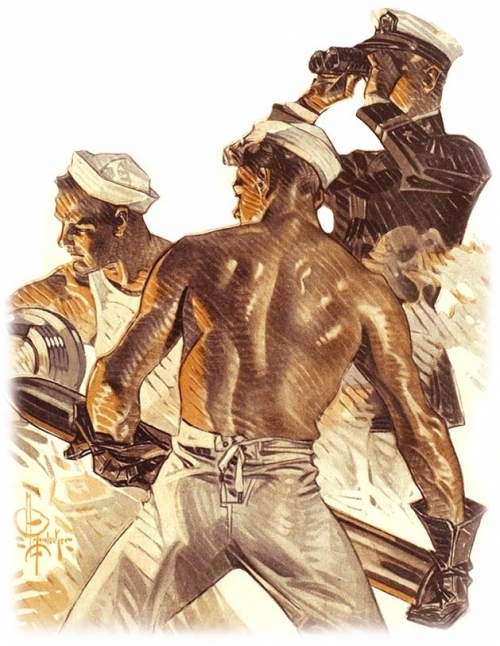
The three articles attached herein were printed five years apart and collectively recall three different events by three different arms of the American military, each claiming to have fired the opening salvo that served notice to Kaiser Bill and his boys that the U.S.A. meant business:


• The first article chuckles at the Army for insisting that the First Division fired the premiere shot on October 23, 1917 in the Luneville sector of the French front;


• The second article recalls the U.S. Merchant Marine freighter MONGOLIA that sank a German U-Boat on April 19, 1917 while cruising off the coast of England.


• following up with the absolute earliest date of American aggression being April 6, 1917 – the same day that Congress declared war – when Marine Corporal Michael Chockie fired his 1903 Springfield across the bow of the German merchant raider S.M.S COMORAN on the island of Guam.

Advertisement

Use shortcode [oma_ad position="summary_top"] (or other position) in your theme or widgets to display OMA Promotions here.

Anticipating the American Century (The Spectator, 1921)
1921, Aftermath (WWI), The Spectator Magazine

Anticipating the American Century
(The Spectator, 1921)

Attached is a review of The American Era by H.H. Powers. The reviewer disputes the author’s argument that the First World War made Britain a weaker nation:

Mr. Powers’ interpretation of the war and it’s squeals is that the Anglo-Saxon idea, having triumphed, will set the tone for the whole world. He also believes that the real depository and expositor of this idea in the future must be America. Britain, he thinks,in spite of her great geographical gains from the war– he considerately exaggerates these, has sung her swan song of leadership.


A similar article about American power can be read here.

Advertisement

Use shortcode [oma_ad position="summary_top"] (or other position) in your theme or widgets to display OMA Promotions here.

Scroll to Top