Author name: editor

The Life and Death of Hank Williams (Coronet Magazine, 1956)
1956, Coronet Magazine, Interviews: 1912 - 1960

The Life and Death of Hank Williams
(Coronet Magazine, 1956)

Country Music legend Hank Williams (1923 – 1953)
died just four and a half months after being kicked out of the Grand Ol’ Opry for drunken and erratic behavior. He was at the peak of his fame, earning over $200,000 a year and enjoying the enthusiasm of ten million fans in the U.S. and five million abroad. He was 29 years old and known only for 35 songs. The attached article will let you in on the short and painful life of country music’s fair haired boy.


Like many artists, his creativity was nurtured by an empty stomach. Hank Williams was raised under dreadfully impoverished conditions in Depression era Alabama; suffering from spinal bifida, the illness that eventually overcame him, he sought relief from the pain with liquor and drugs and died in the back of the Caddy that was ferrying him to a gig in Canton Ohio.

Define Statism
1946, Pathfinder Magazine, The Nanny State

Statism
(Pathfinder Magazine, 1946)

Not long after the free world had conquered fascism, the long twilight struggle against Communism commenced. Stalin’s Soviet Union had refused to comply with the treaties it had previously agreed to and was occupying North Korea and many of the Eastern European countries that the Nazis had invaded. Furthermore, Stalin was was funding armed insurgencies in Greece, Vietnam and China. In an effort to help define the tyranny that is Communism, Pathfinder ran this column that defined Communism as Statism and explained it in simple terms.

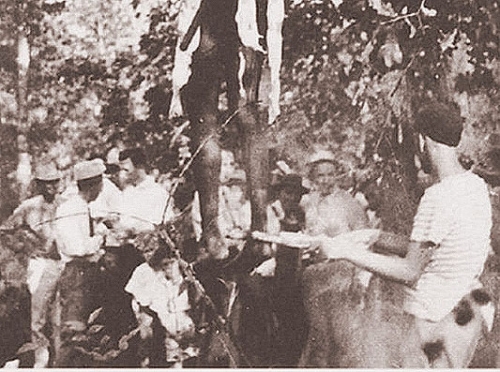
Anti-Lynching Law Debated in Congress (Congressional Digest, 1922)
1922, Lynchings, The Congressional Digest

Anti-Lynching Law Debated in Congress
(Congressional Digest, 1922)

Reproduced here are the two pages from the Congressional Digest of 1922 which are composed of both the outline of the proposed legislation as well as the debate of the Dyer Anti-Lynching Bill.


The bill, which was introduced by Representative Leonidas C. Dyer (1871 – 1957)of Missouri, was intended to make lynching a felony that would have resulted in a short prison term and a $5,000.00 fine for all guilty participants. The proposed legislation passed the House of Representatives but not the Senate. Congressional debates concerning anti-lynching would be a topic for many years to come, however, the arguments presented against passage of this bill by the Southern Representatives make an interesting read.

Advertisement

Use shortcode [oma_ad position="summary_top"] (or other position) in your theme or widgets to display OMA Promotions here.

Advertisement

Use shortcode [oma_ad position="summary_top"] (or other position) in your theme or widgets to display OMA Promotions here.

1933: A Lynchless Year? (Literary Digest, 1933)
1933, Lynchings, The Literary Digest

1933: A Lynchless Year?
(Literary Digest, 1933)

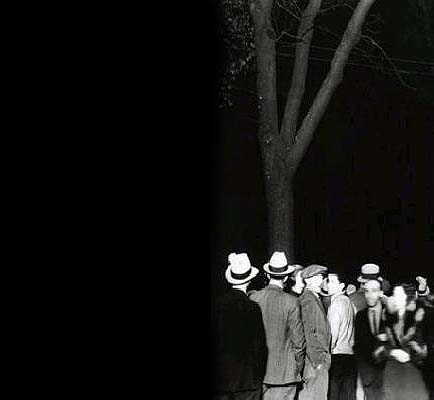
This article was published during the opening days of 1933 and reported on the deep spirit of optimism that was enjoyed by the Association of Southern Women for the Prevention of Lynching, and their executive director, Mrs. Jessi Daniel Ames (1883 – 1972). This group of Southerners were hoping that, through their efforts and those of other like-minded Southern organizations, 1933 would be a year without a single lynching:

If Mississippi can have a lynchless year, a lynchless South is a possible and reasonable goal…


The reporter dryly noted that a few days after the above remark was recorded, a lynching was committed – one of the twenty-eight that took place throughout the course of 1933.

Kind Words from Field Marshall Montgomery (Newsweek Magazine, 1945)
1945, Battle of the Bulge, Newsweek

Kind Words from Field Marshall Montgomery
(Newsweek Magazine, 1945)

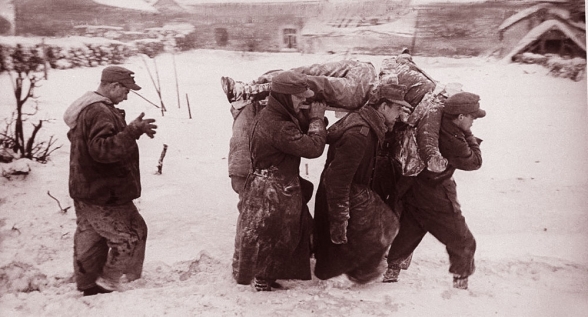
As the Battle of the Bulge reached its conclusion and the Germans resumed their retreat, British General Bernard Law Montgomery (1887 – 1976) held a press conference in which he praised the fighting abilities and the leadership skills of all those Americans who resisted the German onslaught in the Ardennes:

But when all is said and done, I shall always feel that Rundstedt was really beaten by the good fighting qualities of the American soldier…

Advertisement

Use shortcode [oma_ad position="summary_top"] (or other position) in your theme or widgets to display OMA Promotions here.

Advertisement

Use shortcode [oma_ad position="summary_top"] (or other position) in your theme or widgets to display OMA Promotions here.

Rob Wagner's Script (Rob Wagner's Script, 1946)
1946, Magazines, Rob Wagner's Script Magazine

Rob Wagner’s Script
(Rob Wagner’s Script, 1946)

Written by one of the underpaid ink-slingers who toiled silently on the corner of Dayton and Rodeo Drive, is the skinny on that unique magazine published in Beverly Hills, California between the years 1929 through 1949, Rob Wagner’s Scriptstyle=border:none. It was an exceptional magazine that took courageous stands on a number of moral issues, such as the wartime incarceration of Japanese-Americans. As a product of Los Angeles it not only addressed a good many issues involving Hollywood but also published the writings of Walt Disney, Dalton Trumbo, Ray Bradbury and Charlie Chaplin. From a graphic stand-point it was, perhaps, a bit envious of the New Yorker, but Script also laid claim to a number of fine cartoonists; Leo Politi (1908 – 1996) worked for a time as the magazine’s Art Director. In the late Forties Salvador Dali contributed cover illustrations. We recommend that you read the attached article and suggest that you surf over to Wikipedia for additional history concerning this magazine.

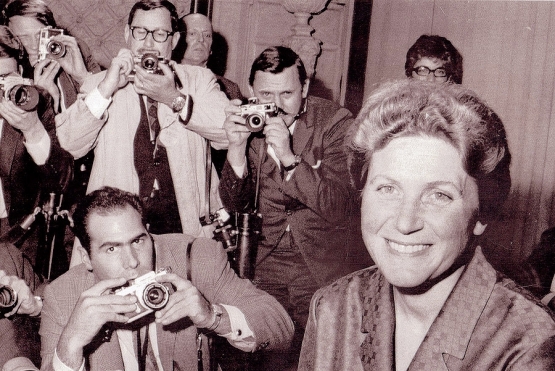
Svetlana Alliluyeva Daughter of Joseph Stalin | Svetlana Alliluyeva MAGAZINE INTERVIEW 1967 | Stalin's Daughter Defected in 1967
1967, Coronet Magazine, Joseph Stalin

The Defection of Stalin’s Daughter
(Coronet Magazine, 1967)

Unquestionably, the most famous individual to defect from the USSR and seek refuge in the West was Svetlana Alliluyeva (1926 – 2011), the only daughter of Soviet Premier Joseph Stalin (she used her mother’s maiden name). She was the one closest to the aging dictator during his closing days – and her defection to the United States aroused a tremendous amount of interest throughout the world.

Advertisement

Use shortcode [oma_ad position="summary_top"] (or other position) in your theme or widgets to display OMA Promotions here.

Immigration Hollywood-Style (Rob Wagner's Script, 1935)
1935, Immigration History, Rob Wagner's Script Magazine

Immigration Hollywood-Style
(Rob Wagner’s Script, 1935)

Apparently during the pit of the Great Depression there were complaints coming from a few frustrated corners about the number of foreign talents that were being hired to entertain us in the movie business. An old Hollywood salt answered this complaint head-on:

The average world-fan cares nothing that Chaplin is an Englishman, Garbo a Swede, Novarro a Mexican, Bergner a German or Boyer a Frenchman.

Advertisement

Use shortcode [oma_ad position="summary_top"] (or other position) in your theme or widgets to display OMA Promotions here.

Scroll to Top