Author name: editor

1920s Xenophobia | Fear of Multiculturalism | Fear of Cultural Pluralism
1923, Immigration History, Reader's Digest

For Want of Assimilation
(Reader’s Digest, 1923)

If Facebook existed in 1923, their über censor meisters would see to it that the uncharitable opinions of U.S. Representative French Strother (1868 – 1930) would never appear upon their fair pages. Strother’s thoughts on the failure of the immigration system were shared by many of his countrymen and in this column he lists many examples illustrating the collapse of America’s ability to assimilate the new-comers:

In fairness to the aliens, be it said that some of them have brought rich gifts to our civilization. But what shall profit a nation if it gain the whole world, and lose it’s own soul?

What is Boogie-Woogie? (The Clipper, 1941)
1941, Big Band 1930s-1940s, The Clipper

What is Boogie-Woogie?
(The Clipper, 1941)

A 1941 article by the screenwriting, piano playing novelist Eliot Paul (1891-1958) who put-forth a sincere effort to define that popular 1940s music known as Boogie-Woogie.

Paul went to great lengths explaining the roots of Boogie-Woogie, the origin of the term and the finest performers and composers of the music:

First, one can say that Boogie-Woogie is an authentic, soul-satisfying genre of piano music, native to America and for which America is indebted to the Negro people…If you ask Al Ammons (1907 — 1949), one of the foremost exponets of boogie-woogie, what boogie-woogie is, he would smile, his eyes would light up, and probably he would say:

Man! It scares you

-and it does. There are deep reasons why it tugs at our memories and slumbering instincts.

Remembering George Gershwin and 'Rhapsody in Blue' (Creative Art Magazine, 1937)
1937, Creative Art Magazine, Music History

Remembering George Gershwin and ‘Rhapsody in Blue’
(Creative Art Magazine, 1937)

By clicking the blue title link above, you will be treated to a postmortem appraisal of the American composer George Gershwin (1898 – 1937). The article was written by one of his contemporaries; Gershwin is admired in this article, but not idolized:

No one could have been more surprised than George Gershwin at the furor the Rhapsody caused in highbrow circles. He had dashed it off in three weeks as an experiment in a form that he only vaguely understood. In no sense had he deliberately set out to make an honest woman out of jazz.

Advertisement

Use shortcode [oma_ad position="summary_top"] (or other position) in your theme or widgets to display OMA Promotions here.

Glenn Miller (Coronet Magazine, 1954)
1954, Big Band 1930s-1940s, Coronet Magazine

Glenn Miller
(Coronet Magazine, 1954)

Ten years after the death of Big Band legend Glenn Miller (1904 – 1944), it was found that his record sales were going through the roof at 16,000,000 per annum, and Hollywood had attempted to cash-in on his memory by releasing a (bland) Technicolor bio-pic, appropriately titled, The Glenn Miller Story(Universal) – with Jimmy Stewart starring in the title roll. The band leader’s popularity was obvious to everyone in 1944, when he was killed in the war, but no one could have predicted this.

Armed Motorcycles (Popular Mechanics, 1914)
1914, Inventions and Weapons, Popular Mechanics Magazine

Armed Motorcycles
(Popular Mechanics, 1914)

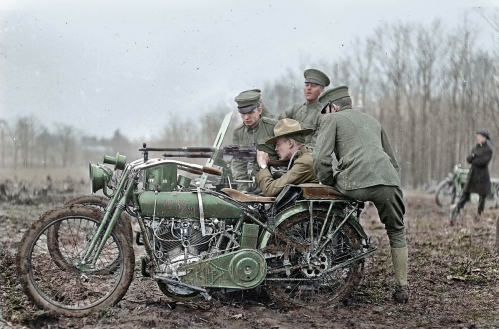
The combining of machine gun and motorcycle was an entirely Canadian concept that made an appearance early in the war. It is highly likely that the vehicles never got their baptism of fire:

an interesting adaptation of the motorcycle to military uses has been made by employing it as a light artillery vehicle…the accompanying photograph shows a machine gun mounted on a sidecar chassis.

Ignaz Paderewski (Stage Magazine, 1939)
1939, Music History, Stage Magazine

Ignaz Paderewski
(Stage Magazine, 1939)

Here is an article on the last American concert tour of Polish pianist (and composer, diplomat and politician) Ignaz Jan Paderewski (1860 – 1941). The article concentrates on the amount of money pulled-in by the performer, both on this tour as well as previous ones; his legendary generosity and his monumental reputation.


Click here to read more about Paderewski and other pianists of 1915…


Click here to see what the first car radios look like.

Advertisement

Use shortcode [oma_ad position="summary_top"] (or other position) in your theme or widgets to display OMA Promotions here.

Justice Hugo L Black of the KKK | New Deal Southern Democrats
1940, Ku Klux Klan, Pathfinder Magazine

The Klansman on the Supreme Court
(Pathfinder Magazine, 1940)

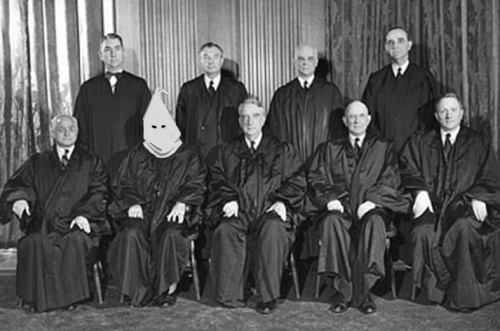
When the U.S. Supreme Court gave their decision concerning the 1940 appeal of a lower court’s verdict to convict three African-Americans for murder, civil libertarians in Washington held their collective breath wondering how Justice Hugo Black approached the case. Black, confirmed in 1937 as FDR’s first court appointee, admitted to having once been made a ‘life member’ of the Ku Klux Klan. This column was one of any number of other articles from that era that reported on the Alabaman’s explanation behind his Klan associations:

I did join the Klan… I later resigned. I never rejoined.

General John J. Pershing (American Legion Weekly, 1924)
1924, General John Pershing, The American Legion Weekly

General John J. Pershing
(American Legion Weekly, 1924)

An interesting profile of General Pershing by the Pulitzer Prize winning journalist Marquis James (1891 – 1955):


• Ever hear about the time the C-in-C saluted a French cow?
• Did you know he had the right to put ‘Attorney at Law’ after his name?
• That he was given eight hours extra guard duty for a breach of discipline at West Point?
• Do you know why he was chosen to command the A.E.F.?

Read another post-war article about General Pershing.

The Hobo News (Collier's Magazine, 1945)
1945, Collier's Magazine, Magazines

The Hobo News
(Collier’s Magazine, 1945)

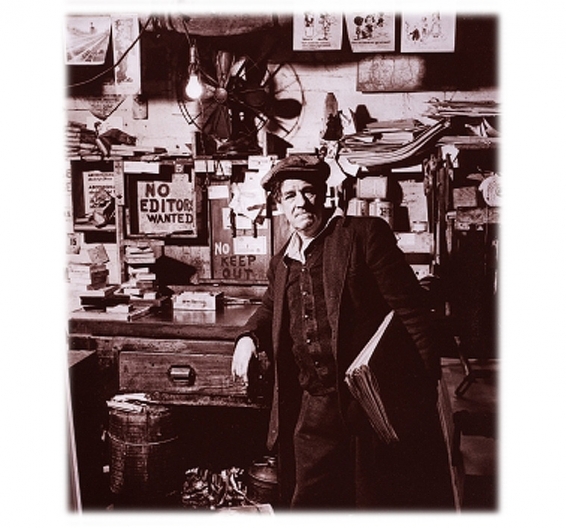
The Hobo News printed poems, cartoons, pin-ups, essays and news items that were useful to that unique class of men who rode the rails and frequent flop-houses. It was established in New York City by Pat The Roaming Dreamer Mulkern (1903 – 1948); the paper was run by hobos, for hobos and printed proudly across the awnings of their assorted offices were the words a little cheer to match the sorrow. Mulkern recognized that no self-respecting litigator would ever stoop to sue a newspaper with such a pathetic name, and so the paper was voluntarily in constant violation of U.S. copyright law by habitually printing the articles they most admired that had earlier appeared in Collier’s, The New Yorker and The Saturday Evening Post.

Advertisement

Use shortcode [oma_ad position="summary_top"] (or other position) in your theme or widgets to display OMA Promotions here.

Doughboys and Social Disease (The Stars and Stripes, 1919)
1919, Stars and Stripes Archive, The Stars and Stripes

Doughboys and Social Disease
(The Stars and Stripes, 1919)

A short notice concerning the number of sexually diseased American World War I soldiers who were treated or segregated during the war and post-war periods.


What is missing from this report was an anecdote involving General John Pershing, who upon hearing that his army was being depleted by social disease, quickly called for the posting of Military Policemen at each bordello to discourage all further commerce. The immediate results of this action were pleasing to many in the American senior command however the next problem concerned the growing number of venereal cases within the ranks of the Military Police.

A Walk Through Five W.W. I American Battlefields (The Independent, 1919)
1919, Cemeteries, The Independent

A Walk Through Five W.W. I American Battlefields
(The Independent, 1919)

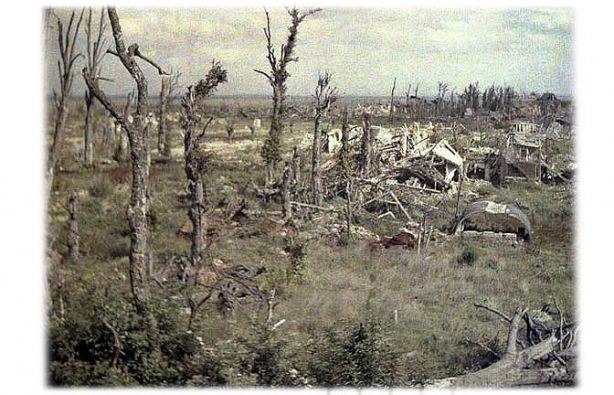
Attached are some of moving observations penned by the Editor of The Independent, Hamilton Holt (1871 – 1951) when he toured Seicheprey, Cantigny, Chateau Thierry, St Mihiel and the Argonne battle fields — which were the five battlefields where General Pershing chose to launch operations in the European war against Imperial Germany. There is one winsome photograph of the Aisne-Marne Cemetery as it appeared shortly after the conflict.


Within a year Holt would change his mind about the war as well as the treaty signed at Versailles.

military influence on men s fashion 1917
1918, Magazine Advertisement, Trench Coats

Trench Coats on Madison Avenue
(Magazine Advertisement, 1918)

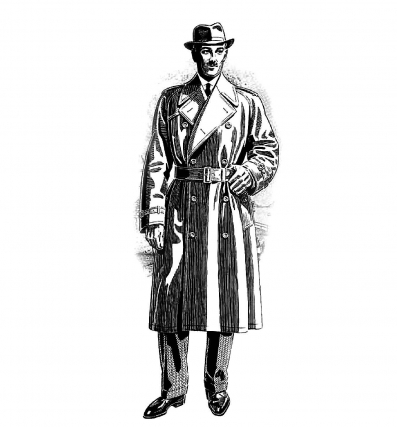
The trench coat has become such a mainstay in the male wardrobe throughout the years it is difficult to imagine a time when the great shopping boulevards were without them. Perhaps the first men’s shops to offer them in the U.S. were on New York’s Madison Avenue: F.R. Tripler and Brooks Brothers, where the garments can still be purchased to this day. The attached vintage print ad was commissioned by F.R. Trippler for a gabardine trench coat as well as the sale of private-purchase flexible protective body armor. The body armor appears to have been modeled after a German design. The reader may be disappointed to learn that the Madison Avenue boutiques no longer offer body armor.

Advertisement

Use shortcode [oma_ad position="summary_top"] (or other position) in your theme or widgets to display OMA Promotions here.

1919, La Nazione, Men's Fashion

The Dress Reform Movement
(La Nazione, 1919)

In the early parts of the 20th Century serious attention had been paid in some quarters to what was called dress reform. An article from the August 14, 1929 magazine The Nation pointed out that

The Life Extension Institute weighed the street clothing of the women in New York City last June. The clothing of the women…averaged two pounds, ten ounces, while that of the men was was eight pounds, six ounces.


The Italian Futurist Ernesto Thayaht offered his remedy for the fashion maladies of the day with the design of a one piece garment that many Americans chose to see simply as pajamas. Needless to say, it didn’t catch on.


Click here to read a 1929 article about the Dress-Reform Movement.
Click here to read an editorial about the need for reform in men’s attire.
Read about men’s fashions from 1937 and the break-through in color that had been so sorely needed.

Anticipating the War with Japan (The Saturday Review, 1925)
1925, The Saturday Review

Anticipating the War with Japan
(The Saturday Review, 1925)

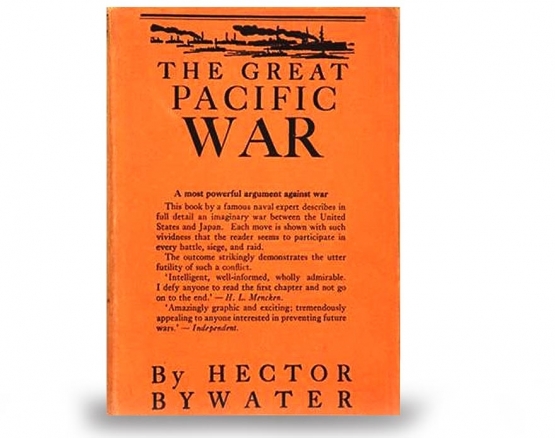
The Great Pacific Warstyle=border:none
was one of the truly remarkable books to hit the shops in 1925; the problem was that this would not be recognized until at least 1944. Unlike the unfortunate writers charged with the task of reviewing the novel, the author, Hector C. Bywater (1884 – 1940), was something of a clairvoyant, and was able to spell out how the war between Japan and the United States would unfold; the contested islands and the American victory. He wrote that the war would commence with a Japanese surprise assault, he recognized the importance that naval aviation would play and he predicted the Kamikaze attacks. Some elements of the war he did not predict, such as Hiroshima, but in 1945, after the smoke had cleared and the bodies were buried, many were amazed to pick the book up and read how much he got right.

Troop Ship TUSCANIA torpedoed 1918 | Soldiers of the 32nd Division Torpedoed 1918
1919, Stars and Stripes Archive, The Stars and Stripes

TUSCANIA Torpedoed
(The Stars and Stripes, 1919)

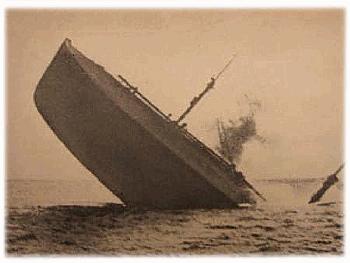
On February 5, 1918 the Cunard passenger liner, Tuscania (having been pressed into service as a troop ship) was sent to the bottom of the sea by a German U-boat; well over one thousand, five hundred Doughboys from various units were drowned, as were her British crew which was numbered over three hundred. On the first anniversary a survivor of the attack wrote to the editors of the Stars and Stripes.

Advertisement

Use shortcode [oma_ad position="summary_top"] (or other position) in your theme or widgets to display OMA Promotions here.

Baseball in WW1 | Baseball as a Metaphor for War
1918, Stars and Stripes Archive, The Stars and Stripes

Baseball as Metaphor for War
(The Stars and Stripes, 1918)

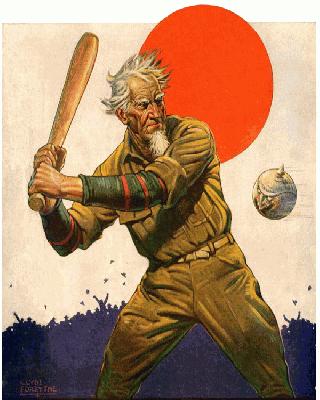
In one of the first issues of the Stars & Stripes, it was decided to mark the historic occasion of the American arrival on the World War One front line with the always reliable baseball comparison. Printed beneath a headline that clearly implied that the war itself was actually the World Series sat one of the worst poems to ever appear on the front page of any newspaper:

The Boches claim the Umpire is a sidin’ with their nine,

But we are not the boobs to fall for such a phony line;

We know the game is fair and square, decision on the level;

The only boost the Kaiser gets is from his pal the Devil…

The Loud Noises of N.Y. (Literary Digest, 1929)
1929, Old New York History, The Literary Digest

The Loud Noises of N.Y.
(Literary Digest, 1929)

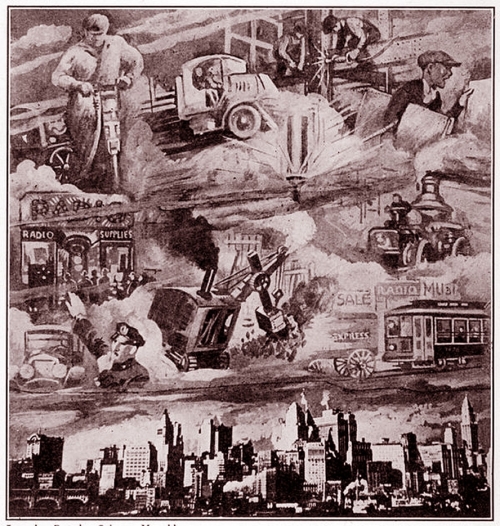
The unsettling noises of New York City are as well-known to the New Yorkers of today as they were to the New Yorkers of yore:

Soldiers get war shell-shock; New Yorkers get peace shell-shock, a condition of nerves less obvious, but more insidious. It makes the New Yorker smoke more cigarettes than any one else in the world…it keeps the speakeasies open, it builds skyscrapers and eggs him on to splendid achievement, or shatters his morale…

Advertisement

Use shortcode [oma_ad position="summary_top"] (or other position) in your theme or widgets to display OMA Promotions here.

Scroll to Top