Author name: editor

summary and book review of ALL QUIET on the WESTERN FRONT by Erich Maria Remarqu
1929, The Bookman, Twentieth Century Writers

ALL QUIET on the WESTERN FRONT
(The Bookman, 1929)

All Quiet On The Western Front by Erich Maria Remarque topped the U.S. bestseller list for all of 1929 and it was due in no small part to enthusiastic book reviews like the one we’ve posted here that must have numbered in the thousands throughout all of North America:

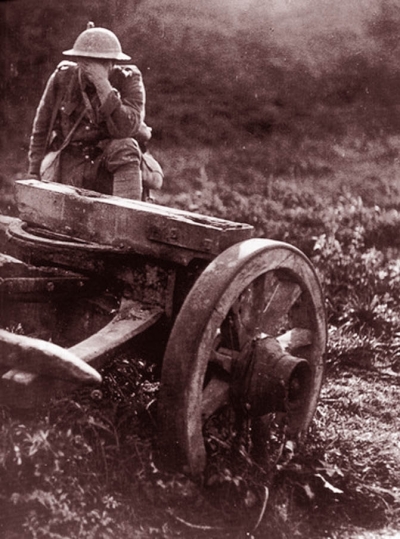
Here is a book about the war of such extraordinary purity and force that, reading it, one seems actually never to have read of the wear before. Numberless books have been written that present the stark, physical horrors of the war in quite as full detail as All Quiet on the Western Front, but their effects have been ified by one’s perception of the intent to shock. Many others have given us a more complete, more literary rendition of war as it strikes full upon the nerves of sensitive and intelligent men. Nothing could be less academic than Herr Remarque’s book; but nothing could be more vivid.


Is your name Anderson?


From Amazon: All Quiet on the Western Frontstyle=border:none

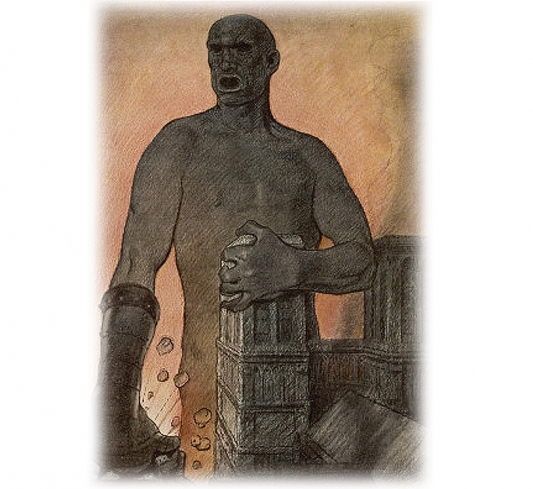
Rise of Benito Mussolini 1923 |
1923, Benito Mussolini, The American Legion Weekly

Benito Mussolini And His Followers
(American Legion Weekly, 1923)

A 1923 article about the earliest days of Mussolini and the Italian Black Shirts; their discomfort with neighboring Yugoslavia, their love of the Italian poet Gabriele D’Annunzio (1863 – 1938) and their post-war struggle against the Italian Communists:

When the Communists virtually ruled over Italy in 1920 and 1921, they set up a detestable tyranny. Railways could not carry troops. Officers were forbidden wear sidearms, and men with war medals were spat on and beaten.


Mussolini changed all that.


You can read about his violent death here…

Advertisement

Use shortcode [oma_ad position="summary_top"] (or other position) in your theme or widgets to display OMA Promotions here.

The 1920s Craze for Flagpole Sitting (Literary Digest, 1929)
1929, Miscellaneous, The Literary Digest

The 1920s Craze for Flagpole Sitting
(Literary Digest, 1929)

Here is a 1929 magazine article that makes clear for us in the digital age just how appealing the fad of flag pole sitting was to the YouTube-starved teenagers of the Twenties. This article tells the tale of Avon Azie Foreman and Jimmy Jones, two courageous flag pole sitting sons of Baltimore who inspired their feminine Maryland counterparts, Ruth McCruden and Dorthy Staylor, to ascend to perch. This journalist was probably not alone in believing that anyone who was capable of placing their keister where the flag should be was a rare and distinct breed of individual – possessing a faultless character and was destined for great things in the future.


Good; they will need such sturdy souls in two months – when the bottom falls out of the N.Y. Stock Exchange and the Great Depression begins – you can read about that here…

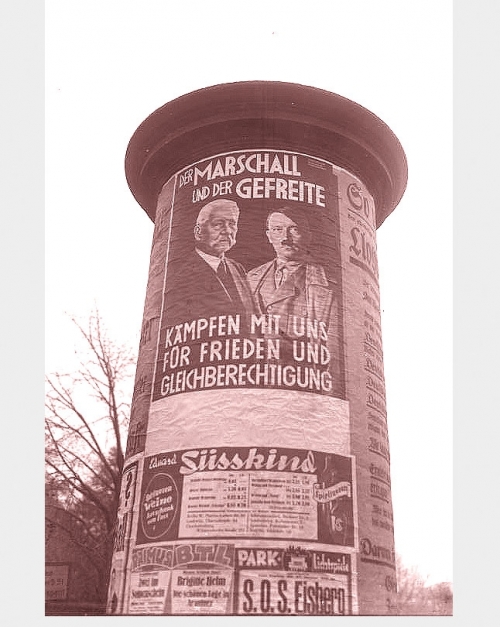
1932 Lausanne Conference and German Politics | 1932 Political Climate in Germany | 1932 Economic Outlook in Europe
1932, New Outlook Magazine, Versailles Treaty

The Political Climate in Germany
(New Outlook Magazine, 1932

By the early Thirties the anointed of Europe realized that there would be no economic recovery for the continent if Germany was not a part of it. With this in mind, a delegation convened in Lausanne, Switzerland where it was decided by representatives from France, Britain and Germany that the reparation payments imposed upon the defeated countries by the Treaty of Versailles would be suspended. Hitler’s followers were of the mind that Germany should not have signed the agreement unless the war-guilt clause was removed from the Versailles Treaty. This article addresses the general political climate in Germany as 1932 came to a close.
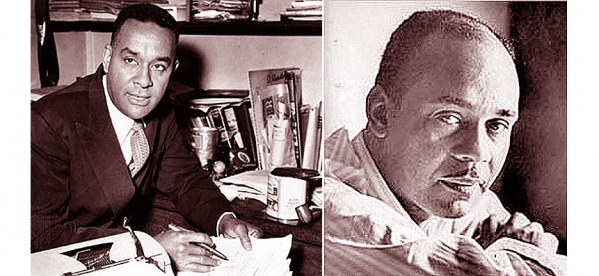
Ralph Ellison on Richard Wright Among Others... (Direction Magazine, 1941)
1941, Direction Magazine, Twentieth Century Writers

Ralph Ellison on Richard Wright Among Others…
(Direction Magazine, 1941)

Printed just twelve years before he would receive a National Book Award for his tour de force, The Invisible Man, celebrated wordsmith Ralph Ellison (1914 – 1994) wrote this review of Negro fiction for a short-lived but informed arts magazine in which he rolled out some deep thoughts regarding Richard Wright, Langston Hughes, Arna Bontemps, Zora Neil Hurston and assorted other ink-slingers of African descent:

It is no accident that the two most advanced Negro writers, Langston Hughes and Richard Wright, have been men who have enjoyed freedom of association with advanced white writers; nor is it accidental that they have had the greatest effect upon Negro life.


Click here to read a 1929 book review by Langston Hughes.


CLICK HERE to read about African-Americans during the Great Depression.

Advertisement

Use shortcode [oma_ad position="summary_top"] (or other position) in your theme or widgets to display OMA Promotions here.

The Effects of Unrestricted Submarine Warfare (The Atlanta Georgian, 1917)
1917, The Atlanta Georgian, World War One

The Effects of Unrestricted Submarine Warfare
(The Atlanta Georgian, 1917)

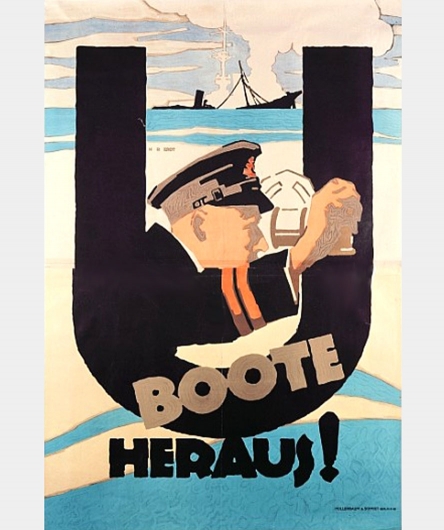
The alarming rise in shipping losses due to the increased presence of German submarines (as foretold in the Zimmermann telegram) had made the American population sit up and take notice in a way that the war had never done before. The attached four notices were printed on the front pages of an Atlanta paper one month prior to the U.S. Congress’ declaration of war; each one pertains to military recruiting or the need for military equipment.


The widening of hostilities also served to outrage the Latin American republics: Guatemala would soon break off all relations with Germany and Brazil would declare war in October of that year.


Click here to read about the new rules for warfare that were written as a result of the First World War – none of them pertain to the use of poison gas or submarines.

W.W. I Zeppelin Raids on London (NY Times, 1915)
1915, World War One

W.W. I Zeppelin Raids on London
(NY Times, 1915)

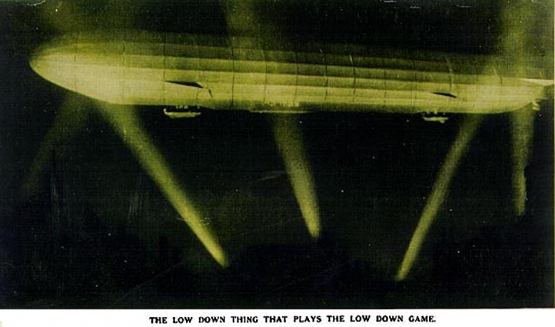
Printed during the seventh month of the First World War, this is a collection of assorted musings that first appeared in The London Times involving what was known for sure regarding the subject of German zeppelins. In an attempt to understand the true speed, range and fuel capacity of a zeppelin, the author refers to a number of previous voyages that the airships were known to have made during the pre-war years. Concerns regarding the amount of ammunition that could have been carried is also mentioned.

Why Was World War I So Bad | Anti-WW I Editorial | On A Second Rate War American Mercury January 1924
1924, The American Mercury, World War One

It was a Second Rate War
(The American Mercury, 1924)

In the conflict which some still persist in calling the Great War, though it was great only in size, there was so much jumble and muddle and half-hearted experiment and so little visible military skill and ingenuity that a far-seeing and keen-thinking British colonel has declared that if the nations of the earth will only use their brains, the inevitable next war will show combat so transformed and reformed that the struggle of 1914 – 1918 will seem, by comparison, little more than a clash ‘between barbaric hordes…’


Click here to read about the new rules for warfare that were written as a result of the First World War – none of them pertain to the use of poison gas or submarines.

Advertisement

Use shortcode [oma_ad position="summary_top"] (or other position) in your theme or widgets to display OMA Promotions here.

Submarine Warfare: The First Seven Months (NY Times, 1915)
1915, World War One

Submarine Warfare: The First Seven Months
(NY Times, 1915)

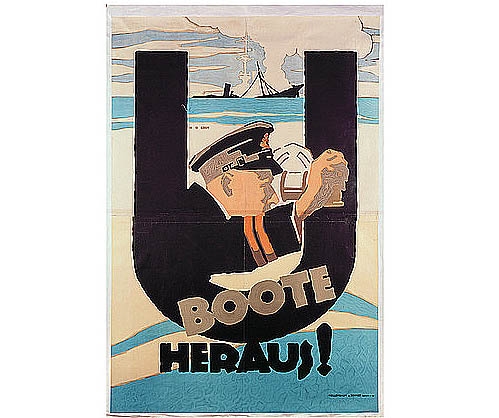
Information released from the British Admiralty concerning the number of British merchant and fishing vessels lost to German U-boat attacks during the first seven months of the war. The article names eight non-military ships sunk during March 1915. In addition, the Admiralty also stated the total number of British merchant and fishing vessels lost through German naval attacks from the start of the war through March 10, 1915.


Click here to read about the new rules for warfare that were written as a result of the First World War – none of them pertain to the use of poison gas or submarines.

The Future of War and Chemical Weapons (Current Opinion, 1921)
1921, Current Opinion Magazine, Poison Gas

The Future of War and Chemical Weapons
(Current Opinion, 1921)

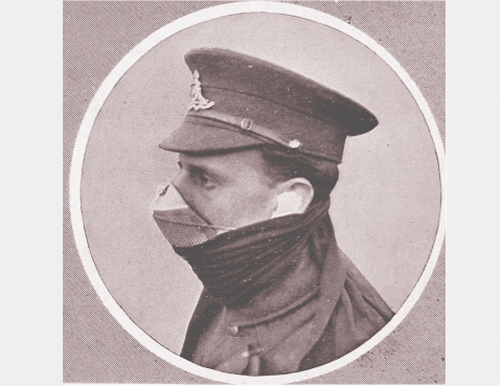
Read this article and you will soon get a sense of what busy bees they must have been over at the United States Department of War within that year and a half following the close of World War One. General Amos A. Fries and the lads attached to the Chemical Warfare Service had been applying much cranium power to all matters involving mustard gas, tear gas, Lewisite and White Phosphorus. Much of the post-war dollar was devoted to making ships impervious to gas attacks, masks and uniforms suited to withstand nerve agents and offensive aircraft capable of deploying chemical bombs.

As to the effectiveness of phosphorous and thermit against machine-gun nests, there is no recorded instance where our gas troops failed to silence German machine-gun nests once they were located…In the next war, no matter how soon it may occur, a deadly composition called Lewisite will be used with far more devastating effect than that of mustard gas.

The Blessings of Poison Gas (Literary Digest, 1927)
1927, Poison Gas, The Literary Digest

The Blessings of Poison Gas
(Literary Digest, 1927)

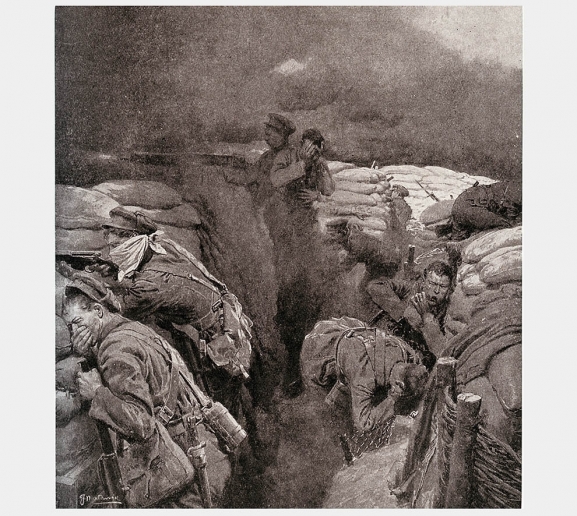
Having examined the collected data from the First World War, scientists and soldiers alike were drawing surprising conclusions as to the inefficiency of chemical agents in warfare. No doubt, it was articles such as this that lead to the decision not to use gas in the Second World War:

Poisonous gas as used in warfare is ‘a blessing, not a curse,’ and makes for the future security and peace of the world’, declares J.E. Mills, of the U.S. Chemical Warfare Service

…Theoretically one ton of mustard gas could kill 45,000,000 men. Actually one ton of mustard gas as used at the front caused about twenty-nine casualties, of which one died.

Advertisement

Use shortcode [oma_ad position="summary_top"] (or other position) in your theme or widgets to display OMA Promotions here.

Reconsidering Poison Gas as a Weapon (Current Opinion, 1925)
1925, Current Opinion Magazine, Poison Gas

Reconsidering Poison Gas as a Weapon
(Current Opinion, 1925)

An article about J.B.S. Haldane (1892 – 1964), formerly a British combatant of the Great War who became a chemist (and pioneer geneticist) during the inter-war years studying not merely the effectiveness of poison gas but the question as to whether the weapon was more humane than bullets and artillery shells:

The future lies with poisonous smoke made from arsenic compounds and with mustard gas. Of the latter, he says, it kills one man for every forty it puts out of action, whereas, shells kill one for every three.


His musings concerning atomic energy are referred to as are some of his quack-theories regarding the effects of gas warfare on people with dark skin.

Susan B Anthony Admired Feminist Leader 1894 | Phrenologist Edgar C Beall | The Phonological Journal June 1894
1894, The Literary Digest, Women's Suffrage

The Mind of Susan B. Anthony
(Literary Digest, 1894)

For those Victorian phrenologists who made it their life’s work to map out the brains of American Suffragettes, Susan B. Anthony proved to have been the least complicated:

This is a brain in which there was no waste – no superfluous expenditure. This is a woman with a purpose from which she never swerves.


Click here to read about that moment in 1920 when American Women attained the vote.

Modern Women for a Modern Age (Vanity Fair, 1921)
1921, Vanity Fair Hall of Fame, Women's Suffrage

Modern Women for a Modern Age
(Vanity Fair, 1921)

Contained within the confines of the attached PDF is an excerpt from the review of the New York production of the 1921 play, A Bill of Divorcement by Clemence Dane (born Winifred Ashton 1888-1965) – with much enthusiasm, the reviewer wrote:

We know of no better expression of the creed of the new generation than that which Clemence Dane has drawn up….

What followed was a very short soliloquy which beautifully summed up not only the philosophy of the modern woman, but the philosophy of much the Twentieth Century.

Advertisement

Use shortcode [oma_ad position="summary_top"] (or other position) in your theme or widgets to display OMA Promotions here.

Two Million Dead Men and the Advance of Feminism (Delineator Magazine, 1921)
1921, The Delineator Magazine, Women's Suffrage

Two Million Dead Men and the Advance of Feminism
(Delineator Magazine, 1921)

What was keenly felt in the Great Britain of the 1920s was the distinct absence of two million men as a result of the First World War. This short article points out clearly that this was fertile ground for suffrage advancements, as well as any number of other social changes.

England is the great human laboratory of our generation – England with her surplus of two million women, her restless, well-equipped, unsatisfied women.

Dr. Anna Howard Shaw (Literary Digest, 1913)
1913, The Literary Digest, Women's Suffrage

Dr. Anna Howard Shaw
(Literary Digest, 1913)

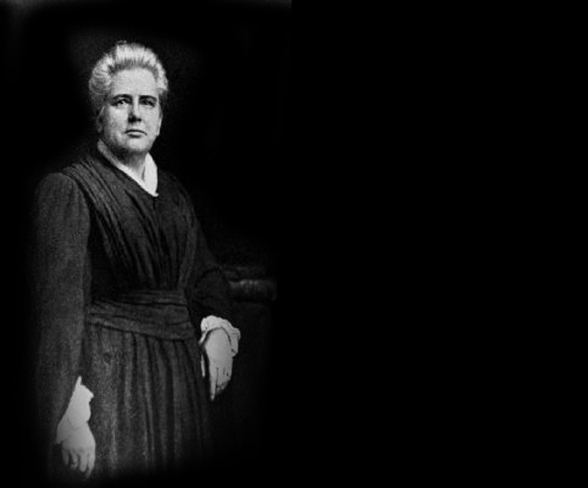
A 1913 profile of Dr. Anna Howard Shaw (1847 – 1919), president of the National American Woman Suffrage Association and leader in their struggle to secure American women their right to vote. This article primarily deals with her meeting with President Woodrow Wilson and his inability to commit to the question of women’s suffrage.

Having helped to fight the good fight, Dr. Shaw died in 1919, weeks after the U.S. Congress voted to ratify the 19th Amendment.

Advertisement

Use shortcode [oma_ad position="summary_top"] (or other position) in your theme or widgets to display OMA Promotions here.

Scroll to Top