









47 Magazine Articles
Click Magazine Articles
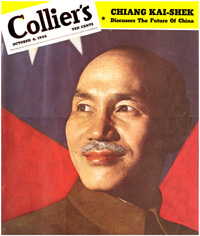
Collier's Magazine Articles
Confederate Veteran Magazine Articles
Confidential Magazine Articles
Creative Art Magazine Articles
Current Literature Magazine Articles
Direction Magazine Articles
Film Daily Magazine Articles
Freedom's Triumph Articles
Harper's Bazaar Magazine Articles
Harper's Weekly Articles
Hearst's Sunday American Articles
Ken Magazine Articles
La Baionnette Articles
Leslie's Magazine Articles
Liberty Magazine Articles
Life Magazine Articles
Men's Wear Magazine Articles
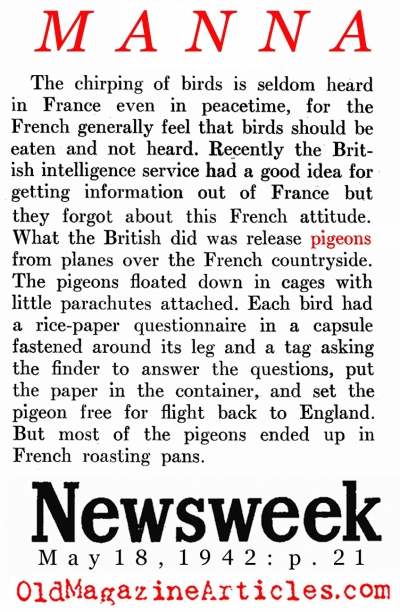
Newsweek Articles
Outing Magazine Articles
Outlook Magazine Articles
People Today Magazine Articles
Photoplay Magazine Articles
Pic Magazine Articles
PM Tabloid Articles
Punch Magazine Articles
Rob Wagner's Script Magazine Articles
Scribner's Magazine Articles
Sea Power Magazine Articles
Stage Magazine Articles
The American Legion Monthly Articles
The American Legion Weekly Articles
The Atlantic Monthly Articles
The Dial Magazine Articles
The Film Spectator Magazine Articles
The Flapper Magazine Articles
The National Park Service Articles
The New Republic Articles
The New York Times Articles
The North American Review Articles
The Saturday Evening Post Articles
The Saturday Review Articles
The Smart Set Articles
Theatre Arts Magazine Articles
Touchstone Magazine Articles
Trench Warfare Articles
Vanity Fair Magazine Articles
Vogue Magazine Articles

Animals (WWII)

The Pigeoneers of the
U.S. Army Signal Corps

• Click Magazine, 1943 •


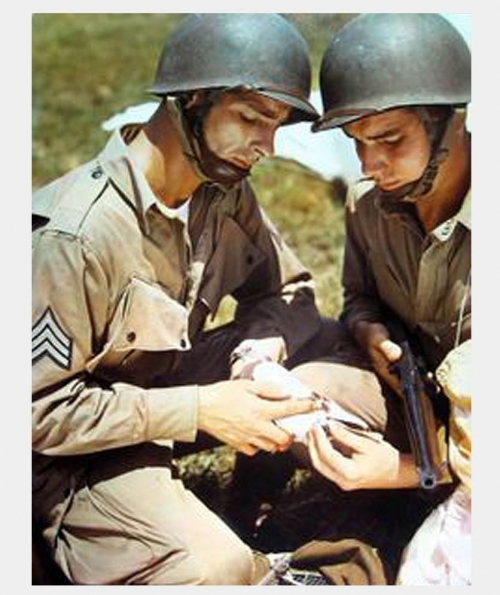
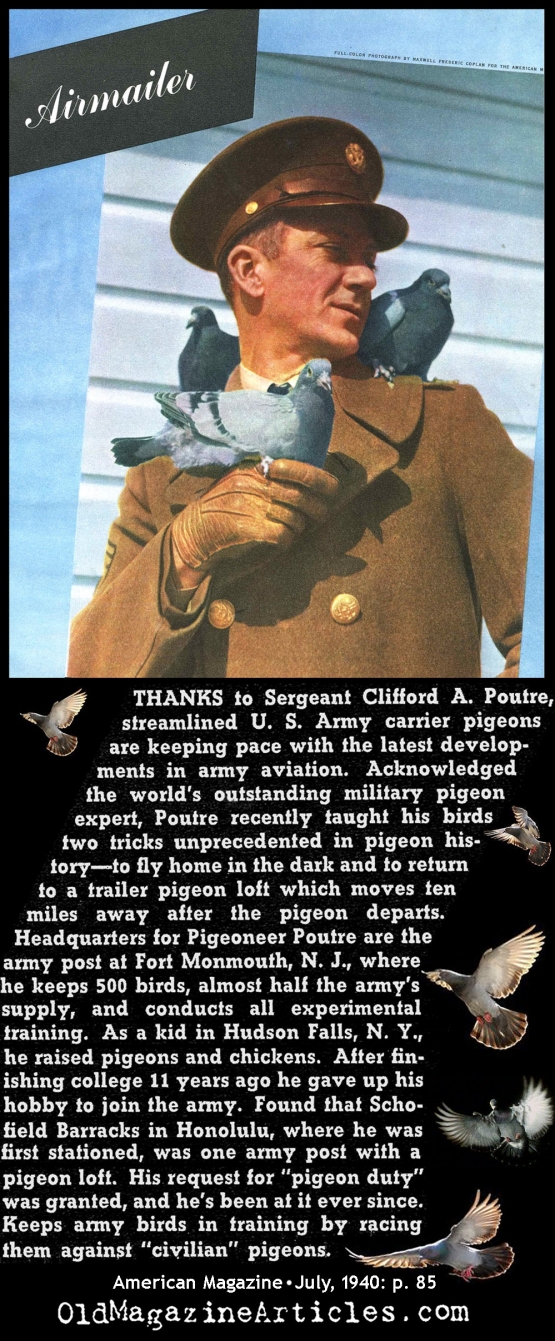
Inasmuch as historians may like to refer to World War II as “the first hi-tech war”, it must be remembered that some of the most ancient tools were still put to use with the greatest efficiency. The attached article gives a very brief outline concerning the W.W. II use of carrier pigeons and the goings on at Camp Crowder, Missouri, where these birds were trained. Throughout the entire course of the war, 50,000 carrier pigeons were trained by the U.S. Army.

“Since 1400 B.C. these birds have acted as couriers; they are the oldest instruments of war still in use. Although they form only a small part of our tremendous Signal Corps resources, the Army maintains a corps of expert pigeoneers who have rendered their birds, by scientific training and breeding, ten percent stronger than those used in World War One.”


You might also enjoy reading this article about the carrier pigeons of W.W. I.


Read U.S. Army Carrier Pigeons of World War II<br>(Click Magazine, 1943) for Free
pigeoneers of the US ARMY during WW2US ARMY pigeon use during world war twocarrier pigeon article 1943carrier pigeons at sea during WW2radio silence maintained by use of carrier pigeons 1943WW2 radio silence maintained by use of carrier pigeonsimprovement in carrier pigeon care between world wars one and two articleUS ARMY carrier pigeon headquarters Camp Crowder Missouri 1943photo of Camp Crowder Missouri pigeon facilities 1943

The Pigeoneers of the U.S. Army Signal Corps

The Pigeoneers of the U.S. Army Signal Corps

The Pigeoneers of the U.S. Army Signal Corps

The Pigeoneers of the U.S. Army Signal Corps

pigeoneers of the US ARMY during WW2US ARMY pigeon use during world war twocarrier pigeon article 1943carrier pigeons at sea during WW2radio silence maintained by use of carrier pigeons 1943WW2 radio silence maintained by use of carrier pigeonsimprovement in carrier pigeon care between world wars one and two articleUS ARMY carrier pigeon headquarters Camp Crowder Missouri 1943photo of Camp Crowder Missouri pigeon facilities 1943
Scroll to Top