





















47 Magazine Articles
Click Magazine Articles
Collier's Magazine Articles
Confederate Veteran Magazine Articles
Confidential Magazine Articles
Creative Art Magazine Articles
Current Literature Magazine Articles
Direction Magazine Articles
Film Daily Magazine Articles
Freedom's Triumph Articles
G.I. Joe Magazine Articles
Harper's Bazaar Magazine Articles
Harper's Weekly Articles
Hearst's Sunday American Articles
Ken Magazine Articles
La Baionnette Articles
Leslie's Magazine Articles
Liberty Magazine Articles
Life Magazine Articles
Men's Wear Magazine Articles
Newsweek Articles
Outing Magazine Articles
Outlook Magazine Articles
People Today Magazine Articles
Photoplay Magazine Articles
Pic Magazine Articles
PM Tabloid Articles
Punch Magazine Articles
Rob Wagner's Script Magazine Articles
Scribner's Magazine Articles
Sea Power Magazine Articles
Stage Magazine Articles
The American Legion Monthly Articles
The American Legion Weekly Articles
The Atlantic Monthly Articles
The Dial Magazine Articles
The Film Spectator Magazine Articles
The Flapper Magazine Articles
The National Park Service Articles
The New Republic Articles
The New York Times Articles
The North American Review Articles
The Saturday Evening Post Articles
The Saturday Review Articles
The Smart Set Articles
Theatre Arts Magazine Articles
Touchstone Magazine Articles
Trench Warfare Articles
Vanity Fair Magazine Articles
Vogue Magazine Articles

War at Sea

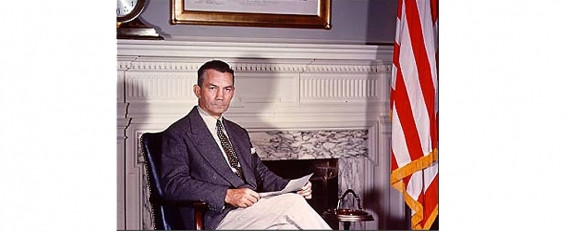
James Forrestal

• Collier's Magazine, 1944 •


It was a clear day on a fast track for James Forrestal (1892 – 1949) when the U.S. Congress passed the Two Ocean Navy Bill during the Summer of 1940. At that time, both Europe and Asia were engulfed in war and it seemed certain, to all thinking souls, that the U.S was not going to get out of it. Serving as the Under Secretary of the Navy, with Frank Knox (1874 – 1944) presiding as his senior, Forrestal was charged with the duty of building the U.S. Navy into something far more dangerous than it already was – and he did:

“[The U.S. Congress] spent ninety-four billion on it, but they got value received. In 1940 we only had three hundred and eighty-five combat ship. The last available figures show that Knox and Forrestal added nine battleships, nineteen first-line aircraft carriers, twenty cruisers, more than five hundred destroyers and destroyer escorts, more than one hundred submarines, and literally thousands of auxiliary ships, landing craft, patrol boats, mine layers and sweepers. When this team started work the Navy had a mere 2, 112 aircraft of all types. Today our Navy has 42,600 planes, more than half of which are combat aircraft.”

Forrestal did his job well. In 1947, when the name of the Department of War was changed to the Department of Defense, Truman named him as its first secretary. In 1954 The U.S. Navy honored his memory by launching the U.S.S Forrestal, which was the largest aircraft carrier ever built up to that time.

Navy Secretary Frank Knox gushes over the two-ocean Navy in this article.

Read an article about the many faults of the German Navy during the Second World War…
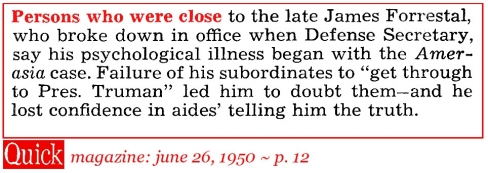
Read James Forrestal: Secretary of the Navy<br>(Collier’s Magazine, 1944) for Free
james vincent forrestaljim forrestalsecretary of defense james forrestalforrestal jamesunited states department of the navy 1944ww2 navy department of defensejames v. forrestalJames Forrestal wwii secretary of the US NavyUS Navy Secretary James Forrestalwho was James ForrestalFDRs secretary of Navy James Forrestalwho was FDRs secretary of the Navycivilian leader in charge of US Navy during wwii

James Forrestal

James Forrestal

James Forrestal

James Forrestal

James Forrestal

James Forrestal

James Forrestal

james vincent forrestaljim forrestalsecretary of defense james forrestalforrestal jamesunited states department of the navy 1944ww2 navy department of defensejames v. forrestalJames Forrestal wwii secretary of the US NavyUS Navy Secretary James Forrestalwho was James ForrestalFDRs secretary of Navy James Forrestalwho was FDRs secretary of the Navycivilian leader in charge of US Navy during wwii
Scroll to Top