










47 Magazine Articles
Click Magazine Articles
Collier's Magazine Articles
Confederate Veteran Magazine Articles
Confidential Magazine Articles
Creative Art Magazine Articles
Current Literature Magazine Articles
Direction Magazine Articles
Film Daily Magazine Articles
Freedom's Triumph Articles
G.I. Joe Magazine Articles
Harper's Bazaar Magazine Articles
Harper's Weekly Articles
Hearst's Sunday American Articles
Ken Magazine Articles
La Baionnette Articles
Leslie's Magazine Articles
Liberty Magazine Articles
Life Magazine Articles
Men's Wear Magazine Articles
Newsweek Articles
Outing Magazine Articles
Outlook Magazine Articles
People Today Magazine Articles
Photoplay Magazine Articles
Pic Magazine Articles
PM Tabloid Articles
Punch Magazine Articles
Rob Wagner's Script Magazine Articles
Scribner's Magazine Articles
Sea Power Magazine Articles
Stage Magazine Articles
The American Legion Monthly Articles
The American Legion Weekly Articles
The Atlantic Monthly Articles
The Dial Magazine Articles
The Film Spectator Magazine Articles
The Flapper Magazine Articles
The National Park Service Articles
The New Republic Articles
The New York Times Articles
The North American Review Articles
The Saturday Evening Post Articles
The Saturday Review Articles
The Smart Set Articles
Theatre Arts Magazine Articles
Touchstone Magazine Articles
Trench Warfare Articles
Vanity Fair Magazine Articles
Vogue Magazine Articles

Censorship

Looking for Spies Among the Doughboys

• Stars and Stripes, 1919 •


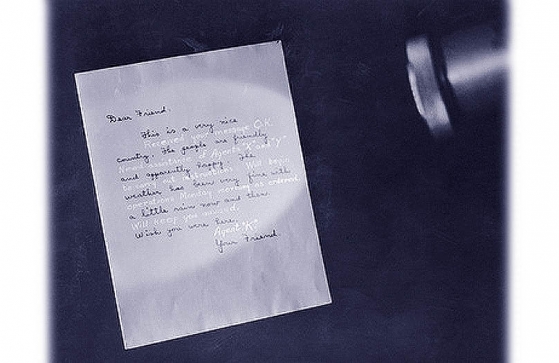
Buried on page eight of a post-war issue of The Stars & Stripes was this column reporting on the wartime activities of the AEF censors in France – men assigned to not simply censor all outgoing mail from Europe, but to also chemically test each one for traces of invisible ink.


Of the 50,700 letters that the Doughboys wrote, only one was found to have contained information useful to the Prussians and transcribed with invisible ink. No information was given as to who he was or what became of him.


One of the many innovations attributed to the creative frenzy generated by the First World War was the discovery of a low-budget source for invisible ink in the form of seman. The director of British Intelligence during the war, Mansfield Smith-Cumming, KCMG, CB (1859 – 1923), is credited with this discovery; he is remembered for standing before his agents and declaring: “Every man [is] his own stylo.”


Click here to read an article the post office censorship duing the Second World War.


Read about American censorship in Occupied-Japan

Read Censoring Letters and Looking for Spies<br>(Stars and Stripes, 1919) for Free
human seman used for ww1 cryptologychemicals used to detect ww1 invisible inkww1 counter-intelligence operatives used chemicals to catch spiesuse of chemicals by ww1 counter-intelligence agents to catch enemy spiesww1 doughboy spyww1 doughboy spiesww1 invisible ink usageww1 use of invisible inkchemicals used to detect invisible ink 1918AEF censorshipAEF base censors 1918biofluids used in ww1

Looking for Spies Among the Doughboys

human seman used for ww1 cryptologychemicals used to detect ww1 invisible inkww1 counter-intelligence operatives used chemicals to catch spiesuse of chemicals by ww1 counter-intelligence agents to catch enemy spiesww1 doughboy spyww1 doughboy spiesww1 invisible ink usageww1 use of invisible inkchemicals used to detect invisible ink 1918AEF censorshipAEF base censors 1918biofluids used in ww1
Scroll to Top