












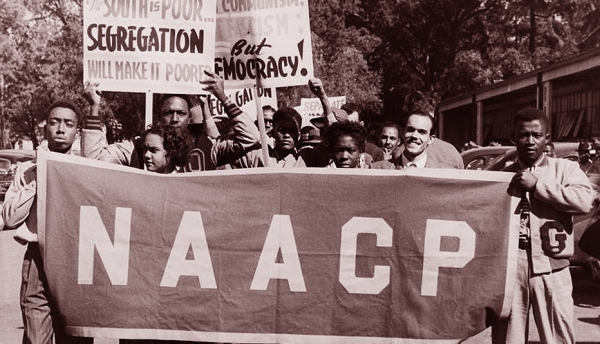
To be sure, the Confederate States of America (1861 – 1865) left a very poor after taste in the collective mouths of many Northerners long after the fighting had stopped. This bitterness was intensified to a higher degree when Northerners considered that even as late as 1948, the entire region known as “Dixie” was tainted by lynchings and other assorted acts of Babylonian justice. The article on the right was written in the New York offices of Commonweal Magazine, where the Northern editors believed it to be highly improbable that President Truman’s Committee on Civil Rights was ever likely to recognize any constitutional freedoms were being denied on racial grounds.
Here are the opening lines of President Truman’s Commission on Civil Rights – To Secure These Rights (October 29, 1947):
“In a democracy, each individual must have freedom to choose his friends and to control the pattern of his personal and family life. But we see nothing inconsistent between this freedom and a recognition of the truth that democracy also means that in going to school, working, participating in the political process, serving in the armed forces, enjoying government services in such fields and health and recreation, making use of transportation and other public accommodation facilities, and living in specific communities and neighborhoods, distinctions of race, color and creed have no place.”
More information on this committee can be found on the Truman Library website.
Four years later an article was written about the gratitude many African-Americans felt toward President Truman and his stand on civil rights – read it here…
Click here to read a history of African-Americans between the years 1619 through 1939.

![President Truman's[BR] Civil Rights Committee](https://oldmagazinearticles.com/pdf/TRUMAN-Civil-Rights_0001.jpg)