










47 Magazine Articles
Click Magazine Articles
Collier's Magazine Articles
Confederate Veteran Magazine Articles
Confidential Magazine Articles
Creative Art Magazine Articles
Current Literature Magazine Articles
Direction Magazine Articles
Film Daily Magazine Articles
Freedom's Triumph Articles
G.I. Joe Magazine Articles
Harper's Bazaar Magazine Articles
Harper's Weekly Articles
Hearst's Sunday American Articles
Ken Magazine Articles
La Baionnette Articles
Leslie's Magazine Articles
Liberty Magazine Articles
Life Magazine Articles
Men's Wear Magazine Articles
Newsweek Articles
Outing Magazine Articles
Outlook Magazine Articles
People Today Magazine Articles
Photoplay Magazine Articles
Pic Magazine Articles
PM Tabloid Articles
Punch Magazine Articles
Rob Wagner's Script Magazine Articles
Scribner's Magazine Articles
Sea Power Magazine Articles
Stage Magazine Articles
The American Legion Monthly Articles
The American Legion Weekly Articles
The Atlantic Monthly Articles
The Dial Magazine Articles
The Film Spectator Magazine Articles
The Flapper Magazine Articles
The National Park Service Articles
The New Republic Articles
The New York Times Articles
The North American Review Articles
The Saturday Evening Post Articles
The Saturday Review Articles
The Smart Set Articles
Theatre Arts Magazine Articles
Touchstone Magazine Articles
Trench Warfare Articles
Vanity Fair Magazine Articles
Vogue Magazine Articles

Post-War Japan

Japanese Ultra-Nationalists in Occupied Japan

• Pathfinder Magazine, 1949 •


The word “chauvinist” takes its origin from from a hard-charging Frenchman Nicolas Chauvin – who was devoted to Napoleon long after he was out of power and proving to be an increasingly irrelevant element within French politics. Upon reading the attached article, we were thinking that perhaps the Japanese lingo has a similar term based on the outdated creeds of Masaharu Kageyama (1910 – 1979)? For as you will find, Kageyama, and his fellow-travelers, was a growing factor in the political landscape of post-war Japan.

Kageyama was something a flat-Earther in his time, choosing the road of the Japanese Nationalist, he held that Emperor Hirohito was indeed divine and the Fascist vision of an “East-Asia Co-Prosperity Sphere” was achievable, even in 1949.

“FEUDALIST: He keeps a staff of rough-looking, bare-footed young men, who wear long, old-fashioned Japanese skirts. They are his ‘kobuns‘ (serfs) and he is their ‘gyabun‘ (master), in a sort of relationship that is a throw-back to the days of Feudal Japan.”

Quaint as all that seems, Masaharu Kageyama had a following and was closely watched by General MacArthur and his lieutenants.

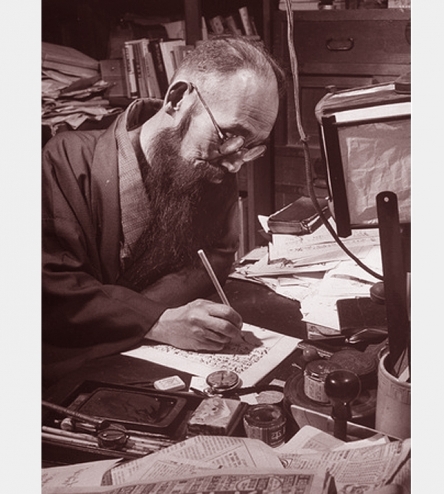
The bookworm pictured above was Soken Fukuda, another Japanese nationalist who was cut from the same cloth as Kageyama.

Click here to read about August 28, 1945 – the day the American occupation began.
Read Japanese Nationalists<br>(Pathfinder Magazine, 1949) for Free
 japanese radicals 1945radicalism is post-war japanjapanese ultra-patriots Soken Fukuda 1949Greater East-Asia Co-Prosperity Sphere article 1949

Japanese Ultra-Nationalists in Occupied Japan

 japanese radicals 1945radicalism is post-war japanjapanese ultra-patriots Soken Fukuda 1949Greater East-Asia Co-Prosperity Sphere article 1949
Scroll to Top