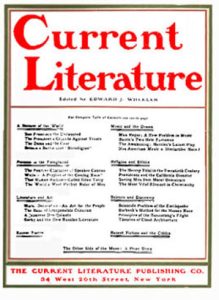
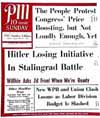
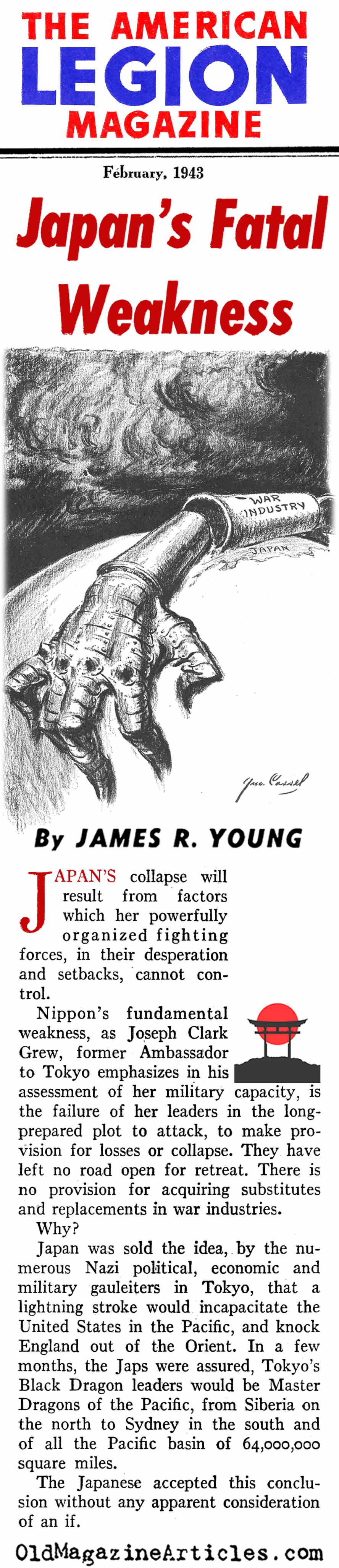
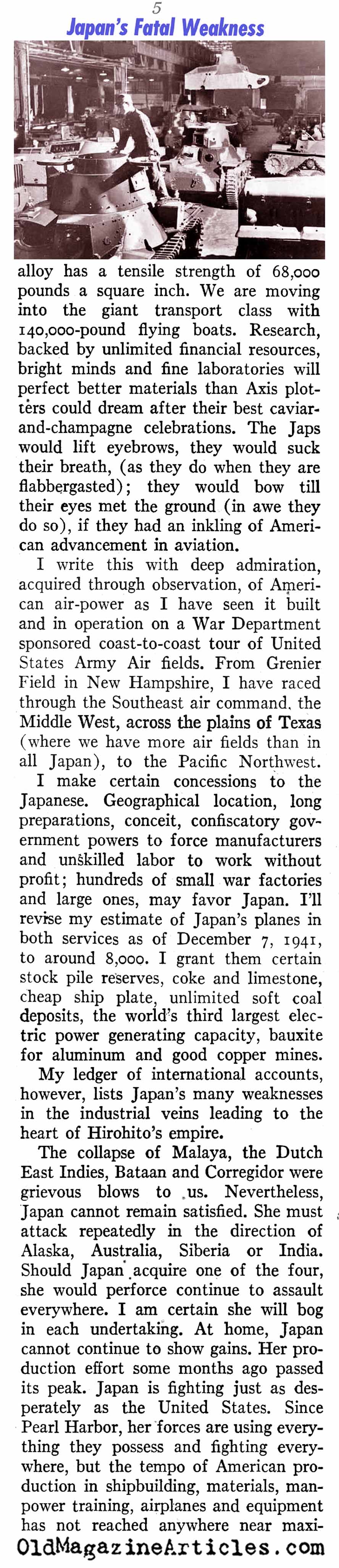
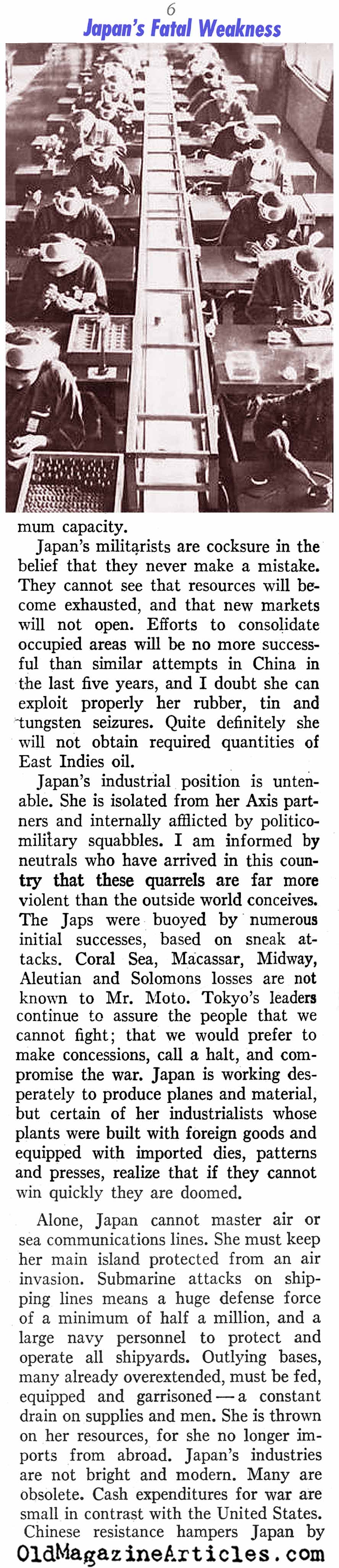
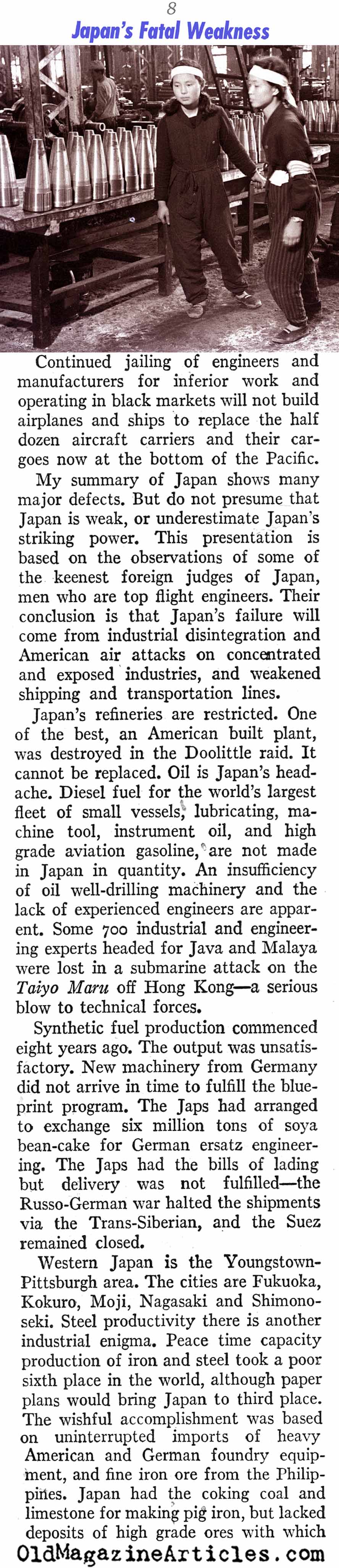
The magazine article on the right was penned by James R. Young, former Asian correspondent for the International News Service. Having once lived in Japan, he had seen first-hand the deficiencies that made up the Japanese war industry:
“The explanation for Japan’s weaknesses, which are greater than her points of strength, I have found in a detailed study of the dent in her giant armada – engineering, plant capacity and raw materials… Japan has passed the peak of her ten-year military campaign. She has reached the lowest point on a military graph, in the loss of some 315 ships and nearly one thousand planes. In peace time, or while fighting China, Japan could import or manufacture replacements. Not now. Japan’s strength was predicated on the importation of six to eight essential raw materials and a world market in tools, steels and oils with which to construct fine ships and planes.”
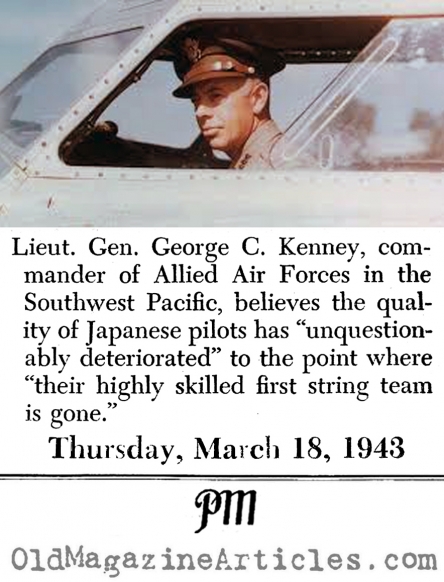

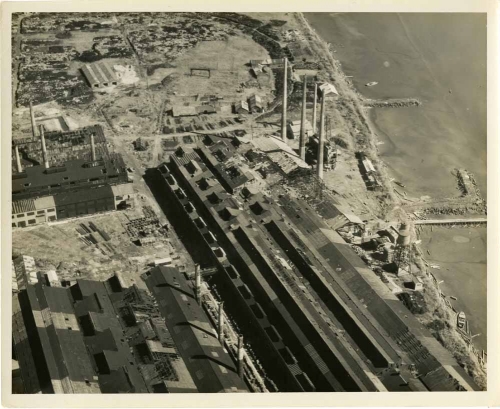
WW2 Japan had weak industriesWW2 Japanese war industry was insufficientWW2 Japanese war industry needed to import many raw materials for productionWW2 Japan lacked industrial strengthww2 Japanese war industry lacked oiljapanese oil refinery destroyed during Dolittle raid 1942ww2 japanese war industry lacked copperww2 japanese war industry needed micaww2 japanese war industry needed tungstenww2 japanese war industry needed tinww2 japanese war industry needed high grade ironww2 japanese war industry needed good bauxiteww2 japanese war industry needed zincww2 japanese war industry needed leadww2 japanese war industry had labor problems
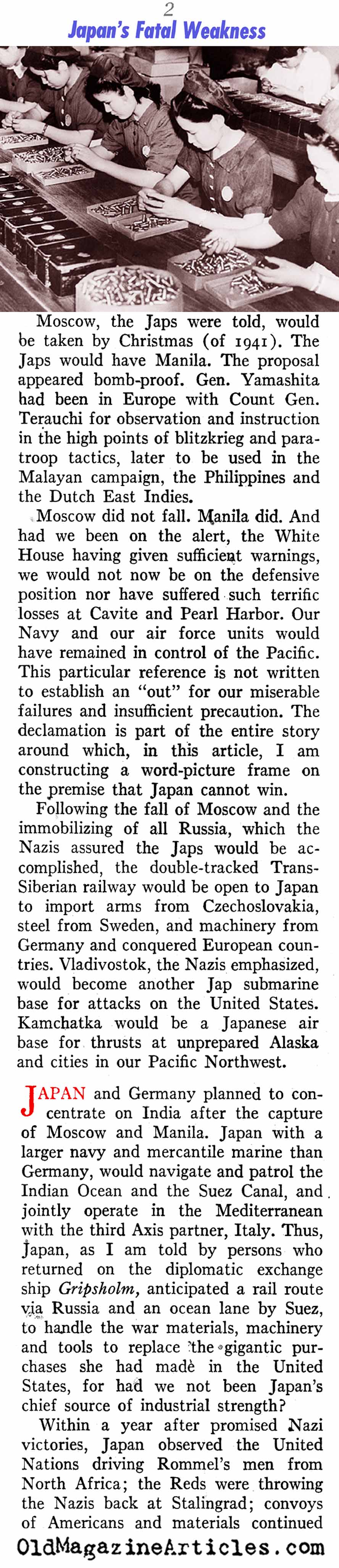
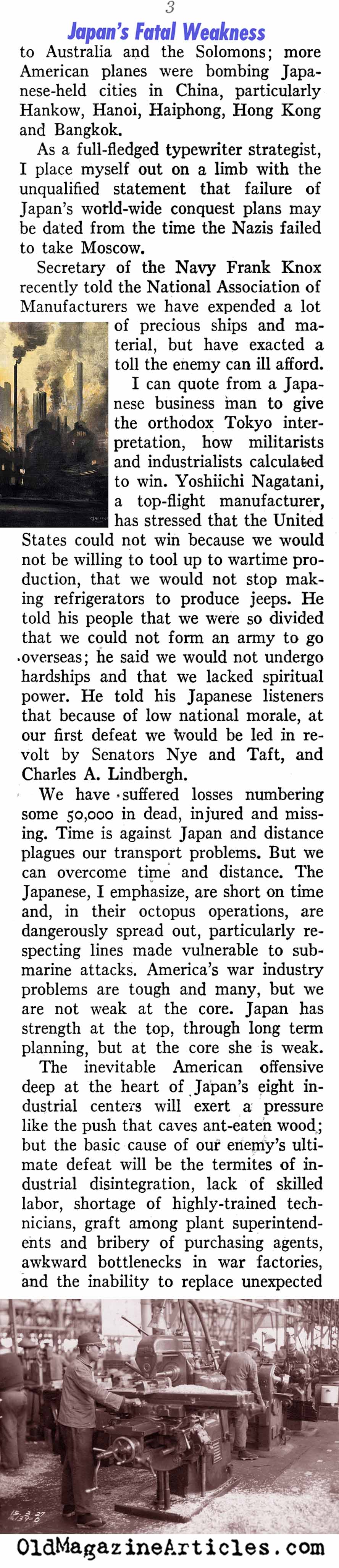
WW2 Japan had weak industriesWW2 Japanese war industry was insufficientWW2 Japanese war industry needed to import many raw materials for productionWW2 Japan lacked industrial strengthww2 Japanese war industry lacked oiljapanese oil refinery destroyed during Dolittle raid 1942ww2 japanese war industry lacked copperww2 japanese war industry needed micaww2 japanese war industry needed tungstenww2 japanese war industry needed tinww2 japanese war industry needed high grade ironww2 japanese war industry needed good bauxiteww2 japanese war industry needed zincww2 japanese war industry needed leadww2 japanese war industry had labor problems