



























47 Magazine Articles
Click Magazine Articles
Collier's Magazine Articles
Confederate Veteran Magazine Articles
Confidential Magazine Articles
Creative Art Magazine Articles
Current Literature Magazine Articles
Direction Magazine Articles
Film Daily Magazine Articles
Freedom's Triumph Articles
G.I. Joe Magazine Articles
Harper's Bazaar Magazine Articles
Harper's Weekly Articles
Hearst's Sunday American Articles
Ken Magazine Articles
La Baionnette Articles
Leslie's Magazine Articles
Liberty Magazine Articles
Life Magazine Articles
Men's Wear Magazine Articles
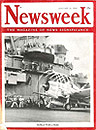
Newsweek Articles
Outing Magazine Articles
Outlook Magazine Articles
People Today Magazine Articles
Photoplay Magazine Articles
Pic Magazine Articles
PM Tabloid Articles
Punch Magazine Articles
Rob Wagner's Script Magazine Articles
Scribner's Magazine Articles
Sea Power Magazine Articles
Stage Magazine Articles
The American Legion Monthly Articles
The American Legion Weekly Articles
The Atlantic Monthly Articles
The Dial Magazine Articles
The Film Spectator Magazine Articles
The Flapper Magazine Articles
The National Park Service Articles
The New Republic Articles
The New York Times Articles
The North American Review Articles
The Saturday Evening Post Articles
The Saturday Review Articles
The Smart Set Articles
Theatre Arts Magazine Articles
Touchstone Magazine Articles
Trench Warfare Articles
Vanity Fair Magazine Articles
Vogue Magazine Articles

Post-War Japan

Landings on the
Japanese Mainland

• Newsweek Magazine, 1945 •


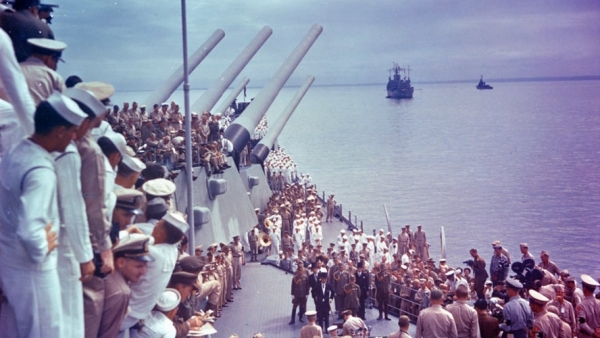
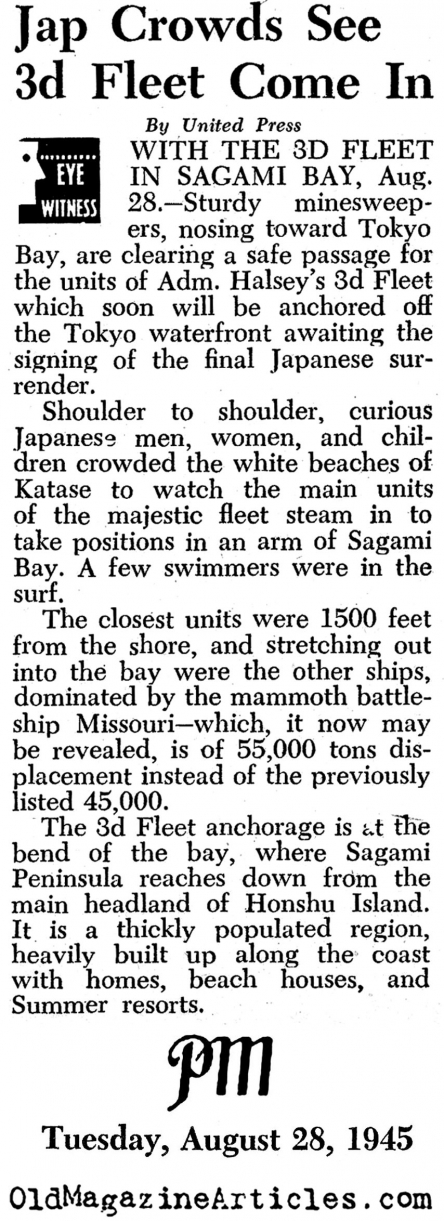
“On Tuesday, August 28 (Tokyo time), the Japs got their first taste of the ignominy of surrender… The occupation forces were ordered to go ashore much as they regularly did in amphibious operations – with full combat equipment and battle dress, across beaches and onto docks. No chances were to be taken. For good measure, an air umbrella of at least 1,200 planes from carriers would hover above the landing forces for protection against possible treachery… While the amphibious landings are beginning to the south, the first large airborne landings are made with about 150 four-engined C-54 transports and 150 Liberators converted to troop carriers from Okinawa bases, and about 50 other transports from Iwo Jima.”

Click here to read about General MacArthur’s leadership in Occupied Japan.

The plans to occupy Japan began in the Fall of 1944 – click here to read about it

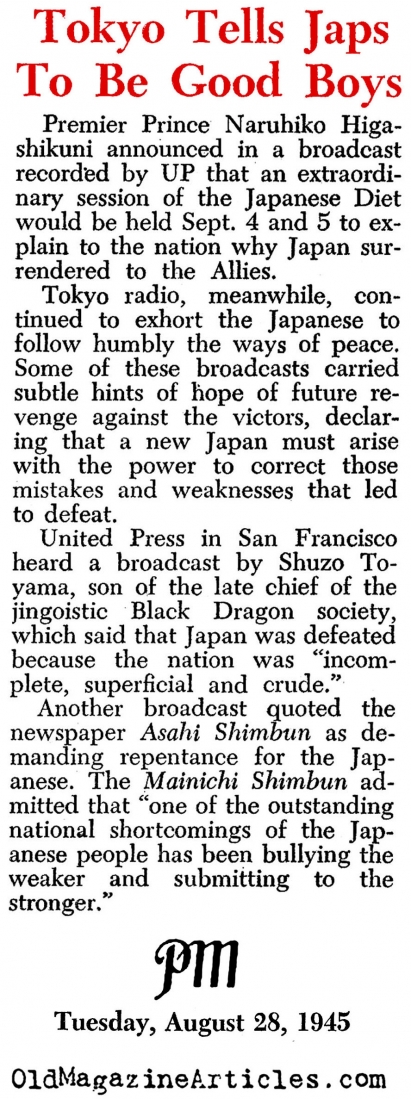
Four years after the Pearl Harbor attack, a Japanese newspaper editorial expressed deep regret for Japan’s aggressiveness in the Second World War, click here to read about it…
What was this evening tabloid PMclick here to find out…

Read Occupation Begins<br>(Newsweek Magazine, 1945) for Free

Landings on theJapanese Mainland

Landings on theJapanese Mainland

Landings on theJapanese Mainland

Landings on theJapanese Mainland

Scroll to Top