










































47 Magazine Articles
Click Magazine Articles
Collier's Magazine Articles
Confederate Veteran Magazine Articles
Confidential Magazine Articles
Creative Art Magazine Articles
Current Literature Magazine Articles
Direction Magazine Articles
Film Daily Magazine Articles
Freedom's Triumph Articles
G.I. Joe Magazine Articles
Harper's Bazaar Magazine Articles
Harper's Weekly Articles
Hearst's Sunday American Articles
Ken Magazine Articles
La Baionnette Articles
Leslie's Magazine Articles
Liberty Magazine Articles
Life Magazine Articles
Men's Wear Magazine Articles
Newsweek Articles
Outing Magazine Articles
Outlook Magazine Articles
People Today Magazine Articles
Photoplay Magazine Articles
Pic Magazine Articles
PM Tabloid Articles
Punch Magazine Articles
Rob Wagner's Script Magazine Articles
Scribner's Magazine Articles
Sea Power Magazine Articles
Stage Magazine Articles
The American Legion Monthly Articles
The American Legion Weekly Articles
The Atlantic Monthly Articles
The Dial Magazine Articles
The Film Spectator Magazine Articles
The Flapper Magazine Articles
The National Park Service Articles
The New Republic Articles
The New York Times Articles
The North American Review Articles
The Saturday Evening Post Articles
The Saturday Review Articles
The Smart Set Articles
Theatre Arts Magazine Articles
Touchstone Magazine Articles
Trench Warfare Articles
Vanity Fair Magazine Articles
Vogue Magazine Articles

World War One

Illustration of
a German
Dugout on the Western Front

• L'Illustration, 1915 •


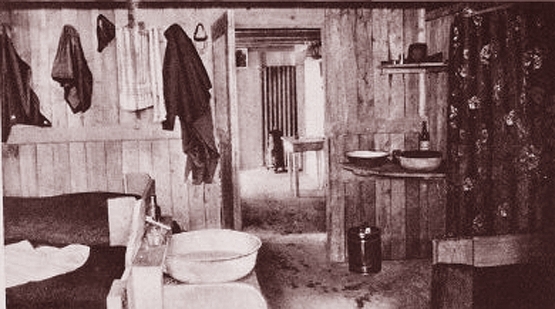
Attached is a black and white diagram from a 1915 French news magazine depicting the depth of a German front-line dugout. Historian John Laffin makes it quite clear in his World War One book, The Western Front Companion, that the term “dugout” seems misleading when applied to the Germans:

“From 1915, the remarkably well-developed German positions, notably on the Somme front, reflected their strategic advantage. They were on enemy soil, the Germans held the initiative, and they could afford to settle down in their dugouts. Hence, most had electricity, drainage, sewage system, piped water, a telephone system and many were heated. The soldiers could lie down on mattresses resting on beds made of stacking stretched over wooden frames, and -and because of deep overhead cover – 30 to 40 feet of it, they were safe even during heavy shell fire.”

Click here to read an article about life in a W.W. I German listening post…

More articles about W.W. I trench warfare can be read here.

Read German Dugouts<br>(L’Illustration, 1915) for Free
WW1 German Trench dugoutWW1 German Trench dugoutsWW 1 German Trench System 1915WW 1 Trench ArticleMagazine Article re WW 1 TrenchesPrimary Source Concerning WW 1Primary Source Concerning German TrenchesPrimary Source Concerning Trench Warfare 1915

Illustration of[BR] a German [BR] Dugout on the Western Front

WW1 German Trench dugoutWW1 German Trench dugoutsWW 1 German Trench System 1915WW 1 Trench ArticleMagazine Article re WW 1 TrenchesPrimary Source Concerning WW 1Primary Source Concerning German TrenchesPrimary Source Concerning Trench Warfare 1915
Scroll to Top