






























47 Magazine Articles
Click Magazine Articles
Collier's Magazine Articles
Confederate Veteran Magazine Articles
Confidential Magazine Articles
Creative Art Magazine Articles
Current Literature Magazine Articles
Direction Magazine Articles
Film Daily Magazine Articles
Freedom's Triumph Articles
G.I. Joe Magazine Articles
Harper's Bazaar Magazine Articles
Harper's Weekly Articles
Hearst's Sunday American Articles
Ken Magazine Articles
La Baionnette Articles
Leslie's Magazine Articles
Liberty Magazine Articles
Life Magazine Articles
Men's Wear Magazine Articles
Newsweek Articles
Outing Magazine Articles
Outlook Magazine Articles
People Today Magazine Articles
Photoplay Magazine Articles
Pic Magazine Articles
PM Tabloid Articles
Punch Magazine Articles
Rob Wagner's Script Magazine Articles
Scribner's Magazine Articles
Sea Power Magazine Articles
Stage Magazine Articles
The American Legion Monthly Articles
The American Legion Weekly Articles
The Atlantic Monthly Articles
The Dial Magazine Articles
The Film Spectator Magazine Articles
The Flapper Magazine Articles
The National Park Service Articles
The New Republic Articles
The New York Times Articles
The North American Review Articles
The Saturday Evening Post Articles
The Saturday Review Articles
The Smart Set Articles
Theatre Arts Magazine Articles
Touchstone Magazine Articles
Trench Warfare Articles
Vanity Fair Magazine Articles
Vogue Magazine Articles

The Cootie Problem

• NY Times, 1918 •


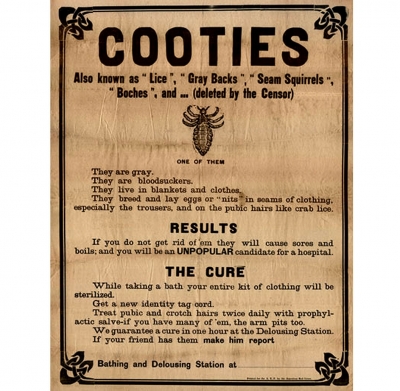
The word “Cooties”, in the World War One sense of the word, were tiny little bugs that lived in the seams of uniforms for that unlucky multitude who lived in the trenches. Being an equal-opportunity sort of parasite, they plagued all combatants alike, regardless of one’s opinions concerning Belgian neutrality, and were cause for much complaining, scratching, discomfort and the creation of way too much juvenile verse.

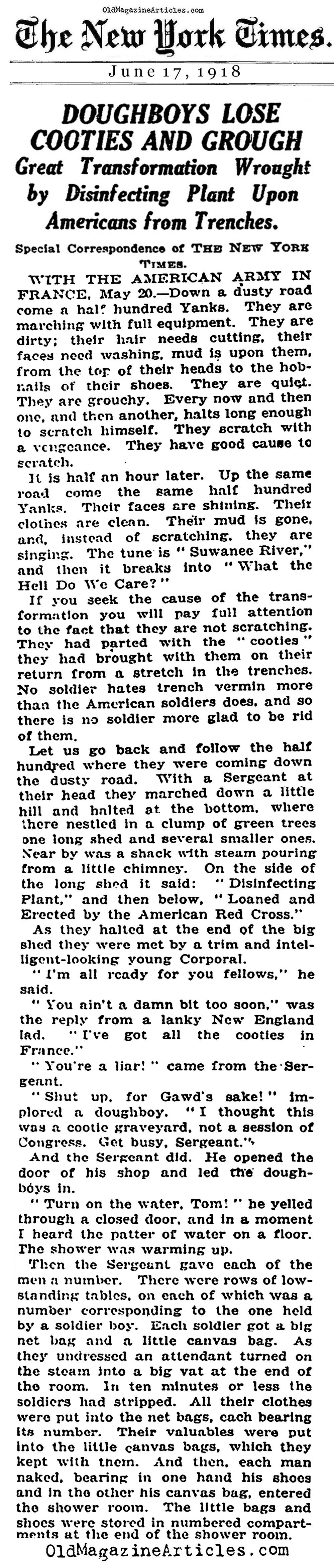
The attached article from 1917 tells the tale of some fortunate Doughboys and their encounter with a U.S. Army “Cootie Graveyard” (read: delousing station):

“They entered a bedraggled, dirty, grouchy lot of sorry-looking Doughboys. They came out with faces shinning and spirits new. They knew they had before them the first good night’s rest in some time and sans scratching.”

As far as cooties were concerned, the American infantrymen of the Great War had it far easier than his European comrades and counter-parts, for he only had to contend with them for the mere six month time that he lived in the trenches, rather than the full four years.

More articles about W.W. I trench warfare can be read here.

Read The Battle of the Cooties<br>(NY Times, 1918) for Free
ww1 cooties onlinewhat were cooties in WW1cooties were lice that lived in the seams of ww1 uniformswwi magazine article about cootieswwi article about licewwi article about trench licewwi newspaper article about cootiescooties in WW1 trenchesbugs that lived in the seams of soldier uniformslice that lived in the seams of soldier uniforms were called cootiescooties of WW1delousing machine to get rid of cootiescooties and ww1 soldierscooties and ww1 trencheswwi soldiers hated cooties

The Cootie Problem

The Cootie Problem

ww1 cooties onlinewhat were cooties in WW1cooties were lice that lived in the seams of ww1 uniformswwi magazine article about cootieswwi article about licewwi article about trench licewwi newspaper article about cootiescooties in WW1 trenchesbugs that lived in the seams of soldier uniformslice that lived in the seams of soldier uniforms were called cootiescooties of WW1delousing machine to get rid of cootiescooties and ww1 soldierscooties and ww1 trencheswwi soldiers hated cooties
Scroll to Top