





47 Magazine Articles
Click Magazine Articles
Collier's Magazine Articles
Confederate Veteran Magazine Articles
Confidential Magazine Articles
Creative Art Magazine Articles
Current Literature Magazine Articles
Direction Magazine Articles
Film Daily Magazine Articles
Freedom's Triumph Articles
Harper's Bazaar Magazine Articles
Harper's Weekly Articles
Hearst's Sunday American Articles
Ken Magazine Articles
La Baionnette Articles
Leslie's Magazine Articles
Liberty Magazine Articles
Life Magazine Articles
Men's Wear Magazine Articles
Newsweek Articles
Outing Magazine Articles
Outlook Magazine Articles
People Today Magazine Articles
Photoplay Magazine Articles
Pic Magazine Articles
PM Tabloid Articles
Punch Magazine Articles
Rob Wagner's Script Magazine Articles
Scribner's Magazine Articles
Sea Power Magazine Articles
Stage Magazine Articles
The American Legion Monthly Articles
The American Legion Weekly Articles
The Atlantic Monthly Articles
The Dial Magazine Articles
The Film Spectator Magazine Articles
The Flapper Magazine Articles
The National Park Service Articles
The New Republic Articles
The New York Times Articles
The North American Review Articles
The Saturday Evening Post Articles
The Saturday Review Articles
The Smart Set Articles
Theatre Arts Magazine Articles
Touchstone Magazine Articles
Trench Warfare Articles
Vanity Fair Magazine Articles
Vogue Magazine Articles

Fashion (WWII)

World War II and
the Growing Popularity
of the T-Shirt

• Men's Wear Magazine, 1950 •


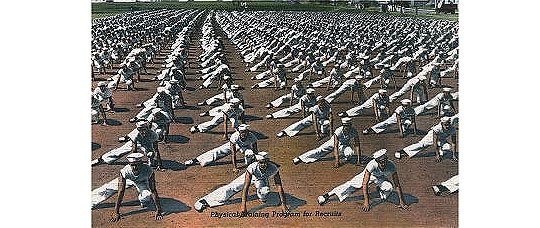
Attached are two short paragraphs from a popular fashion trade magazine pointing out that the white cotton knit crew-neck garment we call the T-shirt came into this world with the name “quarter sleeve” and had it’s origin in the U.S. Navy, where it earned it’s popularity and soon spread to other branches of the U.S. military during the mid-to-late 1930s.

When the war came, the garment was in the quartermaster stores of each branch in the U.S. military and ready to be issued to as many as twelve million men over the course of the next four years. As this article makes plain, the T-shirt was the only element of the military uniform that these men wanted to keep when the war ended. The actor Marlon Brando, who wore one in the 1947 stage production of A Streetcar Named Desire (costume designer by Lucinda Ballard: 1906 – 1993), is credited for having made the garment fashionable.

The rest is history.

More about W.W. II fashions can be read here.

There was another fashion innovations of W.W. II, click here to read about it…
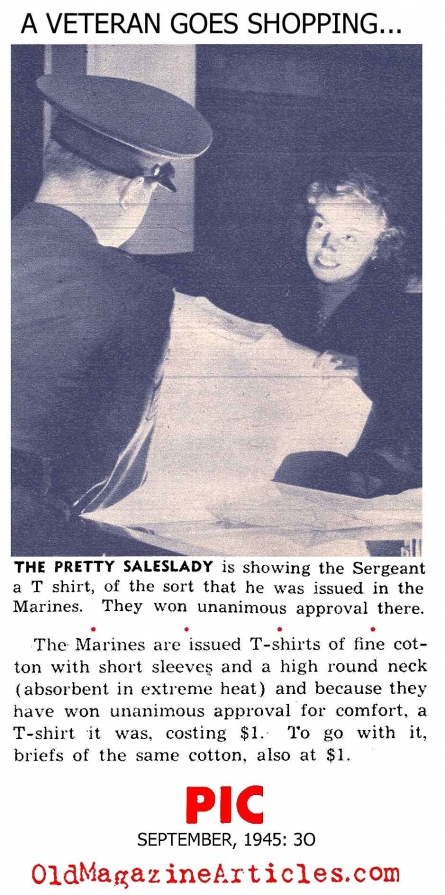
(It should be remembered that Sears began selling white T-shirts as early as 1938 for twenty-four cents.
The garment was then known as the sailor shirt or the gob)
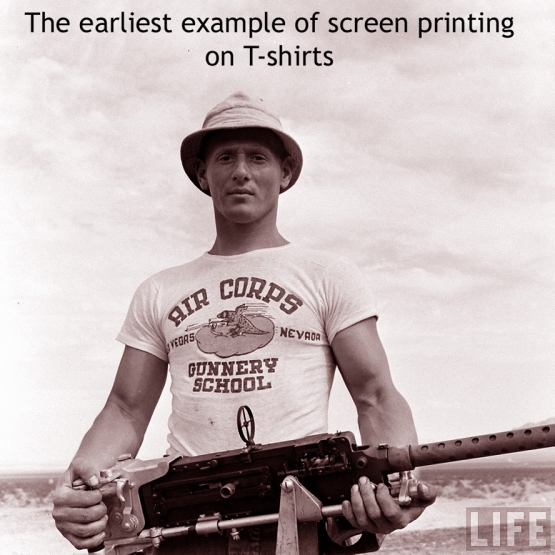
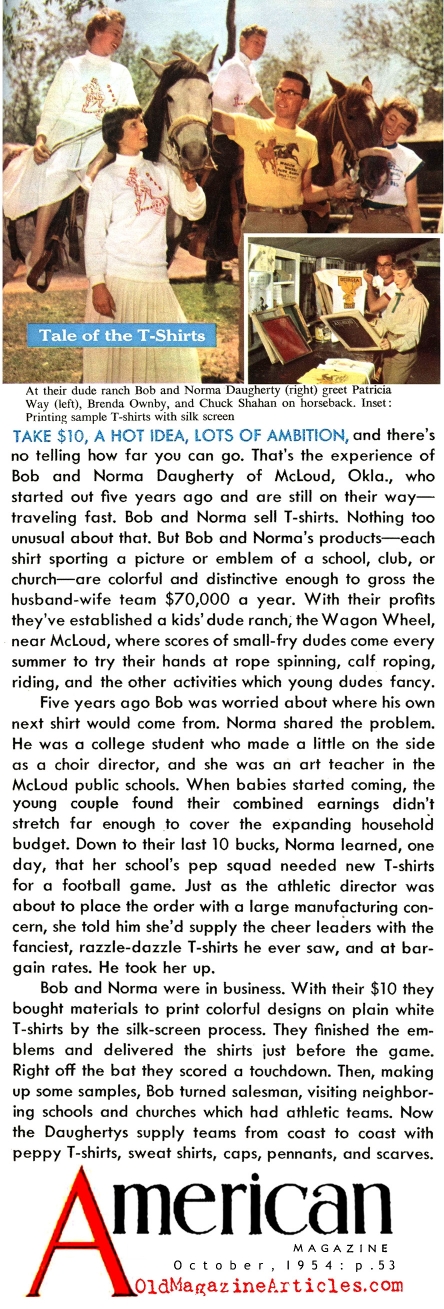
The article below indicates that 1954 was the year when screen printing on T-shirts kicked into high gear and the new normal in street wear was born.
-a history book from Amazon:

Read The World War Two Origins of the T-Shirt<br>(Men’s Wear Magazine, 1950) for Free
1950 T-shirt history magazine article1950 T-shirt history magazine articleT-shirts were first called QUARTER SLEEVEStee shirt historyt-shirts in the us navy 1930ww2 origin of T-shirtsmilitary origin of T-shirtsT-shirts made popular in ww2

World War II and [br]the Growing Popularity [BR]of the T-Shirt

1950 T-shirt history magazine article1950 T-shirt history magazine articleT-shirts were first called QUARTER SLEEVEStee shirt historyt-shirts in the us navy 1930ww2 origin of T-shirtsmilitary origin of T-shirtsT-shirts made popular in ww2
Scroll to Top