


World War Two

Find old World War 2 articles here. We have great newspaper articles from wwii check them out today!

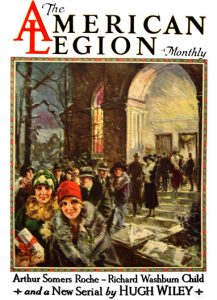
1943: The Year the Japanese Had Shot Their Wad
(American Legion Magazine, 1943)

“Japan in the first 13 months of war let loose virtually everything she had against us. Now she’s feeling the pinch, for her lack of industrial capacity makes replacements slow, and she hasn’t the savvy to keep up with her opponents in improving plants and weapons. This is particularly true in the all-important matter of aircraft.”

When Bushido Took a Back Seat
(Collier’s Magazine, 1945)

During the closing days of the Okinawa campaign, Japanese infantry decided to treat the much-ballyhooed Bushido warrior code as if it was a plate of week-old sushi.


“The mass-surrenders were a circus for our troops. It became a race to see which outfit could take the most prisoners. And Major General Lemuel C. Shepard’s Sixth Marine Division won the championship with 3,279 prisoners, while Major General Archibald V. Arnold’s 7th Army Division was runner-up with 2,627.”


More about the Battle of Okinawa can be read here.

Why the Japanese Didn’t take Prisoners
(Liberty Magazine, 1942)

Hallett Abend (1884 – 1955) was an American journalist who lived in China for fifteen years. He covered the Sino-Japanese War during its early years and had seen first-hand the beastly vulgarity of the Japanese Army. After Pearl Harbor, the editor at Liberty turned to him in hopes that he would explain to the American reading public what kind of enemy they were fighting:


“In four and a half years of warfare [in China], the Japanese have taken almost no prisoners… Chinese prisoners of war are shot.”

Advertisement

Use shortcode [oma_ad position="summary_top"] (or other position) in your theme or widgets to display OMA Promotions here.

The Doughboy in the Pacific Theater
(Liberty Magazine, 1945)

The U.S Marine Corps is not in the practice of sending their oldest members into harm’s way – they aren’t now, and they weren’t in 1942. But when they imparted this information to Gunnery Sergeant Lou Diamond (1890 – 1951), he would have none of it – the mere idea that the world was to be at war, and he would be excluded: not going to happen:


“Lou roared his way through the battles of Guadalcanal and Tulagi and did much to back up the Marine Corp’s contention that he is far and away the the most expert mortar sergeant in any branch of the service.”

Frank P. Witek on Guam
(All Hands Magazine, 1945)

“For risking his life twice to save his platoon when they were pinned down by Jap fire during the Battle of Finegayan on Guam, Pfc. Frank Peter Witek, USMCR, has been posthumously awarded the Congressional medal of Honor.

Advertisement

Use shortcode [oma_ad position="summary_top"] (or other position) in your theme or widgets to display OMA Promotions here.

The First Black Marines
(Yank Magazine, 1944)

The editors at Yank (an Army possession) seldom wrote about the Marines – and they loved dissing their weekly magazine, The Leatherneck. However, they did recognize an historic moment when they saw one. As remarked in another article on this site, the Navy was the most prejudiced of all the branches of service, and the Marines had previously rejected all Black recruits, but that changed in 1942, and this article served to introduce their readers to this consequential lot. The first African American Marines trained at Camp Montford Point in Jacksonville, NC from August 26, 1942 until the camp was decommissioned in 1949. The greatest number of black Marines to serve in combat during the Second World War was during the Battle of Okinawa (2,000 strong).

VE-Day in Philadelphia
(Philadelphia Record, 1945)

The citizens of Philadelphia took the news calmly. There were isolated pockets of tremendous joy, but many were wary because they had celebrated the event the previous month when a false rumor had circulated.


“Many soldiers and sailors were gathered in small groups in Market, Walnut and Chestnut streets. One said: ‘Even if it’s true, it doesn’t mean a thing. It’s over for us when we get out of this uniform.'”

Advertisement

Use shortcode [oma_ad position="summary_top"] (or other position) in your theme or widgets to display OMA Promotions here.

The U.S. Navy at War’s End
(All Hands Magazine, 1945)

“During the final days of the war, the Navy’s carrier aircraft concentrated on northern Honshu, inflicting heavy damage on industrial targets of Hamaishi on the ninth of August. One of the last blows struck, however, was directed at Wake Island, where the Japs had scored one of their earliest victories of this war.”

”Nightmare Off Iwo”
(Our Navy, 1945)

“Nine months and a day after she was commissioned, the pug-nosed little carrier Bismark Sea (CVE-95) was as much in the two-day-old battle for Iwo Jima as the Marines fighting for the island’s lower air strip. This was her third major campaign in less than four months. Her career was just beginning, and the crew was proud of calling her the Busy Bee. She was a happy ship.”


Happy or not, after two Kamikazes hit home, the ship sank in just two hours, taking 318 men with her. She claimed the dubious distinction of being the last American carrier to be lost in the war.

The Capture of U-505
(Our Navy Magazine, 1945)

“One of the best kept secrets of the war was revealed by a recent Navy Department report that, on June 4, 1944, an escort carrier task group hounded a Nazi sub through the waters some 150 miles off the coast of French West Africa near Cape Blanco, forced it to the surface, boarded it, and took the Nazi over. The group then towed their prize, U-505, about 2,500 miles to Bermuda…”

Advertisement

Use shortcode [oma_ad position="summary_top"] (or other position) in your theme or widgets to display OMA Promotions here.

The Tigercat
(Our Navy, 1945)

Just as the Pershing M26 tank was deployed to the ETO during the closing weeks of that campaign, so too, was the Grumman 747 Tigercat deployed to the Pacific just weeks before the Japanese capitulation.


“If the Japs have a word for ‘duck,’ they’re probably using it plenty these days when they see the new TIGERCATS, that twin-engine fighter recently thrown into action in the Pacific. Termed F7F in Navy parlance, the latest Grumman battler to be given public recognition is one of those versatile designer’s dreams that can lug bombs, toss rockets, intercept cover bombers on long-range missions, fly night hawk expeditions and do everything else but have a baby for you… which is about all they haven’t been asked to do.”

Joan Fontaine Does Her Bit
(Liberty Magazine, 1942)

Whether Joan Fontaine (1917 – 1913) was pressured into writing this bitter-sweet article by her studio or some other Hollywood entity – we’ll never know, but this piece recalls her earliest days in Japan, where she was born, and all the sweet smiles and kind words that all of us are peppered with during our formative years. So much for the sweet part of the article – then she recalls her return trip in 1934-35 and what a bunch of Fascist skanks they all turned into (Japanese-Americans also feel her back hand).

Ration Cheaters
(American Magazine, 1943)

For those blessed to live in a society with a free-market economy, we are pleased to pursue our whims daily – and eight times out of ten, they are made manifest before too long. Yet this was not the case for those living on the W.W. II home front. This article is about the black market that must have been a temptation for everyone back then. The reader will get a true sense of the tyranny Americans had to suffer when our economy was engaged in total war; it was written by one of the autocrats charged with enforcing the rationing laws.

Advertisement

Use shortcode [oma_ad position="summary_top"] (or other position) in your theme or widgets to display OMA Promotions here.

Feeding American Paratroopers
(Newsweek Magazine, 1941)

With W.W. II just around the corner, the U.S. Army Quartermaster Corps’ “subsistence laboratory” in Chicago was burning the mid-night oil trying to create a nutritious light weight ration with little bulk for the nascent paratrooper divisions.

More About the Seabees
(All Hands Magazine, 1945)

“From the start the naval Construction Battalions were unusual outfits, mostly because of the men in them and because theirs was a new kind of warfare… Every Seabee found himself doubling in various trades. It was thus the construction men developed their most important tools – improvisation, ingenuity and guts. Often parts, materials and equipment had to be manufactured on the spot in shops hastily thrown together from salvaged enemy materials and tools… But as the Seabee organization grew (from an original force of 3,300 to a peak of 247,155, of which 83 percent were overseas) and its activities increased, the battalions picked up plenty of know-how, enabling them to smooth out and speed up operations.”

Advertisement

Use shortcode [oma_ad position="summary_top"] (or other position) in your theme or widgets to display OMA Promotions here.

Scroll to Top