

























World War Two

Find old World War 2 articles here. We have great newspaper articles from wwii check them out today!

Japanese Prisoners at Camp McCoy
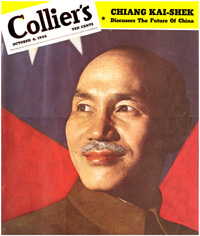
(Collier’s Magazine, 1944)

A midget Jap submarine went aground on the morning of December 8, 1941, off the island of Oahu in Hawaii, and a lieutenant just one year out of the Imperial Naval Academy walked ashore and became the first, and for many weeks our only, W.W. II prisoner. He eventually wound up at Camp McCoy…

How The Atomic Bomb Was Developed
(Yank, 1945)

The story behind the atomic bomb is a detective story with no Sherlock Holmes for a hero. The number of scientists who took part in the search was without parallel…The dramatic story begins with Dr. Lise Meitner (1878 – 1968), a woman scientist and director of the Kaiser Wilhelm Institute in Berlin. In 1938 Dr. Meitner is bombarding uranium atoms with neutrons and then submitting the uranium to chemical analysis. To her amazement…


style=border:none

Hiroshima Two Years Later
(Collier’s Magazine, 1947)

The Collier’s article attached herein, The Atom Bomb’s Invisible Offspring does not simply track the radioactive illnesses and contamination generated as a result of the bombings at Hiroshima and Nagasaki, but also discusses the nuclear testings at Bikini and Alamogordo, New Mexico. Attention is paid to how the devastated people as well as all the assorted flora and fauna in the targeted regions.

Advertisement

Use shortcode [oma_ad position="summary_top"] (or other position) in your theme or widgets to display OMA Promotions here.

The Lady was a Spy
(Coronet Magazine, 1954)

During World War II many women played roles as daring and courageous as were required of any man. This is the true story of one such woman, who gambled her life to help the Allies win the final victory in Europe.

…I began my mission in wartime France as a British secret agent. Colonel Maurice Buckmaster had told me what my assignment was:

You will parachute into France with a wireless operator and a demolition specialist. The drop will be 40 miles from Le Mans, where Rommel’s army is concentrated…


Click here to read about the women who spied for the Nazis during the Second World War.

Somewhere In North Africa
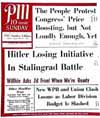
(PM Tabloid, 1943)

With the loss at Kasserine Pass and the victory at El Guettar behind them, the U.S. Army in North Africa traveled ever northward in a caravan of Jeeps and trucks looking for their next engagement with Rommel’s Africa Corps.

Advertisement

Use shortcode [oma_ad position="summary_top"] (or other position) in your theme or widgets to display OMA Promotions here.

Laval’s France
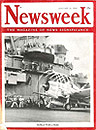
(Newsweek Magazine, 1942)

An article from the Spring of 1942 concerning the efforts of Premiere Laval to fool the French citizenry into loving their Nazi occupiers and hating the Allies.

Laval’s handicaps in reconciling the nation to the ‘new order’ are his personal unpopularity – careful observers estimate that 90 to 95 percent of the population spurn his policies – and the determination of the Nazis to stamp out resistance with terrorism.

Taro Yashima
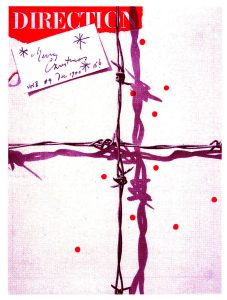
(Direction Magazine, 1944)

Many are the names of the refugee-artists who fled Hitler’s Germany for the United States – but few are the Japanese artists we remember who departed fascist Japan for America. This slim article tells the story of Taro Yashima (born Atsushi Iwamatsu, 1908 – 1994) who was brutalized by the militarists in his homeland and fled in 1939.

‘Guns On French Cliffs Shell British Ships
(PM Tabloid, 1940)

A British convoy in the Straits of Dover today ran the gauntlet of terrific cannonade of long range German artillery on the French cliffs from Calais to Boulogne. The spectacular Channel bombardment was witnessed by thousands on the Dover cliffs. They reported that none of the 18 ships in the British convoy appeared to have been hit.

Advertisement

Use shortcode [oma_ad position="summary_top"] (or other position) in your theme or widgets to display OMA Promotions here.

O.S.S. Agents Executed by General Anton Dostler
(Yank Magazine, 1945)

On the evening of March 26, 1944, fifteen O.S.S. agents were executed following a failed raid on Italian soil to blow-up an Axis railroad tunnel. The sabotage mission was in support of the allied attack taking place further south at Monte Cassino (Battle of Monte Cassino, January 17, 1944 – May 19, 1944) and had the tunnel been successfully blown, supplies to the defending Germans would have been cut off.


This YANK article reported on the first war crime trial of the post World War Two era: the trial of German General Anton Dostler (1891 – 1945), who gave the order to execute the O.S.S. prisoners. In his defense, General Dostler insisted that he was acting under the orders of General Gustav von Zangen, who denied the claim.

The O.S.S.
(Collier’s Magazine, 1945)

This was more than likely the very first mainstream magazine article to address the vital contributions that the Office of Strategic Service made in beating the Axis powers. It appeared on the newsstands just about six weeks after the end of the Second World War and lists various key operations and triumphs that had heretofore been secret.


In 1940 OSS chief Donovan wrote an article about the German-American Bund, Click here to read it.

Advertisement

Use shortcode [oma_ad position="summary_top"] (or other position) in your theme or widgets to display OMA Promotions here.

Letters from the German Home Front
(Coronet Magazine, 1943)

The misery that lingered over the W.W. II German home front is well documented and many of the issues concerning melancholy, hunger and thirst can be read in the attached assortment of letters that were pulled from the bloodied uniforms of the thousands of dead Nazi soldiers that surrounded the city of Stalingrad in 1943. These personal correspondences by German parents, wives and sweethearts present a thorough look at the dreariness that lingered over the German home front.

Savoia Marchette SM 82: Italian Transport and Bomber
(Alertman, 1942)

The Savoia Marchetti SM 82 Canguru was a triple engine transport aircraft that was also put to use as a bomber. Produced by the Italians, it was additionally used by their German allies and was capable of seating 40 fully-equipped soldiers comfortably or 51 fully-equipped soldiers uncomfortably. At the time this article appeared, this long-range transport was being used to shuffle German and Italian soldiers to the collapsing fronts in North Africa.

John Garand: Inventor of the M1 Garand
(Click Magazine, 1944)

Attached is a Click Magazine photo essay of one of the seldom remembered heroes of W.W. II: John C. Garand – the gunsmith who tripled the firepower of the American foot soldier.


In 1939, a German spy almost succeeded in delivering the blueprints of the Garand rifle into the blood-soaked hands of his Nazi overlords: read about it here.


Click here to read about the Japanese Zero.

Advertisement

Use shortcode [oma_ad position="summary_top"] (or other position) in your theme or widgets to display OMA Promotions here.

The Vultee Vengence A-31 Dive Bomber
(Alertman, 1943)

A photograph, profile and statistical information concerning the Vultee Vengeance A-31 – which was a W.W. II American dive bomber, built by Vultee Aircraft Corporation. The Vengeance was not used in combat by any US units, however it was deployed by the British and Commonwealth Air Forces in Southeast Asia as well as the Southwestern Pacific Theaters.

The Japanese Zero
(PM Tabloid, 1942)

Soon after Pearl Harbor Americans began hearing about a Japanese warplane called called the Zero. It had an unusual name, it was virtually unknown, even to aircraft experts, and almost immediately it began to take on an air of sinister mystery. Information now available shows there is no good reason for the mystery, although the plane has been a big factor in the Jap drive… The Zero has no secret weapons or engineering developments. It is simply a pretty good pursuit or fighter.

Advertisement

Use shortcode [oma_ad position="summary_top"] (or other position) in your theme or widgets to display OMA Promotions here.

Scroll to Top