Author name: editor

1922, Silent Movie History, The Flapper Magazine

Silent Film Flapper Colleen Moore
(Flapper Magazine, 1922)

By the time this piece first appeared in THE CHICAGO DAILY NEWS (prior to being picked up by the fast crowd at FLAPPER MAGAZINE) Colleen Moore was all of twenty-one years of age with fourteen Hollywood films to her credit. This interview was conducted over lunch by the polished Hollywood reporter Gladys Hall, who no doubt, picked up the check; on that day Miss Moore wanted to talk about flappers.


The wise elders of Hollywood were perfectly fine about casting flappers to play in various movies, but they didn’t always produce films that were sympathetic to their causes; for example, the editors of FLAPPER MAGAZINE hated this movie.


We recommend this book: The Silent Feministsstyle=border:none

Famous Flapper | Flapper Movie Star Colleen Moore | 1920s Celebrity Flapper
1922, Flappers, The Flapper Magazine

Colleen Moore: A Flapper in Hollywood
(The Flapper Magazine, 1922)

By the time this piece appeared in The Chicago Daily News (prior to being picked up by the fast crowd at Flapper Magazine) Colleen Moore was all of twenty-one years of age with fourteen Hollywood films to her credit. This interview was conducted over lunch by the polished Hollywood reporter Gladys Hall, who we’re sure picked up the check; on that day Miss Moore wanted to talk about flappers, a flock she was proud to be numbered among (and a subject she seemed to know well).

Advertisement

Use shortcode [oma_ad position="summary_top"] (or other position) in your theme or widgets to display OMA Promotions here.

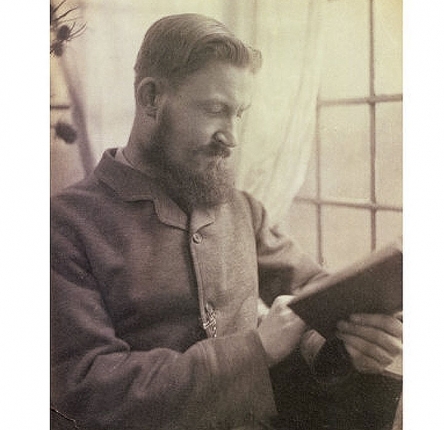
George Bernard Shaw Witticisms | Wit of George Bernard Shaw | George Bernard Shaw Epigrams
1947, Coronet Magazine, Miscellaneous

Shavian Witticisms
(Coronet Magazine, 1947)

Myriad are the clever epigrams that have been attributed to the famed Anglo-Irish playwright George Bernard Shaw (1856 – 1950) – and attached you’ll find additional chestnuts to add to the list. These particular ones recall the bon mots he tossed out while prattling-on with various assorted glitterati of his day; yapers like Clare Boothe Luce, Orson Welles, Judith Anderson and tennis champ Helen Wills.


More about Shaw can be read here.

George Bernard Shaw Socialist Rantings 1923 | George Bernard Shaw in Time Magazine 1923 | George Bernard Shaw Describes the Perfect Society
1923, The Nanny State, Time Magazine

The Utopian GBS
(Time Magazine, 1923)

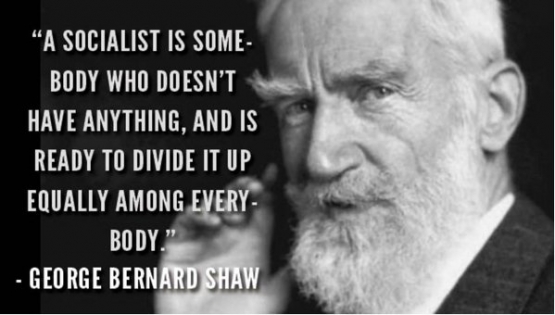
IF we were to have a favorite socialist it might be the silver-tongued playwright and all around-wit, George Bernard Shaw (even though in the attached film clip he blathers-on gleefully in favor of a government that kills the non-productive elements of society). In this article, Shaw muses about how the ideal society would operate – regardless of the flaws inherit in human nature (which Marx also ignored).


Click here to read a few Shavian witticisms.
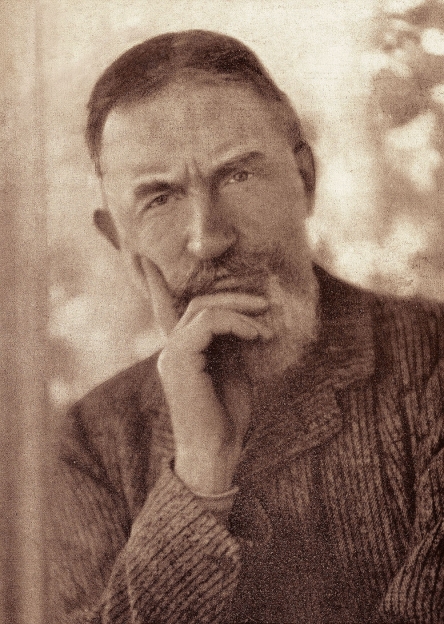
George Bernard Shaw: An Anti-Militarist on the British Home Front (NY Times, 1915)
1915, Letters

George Bernard Shaw: An Anti-Militarist on the British Home Front
(NY Times, 1915)

A letter written by the celebrated playwright George Bernard Shaw (1856 – 1957) to an Austrian friend that appeared in the Munichener Neueste Nachrichten as well as the Frankfurter Zeitung in April, 1915:

At that time scarcely one of the leading newspapers took heed of my insistence that this war was an imperialistic war and popular only in so far as all wars are for a time popular.


Click here to read Shaw on the Titanic disaster…

Advertisement

Use shortcode [oma_ad position="summary_top"] (or other position) in your theme or widgets to display OMA Promotions here.

George Bernard Shaw Comments About the Titanic Sinking (The Bookman, 1912)
1912, The Bookman, Titanic History

George Bernard Shaw Comments About the Titanic Sinking
(The Bookman, 1912)

On the matters involving Titanic, playwright George Bernard Shaw (1856 – 1957) hated the hero-blather he read in the press; he despised all the assorted sugary-sweet romantic rot that was associated with the ship’s sinking and it was only by lying, he insisted, that the newspapers made the victims out to be, in any way, heroic.


Shaw illustrated his point by referring to the survivor account by Lady Duff-Gordon (1863 – 1935):

She described how she escaped in the captain’s boat. There was one other woman in it and ten men, twelve all told, one woman for every five men.


Good point.


Click here to read the socialist ramblings of George Bernard Shaw.


Click here to read various witty remarks by George Bernard Shaw.

British Fascists (Ken Magazine, 1938)
1938, Allies, Ken Magazine

British Fascists
(Ken Magazine, 1938)

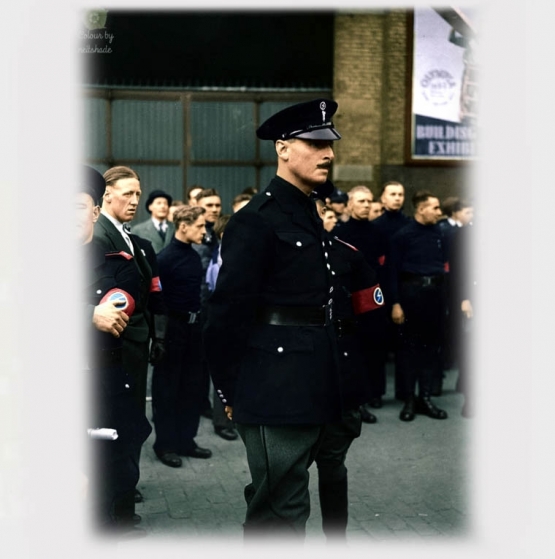
This article is about the founder of the British Union of Fascists, Oswald Mosleystyle=border:none (1896 – 1980). The article outlines much of his life and political career up to the year 1938, with heavy emphasis concerning some of the least admirable aspects of his character
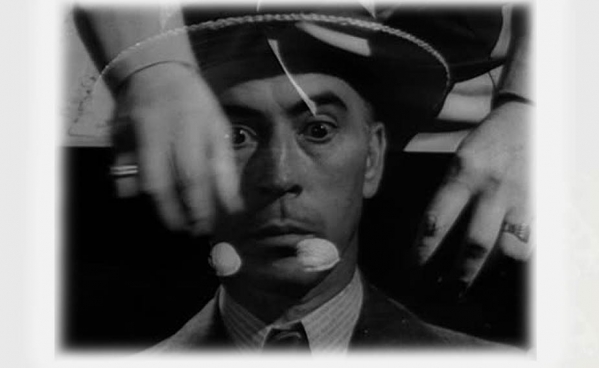
His father’s comment sums Mosely up admirably:
‘He has never done an honest days work in his life.’


Click here to read about the origins of Fascist thought…

anti-FDR article | FDR economics
1934, New Outlook Magazine, The Great Depression

Incompetence at the Helm
(New Outlook Magazine, 1934)

A columnist writing for the magazine New Outlook following the first nine months of the New Deal, weighed carefully all the assorted alphabet agencies and edicts that President Roosevelt created in hopes that the U.S. economy would once more spring to life. He concluded that there was nothing to look forward to and compared FDR to the con-men on the street corners who scam the passersby into playing their shell games; difference being that FDR’s shells were both empty.


Click here to read about the first 100 days of the Roosevelt administration.

Advertisement

Use shortcode [oma_ad position="summary_top"] (or other position) in your theme or widgets to display OMA Promotions here.

Arab League Mobilization 1947 | Mohammad Nimr al-Hawar 1947 | Najjada Violence 1947
1947, Collier's Magazine, Jews in the 20th Century

The Arabs Mobilize
(Collier’s Magazine, 1947)

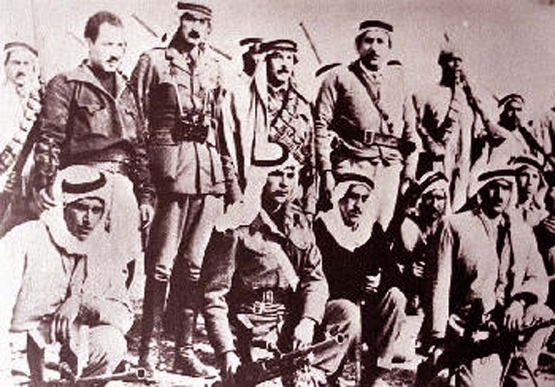
From a guarded high-walled villa in Alexandria, Mohammad Amin al-Husayni (1895 – 1974), exiled fifty-three year-old Grand son of the Grand Mufti of Jerusalem craftily directs the affairs of the 1,200,000 Palestinian Arabs.

In the Mufti’s web, the strands of potential organized resistance include two rival ‘youth organizations’, the al-Najjada and the Al-Futawa and the ‘mobile elements’ of the secret Muslim Brotherhood, which is a sort of Middle Eastern Ku Klux Klan. The precise figures of their strength are elusive, but combined they may comprise something like 50,000 men and boys.

Mohammad Nimr al-Hawari, thirty-eight-year-old leader of the Najjada told me, ‘We believe in force’.

More Titanic Verses (Collier's Magazine, 1912)
1912, Collier's Magazine, Titanic History

More Titanic Verses
(Collier’s Magazine, 1912)

American politician, diplomat and author Brand Whitlock (1869 – 1934) composed this pseudo-medieval verse in which the Ironic Spirit mocks man and his triumphs:

This is thy latest, greatest miracle.

The triumph of thy latest science, art and all
That skill thou’st learnt since forth the Norsemen fared
Across these waters in their cockle shells


Whitlock is not remembered for his poetry, but rather as the outstanding U.S. Ambassador to Belgium between the years 1913 – 1922. It was there that the man’s mettle was put to the test and was not found wanting.

Advertisement

Use shortcode [oma_ad position="summary_top"] (or other position) in your theme or widgets to display OMA Promotions here.

1950 Chinese Invasion of Korea | Chinese Army Crosses Yalu River 1950 | Chinese Military Intervention 1950
1950, Pathfinder Magazine, The Korean War

‘Korean Pearl Harbor”
(Pathfinder Magazine, 1950)

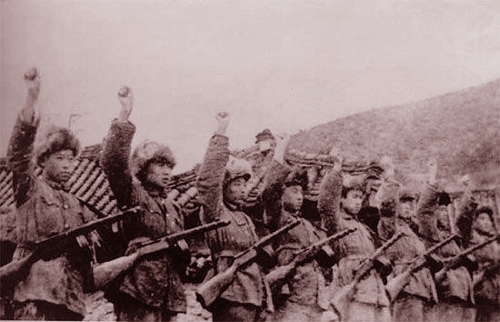
The first surprise attack came at night. It was mounted by reckless fighters, who swarmed into battle on horseback and afoot after [American] bugles had morbidly sounded ‘taps’. The Reds pounced on two combat regiments of the American First Cavalry Division and the South Korean First Division. Hundreds of civilians, caught by the flaming machine gun and mortar fire, were mowed down. In U.N. casualties, it was the one of the costliest engagements of the war.

Vietminh Power Struggle? (The New Leader Magazine, 1951)
1951, The New Leader Magazine, The Vietnam War

Vietminh Power Struggle?
(The New Leader Magazine, 1951)

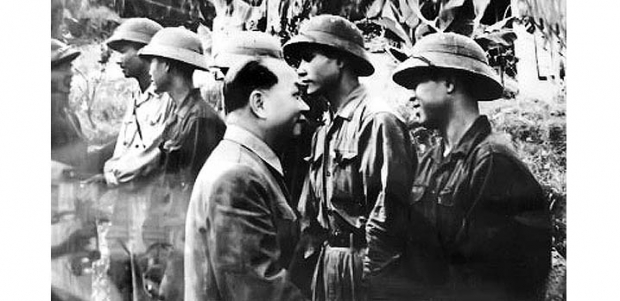
During the earliest days of 1951 many journalists and intelligence analysts in the West thought Ho Chi Minh’s prolonged absence from public view meant a coup d’état had taken place within the Viet Minh hierarchy. These same minds held that the most likely candidate to launch such a power play was Ho’s number two: Dang Xuan Khu (1907 – 1988). This article goes into some detail explaining who he was and what he’d been up to for the past forty years.

Advertisement

Use shortcode [oma_ad position="summary_top"] (or other position) in your theme or widgets to display OMA Promotions here.

Private Yori Wada, United States Army (Script Magazine, 1942)
1942, Japanese-American Service, Script Magazine

Private Yori Wada, United States Army
(Script Magazine, 1942)

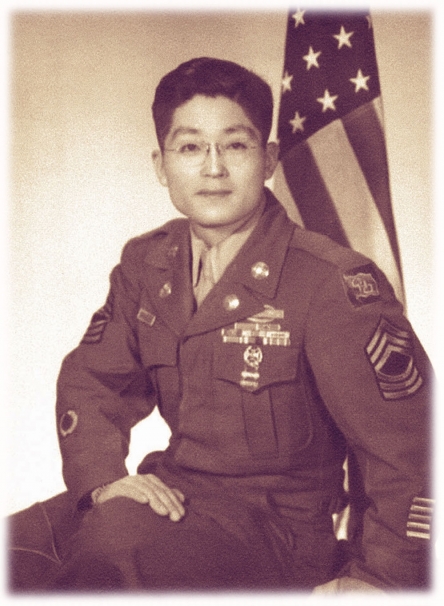
The attached article was written by a twenty-five year-old Japanese-American Army private named Yori Wada (1917 – 1997). Wada had joined the army some months prior to the Pearl Harbor attack and with all the good fellowship and optimism typical of youth, he explained with some enthusiasm, about how much he enjoyed army life and all the friends he had made within his unit. While the article makes no reference to the unfortunate lot of his family back home, Wada wrote that his future in the army as of April, 1942 was unclear; all he wanted was a fair shot to defend his country, and he didn’t think that he’d get it.

Advertisement

Use shortcode [oma_ad position="summary_top"] (or other position) in your theme or widgets to display OMA Promotions here.

Scroll to Top