Author name: editor

One of the First Letters to the Editor in Favor of the Bomb (Yank Magazine, 1945)
1945, Atomic Bombs, Yank Magazine

One of the First Letters to the Editor in Favor of the Bomb
(Yank Magazine, 1945)

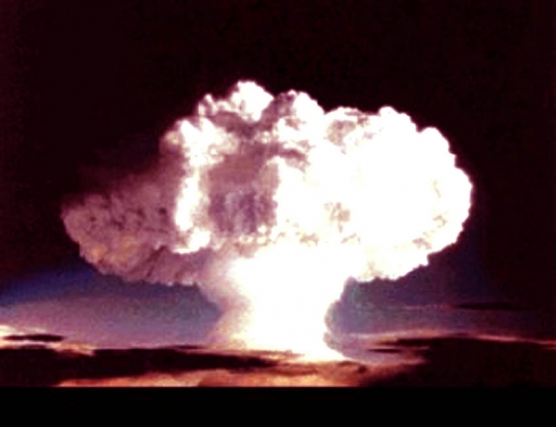
Apparently the arguments that we still hear today concerning whether or not use of the Atomic Bomb in 1945 was justifiable popped-up right away. The following is a letter to the editor of Yank Magazine written by a hard-charging fellow who explained that he was heartily sick of reading the

-pious cries of horror [that] come from the musty libraries of well-fed clergymen and from others equally far removed from the war.

Advertisement

Use shortcode [oma_ad position="summary_top"] (or other position) in your theme or widgets to display OMA Promotions here.

German Armor: Panzer III and IV (Yank Magazine, 1944)
1944, Weapons and Inventions, Yank Magazine

German Armor: Panzer III and IV
(Yank Magazine, 1944)

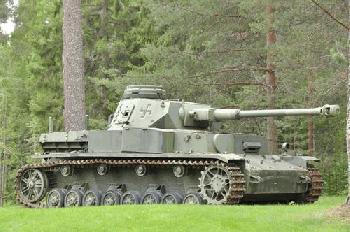
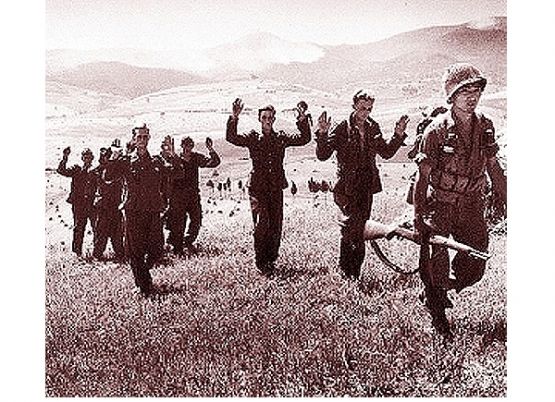
The attached two articles report on what the U.S. Army came to understand following the close examination of two German tanks: the Panzer III and Panzer IV.


The Panzer III was first produced in 1934 and the Panzer IV two years later; both tanks were used with devastating effect during the opening days of the Blitzkrieg on Poland, France and later the invasion of Russia. The developed a close and personal relationship with both during the North African campaign in 1943.


Click here to read about the German King Tiger Tank.

George Gershwin: Tin Pan Alley and Beyond (Magazine of Art, 1937)
1937, Big Band 1930s-1940s, The Magazine of Art

George Gershwin: Tin Pan Alley and Beyond
(Magazine of Art, 1937)

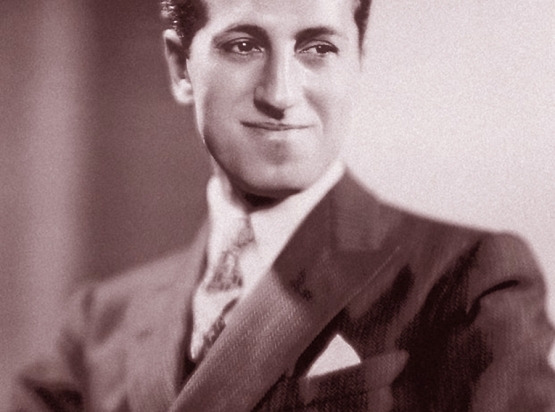
An interesting two page article about George Gershwin (1898 – 1937), written within days of his death and filled with fascinating bits about his career, education and his instant popularity:

The Gershwin invasion of Tin Pan Alley came at a time when history was being made. The Broadway-Negro tradition that stemmed from Stephen Foster and the anonymous tune-smiths who wrote old minstrel shows, was being carried on by bards like Paul Dresser, Harry von Tilzer, and the amazing Witmark family. Jerome Kern and Irving Berlin labored in the Alley cubicles. Something called ragtime was in the air and jazz was about to be born.

Advertisement

Use shortcode [oma_ad position="summary_top"] (or other position) in your theme or widgets to display OMA Promotions here.

Women Candidates Win Higher Offices (The Literary Digest, 1924)
1924, The Literary Digest, Women's Suffrage

Women Candidates Win Higher Offices
(The Literary Digest, 1924)

The majority of women being natural-born housekeepers, why shouldn’t the infinite details of a Governor’s office appeal to the female of the species?

This deep thought was put to the public by the inquisitive souls at The Birmingham News just four years after the ratification of the Nineteenth Amendment, which granted American women the right to vote.


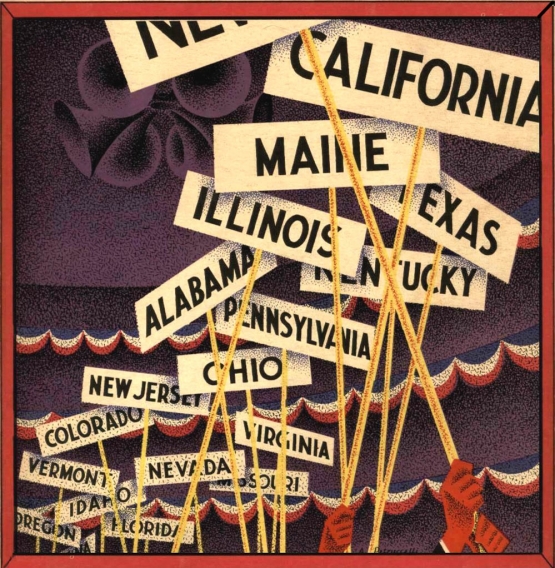
The attached article concerns the 1924 elections which saw many American women swept into high political offices all across the fruited plain; it lists all significant offices that would soon be held by women and clearly indicates that the year 1924 ushered in a new era in American political history.


Click here to read further about women in national politics.


In 1933 FDR named one of these women to serve as Director of the U.S. Mint…

Fortune Magazine History
1938, Magazines, Scribner's Magazine

Fortune
(Scribner’s Magazine, 1938)

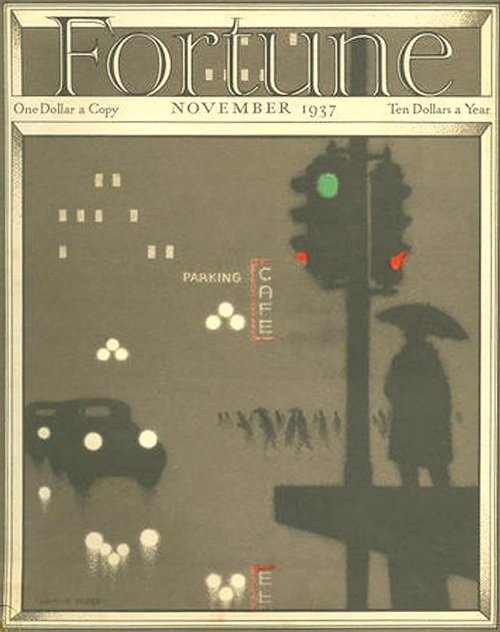
Fortune is the world’s outstanding exponent of plush journalism. Its editors, long accustomed to prodigal expenditures, proudly talk of doing things ‘in the Fortune manner’. The Fortune manner may mean spending $12,000 on research for a single story. It means commissioning oil paintings of industrial tycoons for the sole purpose of reproduction in Fortune. It mean de luxe color gravure and high-priced writers…

The Prophetic Dreams of Abraham Lincoln (Literary Digest, 1929)
1929, Abraham Lincoln, The Literary Digest

The Prophetic Dreams of Abraham Lincoln
(Literary Digest, 1929)

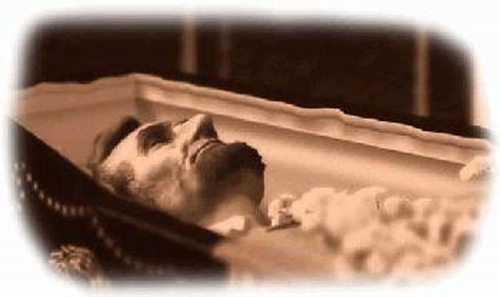
There are hundreds of stories concerning the life of President Lincoln. Some of them are true and some are not and we’ll leave it up to other websites to decide; among the stories told are the ones that tell the tale of a Lincoln who had dreams of foreboding, dreams that came to him in the night and told of his own demise:

Gradually she drove him into telling of his dream.

‘About ten days ago I retired late. I soon began to dream. Then I heard subdued sobs, as if a number of people were weeping. I thought I left my bed and wandered downstairs…I arrived at the East Room, which I entered. Before me was a catafalque, on which rested a corpse, wrapped in funeral vestments. Around it were stationed soldiers who were acting as guards, and there was a throng of people, some gazing mournfully…others weeping pitifully. ‘Who is dead in the White House?’ I demanded of one of the soldiers. ‘The President,’ was his answer. ‘He was killed by an assassin.’ Then came a loud burst of grief from the crowd which awoke me from my from my dream.’

It was argued that slavery in the United States did not end in 1865…

Advertisement

Use shortcode [oma_ad position="summary_top"] (or other position) in your theme or widgets to display OMA Promotions here.

The Invention of Rayon (Literary Digest, 1937)
1930s Fashion, 1937, The Literary Digest

The Invention of Rayon
(Literary Digest, 1937)

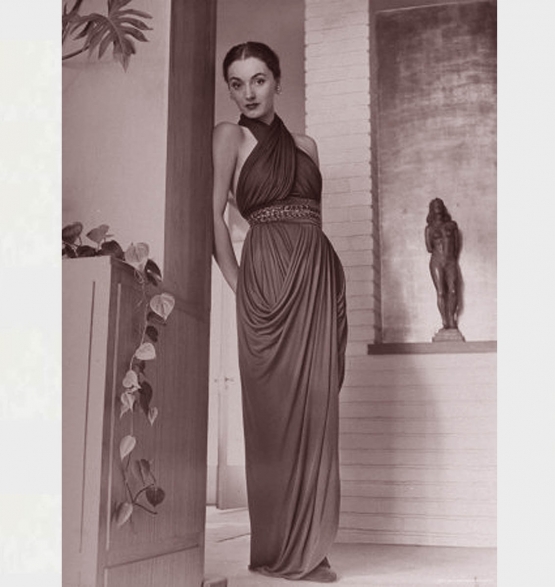
This magazine article reported on the Miracle Fabric of the 1930s: rayon – and rayon cannot be deleted from any study dealing with Thirties fashion any more than the word polyester can be separated from a discussion of 1970s fashion. The article presents a history of the fabric but makes it quite clear that the fabric was immediately embraced by all the fashion houses at that time.


Read about the 1930s revival of velvet.

Click here to read about feminine conversations overheard in the best New York bathrooms of 1937.

Weapons and Tactics at Gettysburg (National Park Service, 1954)
1954, Gettysburg History, Pamphlet Produced by the National Park Service

Weapons and Tactics at Gettysburg
(National Park Service, 1954)

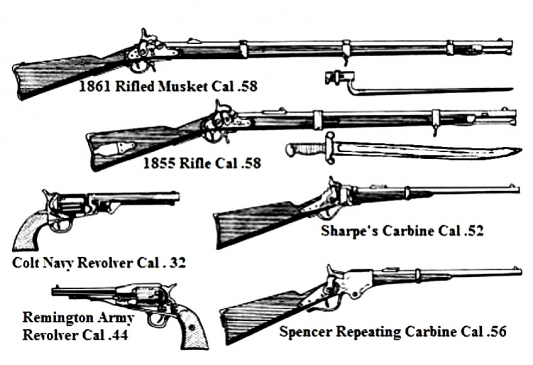
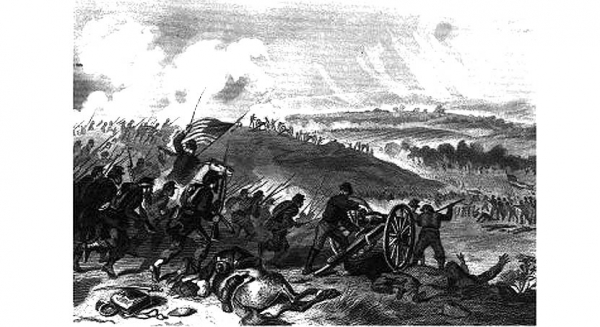
The weapons and tactics used at the Battle of Gettysburg were in no way different from those brought into use during other parts in the war. Just as war has always been practiced, weapons influence tactics and this article lists a variety of Civil War rifles and artillery pieces that were put to use during that three day battle. The author also goes to some length describing the manner in which Civil War regiments and brigades marched into battle and the deployment of their supporting artillery batteries.

Advertisement

Use shortcode [oma_ad position="summary_top"] (or other position) in your theme or widgets to display OMA Promotions here.

'Beginner's Guide to the Civil War'' (Pageant Magazine, 1958)
1958, Civil War History, Pageant Magazine

‘Beginner’s Guide to the Civil War”
(Pageant Magazine, 1958)

As the one-hundredth anniversary of the War Between the States grew ever nearer, a Pulitzer Prize winning Civil War Historian, Bruce Catton, wrote the attached article concerning the overwhelming popularity that the nation was finding in their study of that remarkable contest:

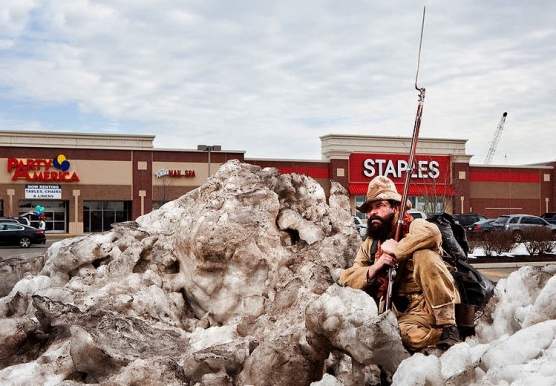
The requirements for becoming a Civil War Buff are very simple. All you need is a desire to join. If you are interested in the Civil War, you’re in… You may get to the point where you want to join a Civil War Round Table. [Overtime] commonplace words like Appomattox and Antietam and Perryville take on a new meaning for you; a good deal of the monotony and routine of modern life somehow evaporates, as you escape into a period of profound and haunting significance.

All in all, it’s quite an experience.
Welcome to the Army!
Impressions of John Brown (Literary Digest, 1897)
1897, Civil War History, The Literary Digest

Impressions of John Brown
(Literary Digest, 1897)

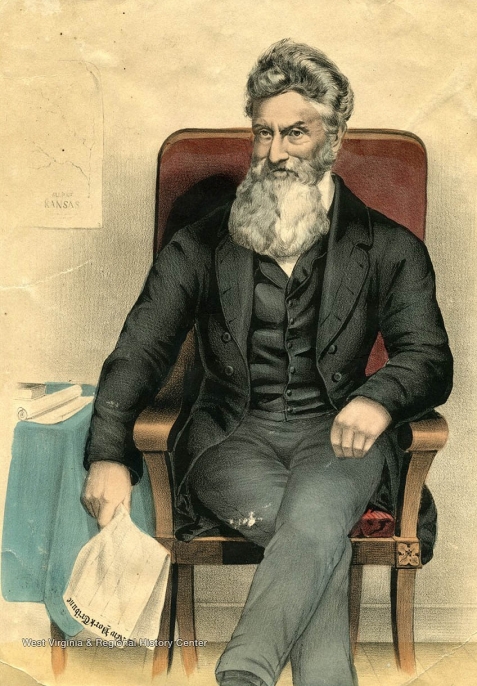
This article from 1897 is a digest of Cheerful Yesterdays, a longer piece by Colonel Thomas Wentworth Higginson (1823 – 1911) originally appeared in The Atlantic Monthly. Having served actively in the anti-slavery movement during the days leading up to the Civil War, Higginson put to paper his memories of famed abolitionist John Brown, wishing to banish all thoughts that the man was mad.

Advertisement

Use shortcode [oma_ad position="summary_top"] (or other position) in your theme or widgets to display OMA Promotions here.

Mathew Brady at Antietam (NY Times, 1862)
1862, Civil War History

Mathew Brady at Antietam
(NY Times, 1862)

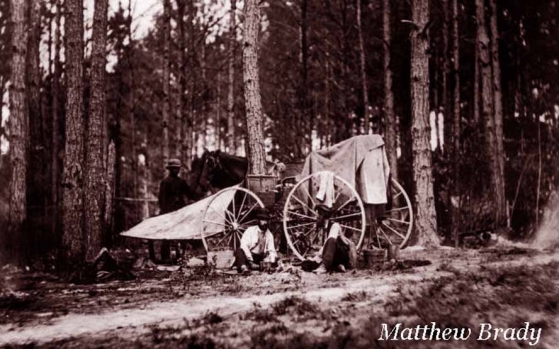
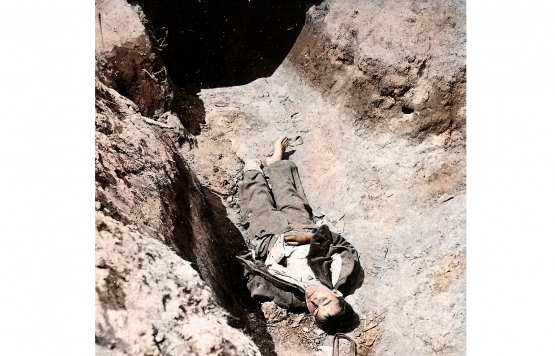
An anonymous reviewer tells his readers about the mournful spirit that dominated each room at the Matthew Brady Gallery where he attended a unique exhibit of the photographer’s Civil War pictures:

At the door of his gallery hangs a little placard ‘The Dead of Antietam’. Crowds of people are constantly going up the stairs; follow them…there is a terrible fascination about it that draws one near these pictures, and makes you loath to leave them. You will see hushed, reverend groups standing around these weird copies of carnage, bending down to look in the pale faces of the dead, chained by the strange spell that dwells in dead men’s eyes.


It was on the first day at Gettysburg that the Confederates made a terrible mistake. Read about it here.

'Boy Soldiers of the Confederacy'' (Confederate Veteran Magazine, 1922)
1922, Civil War History, Confederate Veteran Magazine

‘Boy Soldiers of the Confederacy”
(Confederate Veteran Magazine, 1922)

The two page article attached herein served to alert the 1922 subscriber-base of Confederate Veteran Magazine that Boy Soldiers of the Confederacy (1905) – was no longer in print and isn’t that too bad and just in case no one shared the reviewers feelings on this matter, she recalled some of the Civil War experiences of the boys who fought throughout that war.


Read about a boy who fought for the Union…

The Bad Generals (Pageant Magazine, 1958)
1958, Civil War History, Pageant Magazine

The Bad Generals
(Pageant Magazine, 1958)

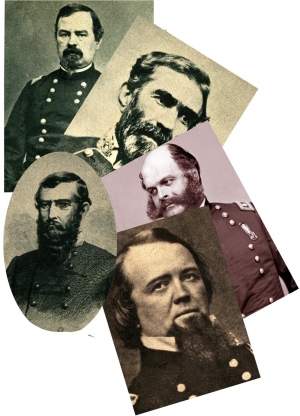
Attached herein is a list the five lamest Generals of the American Civil War.


This two page compilation is made up of thumbnail descriptions outlining just how far from awesome these men were, and why, one hundred years later, they continue to be recognized as failures to the succeeding generations of Civil War historians.

Advertisement

Use shortcode [oma_ad position="summary_top"] (or other position) in your theme or widgets to display OMA Promotions here.

Scroll to Top