Author name: editor

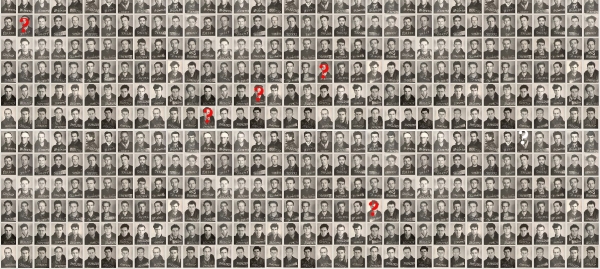
The Escaped P.O.W.s That The F.B.I. Never Found (Collier's Magazine, 1953)
1953, Collier's Magazine, POWs

The Escaped P.O.W.s That The F.B.I. Never Found
(Collier’s Magazine, 1953)

Unlike Reinhold Pabel, the W.W. II German P.O.W. whose story is told in the article posted above, the five escapees in this article remained at large long after the war ended. Five minutes researching their names on the internet revealed that every single one of them remained in the U.S. where they held jobs, paid taxes and raised families well into their golden years.
Elmer Wheeler Amazing Salesman | Elmer Wheeler Greatest Salesman
1938, Advertising, The Literary Digest

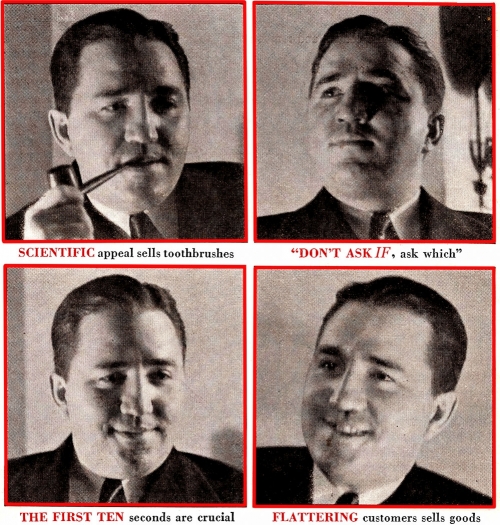
Elmer Wheeler, Word Chemist
(Literary Digest, 1938)

For ten years it has been Elmer Wheeler’s profession to find out for his clients what words, spoken across the counter, will sell merchandise. It is shrewd psychology applied to a neglected link in the chain of business…:

Don’t ask if, ask which. Don’t ever give the customer the choice between something and nothing.


Wheeler knows he alone is not the gate keeper of successful sales pitches – he recalled seeing a blindman with a sign reading, It’s spring, and I am blind.

Advertisement

Use shortcode [oma_ad position="summary_top"] (or other position) in your theme or widgets to display OMA Promotions here.

Captain Fritz Wiedemann in San Francisco 1940
1940, Spying, The American Magazine

Friend of the Allies
(The American Magazine, 1940)

Colonel William J. Donovan and Edgar Mower, writing of fifth-column activities at the direction of Frank Knox, Secretary of the Navy, charged Fritz Wiedemann [as having been] praised by Hitler for helping to spike American legislation to aid the Allies in 1939.


Numerous nasty remarks were quoted in the attached article concerning the German Consul General in San Francisco, Fritz Wiedemann (1891 – 1970), but the journalist who penned the article could not possibly know that Wiedemann was at that time spilling his guts to the FBI. Having served under Hitler for some time as adjutant, by 1940 Wiedemann had denounced his devotion to the Nazi Party and told Hoover all that he Knew about Hitler and what the world could expect from the man.


In 1940, Japanese spies made the mistake of confiding in Wiedemann – more about this can be read here.

Duquesne Spy Ring 1941 | Frederick Joubert Duquesne Spy | William G Sebold FBI Informant
1941, Newsweek, Spying

Capturing The Largest Nazi Spy Ring
(Newsweek Magazine, 1941)

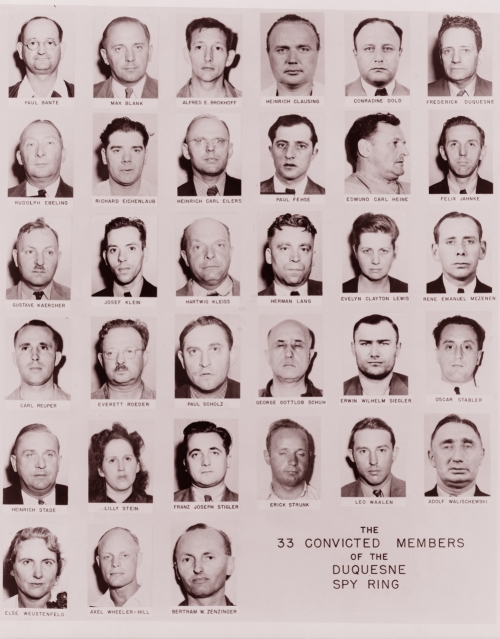
Following swiftly on the smashing of a spy ring in this country, a Federal grand jury in Brooklyn, N.Y., last week leveled a unique indictment at the government of Nazi Germany: it baldly accused the Third Reich of conducting, in ten countries stretching from Peru to China, a worldwide espionage plot directed against the United States.


J. Edgar Hoover tells how this ring was broken up in this 1951 article…

WW2 Counter-Espionage | J Edgar Hoover Counter-Espionage | Sicherheitsdienst 1941
1951, Coronet Magazine, Spying

Counter-Espionage
(Coronet Magazine, 1951)

This is the story of Harry Sawyer (real name William G. Sebold), a German immigrant to American shores. On a return trip to Germany to visit family in 1939, Sawyer was very reluctantly forced into service as a spy for the German SD (Sicherheitsdienst), the intelligence arm of Himmler’s SS. Sawyer was schooled briefly in the ways of spying, told what was expected of him and then let loose to set sail home.


Upon his return, Sawyer quickly explained his problem to J. Edgar Hoover, who masterfully turned the situation to his advantage, an advantage that led to the capture of 32 Nazi spies.


Click here to read about Lucy – Stalin’s top spy during the Second World War.

Advertisement

Use shortcode [oma_ad position="summary_top"] (or other position) in your theme or widgets to display OMA Promotions here.

Japanese spies in 1940s USA |
1942, Spying, The American Magazine

Finding Japanese Spies
(The American Magazine, 1942)

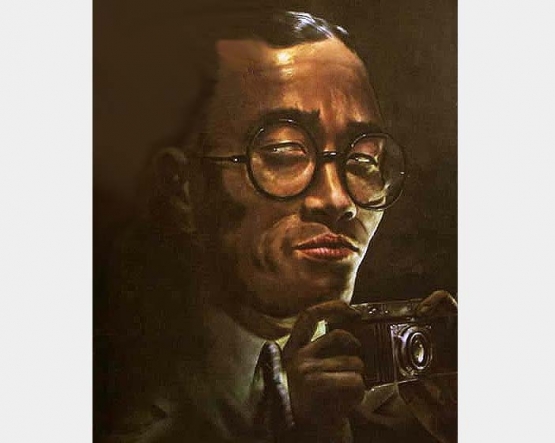
Here is an interesting article by an American counter-espionage agent who tells several stories about the various Japanese spies he had encountered during the early months of the war. He wrote of his his frustrations with the civil liberty laws that were in place to protect both citizen and alien alike.


It was Mexican president Manuel Avila Camacho who chased the spies out of his nation – click here to read about it…

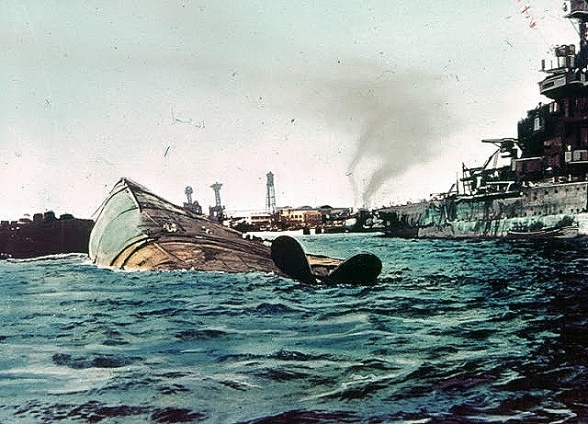
The Road to Pearl Harbor (United States News, 1945)
1945, Pearl Harbor, The United States News

The Road to Pearl Harbor
(United States News, 1945)

It now becomes apparent that the U.S. Government, long before Pearl Harbor, knew Tokyo’s war plans almost as thoroughly as did the Japanese. To all practical purposes, Washington had ears attuned to the most intimate, secret sessions of Japan’s cabinet.


A year and a half before the Pearl Harbor attack, Naval Intelligence sold a Japanese agent some bogus plans of the naval installation – more about this can be read here.

Advertisement

Use shortcode [oma_ad position="summary_top"] (or other position) in your theme or widgets to display OMA Promotions here.

Review of PORGY AND BESS 1935 | Opera by George Gershwin 1935
1935, Music History, Stage Magazine

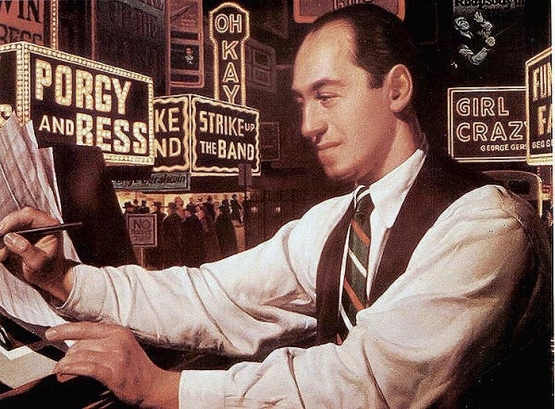
“Porgy and Bess”
(Stage Magazine, 1935)

Music critic and scholar Isaac Goldberg (1887 – 1938) reviewed the opening performance of George Gershwin’s Porgy and Bess for the editors of STAGE MAGAZINE:

Why the Jew of the North should, in time, take up the song of the Southern Negro and fuse into a typically American product is an involved question. Perhaps, underneath the jazz rhythms and the general unconventionality of musical process lies the common history of an oppressed minority, and an ultimately Oriental origin. In any case, the human focus of this particular type of musical Americanism has been, from the very first notes, George Gershwin.

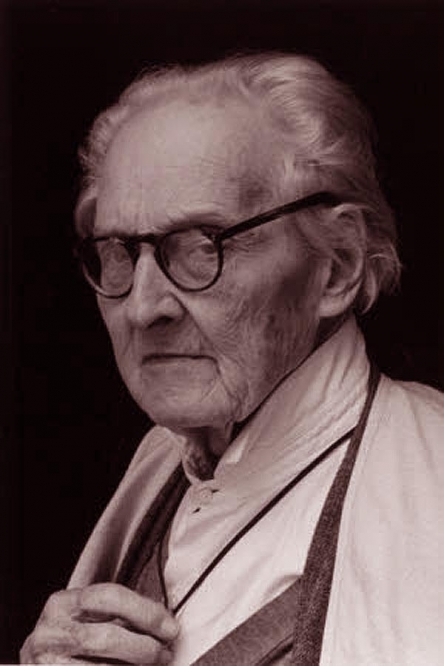
Edward Henry Gordon Craig Article for The English Review 1922 | Edward Henry Gordon Craig Hatred of Film 1922
1922, Silent Movie History, The English Review

One Thousand Nasty Remarks About Silent Films
(The English Review, 1922)

A much admired theatrical set designer was the author of this column – he was devoted to his craft and believed deeply that movies could only lead society to the lowest place:

The Drama in the Cinema is held to be made ‘of the people, by the people, and for the people’ It is really made by the new school of the same old tyrants, to enslave the mind of the people.

Advertisement

Use shortcode [oma_ad position="summary_top"] (or other position) in your theme or widgets to display OMA Promotions here.

The Films of the U.S. Army Signal Corps (Click Magazine, 1943)
1943, Click Magazine, World War Two

The Films of the U.S. Army Signal Corps
(Click Magazine, 1943)

An article from Click Magazine designed for civilian consumption concerning the U.S. Signal Corps and their efforts to film and photograph as much of the war as was possible in order that the brass hats far off to the rear could sit comfortably and understand what was needed. The article is illustrated with six war photographs and the captions explaining what information was gleaned from each:

Every detail of these films is scrupulously studied by a group of experts, officers and engineers representing the Army Ground Force, the Navy, the Marine Corps, the Army Air Corps, the Signal Corps the Armored Forces, the Quartermaster Corps and other military units. Naturally, these services are interested in different sections of every film. To facilitate their studies, a device known as the Multiple Film Selector is used.

The Signal Corps Movies of World War I were intended for different uses…

Advertisement

Use shortcode [oma_ad position="summary_top"] (or other position) in your theme or widgets to display OMA Promotions here.

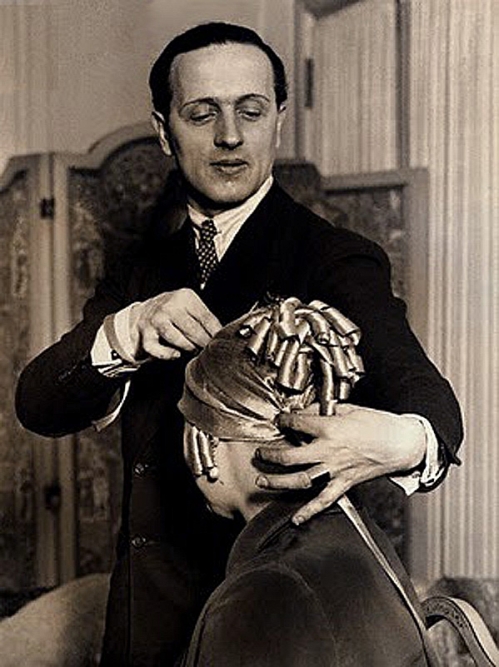
Antoni Cierplikowski article
1955, Coronet Magazine, Cosmetics

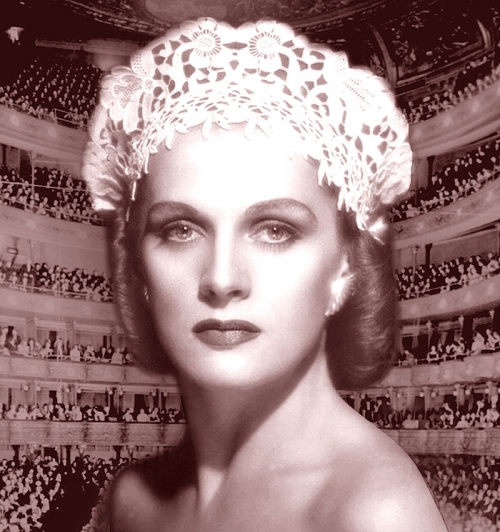
The First Celebrity Hairdresser
(Coronet Magazine, 1955)

This article tells the story of a certain Antoni Cierplikowski – better known as Antoine of Paris (1884 – 1976). He was the premiere hairdresser throughout much of the last century and his illustrious client list included many names that you would recognize. Yet, to simply write the man off as a celebrity hairstylist is to ignore his myriad innovations:


• Antoine was the creator of the Bob.

• He created the Perm.

• He was the first to tint gray hair to blue.

• He was the first to apply a lacquer to hair as a fixative.

• Antoine was the first to tinge isolated elements within a hairdo blond as a streaked highlight.

America Vilified in the European Press (Literary Digest, 1928)
1928, Foreign Opinions About America, The Literary Digest

America Vilified in the European Press
(Literary Digest, 1928)

Envy and admiration as well as ridicule and praise are found in the many articles the European press devoted to this country. Our big business astonishes them, our so-called lack of culture inspires thinly veiled contempt, while our homicide records lead some rather irascible English critics to speak of the United States as ‘the Land of Liberty – for the murderer.’

Yet for all their contempt there was one thing they couldn’t live without: click here to read an article about how much the Europeans loved American silent comedies.

'Tell That To The Marines'' (Sea Power Magazine, 1918)
1918, Posters, Sea Power Magazine

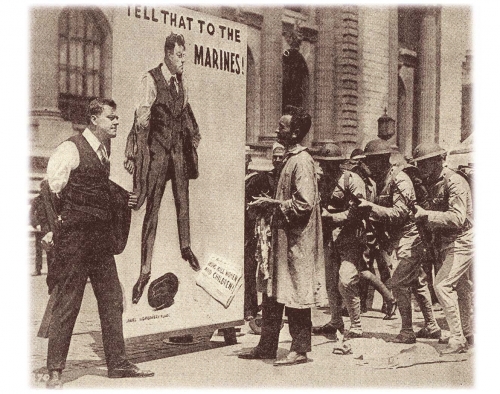
‘Tell That To The Marines”
(Sea Power Magazine, 1918)

The W.W. I poster campaign was a vast undertaking that was new in the annals of warfare. Never before had government locked arms with the newly created forces of mass-media (such as it was) in an effort to instill some sense of patriotism in the hearts of so many. The old salts who edited Sea Power Magazine recognized this and so they documented as many of the posters dealing with the US. Navy as they could find.


The attached single page article explains the origins and development of the famed Tell That To The Marines poster that was painted by James Montgomery Flagg in 1918.

Advertisement

Use shortcode [oma_ad position="summary_top"] (or other position) in your theme or widgets to display OMA Promotions here.

Scroll to Top