Author name: editor

1944 Peace Now Movement | Peace Movements in WW2 America
1944, Home Front, Newsweek

A Failed Peace Movement
(Newsweek Magazine, 1944)

We were terribly surprised to learn of a peace movement that existed on the 1944 American home front. Baring an awkward name that was right out of Seventiespeak, Peace Now printed pamphlets that played the class game so prevalent in the other leftist organizations that would come forth twenty years later.

British Children Brought to USA 1940 | Child-Refugees from London Blitz to Arrive in USA
1940, Home Front, PM Tabloid

Thousands of British Children Welcomed
(PM Tabloid, 1940)

A year and a half before Pearl Harbor, many Americans, 10,000 to be exact, were active in welcoming British children, ages 5 – 16, to their homes. This was a time when it was widely believed that a Nazi invasion of Britain was imminent and the Battle of Britain was in full-swing:

Nobody knows how many will be admitted or how many will land in Canada on the first child-refugee ship, due three weeks from now.The quota for British children is 6,500 a-month; for children from other countries quotas are considerably lower.


To read about the short and productive life of New York’s PM, click here

D-Day News On The U.S. Home Front | June 6 1944 In The USA |
1944, Home Front, Newsweek

D-Day On The Home Front
(Newsweek Magazine, 1944)

By the dawn’s early light America awoke to the knowledge that its D-Day had come. Electricity meters clocked a sudden spurt in kilowatt loads as house lights and radios went on; telephone switchboards jammed as excited householders passed the word along. By morning on June 6, scarcely a family failed to know that the nation’s sons and brothers, husbands and sweethearts were even then storming the beaches of Normandy to begin the Allied liberation of Europe.


Click here to read about D-Day…

Advertisement

Use shortcode [oma_ad position="summary_top"] (or other position) in your theme or widgets to display OMA Promotions here.

Home Front Chicago (Yank Magazine, 1944)
1944, Home Front, Yank Magazine

Home Front Chicago
(Yank Magazine, 1944)

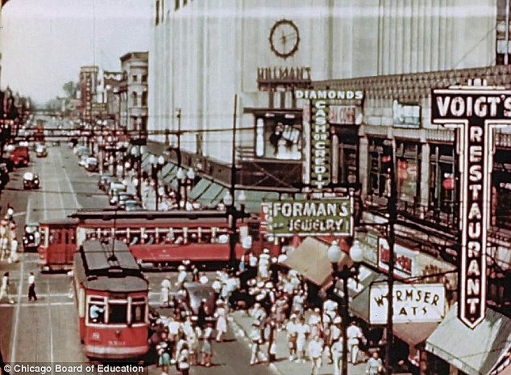
Chicago, Illinois saw enormous changes take place during the war years, most notably the overnight construction of over 260 defense plants and the opening of its subway system (six miles in length, at that time). Half a million war workers arrived to toil in her new factories while it is said that each city block in Chicago dispatched, on average, at least seven of her sons and daughters for the armed services.

Nerves are taught with war tension. Hard work adds to the strain and increases the tempo. People walk faster in the streets. Stampedes for surface cars, and the new subway are more chaotic than ever… Five thousand block flagpoles have been erected by block committees of the Office of Civilian Defense. Listed in some manner near each are the names of all the GIs from the block. Some of the installations are elaborate and have bulletin boards that are kept up to date with personal news from camps and war theaters.
WW2 Japanese Home Front Article | WW2 Reporter Max Hill Associated Press
1943, Japanese Home Front, The American Magazine

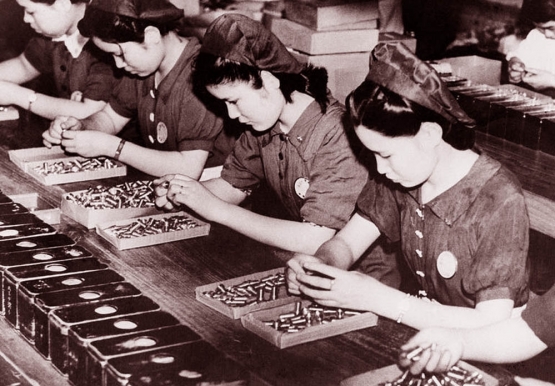
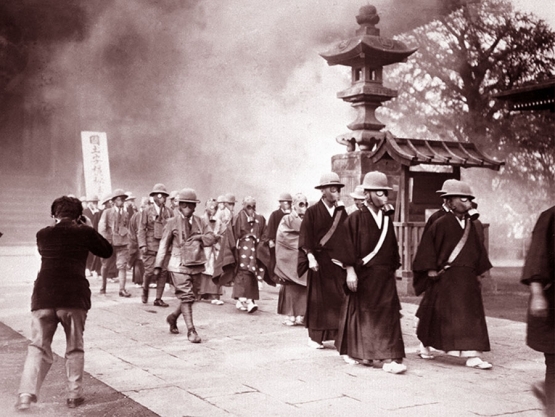
The Japanese Home Front
(American Magazine, 1943)

This article was written by Max Hill, who was serving as the Tokyo bureau chief for the Associated Press at the time of the Pearl Harbor attack. The column consists of his observations as to how the Japanese home front operated during his seven month incarceration.


Click here to read about the Japanese home front during the early period of the Sino-Japanese War.


Click here to read about the W.W. II German home front.

Advertisement

Use shortcode [oma_ad position="summary_top"] (or other position) in your theme or widgets to display OMA Promotions here.

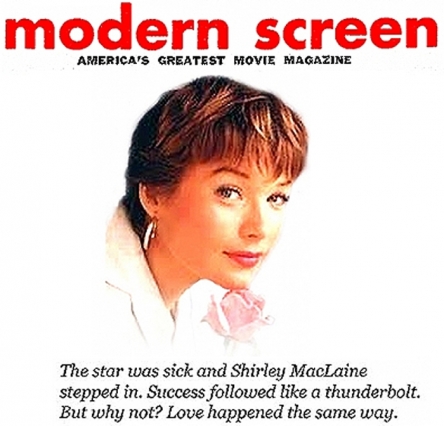
Shirley MacLaine at 22 (Modern Screen, 1956)
1956, Hollywood History, Modern Screen

Shirley MacLaine at 22
(Modern Screen, 1956)

Arriving in Hollywood by way of The Trouble with Harry in 1955, and cute as buttons – Shirley MacLaine (b. 1934) was the adopted little sister of the Rat Pack, that odd movie star whose sensitive skin burned too easily in the California sun and one of the few starlets who was actually capable of sewing her own clothes.

Should the Federal Government Fund Schools at All? (Literary Digest, 1921)
1921, Education, The Literary Digest

Should the Federal Government Fund Schools at All?
(Literary Digest, 1921)

‘The public school system will become a vast political machine.’ And this machine, it is charged, ‘will give a Federal Administration the opportunity of creating an educational autocracy, really endangering the liberty of thought and information, which is a basic right of the people.’


This article pertains to a bill that was before the Congress one hundred years ago that proposed the creation of a Department of Education. The bill was defeated. The proposed legislation was enthusiastically supported by the National Education Association.

Advertisement

Use shortcode [oma_ad position="summary_top"] (or other position) in your theme or widgets to display OMA Promotions here.

1943, Education, The Saturday Review

‘Revolt in the Classroom
(The Saturday Review, 1943)

This 1943 article by the noted American sociologist, Willard Waller (1899 – 1945), reported on the impact that W.W. II was having on the American educational system. Waller pointed out that during the course of 1942-43 school year, as many as 189,000 teachers had left their classrooms in order to work in defense plants. The author argued four distinct points that would halt the mass exodus – among them was the cry that salaries of teachers must be raised to the point where they match favorably with industry.


A 1944 photo-essay on this topic can be read here…

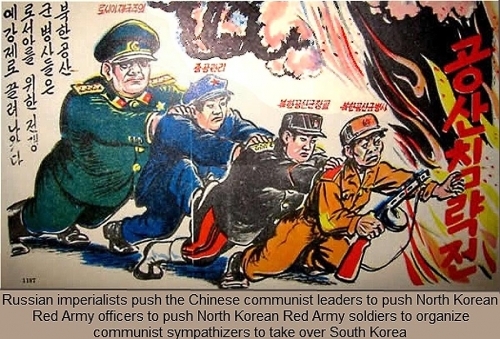
America vs Russia During the Korean War | 1950 Satellite War 1950 | Soviet Satellite States 1950
1950, Pathfinder Magazine, The Korean War

The Satellite War
(Pathfinder Magazine, 1950)

Then came June 24 [1950]. Her skirts legally clean, Russia hit upon a way to fight the U.S. without technically using a single bullet or soldier of her own. It mattered little if Korean mercenaries, not identifiable nationally with the USSR, were doing the fighting. A satellite war was just as good a way to weaken the U.S. as a direct war – if not better.

Advertisement

Use shortcode [oma_ad position="summary_top"] (or other position) in your theme or widgets to display OMA Promotions here.

John Thompson of the Chicago Tribune (Coronet Magazine, 1944)
1944, Coronet Magazine, War Correspondents

John Thompson of the Chicago Tribune
(Coronet Magazine, 1944)

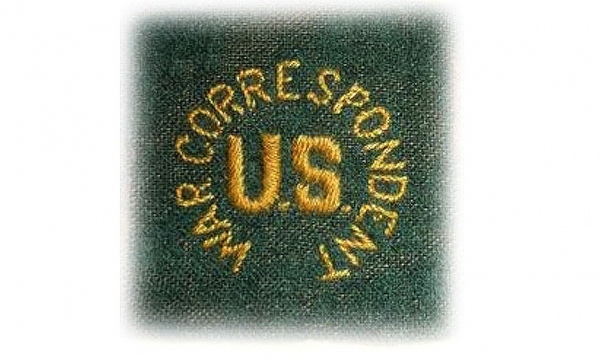
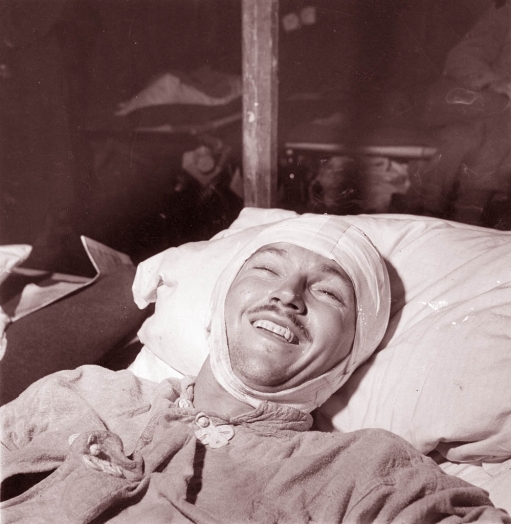
John Thompson of The Chicago Tribune saw more of the World War II than most other correspondents. He had witnessed to the Battle of the Bulge, the liberation of Paris and the horrors of the Buchenwald death camp. Throughout his life, Thompson held the distinction of being the last surviving war correspondent to land on Omaha Beach during the D-Day landings; by war’s end he had been awarded the Purple Heart, nine battle stars and was the first correspondent to receive the Medal of Freedom. This column was written in 1943 and pertains to some of his experiences in North Africa and Sicily.

Advertisement

Use shortcode [oma_ad position="summary_top"] (or other position) in your theme or widgets to display OMA Promotions here.

Richard Tregaskis of the International News Service (Coronet, 1944)
1944, Coronet Magazine, War Correspondents

Richard Tregaskis of the International News Service
(Coronet, 1944)

Richard Tregaskis (1916 – 1973) covered the invasion of Guadalcanal and the first seven weeks of Marine fighting on that island, the earliest stages of the Tokyo air raid, covered the Battle of Midway, wrote a best-selling book
(Guadalcanal Diary) and accompanied the forces that invaded the Russell Islands.

It wasn’t long after he arrived in the Mediterrian that stories began appearing in American papers under the Tregaskis byline, and he is still ‘somewhere’ on the European fighting front covering the big battles which make news.

The Absent Teachers (Click Magazine, 1944)
1944, Click Magazine, Home Front

The Absent Teachers
(Click Magazine, 1944)

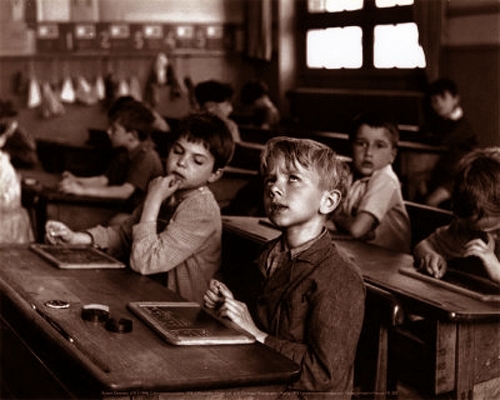
This 1944 article by the U.S. Commissioner of Education, John W. Studebaker (1887 – 1989), reported on the impact that W.W. II was having on the American educational system. Studebaker pointed out that during the course of the national emergency, as many as 115,000 teachers had left the nation’s classrooms in order to help the war effort in one form or another.

The 45 Communist Goals for the United States by W Cleon Skousen | Political Correctness in the United States | Quote from THE NAKED COMMUNIST
1963, Congressional Record, The Cold War

Red Goals For American Society
(Congressional Record, 1963)

When we read this transcript from The Congressional Record we were flabbergasted! You will find that it is a compilation that was pieced together in the late Fifties listing all the changes America’s Communist enemies wished to see take place in the United States in order to make their mission of conquest that much easier – yet as you read the list you quickly recognize that at least 85% of this tally fell into place as recently as 2020.

Advertisement

Use shortcode [oma_ad position="summary_top"] (or other position) in your theme or widgets to display OMA Promotions here.

Scroll to Top