A Pearl Harbor Day Recollection
(PM Tabloid, 1942)
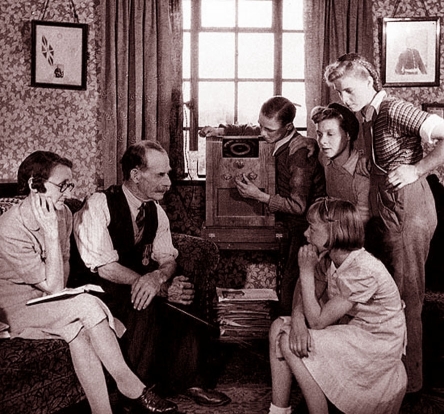
A year after the Pearl harbor attack, one of the PM journalists recalled for their readers how many Americans in the lower 48 had heard the news on the radio that evening.

A year after the Pearl harbor attack, one of the PM journalists recalled for their readers how many Americans in the lower 48 had heard the news on the radio that evening.
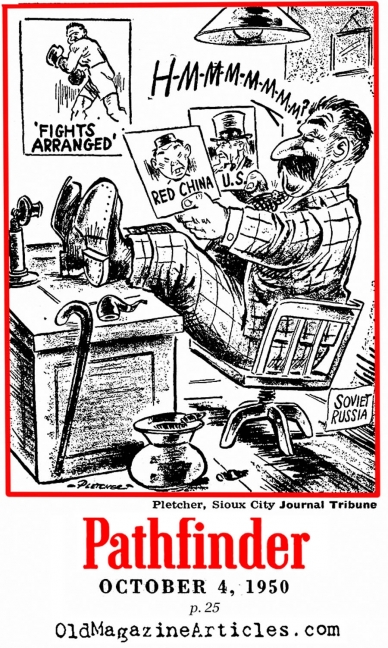
On Friday, November 3, 1950 Mao Tse-Tung (1893 – 1976) ordered the Chinese Army to intervene in the Korean War on behalf of the the retreating North Korean Army:
…perhaps [as many as] 250,000 Chinese Communists jumped into the battle for Northwest Korea; at best, their intervention meant a winter campaign in the mountains; at worst, a world war.
From Amazon: The Korean War: The Chinese Intervention
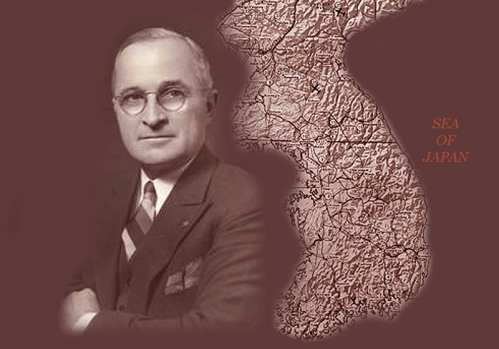
The Korean War was all of two weeks old when this column went to press describing the combustible atmosphere that characterized the Nation’s Capitol as events unfolded on the Korean peninsula:
A grim Senate voted the $1.2 billion foreign arms aid bill. Knots of legislators gathered on the floor or in the cloakrooms for whispered conversations. Crowds gathered around news tickers…
On everyone’s lips was the question: ‘Is this really World War III?’
Click here to read about the need for Army women during the Korean War.
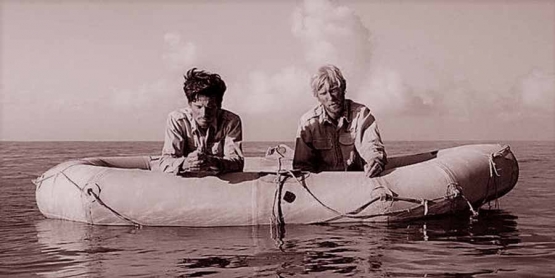
A psychologist, in discussing some of the widely publicized ‘miracles’ of the war, puts it this way: ‘God may be likened to an electric dynamo. We can receive the power of this dynamo by attaching ourselves to it by prayer; or we can prove it has no influence in our lives by refusing to attach ourselves to it by prayer. The choice is ours…’ Today indisputable proof of the power of prayer are pouring in from every quarter of the globe. The only surprising thing is that we think it surprising. These praying soldiers, sailors and aviators of ours are merely following the example of Washington who knelt to ask for aid in the snows of Valley Forge and of Lincoln who, in the darkest days of the Civil War, declared: ‘Without the assistance of That Divine Being Who attends me I cannot succeed; with that assistance I cannot fail.’
Click here to read about one of the most famous prayers of the Second World War…
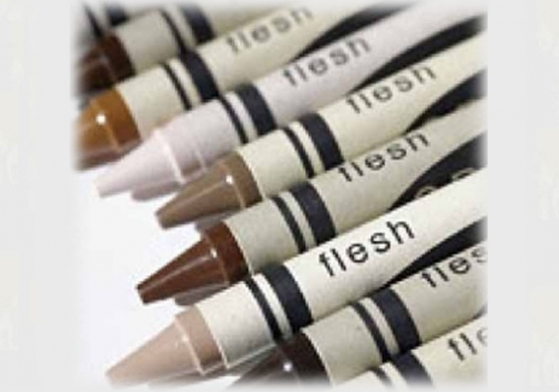
With the end of the Second World War in 1945 came numerous social changes to the nation. Among them was the Civil Rights movement, which soon began to find followers in the white majority and acquire an unprecedented traction in Washington as a result of the Cold War (an article on this topic can be read here). It was these two factors, the Cold War and the Civil Rights movement, that combined in the Fifties to call for the creation of a new immigration policy. It would be naive to assume that race alone was the sole factor in drafting a more inclusive policy because, as the attached editorial spells out, the Cold War climate demanded that the U.S. make more friends among the developing countries if the Soviets were to be defeated economically and militarily.
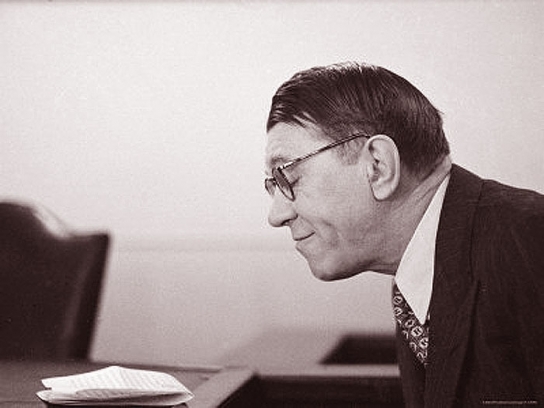
Twenty-three years after Harold Ross (1892 – 1951) launched The New Yorker, this profile of the man appeared on the newsstands:
Ross is a kind of impostor. The New Yorker is urbane; cactus is more urbane than Ross. The New Yorker carries understatement almost to the point of inaudibility; with Ross the expletive crowds out most of the eight parts of speech….It is true that he never had a high school education; but it is also true that he is a master grammarian, and that the superb sense of style which informs The New Yorker flows in part from his clean, uncompromising feeling for the English language.
Click here to read the second half of the Harold Ross profile. This portion is decorated with rejected cartoons from The New Yorker …
Ross never forgot his days in Paris as the editor of The Stars & Stars, click here to read an article about that period in his life.

When The Noble Experiment ended in 1933 the United Sates was a far less sober nation than it was thirteen years earlier. Organized crime was stronger than ever before, more Americans were in prison then ever before and more Americans than ever before had developed an unfortunate taste for narcotics. If prohibition was undertaken in order to awaken Americans to the glories of sobriety, it was the opposite that came to pass – Americans had become a people that reveled in drink. The writer who penned this column recognized that with the demise of Prohibition arose a culture that was eagerly buying up
a flood of utensils, mechanisms, gadgets, devices and general accessories [that celebrated the] noble old art of public drinking…

This is a report from 1952 on the largest group of Christians in the United States during that period in time:
The United States is sometimes called a ‘Protestant nation.’ It isn’t, of course. It is a nation of 150,697,361 free people, free to choose whatever path to God they please. But it was settles largely by Protestant denominations; it has, in fact, the largest Protestant population of any nation on earth. By latest tally, 81,862,328 Americans belong to religious bodies. Of these 59 percent are Protestant. Roman Catholics account for 33 percent, Jews for six percent and other faiths for two percent.
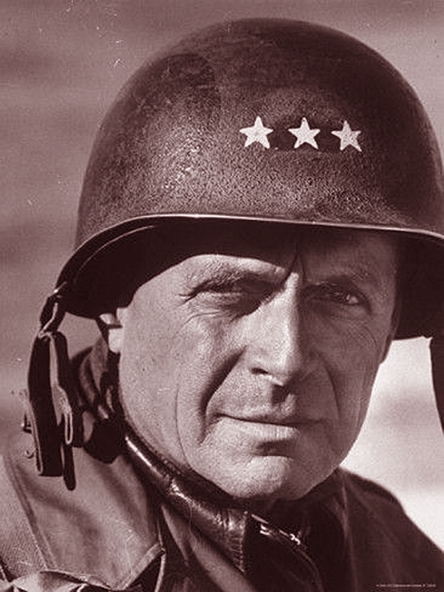
Ridgway wants no repetition of the Korean experience. If the U.S. is to fight in Asia again, he wants an army equal to the task and free to win. And, until his Army is capable of undertaking the job, he opposes even limited action by air or sea forces. The General disagrees with those who hold that a war can be won by air or sea power alone.

This is a very funny cartoon that was published in a long forgotten satire magazine from the early Sixties – you’ll enjoy it.
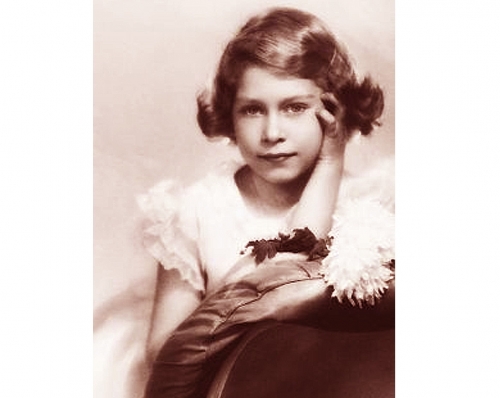
When Edward VIII chose to abdicate, the world’s attention shifted to the new heir, the Duke of York (George VI: 1895 – 1952) and his daughter, Elizabeth (Elizabeth II: b. 1926). This magazine article served to introduce the future queen to American readers – making clear that the princess was something like a British version of the Hollywood child star, Shirley Temple – often imitated and recognized as the gold standard of girlhood. Written during the depression, her lavish, story-book existence seemed unreal to many.
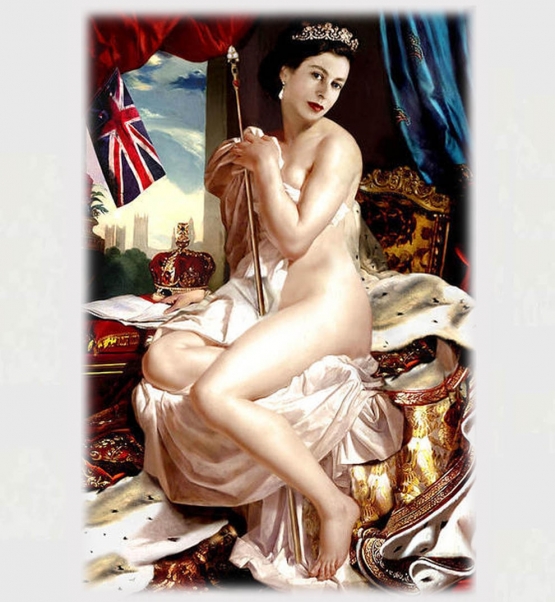
Actor Richard Burton, CBE (1925 – 1984) was no stranger to pretty feminine faces – and as a Welshman, he was no fan of British royalty; so it must have turned some heads when he listed Britain’s Queen Elizabeth as one of the most beautiful women in the world for the editors of Pageant Magazine.
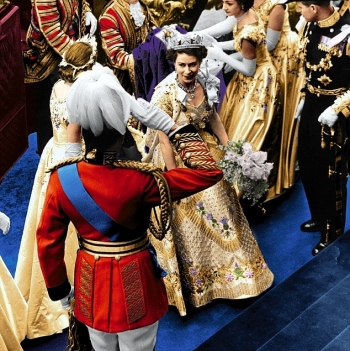
Judging by the photographs in this eleven page article, the editors of PAGEANT MAGAZINE must have finally decided to take their name quite seriously when they decided to dispatch a correspondent across the sea to report on all the glorious pageantry and glamour that made up the 1953 Coronation of the 27-year-old Elizabeth II (b. 1926):
When Elizabeth arrives at Westminster Abbey for the two-and-a-half-hour ceremony of the Coronation, it will mark the first time in fifty years that a queen has been crowned in England. Three queens have ruled over Albion in 800 years: Elizabeth I, Ann and Victoria; each of their reigns have brought great progress and prosperity. That is one reason why her subjects look forward with such glowing hope to the reign of Elizabeth II.
(Although it is no reflection on her, Britain’s power has decreased dramatically since 1953)
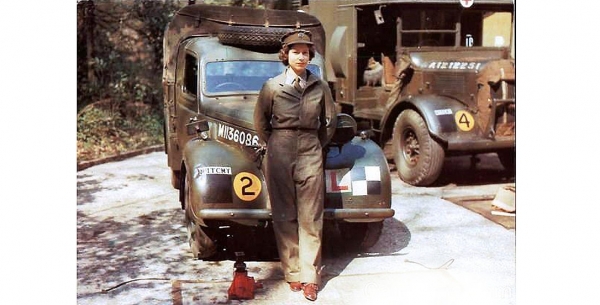
A printable article (excerpted from a longer one) outlining what exactly Princess Elizabeth II was up to during World War II:
…and it was decided that Elizabeth must not enlist in anything, that her training for the throne was of the first importance. But Elizabeth felt that she would be a slacker and carry about an inferiority complex for life. So for a year, relentlessly, she persisted. Just before her nineteenth birthday, her father gave in…
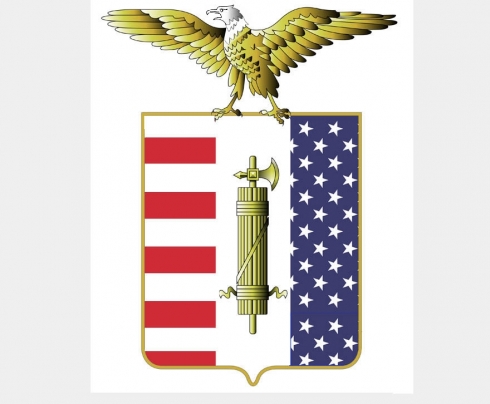
In certain quarters it is asserted that Mr. Roosevelt’s ‘New Deal’ is nothing other than the first stage of an American movement toward Fascism. It is said that, although the United States has not yet adopted the political structure of Italy and Germany, the economic structure of the country is rapidly being molded upon the Fascist pattern.
FDR’s D-Day prayer can be read here
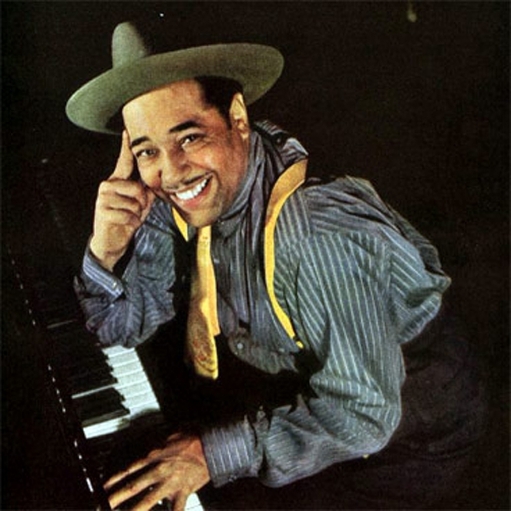
The top man in Negro music climbed on the bandwagon when he and his band played a hot spot called the Kentucky Club. That was twenty years ago, in New York City’s Harlem. This year, Duke Ellington (1899 – 1974) made another debut, at Carnegie Hall, goal of the great in music…Piano lessons bored Ellington when he was six years old. He never learned to play conventionally, but he was only a youngster when his flare for improvisation reaped attention and landed him a job in a Washington theater…one by one, his compositions hit the jackpot: ‘Mood Indigo’, ‘Sophisticated Lady’, ‘Ebony Rhapsody’, ‘Solitude’, ‘Caravan’.
Ellington calls his work Negro Music, avoids the terms ‘jazz’ or ‘swing’.
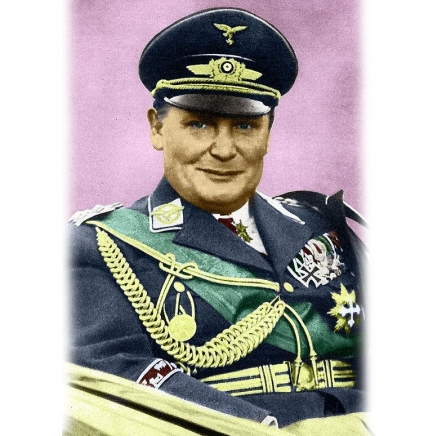
Here is a W.W. II gag cartoon by the Czech chuckle-meister himself, W. Trier (probably a pseudonym) that was smuggled out of his occupied homeland to Britain where it was published in Jesters in Earnest (1944). The cartoonist truly succeeded in satirizing Goering’s love of costume and his precious self-image. However glorious the drawings may be, they fail to impart to the viewers just how enamored the Reichsmarschall was with perfume (and he was)