
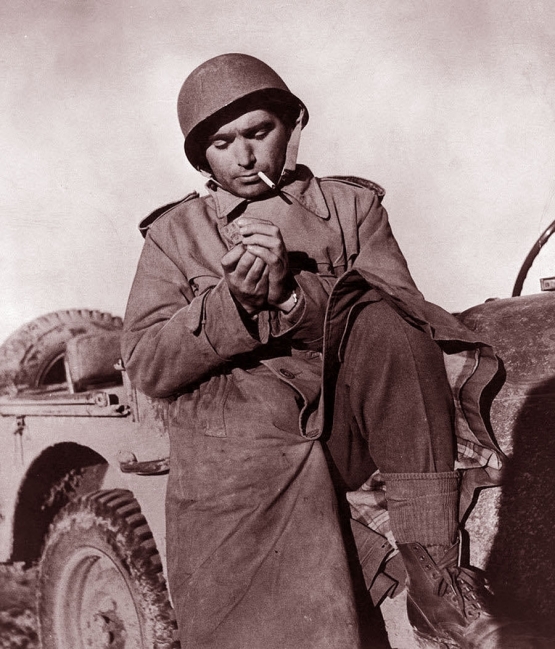
Robert Capa in Tunisia
(Collier’s Magazine, 1943)
Robert Capa’s (1913 – 1954) images of the American thrust through Tunisia.

Robert Capa’s (1913 – 1954) images of the American thrust through Tunisia.
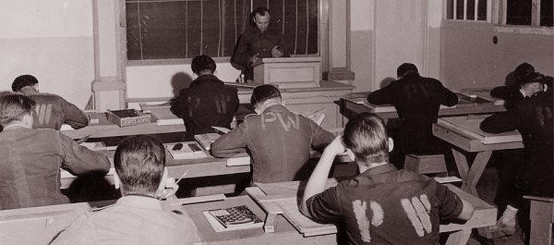
During the earliest days of 1944, the U.S. Army’s Special Projects Division of the Office of the Provost Marshal General was established in order to take on the enormous task of re-educating 360,000 German prisoners of war. Even before the Allies had landed in France it was clear to them that the Germans would soon be blitzkrieging back to the Fatherland and in order to make smooth the process of rebuilding that nation, a few Germans would be required who understood the virtues of democracy. In order to properly see the job through, two schools were set up at Fort Getty, Rhode Island and Fort Eustis, Virginia.

H.R. Knickerbocker (1898 – 1949), foreign correspondent for the Hearst papers, recalled a 1938 conversation he had with the noted Swiss psychiatrist Carl Jung concerning Adolf Hitler and his broad appeal among the German people:
He is like a man who listens intently to a stream of suggestions in a whispered voice from a mysterious source, and then acts upon them… In our case, even if occasionally our unconscious does reach us in dreams, we have too much rationality to obey it – but Hitler listens and obeys.
Click here to read about the origins of Fascist thought…
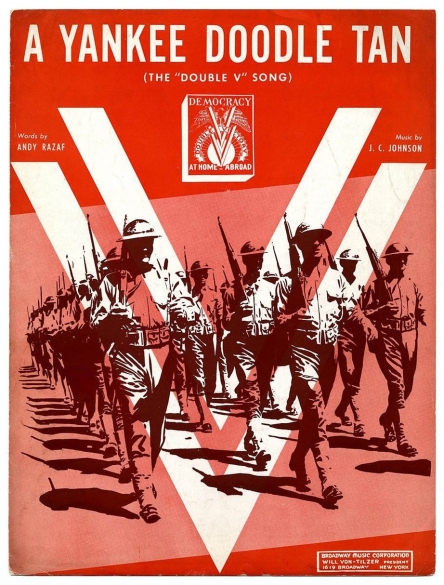
Should I sacrifice my life to live half American?’ Will things be better for the next generation [of colored Americans] in the peace to follow? ‘Would it be demanding too much to demand full citizenship rights in ex- change for the sacrificing of my life?
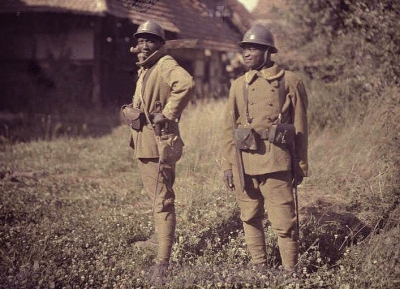
Senegalese, Moroccans, Algerians, Americans – this six page article summarizes the participation of the various Allied units that were composed entirely of Black men throughout the four year course of W.W. I.
‘Black devils‘ the German soldiers called them, when, fighting like demons, they had forced the Kaiser’s shock troops to retreat before them.
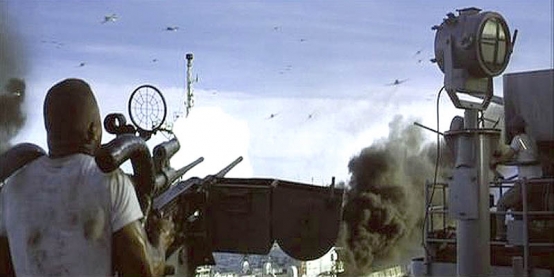
Mess Attendant 2nd Class Dorie Miller had never handled a machine gun, yet he shot down four Japanese planes in twenty minutes, rescued the captain of the USS West Virginia and saved a dozen men from drowning.

There is no organization that has compiled more facts about cars and their impact on society, than The American Automobile Association – AAA for short. And why shouldn’t they? the AAA predates turn signals, starter buttons and stop lights. They were around before seat belts, parking lights and jay-walkers. They even predate car doors and windshields – to say nothing of their wipers. As you should all know by now, the AAA was not established as a car trivia repository but a coterie of motorists who banded together to aid other motorists.
Written in 1952, this article serves to mark the 50th anniversary of the AAA; these columns are positively packed with assorted automobile trivia which, when pieced together, spells out the first fifty years of the car in America.

The essential facts are that women can do men’s heavy work with substantially equal output, without any disturbance of the particular industry, and, when guided by proper conditions, without detriment to their health. How far and how long they ought to do it in the emergency arising from the war is to be decided upon different grounds.
Click here to read about the women war workers of the Second World War.
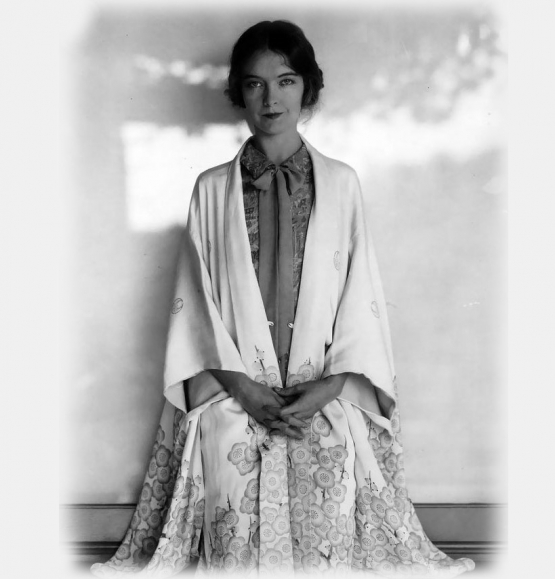
Twenty-two years after wrap was called on the set of The Birth of a Nation, leading lady Lillian Gish (1893 – 1993), put pen to paper and wrote this reminiscence about her days on the set with D.W. Griffith.
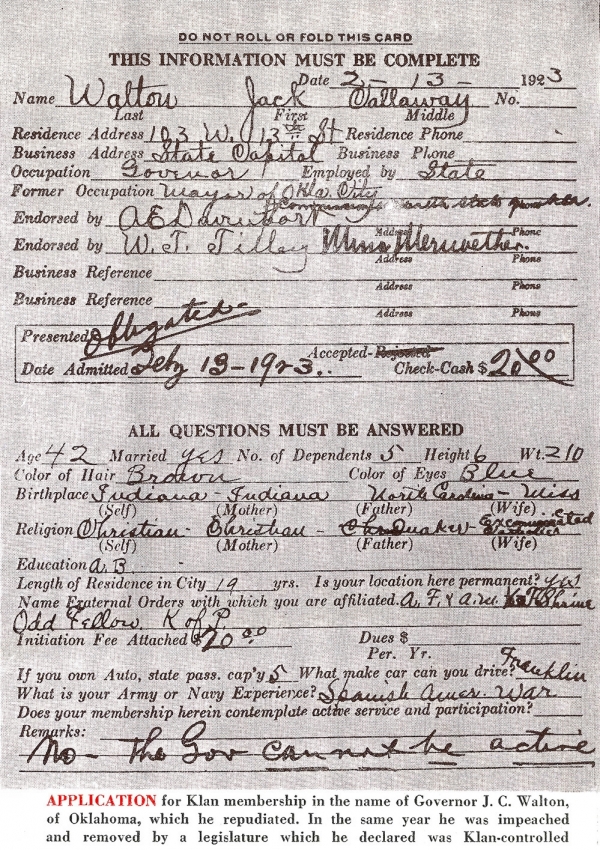
When FDR saw fit to nominate a Klansman to the Supreme Court, Hugo Black, it prompted the editors at Literary Digest to recall the history of those terrorists and how they came into existence, their customs and practices, etc.
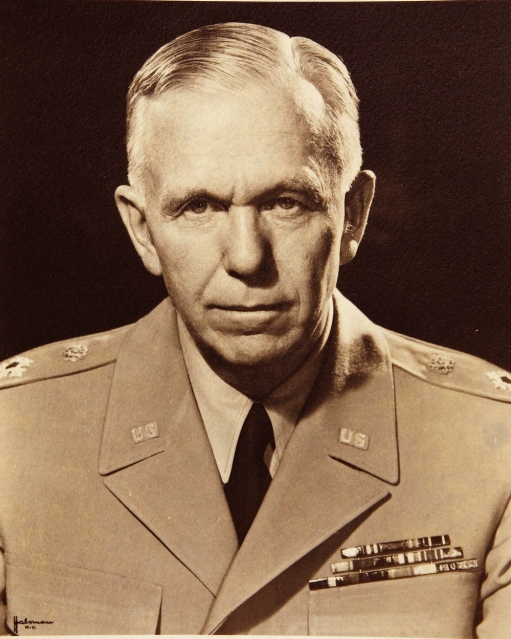
While speaking at the 141st anniversary of the U.S. Military Academy at West Point, Chief of Staff General George Marshall gave a great big shout out to three American generals. Pointing out that all of them were graduates of West Point (as he was) the general could not help but conclude that the Axis didn’t have a chance.
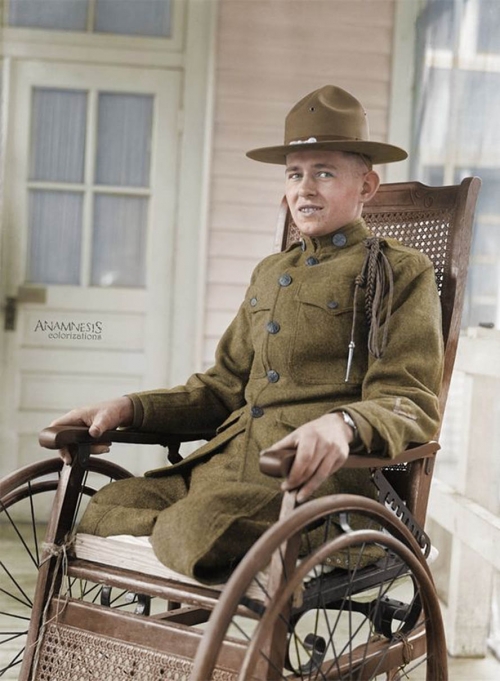
Speaking from their hospital wards, disabled American veterans of W.W. I express their bitterness concerning their lot and the general foolishness of the young who unthinkingly dash off to war at the slightest prompting.
Click here to read about the new rules for warfare that were written as a result of the First World War – none of them pertain to the use of poison gas or submarines.
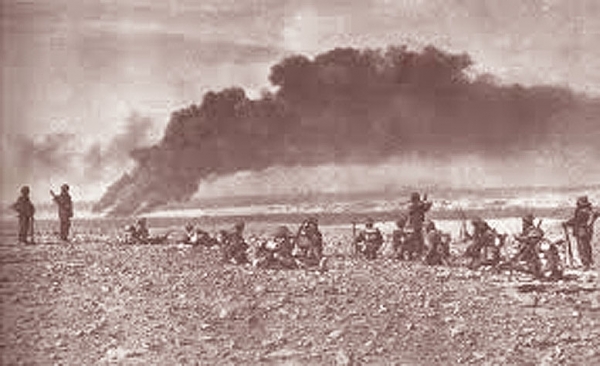
Click here to read more about the campaigns in North Africa during the Second World War. – from Amazon:Read more

The other half of California’s 200,000 migratory workers are farmers who trekked from the dust bowl area; they found work on farms, but not farming; it’s seasonal piecework, like in a mill. Each Oklahoma nomad dreams of a cottage and a cow, but he’s just sitting on a barbed wire fence. With the publicity over, the government has forgotten the dust bowl refugees. At Depression depth, a man might make $8 a week; now, $5 is lucky. They are the bitterest folk in America; blood may flow…
Click here if you would like to read a 1940 article about the the finest movie to ever document the flight of the Okies: The Grapes of Wrath.
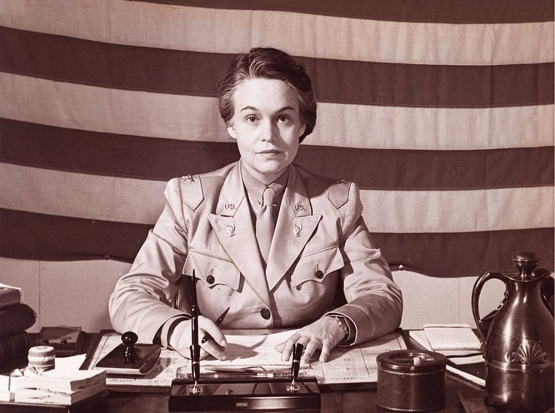
Here is the skinny on Colonel Oveta Culp Hobby (1905 – 1995). This article begins at a crucial point in her life, when she took charge of the Women’s Army Auxiliary Corps (later the Women’s Army Corps). With no prior military experience, Hobby entered the U.S. Army as a major and immediately began organizing the Women’s Army Auxiliary into an efficient clerical element within the army. Her abilities were evident and she was soon elevated to the rank of colonel; in a similar light, the skills and abilities of the WAACs were also recognized and they, too, were given more challenging jobs. After the war, Hobby went on to distinguish herself in a number of other government positions.
Click here to read about WAC accomplishments by the end of 1945.
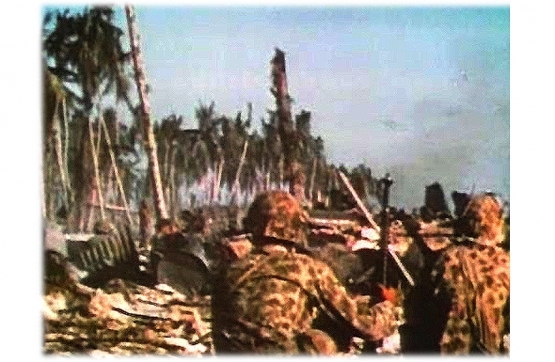
The editors at Yank Magazine were always aware that the publication existed primarily to keep U.S. Army morale on the upward swing, but they never wished to patronize their readers by feeding them Army approved malarkey either. They knew fully that they had to give the straight dope as often as possible or they, too, would be eating k-rations at the front. There are examples of articles that seriously downplayed the disappointing outcomes of major engagements (such as Kasserine Pass and Operation Market Garden) but, by enlarge, the sugar-coating was lighter than you might think. That is why this 1944 article concerning the Battle of Tarawa is important. Yank correspondent John Bushemi (1917 – 1944) made it quite clear the U.S. Marine losses were heavy, and for that reason alone the battle was of historical significance.
Click to read about the U.S. fabric rationing during W.W. II.
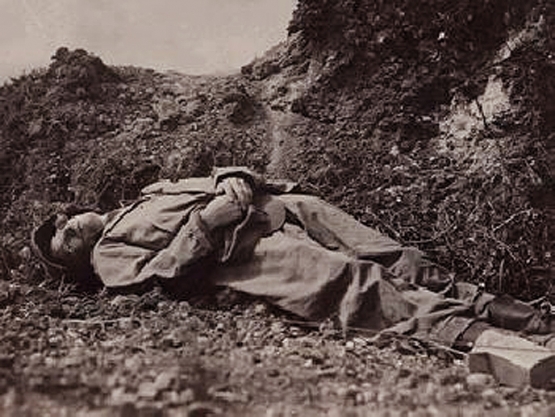
This article was penned by Yank correspondent Evans Wylie; it is an account of Ernie Pyle’s (1900 – 1945) surprise appearance during the Okinawa campaign and the violent death that Pyle had long anticipated for himself. His end came while he was being driven along a road in the company of Marines in a sector that was believed to have been safe.
Of all the many American war correspondents writing during World War II, Pyle was, without a doubt, the most well loved; he was adored by readers on the home front as well as the GIs in the field. Like many men, Pyle struggled in his career as a younger man; yet when the war broke out he very quickly found his voice – and his readership soon followed.
Two months after the death of Ernie Pyle, United Artists released a movie about him; Click here to read about it…

Pathfinder Magazine publisher Graham Patterson put pen to paper in an effort to articulate what the Cold War was in its simplest form, and what were the differences between a communist government and a democracy.
It is important for free people to know their avowed enemy, to understand communism, to recognize the difference between their present freedom and the way of life communism would force upon them.