Author name: editor

Fashion (WWI)

Masculine Shopping
(Vanity Fair Magazine, 1916)

1916 was a poor year if you happened to be a German sailor off the coast of Denmark; it was a simply awful year if you were in the infantry on the Somme or near Verdun; but if you were an American fellow enjoying his nation’s neutrality and you happened at some point to have been shopping for the the perfect riding suit on Madison Avenue, then OldMagazineArticles.com is quite certain that 1916 was a great year for you! Attached, you will find a wonderful article about the 1916 offerings for the horseback riding man.

If you would like to read another article about men’s equestrian attire, please click here.

1938, Music History, Stage Magazine

Sweet Words for Maestro Toscanini
(Stage Magazine, 1938)

Arturo Toscaninistyle=border:none
(1867 – 1957) is believed to have been the greatest conductor of the Twentieth Century. He was bestowed with a ‘Palm Award’ by the well-meaning swells at the now defunct Stage Magazine during the summer of 1938. This article appeared during a time when a Palm Award, granted by such a crew was a reliable form of social currency and would actually serve the highly favored recipients in such a grand manner as to allow them brief respites at dining tables found at such watering holes as New York’s Stork Club. Nowadays, one Palm Award and one dollar and fifty cents will afford you a ride on the Los Angeles City subway system (one way).
The attached article explains why Maestro Toscanini had met all requirements for this award.

Advertisement

Use shortcode [oma_ad position="summary_top"] (or other position) in your theme or widgets to display OMA Promotions here.

The Career of Lilian Gish (Rob Wagner's Script Magazine, 1942)
1942, Rob Wagner's Script Magazine, Silent Movie History

The Career of Lilian Gish
(Rob Wagner’s Script Magazine, 1942)

Attached is a decidedly pro Lilian Gish (1893 – 1993) article concerning the silent film actresses‘ meteoric rise under the direction of D.W. Griffith, her mediocrity when paired with other directors and her much appreciated march on Broadway.

Lilian Gish is the damozel of Arthurian legend, tendered in terms of the Pre-Raphaelite Brotherhood. Her heroines perpetually hover in filtered half-lights, linger in attitudes of romantical despair. They forever drift farther from reality than the dream, and no matter how humble their actual origins, the actress invariably weaves them of the dusk-blues, the dawn-golds of medieval tapestries.

Click here if you would like to read an article in which Lillian Gish recalls her part in Birth of a Nation.

Click here to read articles about Marilyn Monroe.

Lt. Colonel Fremantle at Gettysburg (W.C. Storrick, 1951)
1951, Gettysburg History, W.C. Storrick

Lt. Colonel Fremantle at Gettysburg
(W.C. Storrick, 1951)

Lt. Colonel Frementle (1835 – 1901), a member of the Coldstream Guards, was a guest of the Army of Northern Virginia during the Gettysburg campaign. After the Battle of Gettysburg, he returned to England and published Three months in the Southern Statesstyle=border:none. The following is a vivid extract, describing a part of the battle from the Southern lines:

The position into which the enemy had been driven was evidently a strong one. His right appeared to rest on a cemetery, on the top of a high ridge to the right of Gettysburg, as we looked at it.

General Hill now came up and told me he had been very unwell all day, and in fact he looks very delicate. He said he had had two of his divisions engaged, and had driven the enemy four miles into his present position, capturing a great many prisoners, some cannon, and some colors; he said, however, that the Yankees had fought with a determination unusual to them.

Advertisement

Use shortcode [oma_ad position="summary_top"] (or other position) in your theme or widgets to display OMA Promotions here.

London Society, 1915 (Vanity Fair, 1915)
1915, Manners and Society, Vanity Fair Hall of Fame

London Society, 1915
(Vanity Fair, 1915)

Five months into the general unpleasantness going on across the Channel had transformed London into a very different city, and sadly, it was the leisured classes that had to shoulder most of the burden:

London is well worth living in these troubled days if only for its contrasts…The gloom of the streets, the sinister play of the searchlights, the abnormal hour at which the theatres open and and the public houses close, the fact that half the male population is in khaki and the other half would like to be, that Society is wearing Noah’s Ark clothes and that to buy a new hat is a crime, that there are no dances, no dinners, no suppers, no premieres, no shooting, no no posing, no frivolity, nor idling, it’s rather quickening, you know. But the searchlights have absolutely killed all practical romance.

The Career of Lilian Gish (Rob Wagner's Script Magazine, 1942)
1942, Rob Wagner's Script Magazine, Silent Movie History

The Career of Lilian Gish
(Rob Wagner’s Script Magazine, 1942)

Attached is a decidedly pro Lilian Gish (1893 – 1993) article concerning the silent film actresses‘ meteoric rise under the direction of D.W. Griffith, her mediocrity when paired with other directors and her much appreciated march on Broadway.

Lilian Gish is the damozel of Arthurian legend, tendered in terms of the Pre-Raphaelite Brotherhood. Her heroines perpetually hover in filtered half-lights, linger in attitudes of romantical despair. They forever drift farther from reality than the dream, and no matter how humble their actual origins, the actress invariably weaves them of the dusk-blues, the dawn-golds of medieval tapestries.

Click here if you would like to read an article in which Lillian Gish recalls her part in Birth of a Nation.

Click here to read articles about Marilyn Monroe.

Advertisement

Use shortcode [oma_ad position="summary_top"] (or other position) in your theme or widgets to display OMA Promotions here.

Miscellaneous

Isaac N. Lewis and the Lewis Machine Gun
(1912)

A 1912 magazine article concerns machine gun inventor Isaac N. Lewis and his machine gun, the Lewis gun. The Lewis Gun played a major roll during the First World War, having been purchased in large quantities by the British/Commonwealth armies. Written just two years prior to the slaughter, this article is about U.S. Army experiments with the Lewis Gun when it is mounted on aircraft. As the article makes clear, the Lewis Gun was the first machine gun to have ever been fixed to a plane.

U.N. Forces Turn Back Spring Offensive (Pathfinder Magazine, 1951)
1951, Pathfinder Magazine, The Korean War

U.N. Forces Turn Back Spring Offensive
(Pathfinder Magazine, 1951)

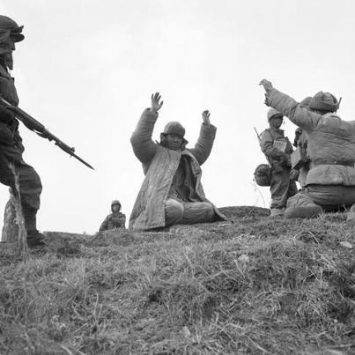
Attacking across a 125 mile front, the Chinese Army launched their spring offensive on May 17, 1951; unable to make any advances, they retired two weeks later, leaving behind some 80,000 dead.

The Communist hit first on the east central front. A quick rout of two ROK divisions caught the U.S. 2nd Division, commanded by Major General Clark Ruffner, in a dangerous pocket with their east flank exposed…One officer called the Red onslaught ‘an astounding demonstration. They wade right through macine gun or artillery fire. The bodies pile up and they walk right over the bodies and the pile of bodies gets higher.’

Advertisement

Use shortcode [oma_ad position="summary_top"] (or other position) in your theme or widgets to display OMA Promotions here.

Where is King George of Serbia? (Ken Magazine, 1938)
1938, European Royalty, Ken Magazine

Where is King George of Serbia?
(Ken Magazine, 1938)

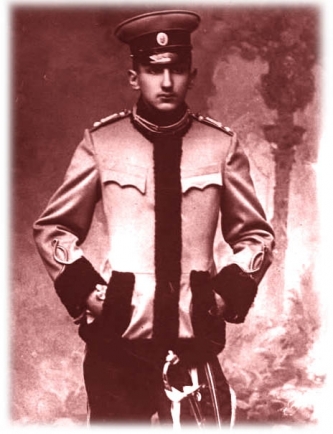
Younger brother Alexander hated dashing, erratic Crown Prince George (1887 – 1972), darling of the Serbian people, so he framed him as a loony, got him exiled, and in due course became King instead. George made the mistake of writing an insulting letter and going back home on the heels of it. Now, in a remote Yugoslavian villa, surrounded by trees, hedges, and mustachioed detectives, the Serbian Bad Boy lives in solitary confinement, doing mathematical problems to keep from getting bored.

A 1938 article which gave a brief account of the incarcerated Crown Prince George of Serbia. As the above makes clear, he was judged insane and locked up between the years 1925 through 1939. He was set free by the Nazis during their brief occupation of that country.

Click here to read about the 1922 discovery of King Tut’s tomb.

Katherine Stinson Offers Her Services to the Army (The Stars and Stripes, 1919)
1919, The Stars and Stripes, Women Pilots

Katherine Stinson Offers Her Services to the Army
(The Stars and Stripes, 1919)

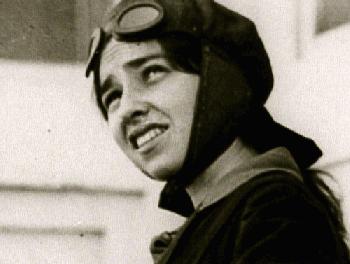
Katherine Stinson wants to carry letters up to Third Army.

By the time Katherine Stinson (1891 – 1977, a.k.a. the Flying Schoolgirl) had applied for the job of carrying the mails to the occupying American forces in post-war Germany, she already had the distinction of being the fourth American woman to earn a pilot’s license and the first woman to ever deliver air-mail for the U.S. Post Office. She didn’t get the job…

Storming the Skies : The Story of Katherine & Marjorie Stinson , Pioneer Women Aviatorsstyle=border:none

Karl Shapiro, Poet (Yank Magazine, 1945)
1945, Interviews: 1912 - 1960, Yank Magazine

Karl J. Shapiro, Poet
(Yank Magazine, 1945)

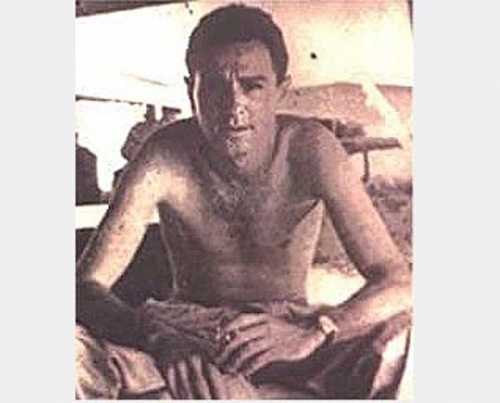
&lIn 1944, Karl Jay Shapiro (1913 – 2000) was pulling in the big-bucks as a U.S. Army Private stationed in New Guinea, but unlike most of the khaki-clad Joes in at least a one hundred mile radius, Shapiro had two volumes of poetry under his belt (Person Place and Thingstyle=border:none and Place of Love) in addition to the memory of having been awarded a Guggenheim Fellowship. In this short interview, he explains what a poet’s concerns should be and offers some fine tips for younger poets to bare in mind. A year latter, while he was still in uniform, Shapiro would be awarded the 1945 Pulitzer Prize for poetry.

Advertisement

Use shortcode [oma_ad position="summary_top"] (or other position) in your theme or widgets to display OMA Promotions here.

Military Buildup in the USSR (Literary Digest, 1935)
1935, The Literary Digest

Military Buildup in the USSR
(Literary Digest, 1935)

Premier Vyacheslav M. Molotov (1890 – 1986) pictured the Soviet Union as a lusty young giant strong enough to defend itself from both the East and the West in the keynote speech of the Seventh All Union Congress of Soviets, the Soviet Parliament.

In proof of this claim it was shown that in the last two years the Soviet Government had increased the strength of the Red Army from 562,000 men in 1932 to 940,000 in 1934.


Read about all the various international treaties that the Soviet Union violated…

Joseph Cummings Chase: Soldiers All (Rob Wagner's Script, 1942)
1942, Artists, Rob Wagner's Script Magazine

Joseph Cummings Chase: Soldiers All
(Rob Wagner’s Script, 1942)

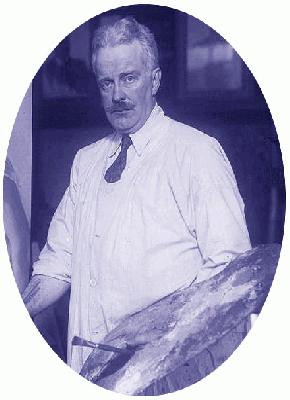
Joseph Cummings Chase (1878 – 1965) was an American painter who’s name is not likely to be associated with World War I artists but, like Sir William Orpen, he had a comfortable place within fashionable circles and he, too, was commissioned to paint portraits of the anointed within his nations military establishment. This article appeared in 1942 and primarily concerns the W.W. I portrait that Chase painted of Brigadier General Douglas MacArthur during the closing days of the war:

Joseph Cummings Chase is without doubt one of the world’s greatest portrait painters, and as luck would have it, he was in Paris when World War I began, at which time the Government commissioned him to paint the Distinguished Service Cross men, both enlisted men and officers, wherever he could catch up with them; some in dugouts, some in trenches, and some behind the lines.


Click here to see a few trench war images by German Expressionist Otto Dix.

Click here to read a 1942 article by Rockwell Kent on the proper roll of American artists during wartime.
Advertisement

Use shortcode [oma_ad position="summary_top"] (or other position) in your theme or widgets to display OMA Promotions here.

Scroll to Top