Author name: editor

The Rebirth of the Corset? (The Nation, 1929)
1929, Fashion, Pamphlet Produced by the National Park Service

The Rebirth of the Corset?
(The Nation, 1929)

This article is an editorial by an anonymous scribe at THE NATION who responded to a fashion article that appeared in the 1929 pages of THE NEW YORK TIMES declaring that skirts and dresses would once again sweep the floor, sleeves would button at the wrist and the corset was making a comeback after so many years on the lam:

There is in this genuine cause for mourning. It is too bad that modern women should again be salves to fashion; it is a pity that the female form, happily free of entanglements for half a dozen years, is in a fair way to go back to them.


Read More 1920s Articles About Flapper Fashions…

M.G.M. Casting Director Billy Grady Tells All (Literary Digest, 1936)
1936, Hollywood History, The Literary Digest

M.G.M. Casting Director Billy Grady Tells All
(Literary Digest, 1936)

Back in the day, he was responsible for casting 91,000 film actors each year, he was,

Hollywood’s No. 1 casting director, Billy Grady: broad-shouldered, open-faced Irishman, a terror to counterfeits, a down-right softy when he encounters an honest man – or woman.

This article tells much of his life story and provides a blow-by-blow as to what his days were like. One of the more interesting aspects of the article addressed the charities that were designed to aid and comfort those many souls who worked as extras in the movies. Today, extra players (also known as ‘atmosphere) are extended benefits through the Screen Actors Guild – but this was not always the case.

Advertisement

Use shortcode [oma_ad position="summary_top"] (or other position) in your theme or widgets to display OMA Promotions here.

Ben Shahn ('48 Magazine, 1948)
1948, 48 Magazine, Modern Art

Ben Shahn
(’48 Magazine, 1948)

A magazine article about the artist Ben Shahn (1898 – 1969) and his particular approach to making art:

A fundamental of Ben Shahn’s philosophy insists that there should be a minimum of separation between the private and the public work of art. He believes that the painter should speak with the same voice in the room and in the street. He is pleased by the criticism that his posters sometimes look like fragments of murals…


This review was penned by James Thrall Soby (1906 – 1979), art historian and critic who wrote two monographs on the artist.

Advertisement

Use shortcode [oma_ad position="summary_top"] (or other position) in your theme or widgets to display OMA Promotions here.

The American Sector (United States News, 1945)
1945, Aftermath (WWII), The United States News

The American Sector
(United States News, 1945)

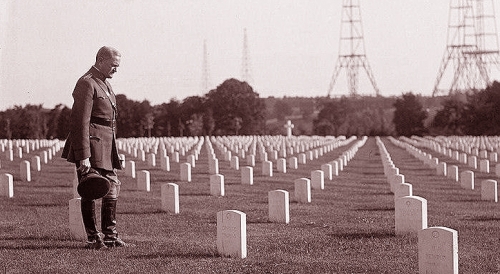
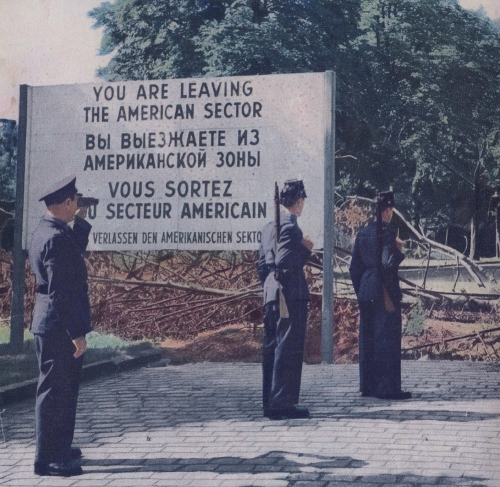
Written seven months after VE-Day, this article reported on life in the American zone of occupation:

Today, with every facet of his life policed by foreign conquerors, the German civilian faces the worst winter his country has known in centuries. And it is likely to be but the first of several such winters. He is hungry now, and he will be cold. Shelter is inadequate. His property is looted by his neighbor. Lawlessness and juvenile delinquency disturb him. Public health teeters in precarious balance which might tip the disaster.
Helena Rubenstein on Youth, Beauty and Commerce (The American Magazine, 1922)
1922, Cosmetics, The American Magazine

Helena Rubenstein on Youth, Beauty and Commerce
(The American Magazine, 1922)

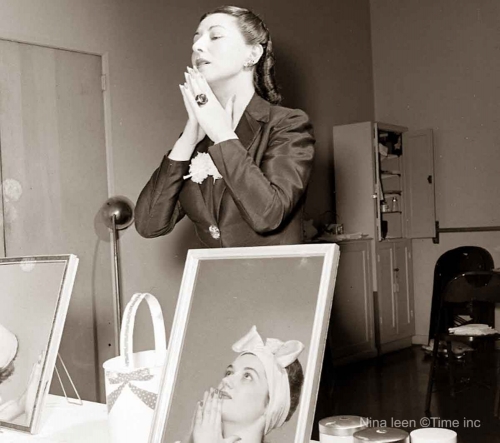
Prior to the creation of cosmetic surgery, with odd procedures like tummy tucks and butt lifts, there was Helena Rubenstein (1871 – 1965), who had a long and stunning career in the cosmetic business and who is remembered for once having said:

There are no ugly women, only lazy ones.

In this interesting 1922 interview, the matron saint of cosmetics made some very bright remarks on the issue of beauty, glamor and vanity.

Advertisement

Use shortcode [oma_ad position="summary_top"] (or other position) in your theme or widgets to display OMA Promotions here.

'Troublesome Mesopotamia'' (Literary Digest, 1920)
1920, Miscellaneous, The Literary Digest

‘Troublesome Mesopotamia”
(Literary Digest, 1920)

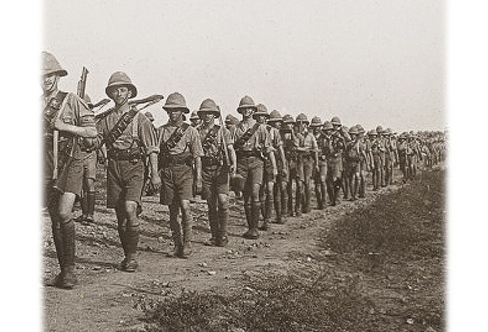
This is a very interesting magazine article concerning the 1920s British experience in Iraq (Mesopotamia); regardless as to where the reader stands concerning the 2003 Iraq War, you will find a striking similarity in the language used in this piece and the articles printed prior to the U.S. infantry surge of 2008:

Unless there is a complete change of policy, Mesopotamia, which has been the grave of empires, is now likely to be the grave of the Coalition.


Click here to read more articles about the British struggle for 1920s Mesopotamia.

Advertisement

Use shortcode [oma_ad position="summary_top"] (or other position) in your theme or widgets to display OMA Promotions here.

1945, World War Two, Yank Magazine

The Man Who Designed American World War II Medals & Insignia
(Yank Magazine, 1945)

This YANK reporter, Sergeant Barrett McGurn, was amused by the seemingly aloof Arthur E. Dubois, who at the time was serving as Chief of the Heraldic Section, U.S. Army Quartermaster Corps in Washington, D.C. During his tenure in this office, DuBois had much to do with the design of American military insignia, medals and decorations. He was one of the designers involved in the creation of the Distinguished Flying Cross (1927) as well as the campaign ribbons that support both the Good Conduct Medal (1941) and the American Defense Service Medal (1942). Throughout much of the late twenties and thirties he was involved in some of the design of numerous uniform insignia for both officers and enlisted men, as William K. Emmerson makes clear in his book, Encyclopedia of United States Army Insignia and Uniforms<img src=http://www.assoc-amazon.com/e/ir?t=oldmagazinear-20&l=as2&o=1&a=0806126221 width=1 height=1 border=0 alt= style=border:none !important;

/
.

Summary and Review of CHINA THE PITY OF IT by J.O.P. Bland | Instability in 1920s China
1933, China - Twentieth Century, The Saturday Review of Literature

‘China: The Pity of It”
(Saturday Review of Literature, 1933)

The review of J.O.P. Bland’s China: The Pity of It which was written by Henry Kittredge Norton:

Mr. Bland (1863 – 1945) has known his China for a third of a century and he is convinced that if that unhappy country has moved at all in the last three decades, it has moved backwards…Without relieving the Chinese of their share of the responsibility in the premises, the half-baked liberalism of the west – by which is meant Great Britain and the United States for the most part -is found to be the chief cause of expanding disaster in China…


Available at Amazon: China – The Pity Of Itstyle=border:none

Advertisement

Use shortcode [oma_ad position="summary_top"] (or other position) in your theme or widgets to display OMA Promotions here.

1945 Hollywood (Yank Magazine, 1945)
1945, Hollywood History, Yank Magazine

1945 Hollywood
(Yank Magazine, 1945)

A swell article that truly catches the spirit of the time. You will read about the war-torn Hollywood that existed between the years 1941-1945 and the movie shortage, the hair-pin rationing, the rise of the independent producers and the ascent of Van Johnson and Lauren Becall:

Lauren, a Warner Brothers property, is a blonde-haired chick with a tall, hippy figure, a voice that sounds like a sexy foghorn and a pair of so-what-are-you-going-to-do-about-it eyes

Mention is also made of the hiring of demobilized U.S. combat veterans to serve as technical assistants for war movies in such films as Objective Burma.

Germany and the German-Americans (Literary Digest, 1897)
1897, Miscellaneous, The Literary Digest

Germany and the German-Americans
(Literary Digest, 1897)

The attached article briefly recalls the general discomfort that the German government experienced when confronted with a unique social sect called German-Americans. As handsome and affable as they might have been, these volk still irked the Kaiser and his administrators to a high degree, although this article points out that the Fatherland was warming to them slowly.


This article makes a number of references to the Bancroft Treaty and how the agreement pertained to a particular German-American family named Meyer. After years spent in the U.S., Meyer the elder returned to Germany along with his wife and children – the story became a news-worthy when it was revealed that his draft-age son, a naturalized Yank, resisted military conscription and was thrown in the hoosegow. It was at that moment when the American embassy stepped forward.


Not surprisngly, Hitler didn’t like German-Americans any better than the Kaiser…

Advertisement

Use shortcode [oma_ad position="summary_top"] (or other position) in your theme or widgets to display OMA Promotions here.

Scroll to Top