Author name: editor

Al-Husseini After the War (Tribune, 1946)
1946, Haj Amin Al-husseini, Tribune

Al-Husseini After the War
(Tribune, 1946)

Appearing in a British labor weekly was this short column pertaining to the whereabouts of Haj Amin Al-Husseini and his appearance as the elected representative of the Palestine Arab Delegation in London:

Haj Amin Al-Husseini, ex-Mufti of Palestine, has had a varied and adventurous career. Few transformations in his fortunes, however, have been as startling as those of the last twelve months. Just before VE-Day, together with Rashid Ali, he gave himself up to French forces on the Austro-German frontier. In his wildest dreams at the time he could not have imagined that a year later he would be conducting Palestine Arab affairs from Cairo….

Story of Heartbreak-Ridge Battle 1951
1951, Collier's Magazine, The Korean War

The Battle of Heartbreak Ridge
(Collier’s Magazine, 1951)

There is a set of rocky hills close to the 38th Parallel that came to be known as Heartbreak Ridge in the Fall of 1951. It came to pass when a plan was made to secure these hills for the U.N Forces – they thought this would be done in one day – but it continued for a full month. At long last, the 23rd Regiment of the 2nd U.S. Infantry Division finally wrested Heartbreak Ridge from a numerically superior enemy on October 12 – and in so doing, lost half their strength (1,650 men).

Advertisement

Use shortcode [oma_ad position="summary_top"] (or other position) in your theme or widgets to display OMA Promotions here.

German Crown Prince Exiled after ww1 | German Crown Prince Article 1919
1919, Aftermath (WWI), The Literary Digest

The Crown Prince in Exile
(The Literary Digest, 1919)

In the attached magazine interview, Kaiser Wilhelm’s son and fellow exile, Crown Prince Wilhelm III (1882 – 1951, a.k.a. The Butcher of Verdun), catalogs his many discomforts as a refugee in Holland. At this point in his life, the former heir apparent was dictating his memoir (click here to read the book review) and following closely the goings-on at Versailles.


Click here to read an article about the German veterans of W.W. I.

The Sten Gun (Collier's Magazine, 1943)
1943, Collier's Magazine, Weapons and Inventions

The Sten Gun
(Collier’s Magazine, 1943)

The Sten gun was hastily created after the catastrophic retreat from Dunkirk when it was widely believed that the invasion of England was inevitable. The British Home Guard requested an easily produced sub-machine gun that could be quickly assembled and easily used by those who have never had any firearm training whatever. Dubbed the ten dollar gun, the Sten gun met all these requirements and more; over four million of them were manufactured throughout the Forties and although they were never used to defend the British Isles, they were parachuted en masse to the partisan armies in Europe.

The attached article is illustrated with six images and tells the story of the Sten Mark II and the small Canadian factory that produced them. Interesting stories are told and there are pictures of cute Canadian girls.

Advertisement

Use shortcode [oma_ad position="summary_top"] (or other position) in your theme or widgets to display OMA Promotions here.

Hungarian Uprising of 1956 Article | Hungarian Revolution of 1956 Article
1957, Collier's Magazine, The Cold War

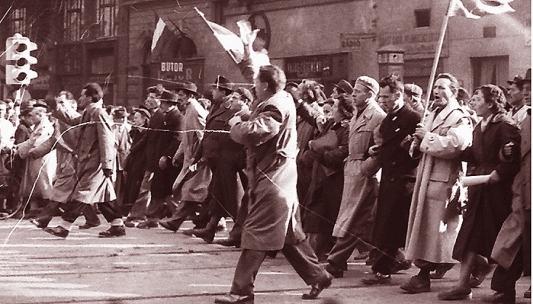
The Hungarian Uprising of 1956
(Collier’s Magazine, 1957)

The Hungarian Revolution of 1956 was a nationwide revolt against the government of the Hungarian People’s Republic and its Soviet-imposed policies, lasting from 23 October until 10 November 1956. Though leaderless when it first began, it was the first major threat to Soviet control since the USSR’s forces drove Nazi Germany from its territory at the end of World War II.
Social Washington During the Depression (Literary Digest, 1937)
1937, The Great Depression, The Literary Digest

Social Washington During the Depression
(Literary Digest, 1937)

Washington Society, long shackled, kicked the lid off last week, swung into the most dazzling season it has had since the Depression spawned bread lines, and knocked the wealthy back on their heels.

Money is spinning again; hostesses are plotting major campaigns; diamonds and pearls are coming out for renewed display; caviar and terrapin reign supreme once more…


Click here to read about American high society during the Depression years.

Silent Movie Caricatures (Vanity Fair Magazine, 1922)
1922, Silent Movie History, Vanity Fair Magazine

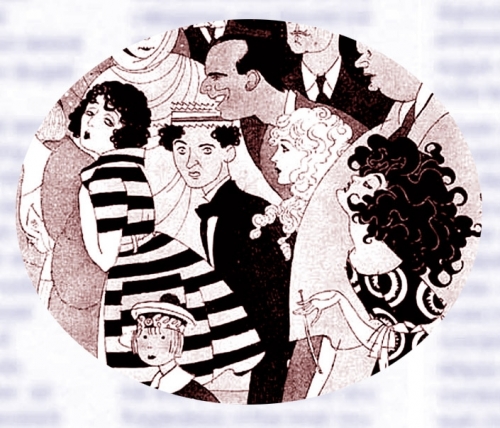
Silent Movie Caricatures
(Vanity Fair Magazine, 1922)

When the Five O’Clock Whistle Blows in Hollywood is attached;
it appeared in VANITY FAIR eight years after Hollywood was declared the film capital of the world.


This single page cartoon was created by one of the great American caricaturists of the Twenties: Ralph Barton, and all the kingpins of the young empire are depicted (among others): Douglas Fairbanks, Marry Pickford, Buster Keaton, Harold Lloyd, Bebe Daniels, Bill Hart, Wallace Reed, Gloria Swanson, Nazimova, Charlie Chaplin, Jackie Coogan, Fatty Arbuckle and the writer Rupert Hughes.
Lording above them all, and represented simply by jodhpurs and riding boots, stands the founder of the feast – Cecil B. DeMille (and his brother).

Advertisement

Use shortcode [oma_ad position="summary_top"] (or other position) in your theme or widgets to display OMA Promotions here.

Advertisement

Use shortcode [oma_ad position="summary_top"] (or other position) in your theme or widgets to display OMA Promotions here.

The Scenario Formula EXPOSED (Photplay Magazine, 1920)
Silent Movie History, Vanity Fair Magazine

A Predictable Silent Movie I
(Vanity Fair, 192?)

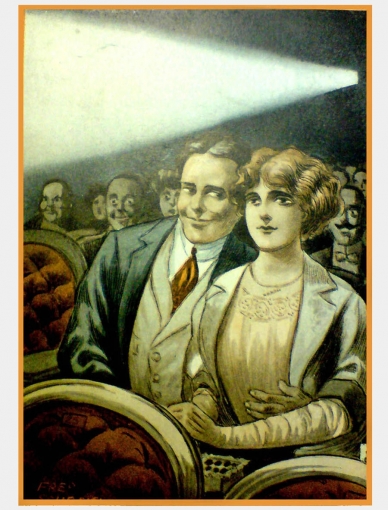
Attached is a Vanity Fair cartoon from the days of silent film illustrating how unsophisticated those movies truly were and how wildly predictable the plots and characters always seemed to be. This cartoon, along with a number similar magazine articles on this site, illustrate that such thinking was not entirely rare.


Another anti-silent film article can be read here…


This critic didn’t like silent movies either – –

Predictable Characters from the Silent War Movies (Vanity Fair, 1919)
1919, Silent Movie History, Vanity Fair Hall of Fame

Predictable Characters from the Silent War Movies
(Vanity Fair, 1919)

Here are seven drawings by Henry Raleigh (1880 – 1944) that depict the sorts of silent film characters that were likely to be seen in the 1920s W.W. I movies. These sketches are accompanied by a few dry remarks by the Vanity Fair editors:

No matter how much we may wish to lose sight of the war, it can’t be done. There will always be reminders of it. You suppose that, just because a little thing like peace has been declared, the playwrights, the theatrical managers, and the moving picture producers are going to let a chance like the war get by? Since we have become accustomed to German spies, Red Cross nurse heroines, and motor corps vampires, we could never go back to the prosaic mildness of innocent little country heroines, villains in fur-lined overcoats and cub reporter heroes. No actor will ever again consent to play a society role in evening clothes with flap pockets and jet buttons, when he can appear in a war play wearing an aviator’s uniform and going around in a property airplane.


This 1918 silent movie was certainly mocked for its predictability…

Model Children (Coronet Magazine, 1941)
1940s Modeling, 1941, Coronet Magazine

Model Children
(Coronet Magazine, 1941)

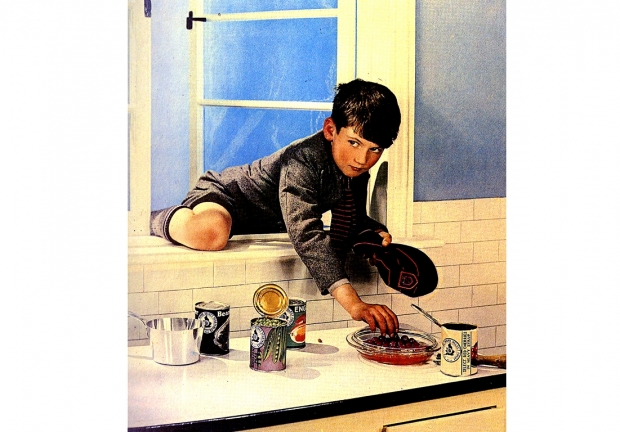
The children whose pictures you see on the advertising pages of national magazines often launch their careers when they are scarcely larger than their social security numbers. Blonde or brunette, freckled or glamorous, these famous boys and girls help sell you everything from automobiles to safety pins. As accustomed to to a camera as a top-flight movie star, they enjoy their work partly because it satisfies their fondness for ‘make-believe’.

Nice work if you can get it. But the maestros of the modeling agencies, John Robert Powers and Harry Conover, emphasize the fact that finding juvenile models is a difficult assignment.

Advertisement

Use shortcode [oma_ad position="summary_top"] (or other position) in your theme or widgets to display OMA Promotions here.

Anita Colby (Pageant Magazine, 1946)
1940s Modeling, 1946, Pageant Magazine

Anita Colby
(Pageant Magazine, 1946)

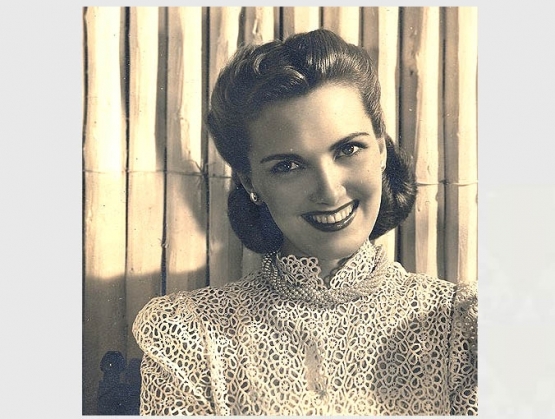
For a time, Jinx Falknenburg shared the high ground as the best-paid fashion model with a lass named Anita Colby (1914 – 1992). She was restless and highly ambitious beauty who recognized that her exulted position in the fashion world was only a temporary one – and by the time that the clock ran out on her, Colby’s resume would boast of numerous high-profile positions such as publicist, syndicated columnist, movie studio executive and T.V. talk show hostess.


This article pertains to her brief stint at the Selznick Studios as some sort of perfumed Über-Stylist who lorded over all the other glam-squad proletarians on the lot.


Her book, Anita Colby’s Beauty Bookstyle=border:none, has become a classic on 1950s style.
Supplying the A.E.F. in Siberia (The Stars and Stripes, 1918)
1918, Siberian Expedition, The Stars and Stripes

Supplying the A.E.F. in Siberia
(The Stars and Stripes, 1918)

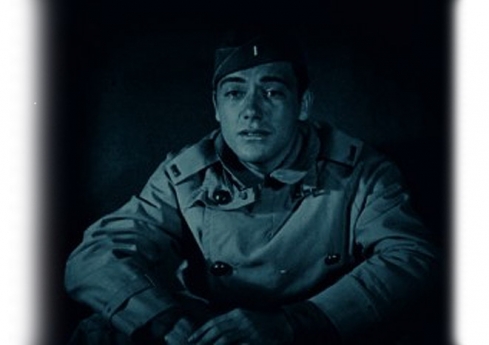
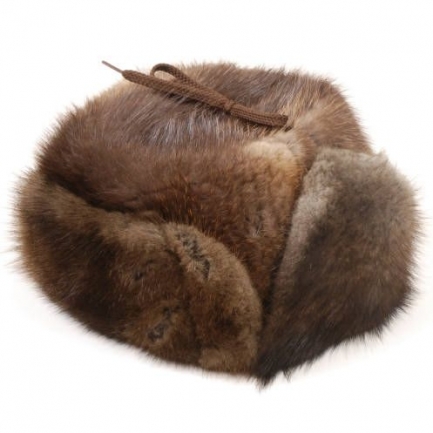
Special woolen coats and breeches and underwear, long mufflers, worsted socks and long stockings, gloves and gauntlets are other things which are being issued to the Doughboys in Russia. Alaska Yanks are said to be right at home in their new surroundings, although they complain sometimes of the heat.


An additional article is attached concerning the supply of medals that had to be shipped North; reading between the lines, you will get a sense that much gallantry was expected…


When the Doughboys complained, they complained heavily about their uniforms; read about it here.

1913 American Films (''Our Times'', 1936)
1936, Our Times, Silent Movie History

1913 American Films
(”Our Times”, 1936)

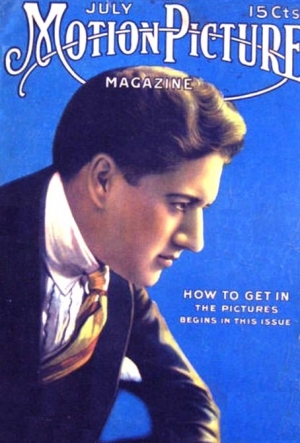
As the rosy fingered dawn came upon America in 1913 it found Douglas Fairbanks, the man who would soon be Silent Hollywood’s fair haired boy, wowing the crowds on Broadway. The play, Hawthorne of the U.S.A., starred Fairbanks in the title roll and closed after 72 performances; he was also married to a woman who wasn’t named Pickford – but rather named Anna Beth Sully, who had sired his namesake. Life was good for the actor and he wouldn’t turn his gaze West for another two years. By contrast, his future bride, Mary Pickford (né Gladys Smith, 1892 – 1979) had been prancing before the cameras since 1909 and by the time 1913 rolled around had appeared in well-over 100 short films and earned the nickname Little Mary.

Advertisement

Use shortcode [oma_ad position="summary_top"] (or other position) in your theme or widgets to display OMA Promotions here.

Scroll to Top