Author name: editor

Animals (WWII)

The Parchuting Sheep of the Italian Army
(Click Magazine, 1938)

This is a highly amusing collection of photos depicting the seldom remembered Para-Sheep of the Italian Army during their adventures in Ethiopia. It would seem that Italian grunts simply would not stomach canned food the way other infantrymen were able to do and so it was decided that sheep would be individually rigged with parachutes and tossed out of planes, where they would be butchered and cooked by the Mussolini’s men below. The accompanying paragraph explains that even a bull had been air-dropped from the same purpose.
Take a look.

President Truman Fired General MacArthur 1951 | General MacArthur Removed from Command
1951, Quick Magazine, The Korean War

When Truman Fired MacArthur
(Quick Magazine, 1951)

General MacArthur’s wish to expand the war by dropping as many as thirty (30) A-Bombs on various strategic targets located in both China and North Korea contrasted dramatically with President Truman’s plans as well as those of the United Nations. Plagued by a crippling sense of self-grandeur, the General’s arrogance became a liability and President Truman was absolutely delighted to fire him.

Advertisement

Use shortcode [oma_ad position="summary_top"] (or other position) in your theme or widgets to display OMA Promotions here.

1951, Pathfinder Magazine, The Korean War

The North Korean Winter Offensive
(Pathfinder Magazine, 1951)

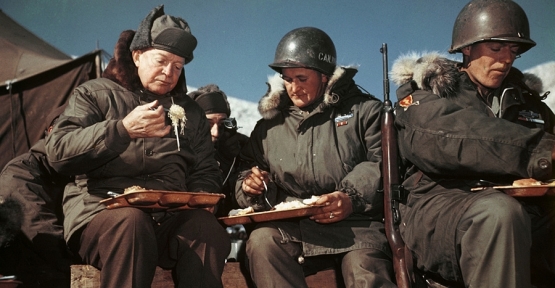
On December 31, 1950, the Communist Armies fighting in Korea launched a campaign that was intended to drive the UN Forces further south away from the 38th Parallel. Costing much in both blood and treasure, the Red Push was easily contained and whatever ground had been gained was easily re-taken when the UN launched a counter-offensive of their own on February 21, 1951.


Click here to read how Japan, still smarting from their defeat just six years earlier, had found a new identity and resolve as a result of the Cold War, and the war in Korea in particular.

Theatre Hats by Lilly Daché (Quick Magazine, 1949)
1940s Fashion, 1949, Quick Magazine

Theatre Hats by Lilly Daché
(Quick Magazine, 1949)

Lilly Daché (1898 – 1989) was the most famous milliner of her era; before retiring in the late Sixties (when hats were finally shown the door) she had accomplished much in the realm of fashion – designing dresses, lingerie, gloves, bags, jewelry and hostess gowns. While in league with the Hollywood costume designer Travis Banton, her lids adorned many of the craniums of the most glamorous women ever to grace a movie screen.

Advertisement

Use shortcode [oma_ad position="summary_top"] (or other position) in your theme or widgets to display OMA Promotions here.

1940s Men's Fashions, 1941, Magazine Advertisement

Men’s Straw Hats from the Early Forties
(From a 1941 Magazine Ad)

Attached are pictured six straw hats from a 1941 color ad promoting the Stetson Straws that appeared on the glossy pages of one of the more bourgeois American magazines just seven and a half months prior to the day when the bombs fell on Pearl Harbor and the bad-old days of World War II kicked-in for that rare breed of man known as homo-Americanus.


There can be no doubt that the fun-loving fashion-fan who was pictured sporting these organic chapeaus would soon find himself wearing one of Uncle Sam’s over-laundered denim stitch-brims, peeling potatoes and remembering wistfully the day that this ad was shot.

We hope he survived the carnage.
Wool of the 1940s (Click Magazine, 1945)
1940s Men's Fashions, 1945, Click Magazine

Wool of the 1940s
(Click Magazine, 1945)

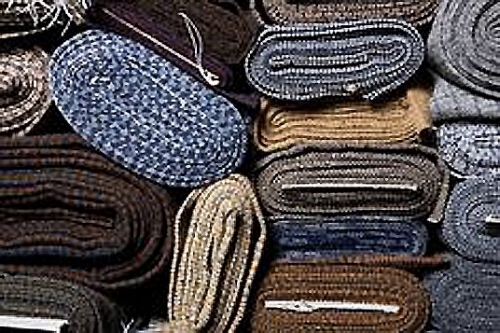
The attached 1945 article was intended to serve as a suit-buying-guide for all those young men who were in the throes of trading in their military uniforms for civilian attire.


The one kind of wool that is not discussed in this article is worsted: this was the wool that was specifically reserved for the uniforms of the U.S. military (enough to outfit 12 million souls) and there wasn’t a single thread of it that could be purchased on the civilian market.

General John Rawlins: General Grant's Chief of Staff (The Literary Digest, 1917)
1917, General Grant, The Literary Digest

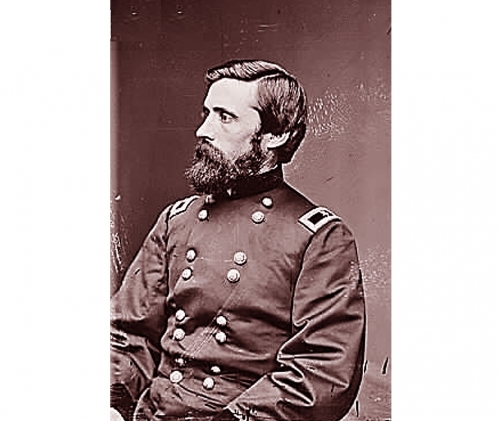
General John Rawlins: General Grant’s Chief of Staff
(The Literary Digest, 1917)

Attached is a review of a biography covering the life and times of Brigadier General John Rawlins (1831 – 1869). Rawlins distinguished himself as the Chief of Staff to General Ulysses S. Grant during the American Civil War. It is explained that the two met while Grant was engaged as a sales clerk at a leather shop which was owned by Rawlin’s brother; at the outbreak of the war, in 1861, Grant’s skill as an officer became clear to many and with each promotion he was able to secure Rawlins’ certain advancements in grade. By 1863 Rawlins was promoted to Brigadier General. During Grant’s term in the White House, Rawlins served as Secretary of War.
The author of the book, Major-General James Harrison Wilson, is remembered as the man who captured Confederate President Jefferson Davis in flight; the review of his autobiography can be read here.

Advertisement

Use shortcode [oma_ad position="summary_top"] (or other position) in your theme or widgets to display OMA Promotions here.

'Lady Macbeth of Mzensk'' by Dmitri Shostakovich (Literary Digest, 1935)
1935, Music History, The Literary Digest

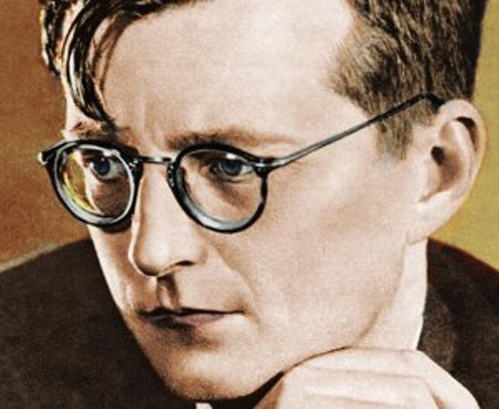
‘Lady Macbeth of Mzensk” by Dmitri Shostakovich
(Literary Digest, 1935)

The Cleveland Orchestra, on February 5 [1935], with Arthur Rodzinski conducting, will introduce to New York ‘Lady Macbeth of Mzensk’, an opera by twenty-eight year-old Soviet composer, Dmitri Shostakovich.

Shostakovich completed the work in December, 1932. It is the first of a projected cycle of four operas in which the composer plans to trace the condition of women in Russia…

'RETREAT? HELL!'' (The American Legion Weekly, 1922)
1922, Belleau Wood, The American Legion Weekly

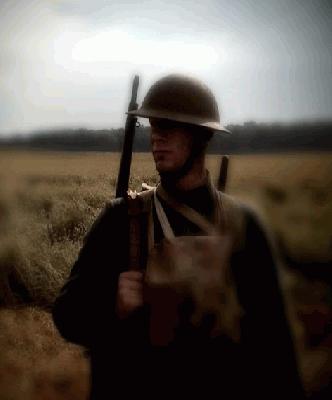
‘RETREAT? HELL!”
(The American Legion Weekly, 1922)

This four page history of the Battle of Belleau Wood is primarily concerned with the fighting that took place at Les Mares Farm; it was written in 1921 by William E. Moore, formerly a U.S. Army captain who was attached to the Historical Branch, General Headquarters of the A.E.F.. Throughout his article, Moore compared the fight at Les Mares Farm to the Battle of Gettysburg, and believed it to have been just as decisive:

That was the last effort the Germans made to force their way to Paris… It is is truly at Les Mares Farm where the Gettysburg of the A.E.F. lies, and there some day a monument should rise to inform the world what deeds were done upon that field.


German historians have long maintained that the Battle of Belleau Wood was not as significant as the Americans have liked to think that it was.

Advertisement

Use shortcode [oma_ad position="summary_top"] (or other position) in your theme or widgets to display OMA Promotions here.

Jacob Epstein: Firebrand of Art (Vanity Fair, 1915)
1915, Modern Art, Vanity Fair Hall of Fame

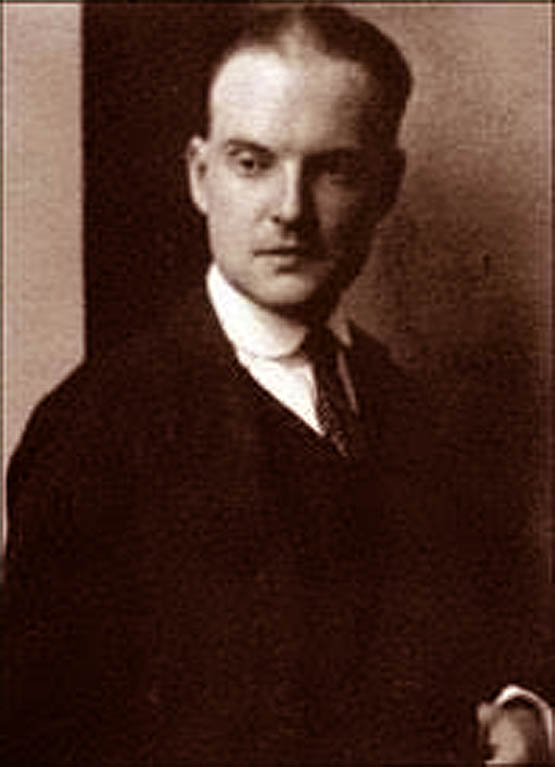
Jacob Epstein: Firebrand of Art
(Vanity Fair, 1915)

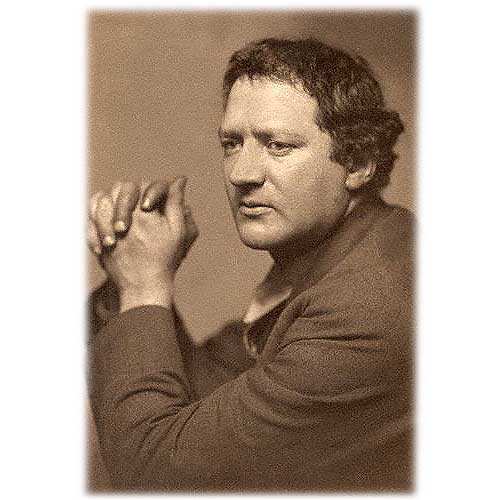
Jacob Epstein was brought up in the city of New York, being one of a group of young men from the other side of the Bowery, some of whom have since become well known in the arts.

Attached is a photograph of the American expatriot sculptor Jacob Epstein and three of his pieces. This is a short notice heralding the great splash that the artist was making in the London art world of 1915. Although his work can be found in many of the world’s finest museums, Epstein is best remembered today for his creation of the monumental sculpture that marks the grave of Oscar Wilde.

Advertisement

Use shortcode [oma_ad position="summary_top"] (or other position) in your theme or widgets to display OMA Promotions here.

1st Jet Dog Fight | First MiG to be Shot Down in Korean War 1950
1950, Pathfinder Magazine, The Korean War

The Air War in Korea
(Pathfinder Magazine, 1950)

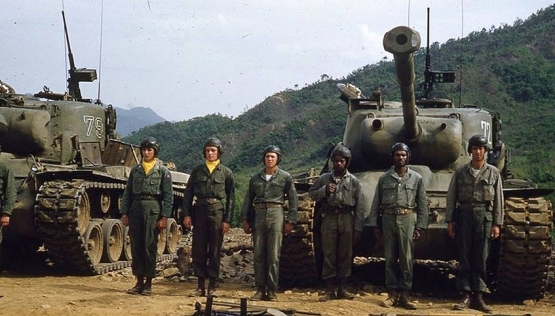
Five days after China entered the Korean War, three U.S. Air Force F-80 Shooting Star fighter jets duked it out with three Soviet-made MIG-15s 20,000 feet above the the Korean/Manchurian border. Lieutenant Russell Brown of Southern California fired the decisive shot that sent one MIG down in flames. While engaged with the other two F-80s, the remaining MIGs were dispatched in a similar manner (although other sources had reported that these two fighters had actually been able to return to their bases badly damaged). In the entire sordid history of warfare, this engagement was the first contest to result in one jet shooting down another.

Vera Maxwell and Claire McCardell (Quick Magazine, 1952)
1950s Fashion, 1952, Quick Magazine

Vera Maxwell and Claire McCardell
(Quick Magazine, 1952)

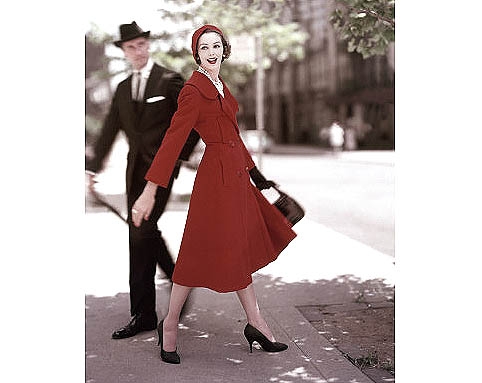
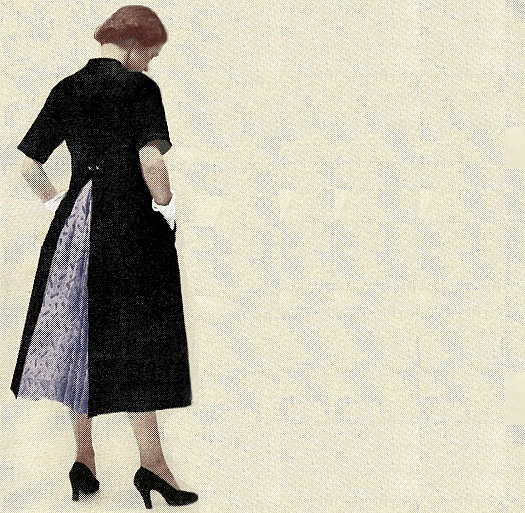
From the Great Minds Think Alike Department came this small piece about two American sportswear designers, Claire McCardell and Vera Maxwell and their admirable approach in creating a light weather coat that served to both keep women warm in springtime gales, yet accommodate the full, billowing skirts that complemented their feminine forms (as well as the hip padding that accompanied many skirts of the Fifties).

Advertisement

Use shortcode [oma_ad position="summary_top"] (or other position) in your theme or widgets to display OMA Promotions here.

Scroll to Top