Flag Day in Germany
(Punch, 1918)
A cartoonist at PUNCH MAGAZINE had a laugh at the expense of Germany and it’s humiliation during the first few days of the Armistice.

A cartoonist at PUNCH MAGAZINE had a laugh at the expense of Germany and it’s humiliation during the first few days of the Armistice.
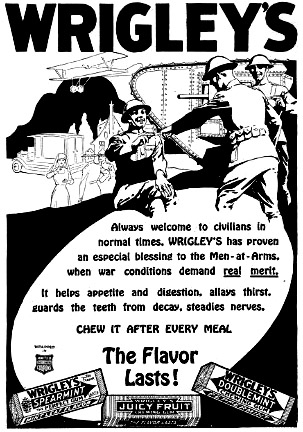
Although the origins of chewing gum have been traced to many different parts of the ancient world, no culture has whole-hardheartedly embraced the stuff quite as thoroughly as the Americans. The Yankee bromance with chewing gum has largely been credited to the American industrialist William Wrigley, Jr. (1861 – 1932) for creating, in 1906, a gum that appealed broadly to the American palette – and when Americans went to war in 1917, Wrigley’s chewing gum was in their arsenal.
We added to this page a small column about Dr. Morris Nafash, who was one of the brilliant chemists at the Bazooka Bubble Gum Company.
Click here to read about the A.E.F. love for candy…
Click here to read about all the effort that was made to get cigarettes to the Doughboys.
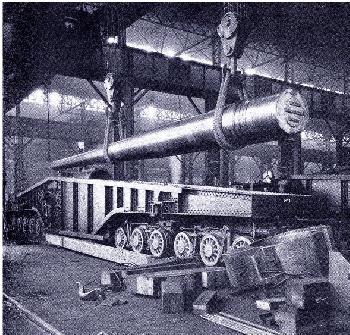
Illustrated with six photographs, this 1918 article is one of the first pieces of journalism to document the planning, construction, testing and deployment of the Railway Batteries that were manned by the U.S. Navy in W.W. I France.
They dreamed a dream wherein a squadron of colossal trains, sheltered in armor plate, cruised constantly on dry land behind the battle lines. On each train a hundred bluejackets and their officers lived, ate, slept and worked the giant guns that rested upon mechanically perfect mounts and hurled explosive shells to the limit of their extreme ranges. In short, they dreamed the United States Naval Railway Batteries just as complete to the firing lines a few months later.
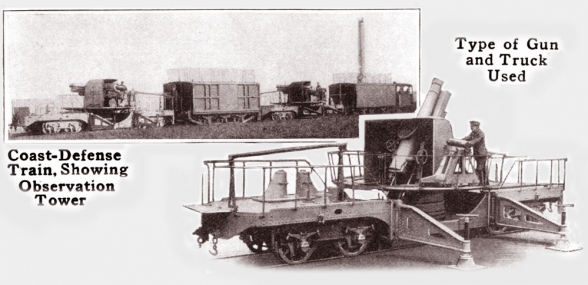
Railway-mounted artillery can be dated to the 19th century, however their shining moment came during World War One, and the most notorious of these was the German manufactured Paris Gun
The well-illustrated article attached herein first appeared a few months prior to the war’s outbreak and concerns the railway gun that the French had on hand at the time: 7.87 inch, 6 inch and 4.7 inch howitzers which were intended for coastal defense. By 1916 both sides in the war would be deploying enormous rail-mounted naval guns, capable of delivering a far larger blow.
Click here to read about the U.S. Navy railroad guns of W.W. I.
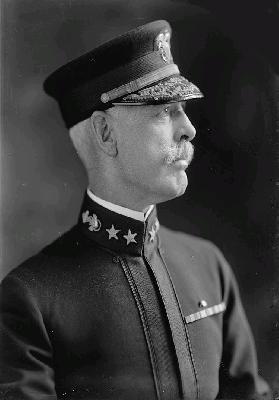
A seven page recollection of the history of the US Navy Railway Artillery Reserve, penned by W.W I naval veteran Bill Cunningham, who served as an officer on one of her five rail-mounted batteries. The unit was lead in collaboration by a hard-charging U.S. Army artillery officer but commanded by Rear Admiral Charles Plunkett (1864 – 1931), a veteran of the Spanish-American War. Cunningham described his first encounter with the admiral, who he first mistook as a member of the YMCA:
I looked up to see a tall stranger approaching. He wore a pair of black, I said black, shoes beneath some badly rolled puttees. He didn’t have on a blouse, but wore an enlisted man’s rubber slicker open down the front, and badly rust-stained around the buckles. His battered campaign hat had no cord of any sort He was strictly the least military object we’d seen in a couple of years, if ever.
Click here to read about the woman who entertained the U.S. troops during the First World War.
An article written for an American veterans organization one year after the war, the attached piece tells the story of the five American naval batteries that were mounted on specially made rail cars and deployed along the Western Front. The article is two pages long and is filled with interesting facts as to the whereabouts of their assorted deployments and what was expected of the naval crews who worked them.
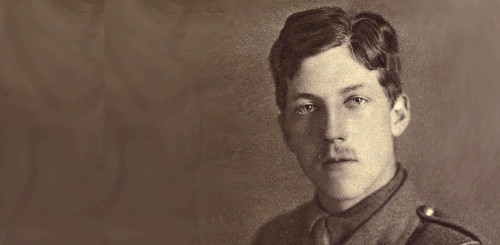
THE TIMES LITERARY SUPPLEMENT reviewed the third edition to Charles Hamilton Sorely’s (1895 – 1915) collection, Marlborough and Other Poems, with particular attention paid to an addition to that volume called Illustrations in Prose.
Sorely reminisced about his days before the war when he was briefly enrolled as a student at the University of Jena. During the war Sorely served in the Suffolk Regiment and was killed in the battle of Loos during the autumn of 1915.
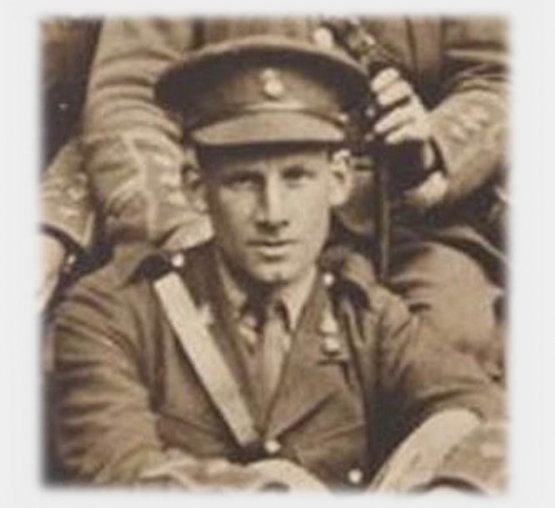
The following five page article was written by the World War One poet Siegfried Sassoon (1886 – 1967), in an attempt to give a rough outline of what the British poets did in the Great War, making every allowance for the fact that they were writing under great difficulty….
A review of three volumes of World War One poetry: From the Front
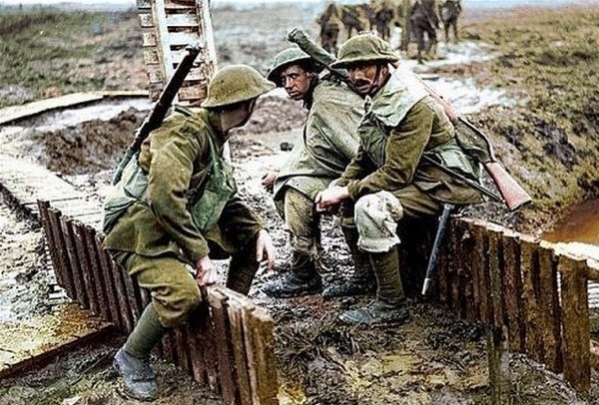
The attached essay by Galloway Kyle (b.1871) concerns World War I poetry and served as the preface for his 1916 anthology titled Soldier Poets: Songs of the Fighting Men
A good deal of ink has been spilt concerning the wonderment World War poetry written by British and Commonwealth troops; the Americans had only Alan Seeger – and the hacks who appeared in the numerous Army newspapers. The “poems” discussed herein were produced on the American home front, far from the moans of the wounded.
An account by one learned traveler who journeyed to that one isolated piece of ground on the isle of Skyros that will forever be England – the grave of the English poet Rupert Brooke (1887 – 1915).
The literati who wrote the attached article went to great lengths imparting the significance of Skyros throughout all antiquity and it’s meaning to the world of letters; credited only as S. Casson, he informed his readers that he arrived on the island five years after the original burial in order to erect the headstone that is currently in place and describes the shepherds and other assorted rustics in some detail while alluding religiously to the works of Homer.
I wonder how many people will visit this remote island to see the grave? It means long and weary journeying, and will be a real pilgrimage. From the sea, just off Tris Boukes Bay, the monument can just be seen, with it’s white Pentelic marble showing clear through the olive trees, the only visible sign of man or his works at this end of the island.
To see a color photograph of the grave, click here..
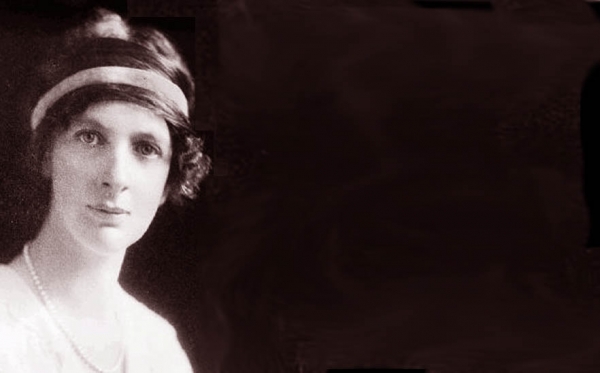
There can be no doubt that as a term Post-Traumatic Stress Disorder is clearly lacking the needed musical quality that would add to the pleasing rhythm of a poem, however the melancholy that is generated by the malady has launched a million poems throughout the course of the last century, which was to date, the bloodiest yet. Most often remembered for her anti-war verses, Lady Margaret Sackville (1881 – 1963) penned this diddly about that legion of crushed and broken men returned to their wives after World War One and how entirely unrecognizable they seemed:
You cannot speak to us nor we reply:
You learnt a different language where men die…
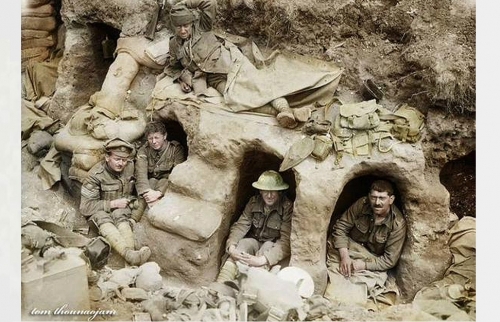
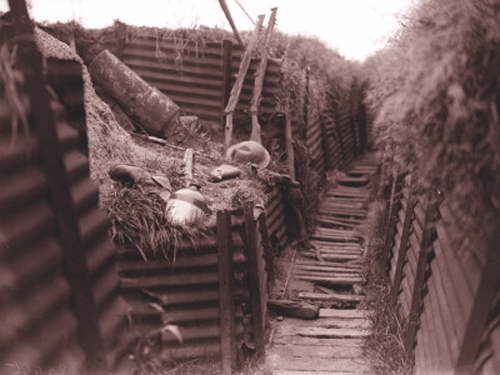
It was the preferred plan on both sides that their troops sleep in fields and forests as they briskly marched forward to the terror-struck cities of their timid and surrendering foes – but other sleeping arrangements had to be made when it was decided that trenches were necessary. Officers in forward trenches would sleep in shifts within muddy little rooms called dugouts and the enlisted men would get something worse; dubbed, shelters, these holes were simply rectangular caves carved into the walls of the trench:
Click here to see a 1915 ad for British Army military camp furniture.
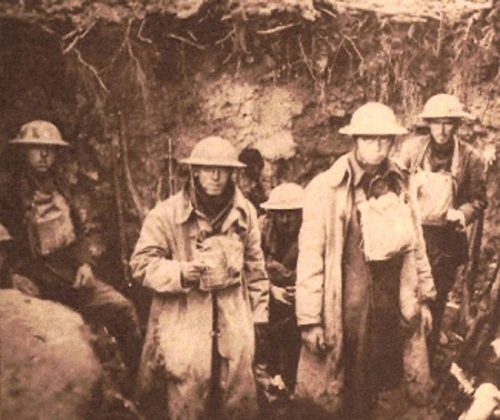
Corporal Frank Sears of the American Expeditionary Force put pen to paper and explained for all posterity the unsanitary conditions of <b.living in a W.W. I trench in France:
Life in the trenches is made up of cooties, rats, mud and gas masks…
We became so used to mud up in the lines that if our chow did not have some mud, or muddy water in it we could not digest it. It was just a case of mud all over: eat, drink, sleep and wash in mud.
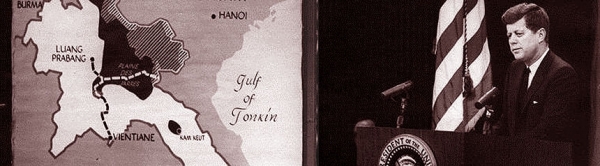
The 1963 struggle in Vietnam was important for a number of reasons: as the year began the world saw the first major defeat for the Army of the Republic of Vietnam at the hands of the Viet Cong guerrillas at Ap Bac. Five months later Buddhist clergymen revealed their deep distaste for the war effort which quickly resulted in the Diem administration putting numerous Buddhist pagodas to the torch. Ngo Dinh Diem himself would be put to the torch in November when he and his brother would be overthrown in an American-backed coup. Historians have long maintained that by meddling in the internal political affairs of South Vietnam, JFK had unwittingly doomed any chance for their self-reliance; following the November coup, that country became more and more reliant upon the United States – and when the U.S. abandoned the cause of a free and independent South Vietnam, their fate was sealed.
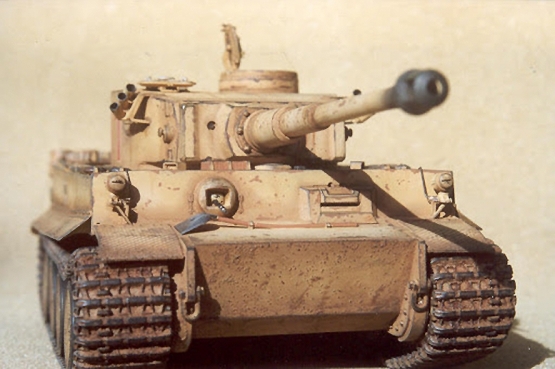
The American army’s Aberdeen Proving Ground rests on 72,962 acres in Aberdeen, Maryland. Since 1917 it has been the one spot where the U.S. Army puts to the test both American and foreign ordnance and in 1944 the gang at Aberdeen got a hold of a 61 1/2 ton German battle-wagon, popularly known as the Tiger Tank (PZKW-VI). This is a nicely illustrated single page article that explains what they learned.
For further reading about the Tiger Tank, click here.
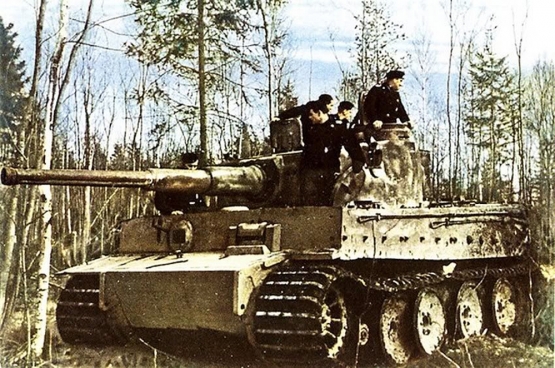
Attached is the sweetest conte crayon illustration ever to depict a Tiger tank is accompanied by some vital statistics and assorted observations that were recorded by the U.S. Department of War and printed in one of their manuals in March of 1945:
This tank, originally the Pz. Kpfw. VI, first was encountered by the Russians in the last half of 1942, and by the Western Allies in Tunisia early in 1943…
Click here to read about the German King Tiger Tank.
Click here to read a 1944 article about the Tiger Tank.