






World War Two

Find old World War 2 articles here. We have great newspaper articles from wwii check them out today!

Hello, Denim
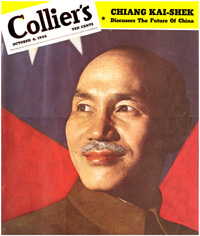
(Collier’s Magazine, 1942)

The editors at COLLIER’S MAGAZINE could not have known the significance of this subject back in 1942, yet to those Americans born after 1960 who read these old columns, it seems like a sign post that pointed the way to the sportswear of the future. Verily, few are the Americans who tread the fruited plane today who do not see at least one pair of jeans every day. Blue jeans have become the symbol of the nation, just as much as the flag.


This 1940s article pointed out that more and more Americans are waking up to denim. They found that it suited them and deemed it a sensible fabric in light of the new agricultural and industrial toil that needed to be finished if the fascists were to be beaten. However, denim was not some newfangled wartime invention; denim has been on the American scene since 1853 – in the Western gold mines and barnyards, roundhouses and cattle ranges.

Some seven years before this article hit the newsstands American teenagers began wearing jeans, but it was W.W. II that created a market for women’s jeans, and for good or ill, the course of American sportswear was forever altered.

A far more thorough fashion history of blue jeans can be read here.

‘They, Too, Have Fought and Died”
(Maptalk, 1945)

You’re damn right those Nisei boys have a place in the American heart, now and forever. And I say soldiers ought to form a pickaxe club to protect the Japanese-Americans who fought the war with us. Any time we see a barfly commando picking on those kids or discriminating against them, we ought to bang them over the head with a pickaxe. I’m willing to be a charter member.


General Joseph W. Stillwell


Read the letters of American soldiers and Marines who recognized
the injustice that was done to the Japanese-Americans…

The Japanese-Americans of the OSS
(Rob Wagner’s Script, 1946)

Printed on the attached two pages is an informative history of the vital contributions that were made by the Japanese-Americans who served in the O.S.S. behind enemy lines during the Burma-China campaign. Additionally, the men who toiled on behalf of the Southeast Asia Translation and Interrogation Center are also praised. This article does not hold back in giving credit where it is due – many are the names that were remembered with gratitude.

Advertisement

Use shortcode [oma_ad position="summary_top"] (or other position) in your theme or widgets to display OMA Promotions here.

The D-Day Landing Crafts
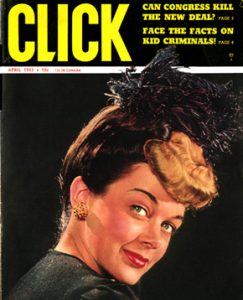
(Click Magazine, 1942)

If you ever wondered why The National W.W. II Museum is located in New Orleans rather than West Point, Annapolis or the nation’s capitol – the answer can be spoken in two words: Andrew Higgins. Higgins was the innovator who designed and manufactured the landing crafts that made it possible for the Allied forces to land on all those far-flung beaches throughout the world and show those Fascists dogs a thing or two. His factory, Higgins Industries, was located on Lake Pontchartrain in New Orleans and it was for this reason that the museum board of directors chose to doff their collective caps, and erect their repository in his home town.


Attached is a five page photo-essay about Higgins and all that he was doing to aid in the war effort.

The Mettle of Americans
(Click Magazine, 1944)

Following his tour of the war fronts, U.S. Senator Henry Cabot Lodge Jr. (1902 – 1985) put pen to paper in an attempt to express his admiration for the brave and selfless acts that Americans were performing all over the globe:

If asked to say what impressed me on my recent trip to the war theater, my answer would be: the heroic qualities displayed by our American boys. My most lasting impressions were gained in the field and in the hospitals around the globe. It is there that one sees the kind of boy America produces.


Additional praise for the American fighting man can be read here…

The WACs
(Think Magazine, 1946)

The Women’s Army Corps (WAC), first organized as an auxiliary May 14, 1942, became ‘regular army’ a little more than a year later…They were secretaries and stenographers for generals. They operated switchboards which kept communications alive throughout the European theater of operations…Their keen eyes and quick fingers made them expert as parachute riggers. They became weather experts [charting the aerial routes for the long-range bombers of the U.S. Eighth Air Force].

140,000 women served as WACs – – although this article stated that there were only 100,000.

Advertisement

Use shortcode [oma_ad position="summary_top"] (or other position) in your theme or widgets to display OMA Promotions here.

Guys & WAACs
(Click Magazine, 1943)

Fort Warren, Wyoming, is bleak, windswept, desolate. It is no wonder that the soldiers stationed there looked forward to the arrival at the lonely post of a unit of the Women’s Army Auxiliary Corps (WAAC). [When the women arrived] The men of Company H, Fifth Quartermaster Training Regiment, sent over an invitation to a party… The party was informal but military. The hosts marched in formation to their guests’ barracks where the two companies fell in behind their respective officers for the return trip. The evening included a buffet supper, attendance at boxing matches and refreshments afterwards.

U.S. Army Mobile Hospitals of World War Two
(Yank Magazine, 1944)

The American military personnel who are wounded while fighting the terrorists in both Iraq and Afghanistan are today the beneficiaries of a field hospital system that was developed long ago in World War II, Korea and Vietnam. The mobile hospitals developed by the U.S. Army Medical Corps has evolved into a unique life-saving force that has not simply relied on a trained staff but also a fast and well-fueled transportation system. This Yank Magazine article will give the reader a good look at how the medics and doctors had to work during the second War to End All Wars:

A portable surgical hospital is a medical unit of four doctors and generally 32 enlisted men. They’re supposed to work directly behind the line of battle and patch up casualties so they can be removed to an evacuation hospital. Sometimes part of the portable hospital personnel have to be removed, too.

Conscientious Objectors
(Yank Magazine, 1944)

Whatever became of the conscientious objectors?
Some of the men who registered as ‘conchies’ with their local selective service boards have been deferred because they are working in essential jobs. About 6,890 conchies have been interned and assigned to Civilian Public Service camps in the States. A handful, just 47, live and work in camps on Puerto Rico and the Virgin Islands, the only places outside the continental limits of the States where they may serve. By act of Congress, conscientious objectors may not be sent to foreign lands, but Puerto Rico and the Virgin Islands, although overseas, are territories of the U.S.


Click here to read about the British conscientious objectors of World War I.


We have an article that pertains to the Korean War draft-dodgers but it also explains the popular methods used by the W.W. II draft-evaders, as well.


To read an article about American draft dodgers of W.W. II, click here.

Advertisement

Use shortcode [oma_ad position="summary_top"] (or other position) in your theme or widgets to display OMA Promotions here.

Late-War Draft Increase Announced
(Yank Magazine, 1945)

Although the press questioned U.S. Secretary of War Henry L. Stimson (1867 – 1950) as to why the Selective Service Department had been ordered to call-up an additional 100,000 men when it was agreed that the U.S. military was already over strengthened with the full participation of 7,700,000 personnel currently under arms, Stimson made it clear in this notice from the Far East Edition of YANK, that he had his reasons – and this article lists a number of them.


Click here to read about a W.W. II draft board.


To read an article about American draft dodgers of W.W. II, click here.

Social Groups Within the Internment Camps
(U.S. Government, 1943-45)

A list provided by the War Relocation Authority of the seven groups that maintained ties and created various social and educational activities for the interned Japanese-Americans spanning the years 1943 through 1945. The Y.W.C.A., the Boy Scouts and the American Red Cross are just three of the seven organizations.

For years prior to W.W. II and the creation of the Japanese-American internment camps, the people of the United States had been steadily spoon fed hundreds articles detailing why they should be weary of the Japanese presence in North America; if you would like to read one that was printed as late as 1939, click here.

The Earliest Days of Training
(Newsweek Magazine, 1941)

Up by bugle at 5:45 in subfreezing temperature. Breakfast – boiled oatmeal, French toast and syrup, toast, jam, coffee. At 7:30 began ‘psychological test’ for mental alertness (typical question: An orange is a broom, bat, flower, or fruit?). Received complete uniforms. Try-on period after lunch resulted in many misfits, much swapping and revival of old crack about there being only two sizes in the Army – too big and too small…

Advertisement

Use shortcode [oma_ad position="summary_top"] (or other position) in your theme or widgets to display OMA Promotions here.

‘Confessions of a Nazi Officer”
(New Masses, 1944)

Lieutenant K. F. Brandes of the German Army was killed on October 24 [1944] on the right bank of the Dnieper. A diary was found on him. I have seen many diaries of German officers and soldiers… It was written by a clever and educated man. Brandes was a Fascist. He calls the conquest of Europe the ‘German Spring’. Like his colleagues he came to Russia for ‘lebensraum’… But as distinct from other Hitlerites, Brandes saw the limit of his dreams. He faithfully described the disintegration of the German Army, showed the meanness of the men who are still ruling Germany. I will cite the most interesting excerpts from his diary.

Demobilizing the American Army of World War Two

The demobilization of 7,730,000 U.S. military personnel must have been a daunting task, but the policy makers in Washington knew well the dangers of that new world and they had no intention of completely demobilizing as they had done after the First World War. General Marshall remarked in these short paragraphs that many men would be needed for occupation duty.


To read further about the demobilized military, click here

Life in Post-War Vienna
(Yank Magazine, 1945)

Published six months after the German surrender was this account of post-war Vienna, Austria: the people, the shortages and the black-market. Originally liberated by the Soviet Army, the Americans occupied the city three months afterward; this is an eyewitness account as to what Vienna was like in the immediate wake of World War II. Reading between the lines, one gets a sense that the Viennese were simply delighted to see an American occupying force swap places with the Soviet Army, although the Soviets were not nearly as brutal to this capital as they were to Berlin.


In compliance with the Potsdam Conference, Vienna was soon divided into four zones of occupation.

Advertisement

Use shortcode [oma_ad position="summary_top"] (or other position) in your theme or widgets to display OMA Promotions here.

The Fifth Ranger Battalion Goes Home
(Yank Magazine, 1945)

One quality that can be found in the memoirs of both world wars is a shared sense that the males of their respective generations had been singled-out for extermination, and when the end to these wars finally came, the most seasoned combat veterans were in a state of disbelief that they would be allowed to grow old, when so many had died. Some of this relief can be felt in this article from 1945 in which the battle-savvy men of the U.S. Army’s Fifth Ranger Battalion anticipated their return to civilian life now that the war was over.

I don’t believe it will do much good to talk about the war with civilians. I don’t think war is something that anyone can know about unless they’re actually in it. I would just rather forget I was ever in the army…


The Rangers underwent intense training in hand-to-hand combat, you can read about about it in this 1942 magazine article.

The SS Prisoner at the U.S. Army Field Hospital
(Yank Magazine, 1944)

This tight little essay, titled The German, serves to illustrate a small piece of life in a very big war. Written with a sense of melancholy by a winsome American medical orderly posted to a hospital not too far behind the front lines, it explains how he slowly got to know one of his German patients, a member of the SS, and how secretive and generally unpleasant he seemed to be.


Click here to read an article about the women of the SS in captivity.

The 1938 Spies
(Pathfinder Magazine, 1938)

Suddenly last June, a Federal grand jury in New York City hoisted the curtain on ‘America’s most significant spy prosecution since the [First] World War’ by indicting 18 persons for participating in a conspiracy to steal U.S. defense secrets for Germany. Subsequently, only four of the 18 could be found for trial. The others, including two high officials of the German War Ministry, were safe in – or had escaped to – the Fatherland.

Advertisement

Use shortcode [oma_ad position="summary_top"] (or other position) in your theme or widgets to display OMA Promotions here.

Scroll to Top