Author name: editor

Post-WW1 Antisemitism | Racist Art J Smith 1934
1934, Jews in the 20th Century, New Outlook Magazine

Antisemitism Grows Globally
(New Outlook Magazine, 1934)

Although the title of this 1934 article pertains to “racial prejudice”, make no mistake: it actually addresses the growth of Jew hatred. Reporter Cedric Fowler examined numerous hate groups throughout the United States, such as the German-American Bund, the Silver Legion of America, the American Fascists, the White Shirts of California, the White People’s Club of West Virginia, and the Patriotic Speakers Bureau. Nasty groups all.

Japanese Spies and American Gullibility 1939 | WW2 Japanese Spies in North America
1939, American Legion Magazine, Spying

The Japanese Spy Problem
(American Legion Magazine, 1939)

“At the end of last year, our authorities discovered that there were nearly one hundred Japanese leg men in New England reporting to the Boston office. More than five hundred in Washington; something above two hundred in Chicago; twenty-five hundred were in the New York area; twenty-five in Cleveland; thirty-eight in Detroit; eighty-odd in Florida, and so on out to the West Coast where around three thousand Japanese are ‘on duty’ from San Diego to Port Washington.”
Advertisement

Use shortcode [oma_ad position="summary_top"] (or other position) in your theme or widgets to display OMA Promotions here.

American Soldiers and the Children of Occupied Lands 1919
1939, American Legion Magazine, Siberian Expedition

Amerikanskies
(American Legion Magazine, 1939)

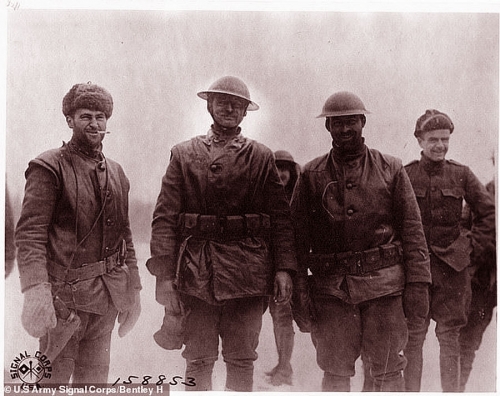
This article is one that has reoccurred throughout the Twentieth Century and into the Twenty-First. It recalls the good will that has existed between the American soldier and the children in the countries that hosted them or the lands they occupied. The American Doughboys in W.W I France were very sympathetic with the numerous orphans that were created in that war and contributed heavily to their charities. Their comrades serving in Siberia were charmed by the boys and girls of that land and quickly became fast friends. The attached article was written by a former officer posted to the Siberian Expedition, and in this column, he put pen to paper and recounted the happy friendships he witnessed between the Amerikanskies and the children of Siberia.

1923 Comic Strips in America | Sociological Study of Comic Strips
1923, Miscellaneous, Vanity fair

Observations Concerning Comic Strips
(Vanity Fair, 1923)

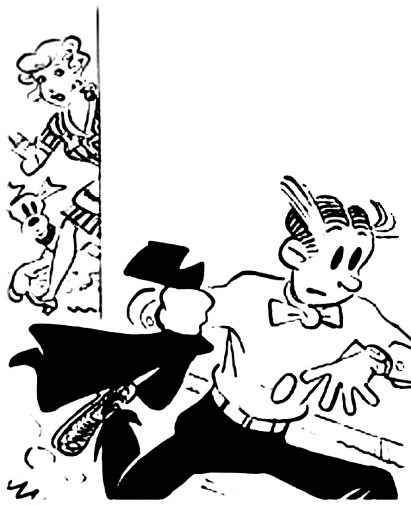
“From a study that covers practically all the comic sequences, I have roughly estimated that sixty percent deal with the unhappiness of married life, fifteen percent with other problems of the home, such as disagreeable children, and in the other fifteen is grouped a miscellany of tragic subjects – mental or social inferiority, misfortune and poverty. This last group contains a few subjects that carry no definite plan from day-to-day but are based on transient jokes such a Prohibition and the income tax.”

Were there WW2 Poets | What Happened to the Poets of WW2 | No War Poetry for WW2
1944, Pageant Magazine, Poetry

W.W. II and the Absent Poets
(Pageant Magazine, 1944)

Attached is an interesting article by the noted poet and poetry anthologist, Louis Untermeyer (1885 – 1977). He praised the soldier poets of the First World War and expressed his bafflement concerning the absolute dirth of competent rhyme-slingers in the Second World War:


“Why then, it has been asked again and again, is the poetry of this war so thin, so emotionally anemic, so unrepresentative of the fierce struggle in which the world is engaged? Why has no poet, not even a single poem, emerged to stir the heart and burn into the mind?”

Advertisement

Use shortcode [oma_ad position="summary_top"] (or other position) in your theme or widgets to display OMA Promotions here.

Vulnerable Pearl Harbor Collier's Magazine 1941
1941, Collier's Magazine, Pearl Harbor

”Impregnable Pearl Harbor”
(Collier’s Magazine, 1941)

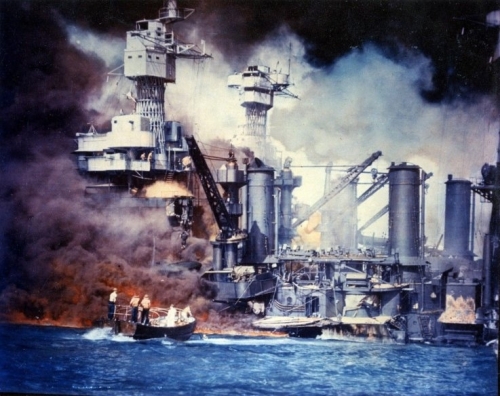
Six months before Japan’s devastating assault on Pear Harbor came this article concerning how remarkable the Navy’s defensive measures were and how unlikely it would be if the installation was ever to be attacked. A large part of the article concerned how overwhelmingly Japanese the Oahu population was, and the many steps taken by the Army and Navy to keep them off-base. How terribly unimaginative of them to think that Japanese Naval Itelligence wouldn’t think to farm-out spying to an Englishman like Frederick Rutland – which they did.

Advertisement

Use shortcode [oma_ad position="summary_top"] (or other position) in your theme or widgets to display OMA Promotions here.

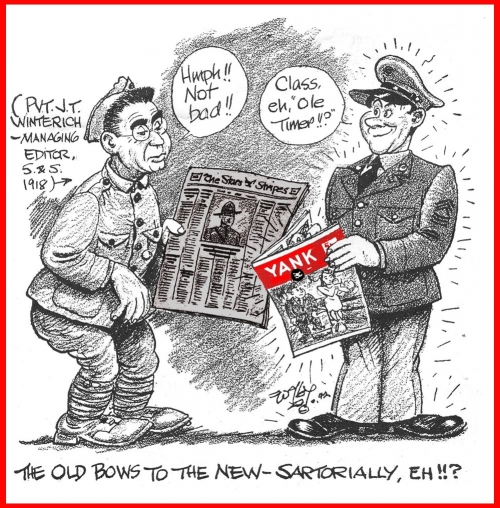
Yank Magazine Compared to The Stars and Stripes of WW1
1942, American Legion Monthly, Magazines

The First Stars and Stripes Looks at Yank
(American Legion Monthly, 1942)

In 1942 a couple of veterans from the first go-round of
The Stars & Stripes (February 8, 1918, through June 13, 1919) visited the New York offices of Yank Magazine, after having read many of their first issues. Although wars had changed, the Army had changed soldier-journalism had changed in 24 years, the old men were impressed with Yank and had to reluctantly admit it.


“[Yank has] profited by all our old mistakes, made some gorgeous ones of their own, and profited by them – and have the guts to admit it! Which means the fighting-writing America of 1942 has actually progressed 24 years over the fighting-writing America of 1918.”

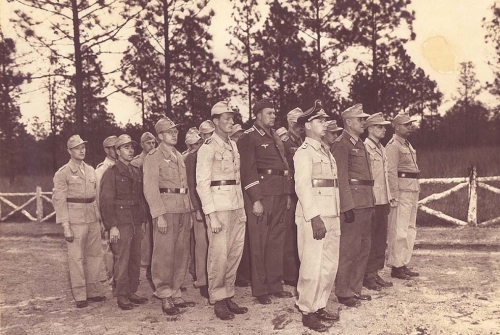
German POW Experience 1945 | Treatment of German POWs at Fort Dix New Jersey 1945
1945, PM Tabloid, POWs

POWs at Fort Dix
(PM Tabloid, 1945)

“German prisoners of war are not coddled at the Fort Dix camp. The PWs are not mistreated, but neither is any kindness shown them. The officers supervising them are not cruel or lenient; they adhere strictly to the letter of the Geneva Convention on the treatment of prisoners.”


PM reporter Jack Shafer knew all this to have been true, because he went to Fort Dix and saw for himself.

stars and stripes newspaper writers during ww1,WW1 Stars and Stripes newspaper history,famous writers on staff at WW1 Stars and Stripes newspaper,experienced newspaper journalists wrote for WW1 Stars & Stripes newspaper,Franklin P Adams New York Tribune,Franklin P Adams WW1 The Stars & Stripes newspaper,Alexander Woolcott WW1 The Stars & Stripes newspaper,Alexander Woolcott New York Times Drama Critic during ww1,Harold Ross WW1 The Stars & Stripes newspaper,Cartoonist Albian A Wallgren Stars & Stripes,WW1 Army Journalism 1918,Illustrator C LeRoy Baldridge Stars & Stripes
1919, Stars and Stripes Archive, The Stars and Stripes

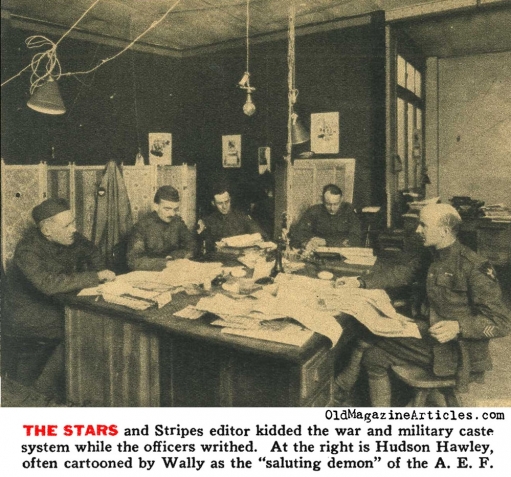
How the ‘Stars & Stripes’ Operated
(The Stars and Stripes, 1919)

Written during the closing days of the paper’s existence, the reporting journalist could not emphasize enough how lousy the paper was with enlisted men serving in the most important positions. You will come away with a good amount of knowledge concerning the manner in which The Stars and Stripes crew addressed their daily duties and still made it to the presses on time. Surprising is the high number of experienced newspapermen who wrote for the paper during the paper’s short existence.

Advertisement

Use shortcode [oma_ad position="summary_top"] (or other position) in your theme or widgets to display OMA Promotions here.

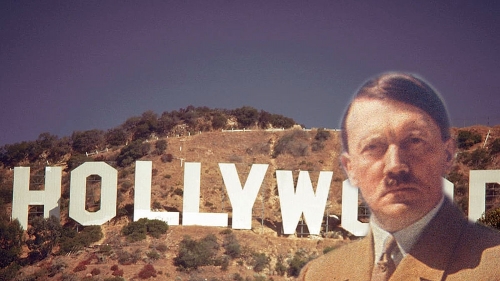
1956 Princess Grace Leaves Hollywood
1956, Collier's Magazine, Hollywood History

Leaving Hollywood
(Collier’s Magazine, 1956)

Here is a short, well illustrated article about the love shared between Grace Kelly and Prince Rainnier III:


“I don’t think I’ve ever seen two people who looked more in love. Every time I turned around to change film or grab another camera, they’d start whispering, holding hands… like any just-engaged couple. Pretty romantic.”

Advertisement

Use shortcode [oma_ad position="summary_top"] (or other position) in your theme or widgets to display OMA Promotions here.

Collective Guilt of Germany 1945 by Dr Carl Jung | German Accountability 1945
1945, Aftermath (WWII), PM Tabloid

Dr. Jung on Germany’s Hangover
(PM Tabloid, 1945)

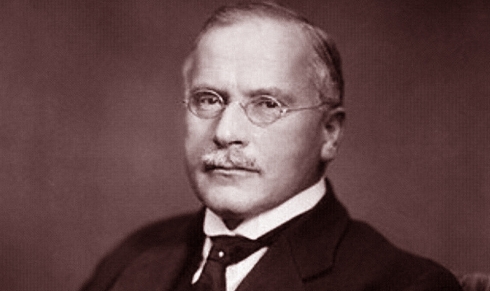
Swiss psychiatrist Carl Jung (1875 – 1961) had much to say as to how the German people could come to terms with all the dreadful acts that were committed in their name during the previous 12 years.


“[The German] will try frantically to rehabilitate himself in the face of the world’s accusations and hate – but that is not the right way. The only right way is his unconditional acknowledgement of guilt… German penitence must come from within.”


Click here to read Jung’s thoughts on Hitler.

NULL
1948, Pathfinder Magazine, Winston Churchill

The Gathering Storm
(Pathfinder Magazine, 1948)

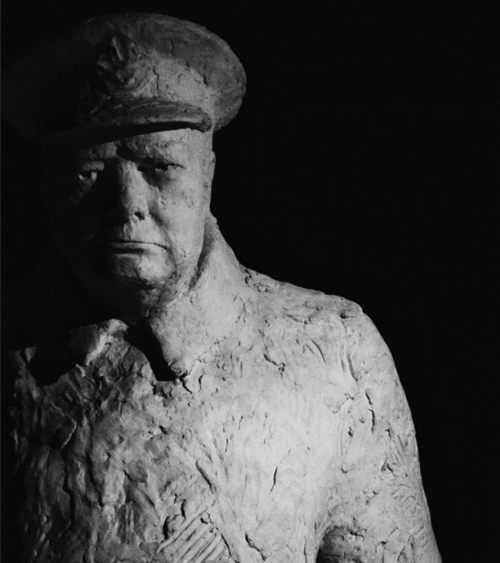
This is the Pathfinder book review for the first in Winston Churchill’s monumental six-volume account of the struggle between the Allied Powers in Europe against the Axis during the Second World War. Told from the unique vantage point of a British prime minister, it is also the story of one nation’s heroic role in the fight against fascist tyranny. When the other volumes in the series were completed, in 1953, Churchill was awarded the Nobel Prize for Literature for his effort.

Advertisement

Use shortcode [oma_ad position="summary_top"] (or other position) in your theme or widgets to display OMA Promotions here.

Scroll to Top