Author name: editor

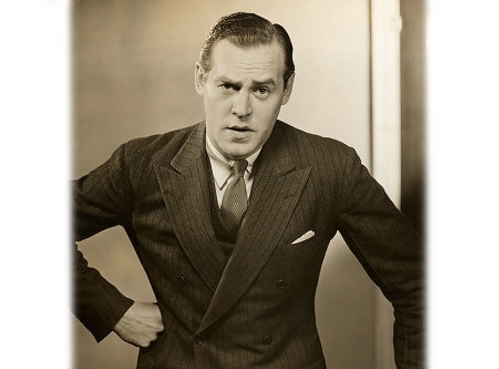
Jimmy Stewart as George Bailey (Photoplay Magazine, 1939)
1939, It's A Wonderful Life, Photoplay Magazine

Jimmy Stewart as George Bailey
(Photoplay Magazine, 1939)

The appeal of James Stewart, the shy, inarticulate movie actor, is that he reminds every girl in the audience of the date before the last. He’s not a glamorized Gable, a remote Robert Taylor. He’s ‘Jim’, the lackadaisical, easy-going boy from just around the corner.


The above line was pulled from the attached article which was one of the first widely read profiles of Jimmy Stewart (James Maitland Stewart 1908 – 1997). Written four years after his arrival in the California dream factory and printed during the same year as his first encounter with the director Frank Capra in Mr. Smith Goes to Washington, this article reveals that Stewart had a small town upbringing and was essentially the same character he played in It’s A Wonderful Life.

Booth Tarkington might have created Jim Stewart. He’s ‘Little Orvie and Billie Baxter’ grown up ‘Penrod’ with a Princeton diploma.


From Amazon: It’s a Wonderful Life: Favorite Scenes from the Classic Filmstyle=border:none

Iceberg Warnings as Early as January (Popular Mechanics, 1912)
1912, Popular Mechanics Magazine, Titanic History

Iceberg Warnings as Early as January
(Popular Mechanics, 1912)

The attached two paragraphs appeared in Popular Mechanics some six weeks prior to the maiden voyage of Titanic:

As many as 4,500 different bergs have been actually counted in a run of 2,000 miles; estimated heights of from 800 to 1,700 feet are not uncommon, and bergs with lengths of from 6 to 82 miles are numerous.


The notice indicated that if the Indian Ocean is suffering such a large number then certainly it can be surmised that the North Atlantic will be plagued doubly. It stands to reason that if the editors of this magazine were aware of the heavy presence of South-bound icebergs, then the naval community must also have been in the know.

Advertisement

Use shortcode [oma_ad position="summary_top"] (or other position) in your theme or widgets to display OMA Promotions here.

WW 2 Sex | Sex During WWII
1955, Coronet Magazine, World War Two

Sex During the Second World War
(Coronet Magazine, 1955)

At the beginning of World War II, our army was a mixture of callow boys and and domesticated men. The older men were homesick for wives and children…There were plenty of lonely wives, too, and it soon became evident that a fair number of them were committed to the belief that continence was bad for women.


Marriage vows were one of the unsung casualties of the Second World War: by 1944 many married women who hadn’t seen their drafted husbands in years began producing babies; you can read about that here…


In 1943 a woman on the home front introduced a sexual component that she believed would bring an end to the problem of industrial absenteeism – click here to read about her idea…

Japanese Feudalism Overturned (Pathfinder Magazine, 1945)
1945, Pathfinder Magazine, Post-War Japan

Japanese Feudalism Overturned
(Pathfinder Magazine, 1945)

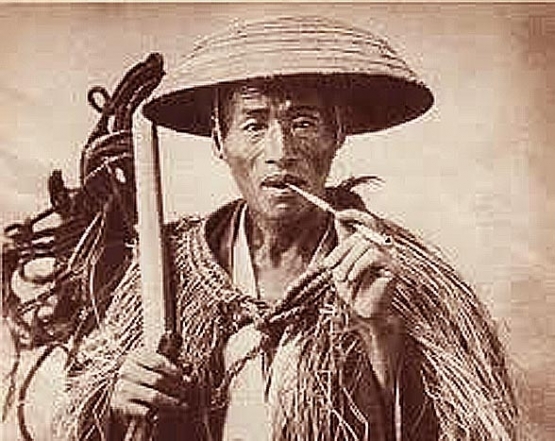
The reforms that were imposed upon Occupied Japan in the Forties and Fifties did not simply come in the form of death sentences for war criminals – but additionally the Japanese came to know the rights and protections that are guaranteed to All Americans under the United States Constitution. For the first time ever Japanese women were permitted to vote, unions were legalized and equality under the law was mandated. This small notice concerned the overthrow of the feudal laws that governed the Japanese tenant farmers.
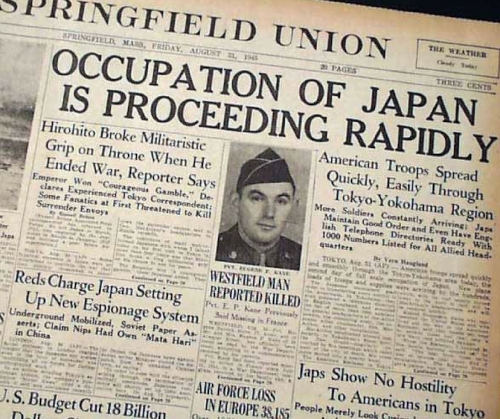

General Robert L Eichelberger Eighth Army commander | Eighth Army Occupation of Japan 1945 | Diseases in Occupied Japan 1945
1945, Newsweek, Post-War Japan

The Work Starts
(Newsweek Magazine, 1945)

As the American occupation forces began to pour in and spread throughout the cities and countryside of Japan, both occupied and occupier slowly get to learn of the other. The cordial attitude of the Japanese leads General MacArthur to conclude that the military presence need not be as large as he had once believed:

Curious and awed, increasingly friendly Japanese flocked to watch what they called the ‘race of giants’ at work.

Advertisement

Use shortcode [oma_ad position="summary_top"] (or other position) in your theme or widgets to display OMA Promotions here.

WAC Women Christmas 1945 |
1945, Newsweek, WACs

WACs at Christmas
(Newsweek Magazine, 1945)

By the time the war ended the WACs were 100,000 strong –
they had earned 314 medals and commendations, including 23 Legion of Merit awards and fourteen Purple Hearts. Throughout the war, seventeen thousand WACs had served overseas but by Christmas of 1945 their global strength had been cut in half.

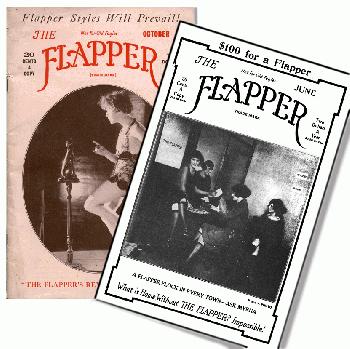
New Fashioned Girls (Flapper Magazine, 1922)
1922, Flappers, The Flapper Magazine

New Fashioned Girls
(Flapper Magazine, 1922)

Unearthed by a team of underpaid urban anthropologists digging all hours in the skankiest and most vile of magazine repositories was this single page of feminine poesy representative of an obscure, forgotten genre of Twentieth Century prosody that celebrated a brash cast of woman that was once known as a Flapper.
Alas, the name of the poet has been lost to time.

Advertisement

Use shortcode [oma_ad position="summary_top"] (or other position) in your theme or widgets to display OMA Promotions here.

Spy Chief Bill Donovan Examined the German-American Bund 1940
1940, American Fascism, PM Tabloid

The Dangers of the Bund
(PM Tabloid, 1940)

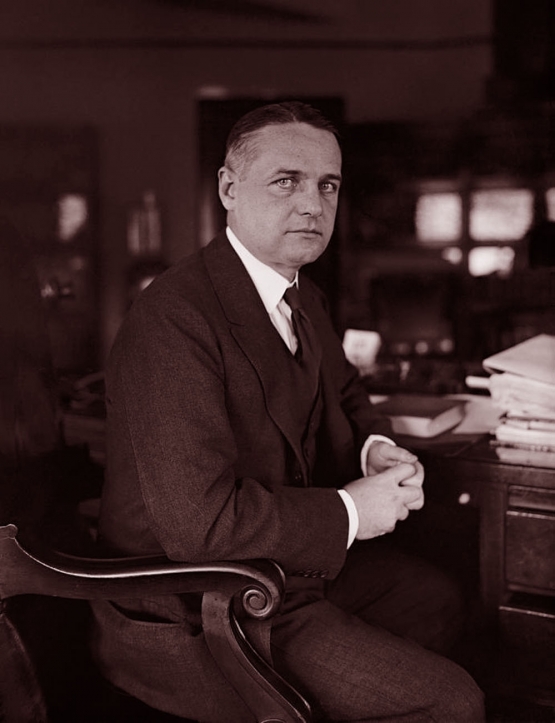
Here is an article from the man who would shortly be America’s premiere spy-master: William Wild Bill Donovan. In this report he examined the Trojan horse tactics of the German Foreign Organization:

Children of Germans naturalized half a century ago are still counted German by Berlin and every effort is made to convince them of the fact… It is safe to say that a very fair proportion of the non-refugee Germans who have become American since Hitler came to power did so with the secret intention of turning free and democratic America into ‘their‘ – that is, Hitler’s – America.

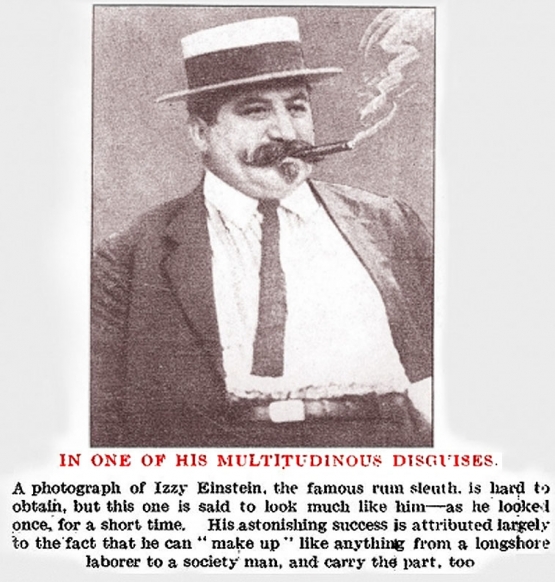
Izzy Einstein: Prohibition Agent No. 1 (Literary Digest, 1922)
1922, Prohibition History, The Literary Digest

Izzy Einstein: Prohibition Agent No. 1
(Literary Digest, 1922)

Here is an interview with Izzy Einstein (Isidor Einstein, 1880 – 1938): Prohibition agent and master of disguise:

A day with Izzy would make a chameleon blush for lack of variation…

He prepared himself to move in high, low and medium circles – on the excellent theory that the taste for liquor and the desire to sell it are no respecters of persons – and in all those circles he has since been whirling with rapidity and a quick-change adeptness.

Advertisement

Use shortcode [oma_ad position="summary_top"] (or other position) in your theme or widgets to display OMA Promotions here.

'Film Cannot Be Art'' (The Dial Magazine, 1927)
1927, Silent Movie History, The Dial Magazine

‘Film Cannot Be Art”
(The Dial Magazine, 1927)

In this article, a 1920s critic forthrightly states that the primitive state of movie cameras renders them unfit as capable tools with which art can be created. He expands on his remarks by pointing out that 1920s film technology generally will never be able to render thought-provoking plots or articulate narratives until some necessary advancements are made in the field.


Another anti-silent film article can be read here…


-an additional article from the 1920s defaming silent film can be read here…

General Stilwell In Burma (Yank Magazine, 1944)
1944, World War Two, Yank Magazine

General Stilwell In Burma
(Yank Magazine, 1944)

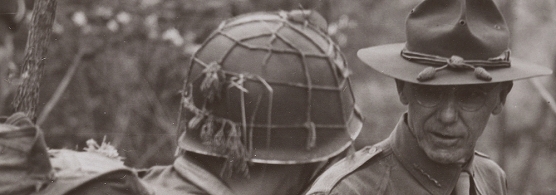
In May 1942 Lieutenant General Joseph Warren Stilwell (1883 – 1946) made that frank statement after leading a tired, battered band of 103 officers, men and nurses on a 20-day march into India, refugees from the Allied rout in Burma… Stilwell’s return to Burma is the result of two years of careful preparation in which two major projects were developed. One was a Chinese-American training center in India…The other was the Ledo Road, a supply route from India by which Allied troops moving into Northern Burma could be equipped and provisioned.

Christianity in the Confederate States (Confederate Veteran, 1922)
1922, Confederate Veteran Magazine, Faith

Christianity in the Confederate States
(Confederate Veteran, 1922)

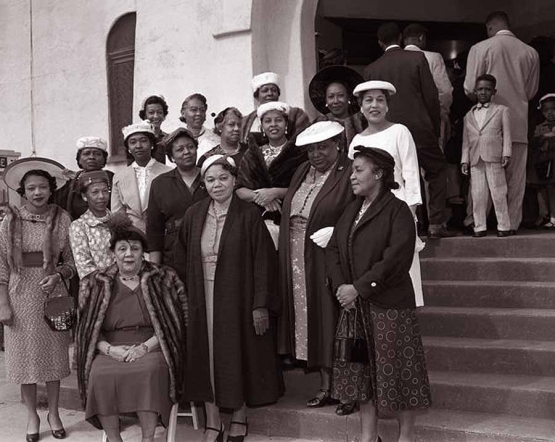
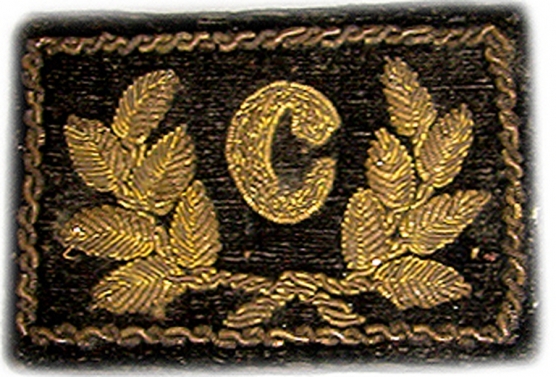
In the war society of the South, religion played a leading roll… The Methodist and Presbyterian churches cut themselves away from their Northern brethren and cast their fortunes with the Southern cause… The churches of the South entered so whole heatedly into the cause of the war that they were invariably closed by the Union commanders. Throughout the war many revivals, special prayer meetings, and fasts were held for the success of Southern arms… The army was swept by religious fervor. All regiments departing for the front were consecrated. Many clergymen joined the army as chaplains… .


Click here to read about the chaplains in the Confederate Army.

Advertisement

Use shortcode [oma_ad position="summary_top"] (or other position) in your theme or widgets to display OMA Promotions here.

United States Religions in the 1940s | American Religions During WW2
1945, America Weekly, Faith

Statistics on American Religions
(America Weekly, 1945)

In this study concerning the religions of the United States during the mid-to-late period of the Second World War, it was revealed that there were a total of 256 religious bodies in the country; of this 13 reported a membership numbering in excess of one million followers. All-in, there were 72,492,669 who were members of one faith or another:

Catholics:…………………………….. 23,419,791


Methodists:…………………………. 8,046,129


Baptists:………………………………. 5,667,926

All the Protestant denominations added up to 41,943,104. The Jewish congregations clocked-in at 4,641,184.

Atheism Defended | Atheist Rights 1960s
1961, Coronet Magazine, Faith

A Christian Defends Atheists
(Coronet Magazine, 1961)

Following the close of the Second World War America took a good look at herself and slowly began to clean house. Assorted magazines and newspapers began to publish articles about various injustices that seemed to be overlooked during the previous centuries in order that remedies could be found and national integrity restored. When this column was sent to the printer it was a time when numerous states barred atheists from holding elective office, serving as a court witness or work as a school teacher. All of this was taking place in spite of the fact that the census bureau records indicated that as many as 36.6% of the U.S. citizenry had no affiliation with any religious institution.


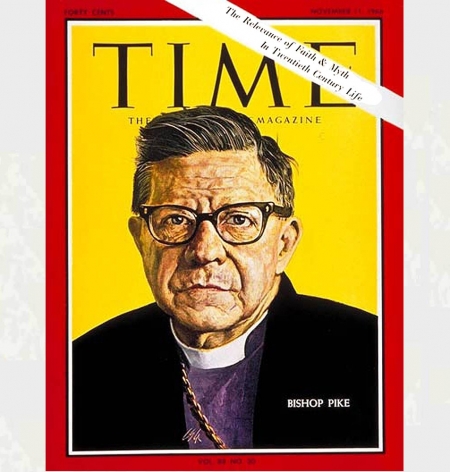
Another article about an outstanding Episcopal bishop can be read here…

Religious Revival During WW II | 1940s Religious Revival | 1940s Christian Revival
1942, Faith, The American Magazine

The W.W. II Revival In Faith
(American Magazine, 1942)

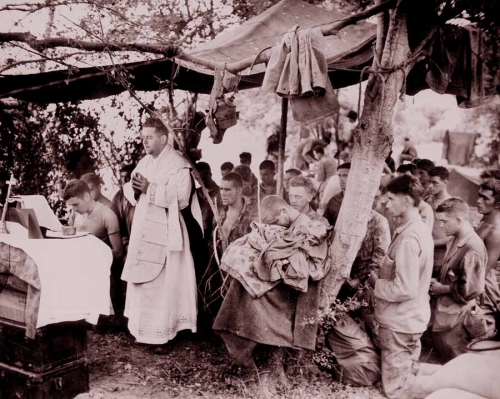
When mobilization began, the government, as usual, undertook to provide spiritual ministry for the men. But many veteran clergymen doubted whether religion would catch on… But religion did catch on – and with such vigor that the chaplaincy services have been swamped by it. Army and Navy chapels are jam-packed. Demands for special services, for Bible study and for religious instruction, are more than can be met. Many men – Protestant and Catholic – are being baptized or confirmed. Some chaplains report an almost overwhelming interest in religion and church as a career.


Click here to read about the renewed interest in religion that existed on the home front…

Advertisement

Use shortcode [oma_ad position="summary_top"] (or other position) in your theme or widgets to display OMA Promotions here.

Scroll to Top