
Author name: editor

Traveling to the Lincoln - Douglas Debate (National Park Service, 1956)
1956, Abraham Lincoln, Pamphlet Produced by the National Park Service

Traveling to the Lincoln – Douglas Debate
(National Park Service, 1956)

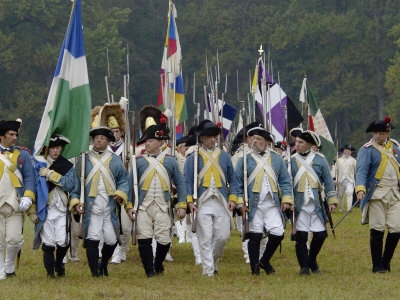
Stephen Douglas (1813 – 1861), Lincoln’s Democratic rival in the contest for the U.S. Senate seat from Illinois, was a popular figure with a great deal of political capitol who enjoyed wide spread fame throughout much of the fruited plain; this all contributed to a robust ego which would not suffer anything less than traveling to the debates in a grand style. By contrast, Honest Abe traveled in economy class, packed among the masses (although as a railroad lawyer, he certainly could have afforded better).

This short paragraph (accompanied by a photograph of both men) was written by a friend of Lincoln who recalled his train ride with the (losing) candidate as he made his way to Ottawa, Illinois, the site of the first debate.
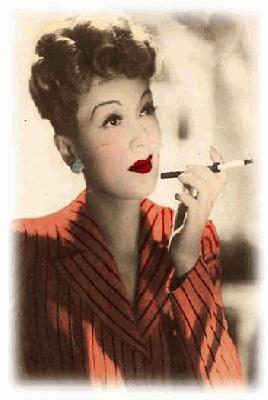
Edwige Feuillère Gets Liberated (Collier's, 1946)
1946, Collier's Magazine, Hollywood History

Edwige Feuillère Gets Liberated
(Collier’s, 1946)

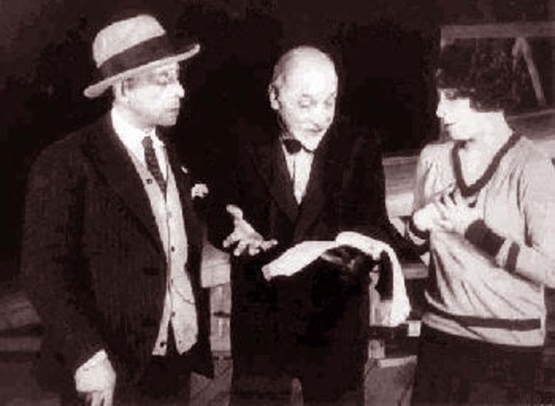
A 1946 article in which the beloved French actress Edwige Feuillère (1907 – 1998) is personified as the epitome of wounded French Glamor returned to it’s rightful place following the hasty retreat of those nasty Huns from the boulevards of lovely Paris:

Edwige Feuillère, France’s Number One actress, is wearing evening clothes again – and all fashionable Paris rejoices. It is a sort of symbol, the blooming of the lovely Edwige into full-panoplied formality. For she, along with most women of France, abstained from festivities and the clothes that go with them throughout the war.

1937, Hollywood History, Photoplay Magazine

The High and the Mighty and the Movies They Loved(Photoplay Magazine, 1937)

Royalty and rulers of the world are movie fans. The cinema tastes of the great are disclosed for the first time in this article.

Listed in the attached 1937 Hollywood fan magazine article are the names of the favorite movies of Gandhi, Stalin, Mussolini, Franco, Hirohito, Roosevelt and many more.

Click here to read about happy Hollywood’s discovery of plastic surgery…

Advertisement

Use shortcode [oma_ad position="summary_top"] (or other position) in your theme or widgets to display OMA Promotions here.

Anti-Plagerism Legislation Introduced (Photoplay Magazine, 1916)
1916, Photoplay Magazine, Silent Movie History

Anti-Plagerism Legislation Introduced
(Photoplay Magazine, 1916)

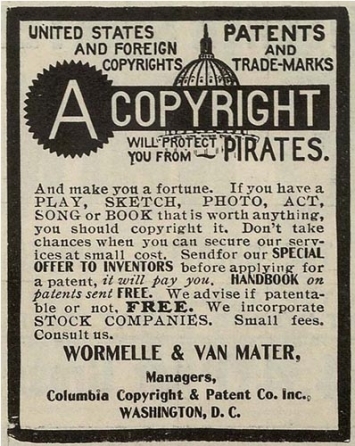
Attached is a small column that credited U.S. Representative Charles Hiram Randall (1865 – 1951) of Los Angeles for having proposed legislation before Congress that sought copyright protection for the benefit of scenario writers in Hollywood:

Congressional Randall [Prohibition Party] of California has introduced a bill in the House of Representatives for the protection of scenario authors, by providing for the issuance of a copyright on the scenario upon reciept of two typewritten copies to the proper department in Washington.

U.S. Propaganda Pamphlets Dropped on the Hun (The Stars and Stripes, 1919)
1919, Stars and Stripes Archive, The Stars and Stripes

U.S. Propaganda Pamphlets Dropped on the Hun
(The Stars and Stripes, 1919)

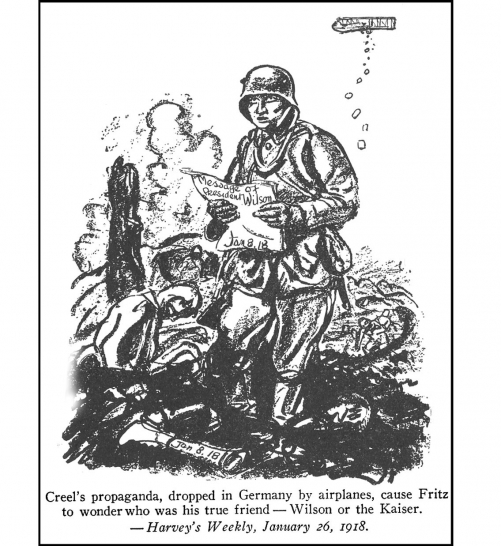
This is a swell read, written in that patois so reminiscent of those fast talking guys in 1930s Hollywood movies. One of the many reasons I find this era so interesting has to do with the fact that the war coincided with that mass-media phenomenon called advertising – and this article pertains exactly to that coincidence. This column was printed shortly after the war in order to let the Doughboys in on the existence of a particular group within the A.E.F. that was charged with the task of dumping propaganda leaflets all over the German trench lines:


Propaganda is nothing but a fancy war name for publicity and who knows the publicity game better than the Yanks?

Advertisement

Use shortcode [oma_ad position="summary_top"] (or other position) in your theme or widgets to display OMA Promotions here.

The Third Anniversary of Verdun (The Stars and Stripes, 1919)
1919, Stars and Stripes Archive, The Stars and Stripes

The Third Anniversary of Verdun
(The Stars and Stripes, 1919)

1919 marked the third anniversary of the Battle of Verdun and the grounds were still littered with the dead, surrounded by a tons of equipment, lying in open fields pock-marked by thousands of high explosive shells:

Spring will come to France next month, but Spring will not come to the field of Verdun. Already the grass is green on the broad stretches of Champagne; in the Vosges the snow patches linger only in the stubborn shelter of rocks that bar the sun,; but there is no portent of resurrection in all the stretch of churned up gravel marking the line of forts that protect the citadel of the Meuse from the Northeast…the shell holes are filled with clear water, and between them course new born brooks, sublimating in crystal pools from which no man would dare drink.

Advertisement

Use shortcode [oma_ad position="summary_top"] (or other position) in your theme or widgets to display OMA Promotions here.

Arthur B. Davies (Vanity Fair, 1919)
1919, Modern Art, Vanity Fair Hall of Fame

Arthur B. Davies
(Vanity Fair, 1919)

An Arthur B. Davies (1862 – 1928) review written by VANITY FAIR art critic Frederick James Gregg following the opening of an exhibition highlighting the the private collection of N.E. Montross. The critic wrote:

Since the death of Albert Pinkham Ryder (1847 – 1917), Mr. Davies has been recognized, by persons abroad who are familiar with art in America, as the leading living painter on this side of the Atlantic.

Where Were the Doughboys From? (U.S. Gov. 1931)
Doughboys, The U.S. Government Records

Where Were the Doughboys From?
(U.S. Gov. 1931)

This page contains a chart clearly stating the number of men who served in the U.S. Army during World War One, the number of men provided by each state and what percentage of the entire army originated from these states.


*Doughboys from New York numbered 367,864 and made up 9.7% of the U.S. Army.
*Doughboys from Pennsylvania numbered 297,891 and made up 7.93% percent.
*While the men of California made up 2.98% of the army, clocking in at 112,514.

etc…etc…etc…


Click here to read about the shipments of chewing gum that were sent to the American Army of W.W. I.

A Civil Libertarian Rants About Prohibition (Judge Magazine, 1920)
1920, Judge Magazine, Prohibition History

A Civil Libertarian Rants About Prohibition
(Judge Magazine, 1920)

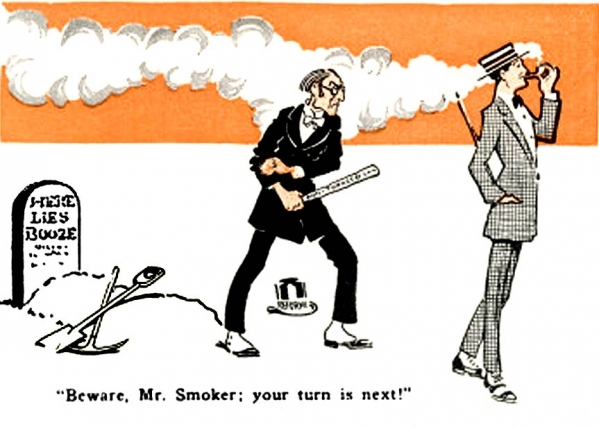
An outraged editorial writer opines that the prohibition of alcohol will serve to corrupt the morality of more Americans than it could possibly save. Additionally, the writer alludes to the fact that, at the time, the U.S. Congress was discussing the prohibition of tobacco, as well:

It is coming time to write the obituary of Joy. Less than a year ago
the Cheering Cup was removed from American life. Now we are told that just as soon as enough Congressmen can be intimidated, not a difficult job, the Soothing Weed is also to be extinguished.


The writer places blame more upon the apathetic American voter rather than the grafters in Congress.

Advertisement

Use shortcode [oma_ad position="summary_top"] (or other position) in your theme or widgets to display OMA Promotions here.

The Fleecing of Liberators (The Stars and Stripes, 1919)
1919, Stars and Stripes Archive, The Stars and Stripes

The Fleecing of Liberators
(The Stars and Stripes, 1919)

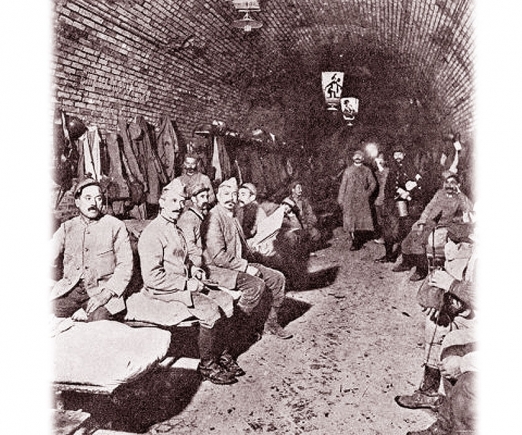
By the time April of 1919 rolled around, it seemed to the Doughboys who were waiting for that boat to take them back to the good ol’ U.S. of A that their French allies had a short term memory and were terribly ungrateful for American sacrifices made on their behalf. Many post-Armistice letters written by the Doughboys were filled with snide comments about the high prices they were asked to pay for everyday merchandise, prices that seemed to be chosen just for them. Wisely, the Stars and Stripes editors chose not to take sides in this debate but ran this nifty little piece about the manner in which the Americans of 1782 treated their French allies during the American Revolution.


Click here to read about the foreign-born soldiers who served in the American Army of the First World War.

Advertisement

Use shortcode [oma_ad position="summary_top"] (or other position) in your theme or widgets to display OMA Promotions here.

Lana Turner Magazine Article | Lana Turner Movies
1949, Hollywood History, Quick Magazine

Lana Turner
(Quick Magazine, 1949)

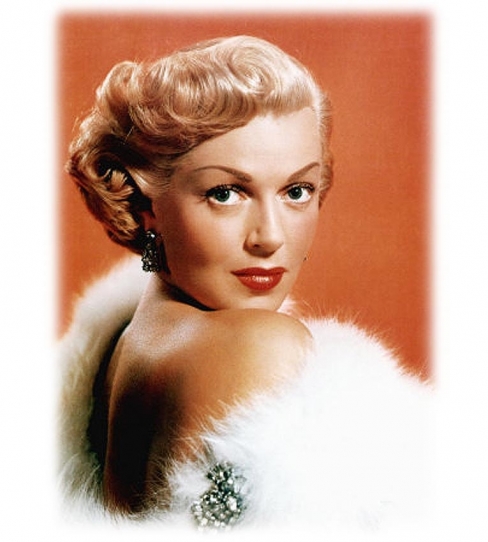
When this Hollywood profile first appeared on paper, actress Lana Turner (1921 – 1995) was all of twenty-nine years of age and about to begin working on A Life of Her Own
it was her thirtieth movie; her last four films had nearly grossed a record-breaking $20 million, and her smiling mug was on each and every Hollywood fan magazine that could be found.

Today, the sleek, gray-eyed Lana has shed the plumpness of two years ago, keeps her weight between to 118 and 127 lbs… Now Lana is as shapely as she was in those early days. She has the ‘perfect’ figure: 5 ft. 3 in., 34-in. bust, 24-in. waist, 34.5 in. hips.


The article is illustrated with photographs from eight of her pre-’49 movies and lists all the husbands that she’d collected up to that same period (she had acquired eight husbands before she was through).

Advertisement

Use shortcode [oma_ad position="summary_top"] (or other position) in your theme or widgets to display OMA Promotions here.

Scroll to Top