
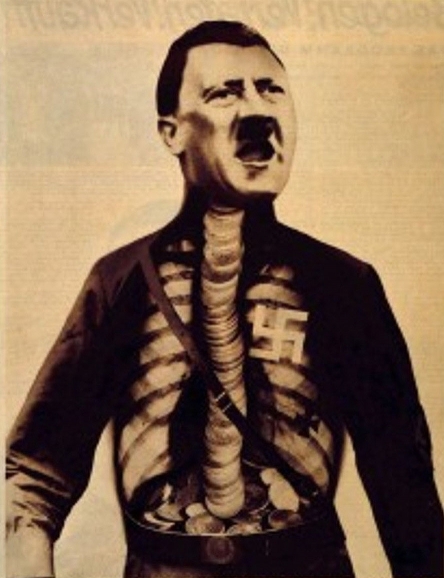
Fritz Thyssen on Hitler
(Liberty Magazine, 1941)
NULL

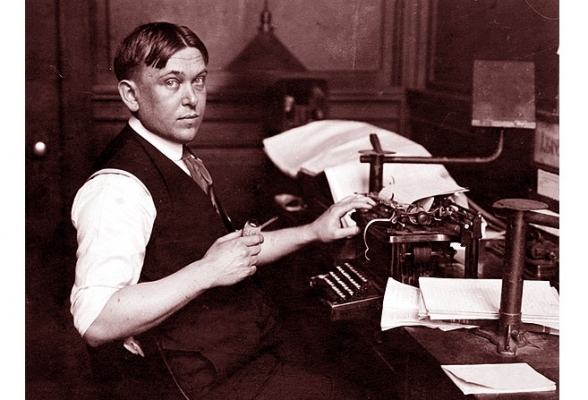
Vanity Fair correspondent L.L. Jones cracked open a copy of The American Language by H.L. Mencken:
At last a man has arrived who knows something about English prose style under American conditions…
The rest of his thoughts can be read in the attached review.
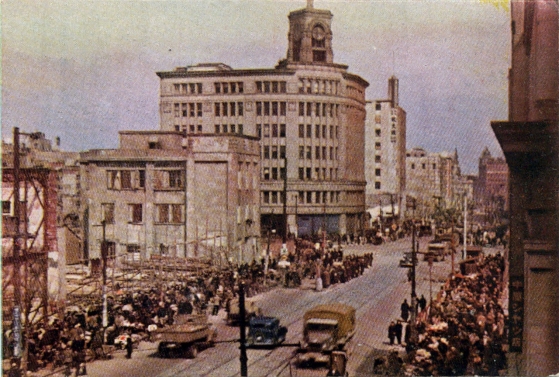
An eyewitness account of the devastation delivered to Tokyo as reported by the first Americans to enter that city following the Japanese surrender some weeks earlier:
The people of Tokyo are taking the arrival of the first few Americans with impeccable Japanese calm. Sometimes they turn and look at us twice, but they have shown no emotion toward us except a mild curiosity and occasional amusement…They are still proud and a little bit superior. They know they lost the war, but they are not apologizing for it.
Click here to read about the humbled Japan.

Somebody said The Lord’s Prayer as the meeting broke up. I walked three blocks to the subway station. Just as I was about to go down the stairs – bang! – It happened! I don’t like the word miracle, but that’s all I can call it. The lights in the street seemed to flared up. My feet seemed to leave the pavement. A kind of shiver went over me and I burst into tears…I haven’t touched a drop in four years and I’ve sent four other fellows on the same road.
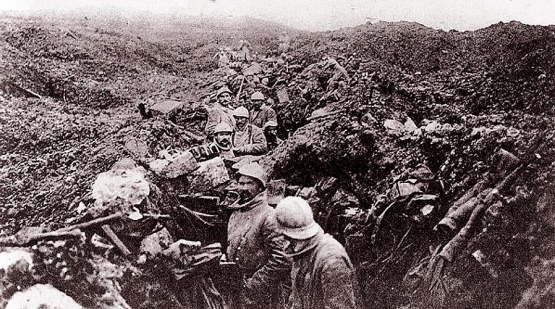
So horrid was the terror of World War I trench warfare that more than a few of the Frenchmen serving in those forward positions (and others who were simply overcome with life in the military) began to post personal ads in French newspapers, volunteering to marry widows and divorcees with large families in order to be absolved of all military duty.
Read what the U.S. Army psychologists had to say about courage.
Appearing in The American Legion Monthly some nineteen years after the end of the war was this nifty article written by a German veteran. The article explains quite simply how his forward listening post operated in the German trenches North of Verdun during the early Autumn on 1918.
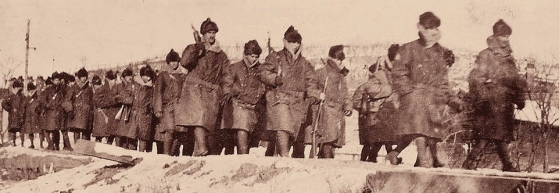
With the Korean War in full-swing, Major General Edward E. MacMorland (U.S.A.) recalled his experiences some forty years earlier when he was a field grade officer fighting the nascent Soviet Army on their own turf:
It was a tough and surprisingly well-equipped enemy that our soldiers faced in this region…
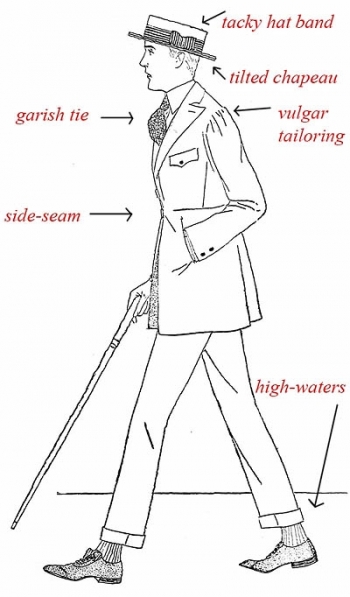
On page one of this three page guide, you will find some essential notes and illustrations from the editors of Vanity Fair regarding the good taste of 1918 (as well as the simply awful).
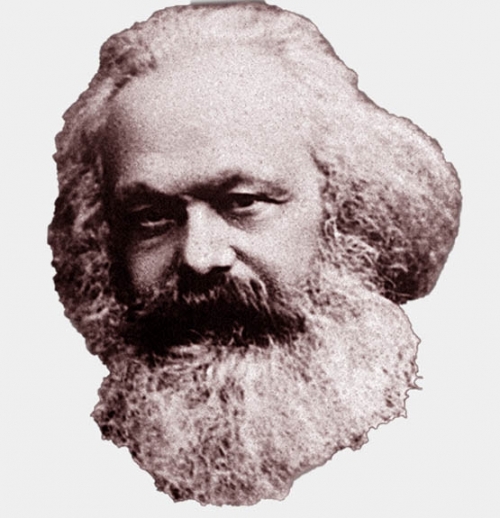
To be sure, the book review of Das Kapital by Karl Marx that appeared in The New York Times in 1887 was very different from the review that same paper would give that book today. For this reviewer, Marx was one of the advocates of chaos, and a militant political economist:
If he is anything, Karl Marx is a man in a towering rage. His paragraphs are replete with kicks and cuffs. He wants to slap your face if you are a bourgeois; to smash your skull if you are a capitalist.
Click here to read an article by Leon Trotsky.
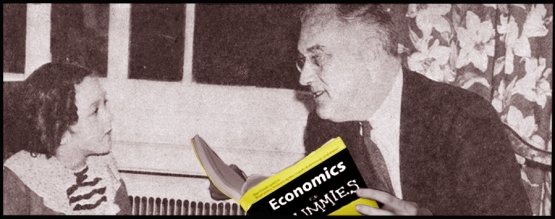
The columnist whose opinions are attached bitterly pointed out that the first year of FDR’s administration had marginalized the Congress – and further opined that Roosevelt’s rhetoric clearly implied his arrogant conviction that his administration alone was the only alternative to out right revolution, and should therefore to be seen as a mandate of the people. The article lists the numerous failings of FDR’s New Deal.
CLICK HERE to read more criticism from FDR’s loyal opposition…
When W.W. II began and the factories reopened, the reality of having money and full-time employment made so many people giddy with excitement it proved to be too much for them – click here to read about that…
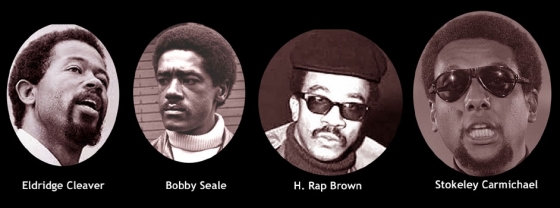
During the closing months of the tempestuous Sixties, American baseball legend Jackie Robinson (1919 – 1972) wrote about his fears in regards to the racist hatreds that existed within the hearts of a handful of the most vociferous Black radicals.
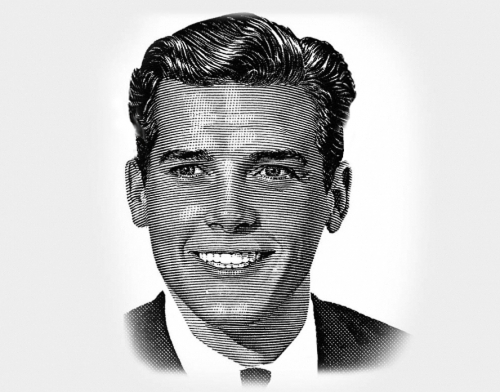
I have gathered my tools and my charts… I shall roll up my sleeves – make America over!
This was the motto to which the young folk began their work, nearly a thousand of them, which may be grouped for study purposes under the generic title, ‘Junior Brain Trusters’. They were, for the most part, young men from the colleges and universities of the larger eastern cities…. Many of them came as protégés of the Senior Brain Trusters themselves, brought from the classrooms by [Guy] Tugwell, [Raymond Charles] Moley, [Felix] Frankfurter – Professor Frankfurter being especially successful in drafting students and recent graduates from the Harvard Law School.
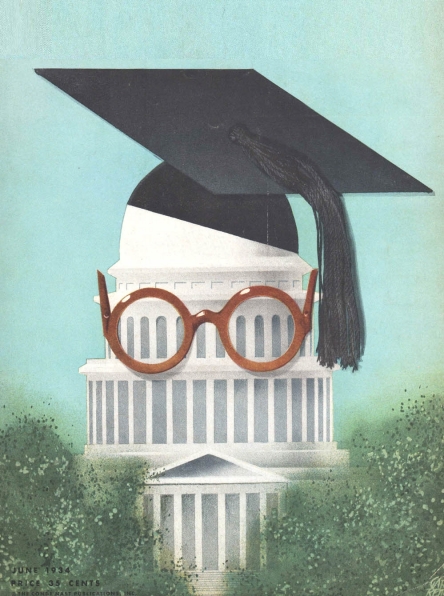
A year and a half into FDR’s first term, journalist William E. Berchtold caught wind of a growing realization in Washington that most of the ’emergency’ legislation will become permanent. This didn’t bother him nearly as much as the fact that such imperishability also meant that the host of beta males who were positioned to maintain this behemoth would also be remaining (History has taught us that it was not FDR’s alphabet agencies that became a mainstay, but those of LBJ).
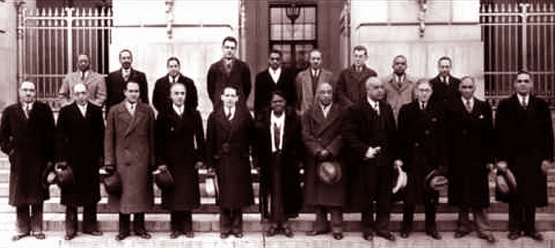
The Black Brain Trust consists of about 25 Negro leaders who have assumed command of America’s 13,000,000 Negroes in their fight for equality. They hold informal meetings to plan their strategy, whether it is to defeat a discriminatory bill in Congress or to overcome a prejudice against a private [in the army]. Few white men know it, but they have already opened a second front in America – a front to the liberation of the dark races.
If one judges by appearances, I suppose I am a flapper. I am within the age limit, I wear bobbed hair, the badge of flapperhood. I powder my nose. I wear fringed skirts and bright colored sweaters, and scarves and waists with Peter Pan collars and low-heeled ‘finale hopper’ shoes. I adore to dance… But then there are many degrees of a flapper. There is the semi-flapper, the flapper, the super-flapper. Each of these three main general divisions has its degrees of variation. I might possibly be placed somewhere in the middle of the first class.
Throughout the decades, Washington, D.C. has had more than its fair share of private clubs for journalists – but they all failed for the same reason: each one of them granted credit to their members at the bar. It was not until 1908 that someone got it right – The National Press Club insisted that each ink-slinger pay-as-they-go. As a result, this club has been able to keep their doors open for well over one hundred years. This well-illustrated article explains what an important role the club played during the war years.
-recommended reading:
Drunk Before Noon: The Behind-The-Scenes Story of the Washington Press Corps
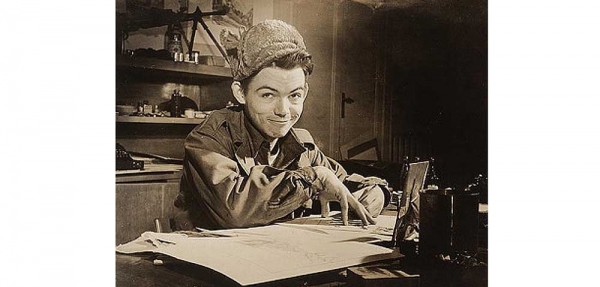
No other cartoonist during the Second World War ever portrayed the American GI so knowingly and with more sympathy than the Stars & Stripes cartoonist Sgt. Bill Mauldin (1921 – 2003), who was awarded a Pulitzer Prize for editorial cartoons in 1945.
Mauldin wrote the attached essay at the end of the war and gave the Yank Magazine readers an earful regarding his understanding of the front, the rear and all the the blessed officers in between
Click here to read a wartime interview with another popular 1940s American cartoonist: Milton Caniff.
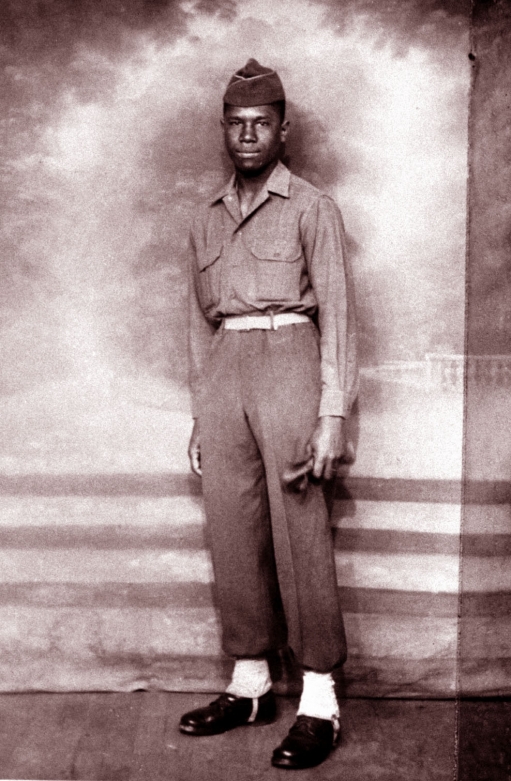
Wishing to avoid some of the taint of racism that characterized the American military during the First World war, Republican Senator William Barbour (1888 – 1943) announced that he intended to introduce an amendment to the 1940 conscription legislation that would open all branches of the U.S. Military to everyone regardless of skin color. The article goes on to list all the various branches that practiced racial discrimination.