Hollywood History - It's A Wonderful Life
"The appeal of James Stewart, the shy, inarticulate movie actor, is that he reminds every girl in the audience of the date before the last. He's not a glamorized Gable, a remote Robert Taylor. He's 'Jim', the lackadaisical, easy-going boy from just around the corner."
The above line was pulled from the attached article which was one of the first widely read profiles of Jimmy Stewart (James Maitland Stewart 1908 – 1997). Written four years after his arrival in the California dream factory and printed during the same year as his first encounter with the director Frank Capra in "Mr. Smith Goes to Washington", this article reveals that Stewart had a small town upbringing and was essentially the same character he played in "It's A Wonderful Life".
"Booth Tarkington might have created Jim Stewart. He's 'Little Orvie and Billie Baxter' grown up 'Penrod' with a Princeton diploma."
From Amazon: It's a Wonderful Life: Favorite Scenes from the Classic Film
A profile of the Hollywood actress Donna Reed (born Donna Belle Mullenger: 1921 – 1986), who will foreve be remembered for her portrayal of the character "Mary Bailey" in the Frank Capra film, It's a Wonderful Life(RKO, 1947).
This interview was published as one more publicity element that was created to promote her television program, The Donna Reed Show (ABC, 1958 - 1966), that was launched a year and a half earlier, and serves as a nice summary of her life and career up until 1960. Reed refers to her earliest days growing up on a family farm in Iowa, her salad years as a maid, librarian and community college student in Los Angeles and her deepest frustrations with pin-headed casting agents who placed her in limited rolls for so many years. (ABC, 1958 - 1966), that was launched a year and a half earlier, and serves as a nice summary of her life and career up until 1960. Reed refers to her earliest days growing up on a family farm in Iowa, her salad years as a maid, librarian and community college student in Los Angeles and her deepest frustrations with pin-headed casting agents who placed her in limited rolls for so many years. James Agee, the film reviewer for The Nation (1942 - 1948), was charmed by the warmth of It's a Wonderful Life
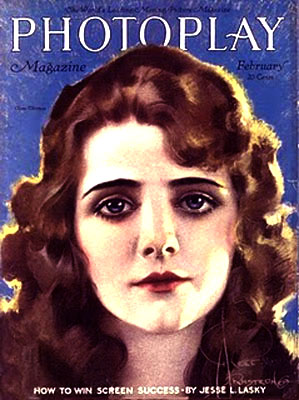
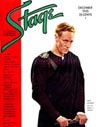
and believed that it was an admirable and well-crafted piece of film making; he nonetheless came away feeling like he'd been sold a bill of goods and rejected the movie primarily because he believed that films created in the Atomic Age should reflect the pessimism that gave birth to the era. When the most popular movies of 1947 were tallied up in Photoplay Magazine's "People's Choice Award", It's a Wonderful Life clocked in at number four, having been trounced by The Jolson Story, The Best Years of Our Lives, and Welcome Stranger This profile of director Frank Capra was written five years before he directed "It's a Wonderful Life" and gives a tidy account as to the course of his career up until 1942, when he was inducted as a major in the U.S. Army Signal Corps. Ten years prior to being cast in the roll as George Baily's guardian angel, "Clarence", the actor Henry Travers (1874 – 1965) appeared in the Broadway play You Can't Take It With You. Playing the part of "Grandpa Sycamore", he was singled out for praise by the editors of Stage Magazine; the review is attached herein. |
MORE ARTICLES >>> PAGE: * 1 * 2 * |
|