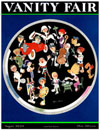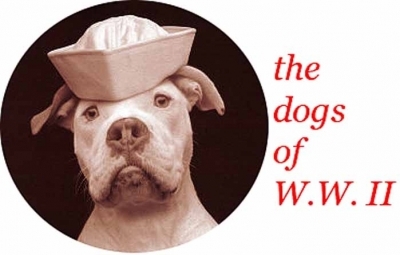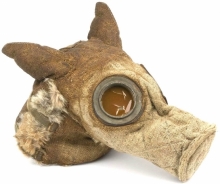
"The training of dogs for war purposes began in a limited way a number of years prior to the outbreak of the European war, the Germans being particularly interested in it. There were some trained war dogs in both the French and Belgian armies, but the British had none to speak of, nor did the United States. The dog began his general usefulness in the late war as a beast of burden." "There are canine sentries on duty on both sides in the Great War, and dogs that are dispatch-bearers. "Marquis", a French dog, fell from a bullet-wound almost at the feet of a group of French soldiers to whom he bore a message across a shell-raked stretch of country. But the message was delivered!"
We are happy to say that in the course of performing our daily duties, the scanning and posting of historic magazine articles, no dogs were harmed in any way; but sadly no such boast can be made by any participant of the Great War. Published during the bloodiest year of that conflict, this VANITY FAIR MAGAZINE article lists a good many of the particular services dogs were trained to perform on behalf of their belligerent masters.
"The French war dogs are divided into five classes, each of which performs a special type of work. There are sentinel dogs, patrol dogs, ambulance dogs, dispatch dogs and drought dogs. In all these departments of military activity they have proved their worth."
|
"I have read many interesting stories about heroes of the war and interesting accounts of pigeons, and police dogs, etc., but very little about the horses that served...Many of them were taken prisoner by the Germans, taken back into Germany and exhibited in their American harnesses and equipment. After the war, immediate plans were made to return the American men to their native country, but the equine warriors were forgotten..."
- from Amazon:
 
This article is about the 32 American horses that were captured by the Germans during the war, and never repatriated.
Illustrated with images of maimed and disfigured carrier pigeons, this article is filled with interesting lore of the battles waged by the 'feathered aviators' of the 1914 - 1918 war. You will read about how the pigeons were often dyed black so as to be mistaken for crows; how they were used at sea and at Verdun and that spies relied upon them. During the course of World War II the U.s Army signal Corps deployed more than 50,000 pigeons.
It was said that the carrier pigeons of W.W. II were ten percent stronger. Animals have played important rolls in war from the beginning and World War One was no exception. Throughout the war the widespread use of dogs, horses mules and pigeons are all well documented and there have been some very interesting books written on the topic. Not so well documented is the presence of this one elephant who, being loyal to the Kaiser, is pictured in the attached photograph from 1915.
From Amazon: War Elephants
|
MORE ARTICLES >>> PAGE: * 1 * 2 * |
|