









World War One

Find old World War 1 articles here. Find information on uniforms, women, gas warfare, prisoners of war and more.

A History of Dogs in the First World War
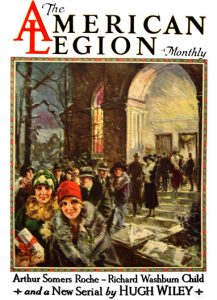
(American Legion Weekly, 1919)

The training of dogs for war purposes began in a limited way a number of years prior to the outbreak of the European war, the Germans being particularly interested in it. There were some trained war dogs in both the French and Belgian armies, but the British had none to speak of, nor did the United States. The dog began his general usefulness in the late war as a beast of burden.

The Red Cross Dogs
(Literary Digest, 1917)

There are canine sentries on duty on both sides in the Great War, and dogs that are dispatch-bearers. Marquis, a French dog, fell from a bullet-wound almost at the feet of a group of French soldiers to whom he bore a message across a shell-raked stretch of country. But the message was delivered!

Advertisement

Use shortcode [oma_ad position="summary_top"] (or other position) in your theme or widgets to display OMA Promotions here.

Who Won World War One?
(Life Magazine, 1927)

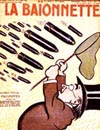
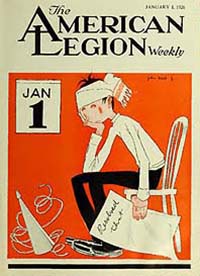
Who won the war? asks the satirist Herb Roth (1887 – 1953) in this cartoon that appeared in print ten years after America’s entry into the war.

By the time 1927 rolled around, the popular opinion across the Western world was that the war of 1914 – 1918, and the subsequent peace treaty that followed, was a big mistake that left a bad taste in everyone’s mouth. Although there was paper work indicating that World War One was victoriously brought to a close by the collective strength of the French, British, and American armies (among other nations) – by the time 1927 rolled around it didn’t feel like anyone’s victory.

Click here if you would like to read about the 1918 Armistice Day celebrations in Paris.


Click here to read about W.W. I art.

German Veterans of the War
(American Legion Monthly, 1934)

The Versailles Treaty insisted that Germany must have no W.W. I veterans organizations or conventions of any kind; 18 years later the Nazi leadership in Germany thought that was all a bunch of blarney and so the War Veterans Associations was formed. This article tells about their first convention (July 30, 1934).

Helmets Along the Western Front
(Literary Digest, 1915)

The tremendous advances in artillery that took place during the years leading up to the war helped to reintroduce an old, time-tested element to the uniforms of the 20th Century soldier: the helmet.


So numerous were head injuries from high-explosive shells during the first year of the war that it compelled the doctors on both sides to beg their respective generals to issue some measure of cranium protection in order to reduce the casualty figures. As you will read in the attached article, the French began to wear helmets in the fall of 1915; the British and Germans a year later.

Advertisement

Use shortcode [oma_ad position="summary_top"] (or other position) in your theme or widgets to display OMA Promotions here.

‘RETREAT? HELL!”
(The American Legion Weekly, 1922)

This four page history of the Battle of Belleau Wood is primarily concerned with the fighting that took place at Les Mares Farm; it was written in 1921 by William E. Moore, formerly a U.S. Army captain who was attached to the Historical Branch, General Headquarters of the A.E.F.. Throughout his article, Moore compared the fight at Les Mares Farm to the Battle of Gettysburg, and believed it to have been just as decisive:

That was the last effort the Germans made to force their way to Paris… It is is truly at Les Mares Farm where the Gettysburg of the A.E.F. lies, and there some day a monument should rise to inform the world what deeds were done upon that field.


German historians have long maintained that the Battle of Belleau Wood was not as significant as the Americans have liked to think that it was.

Relief Agency Structures on U.S. Army Camp Grounds

Illustrated with as many as twelve pictures, this article from ARCHITECTURAL RECORD points out what the recreational buildings looked like on the grounds of the various U.S. Army camps that were hastily erected following the Congressional declaration of war in April of 1917.

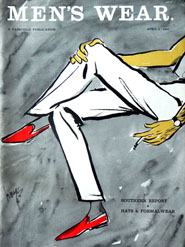
How the Furnace of War Made the Wrist Watch a Musculine Fashion Accessory
(The Stars and Stripes, 1918)

The following article must have been penned as a result of some sort of creative writing project for one of the many bored World War One Doughboys waiting for the boat home. The article spells out how the necessities of modern war demanded that the wrist watch no longer be thought of as a piece of jewelery adorned only by fops and fems and evolved into a useful tool for soldiers on the field. The column makes clear that prior the Great War, any man who dared to accessorize themselves with a watch was immediately suspect and likely to have their noses broken.

The T-shirt also had a military origin. Click here to read the article

•Read an article about the history of Brooks Brothers•

Advertisement

Use shortcode [oma_ad position="summary_top"] (or other position) in your theme or widgets to display OMA Promotions here.

Armored Cars and Trucks
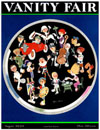
(Vanity Fair, 1916)

The American trucks and armored cars pictured here were not created specifically for the Great War, but no doubt they were sold to the French and British; a year later these trucks arrived with the A.E.F.. The bull dog that has for so long adorned the hood of the Mack truck dates to this conflict -the bull dog was the nick-name bestowed upon that vehicle by the Tommies.

Recognizing the importance of armored vehicles, a group of American Millionaires, among them Henry Clay Frick (1849 – 1919), pooled their money and donated a number of such items to the New York National Guard. Vanity Fair Magazine followed this story and produced this article as it developed with a thorough review of each of the donated military vehicles. Although the trucks are photographed, few are named.

Advertisement

Use shortcode [oma_ad position="summary_top"] (or other position) in your theme or widgets to display OMA Promotions here.

The Dwindling A.E.F.
(American Legion Weekly, 1919)

The intended readers for the attached article were the newly initiated members of the American Legion (ie. recently demobilized U.S. veterans), who might have had a tough time picturing a Paris that was largely free of swaggering, gum-chewing Doughboys gallivanting down those broad-belted boulevards, but that is what this journalist, Marquis James (1891 – 1955) intended. At the time of this printing, the A.E.F. (American Expeditionary Force) had been shaved down from 4,000,000 to half that number and re-christened the A.F.F. (American Forces in France) and the A.F.G. (American Forces in Germany). With a good bit of humor, the article concentrates on the antics of the American Third Army in Germany as they performed their Bolshevist busting duties in the Coblenz region.

Odd Post-War Thinking from H.L. Mencken
(The Smart Set, 1920)

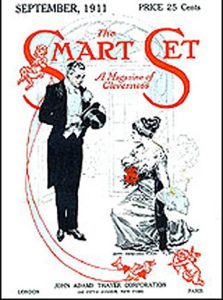
Perhaps in his haste to be the reliable cynic, H.L. Mencken (1880 – 1956) decided to ignore the haphazard nature of industrial warfare and indulged in some Darwinian thinking. There is no doubt that this column must have infuriated the Gold Star Mothers of W.W. I, who were still very much a presence at the time this opinion piece appeared, and it can also be assumed that the veterans of The American Legion were also shocked to read Mencken’s words declaring that:

The American Army came home substantially as it went abroad. Some of the weaklings were left behind, true enough, but surely not all of them. But the French and German Armies probably left them all behind. The Frenchman who got through those bitter four years was certainly a Frenchman far above the average in vigor and intelligence…

The Rise of Islamic Outrage
(Current Opinion, 1922)

I predict increasing ferment and unrest throughout all Islam; a continued awakening to self-consciousness; an increasing dislike for Western domination.


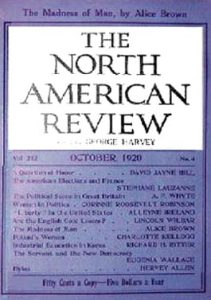
So wrote Lothrop Stoddard (1883 – 1950), an author who was very much a man of his time and tended to gaze outside the borders of Western Civilization with much the same vision as his contemporary Rudyard Kipling, seeing the majority of the world’s inhabitants as the white man’s burden. Yet, for all his concern on the matter of Anglo-Saxon hegemony, he seemed to recognize the growing discontent in Islam, even if he was some sixty years early.

Advertisement

Use shortcode [oma_ad position="summary_top"] (or other position) in your theme or widgets to display OMA Promotions here.

A Weird Anti-Barb Wire Artillery Shell
(Scientific American, 1917)

During much of the war, inventors from all combatant nations had been trying to make a artillery projectile that could eradicate the obstacle that had become one of the symbols of trench warfare: barbed-wire. No one seemed up to the task and in the end, wire-cutters were still the best way to deal with the problem.


This article is about one inventor’s failed effort to create a time fuse artillery shell that would deploy hooks that grab the wire as it goes speeding by and thereby saving the day. Needless to say, the hook thing didn’t work out terribly well and the difficulty inherit with time fuse artillery shells would be perfected in the inter-war years.

Anticipating New Equipment
(The Stars and Stripes, 1918)

Three notices appeared in the fall of 1918 announcing changes in design for three items issued to American troops: the 1918 combat knife, a.k.a. ‘the Knuckle-Duster, the mess kit and the canteen. Interestingly, the notice pertaining to the canteen states that Doughboys had been carrying both French canteens and American canteens by the end of the war.

Click here to read magazine articles from the Second World War.

Summing Up the Aisne-Marne Offensive
(Dept. of the Army, 1956)

This printable page from an R.O.T.C. manual concerns the American military efforts in World War I.
Attached is a useful summation in three paragraphs of the Aisne-Marne offensive. The reader will learn which American and French units participated, the dates on which the battle raged and the German defense strategy.

The battle had numerous and far reaching results. It eliminated the German threat to Paris, upset Ludendorff’s cherished plan to attack the British again in Flanders, gave the Allies important rail communications, demonstrated beyond further doubt the effectiveness of American troops on the offensive, firmly established Allied unity of command…

Advertisement

Use shortcode [oma_ad position="summary_top"] (or other position) in your theme or widgets to display OMA Promotions here.

Scroll to Top