









World War One

Find old World War 1 articles here. Find information on uniforms, women, gas warfare, prisoners of war and more.

America’s First Shot
(Various Sources, 1917 – 1937)

The three articles attached herein were printed five years apart and collectively recall three different events by three different arms of the American military, each claiming to have fired the opening salvo that served notice to Kaiser Bill and his boys that the U.S.A. meant business:


• The first article chuckles at the Army for insisting that the First Division fired the premiere shot on October 23, 1917 in the Luneville sector of the French front;


• The second article recalls the U.S. Merchant Marine freighter MONGOLIA that sank a German U-Boat on April 19, 1917 while cruising off the coast of England.


• following up with the absolute earliest date of American aggression being April 6, 1917 – the same day that Congress declared war – when Marine Corporal Michael Chockie fired his 1903 Springfield across the bow of the German merchant raider S.M.S COMORAN on the island of Guam.

The Secret Papers of Robert Lansing
(Pathfinder Magazine, 1940)

In 1940, when America stood on the precipice preparing to enter another enormous conflict, the heretofore secret papers of Woodrow Wilson’s Secretary of State, Robert Lansing (1864 – 1928), were released – shedding light on the government’s reasoning as to why they felt U.S. intervention in the European war was necessary.

Anticipating the American Century
(The Spectator, 1921)

Attached is a review of The American Era by H.H. Powers. The reviewer disputes the author’s argument that the First World War made Britain a weaker nation:

Mr. Powers’ interpretation of the war and it’s squeals is that the Anglo-Saxon idea, having triumphed, will set the tone for the whole world. He also believes that the real depository and expositor of this idea in the future must be America. Britain, he thinks,in spite of her great geographical gains from the war– he considerately exaggerates these, has sung her swan song of leadership.


A similar article about American power can be read here.

Advertisement

Use shortcode [oma_ad position="summary_top"] (or other position) in your theme or widgets to display OMA Promotions here.

Questioning German War Guilt
(The Nation, 1927)

This article from THE NATION was written by Alfred Von Wegerer in the interest of refuting Versailles Treaty article 231, which reads:

The Allied and Associated Governments affirm, and Germany accepts, the responsibility of Germany and her allies for causing all the loss and damage to which the Allied and Associated Governments and their nationals have been subjected as a consequence of the war imposed upon them by the aggression of Germany and her allies.


Von Wegerer, like most Germans at that time, got mighty hot under the collar when he stopped to consider that Germany was blamed entirely for the start of the First World War. This article was written nine years after the close of the war when a number scholars on the allied side had already stepped forward to question, what has come to be called, the war guilt clause.


Read about the total lack of war guilt that existed in 1950 Germany…

First Blood
(American Legion Weekly, 1922)

A veteran of the U.S. First Division, Sixteenth Infantry, tells the chilling story of that rainy night in November, 1917, when the first German raid upon the American trenches took place:

It was on that night that Company F took over its first front line position, received its baptism of fire, bore the brunt of the first German raid and lost the first American troops killed and captured in the World War.

…two hundred and forty Bavarians, the widely advertised cut-throats of the German Army, hopped down on us. The first raid on American troops was in full swing. They had crawled up to our wire under cover of their artillery barrage and the moment it lifted were right on top of us.


The U.S. Army would not launch their own trench raid for another four months.

‘Soldier Man Blues from Somewhere in France”
(Literary Digest, 1927)

This article is essentially a collection of lyrics from an assortment of songs sung by the Black Doughboys who were charged with the task of loading and unloading trucks far behind the front line trenches. It was written in 1927 to serve as a review for Singing Soldiersstyle=border:none by John J. Niles, who compiled the labor songs while stationed in France as a fighter pilot:


All dese colored soldiers comin’ over to France

All dese soldiers an’ me

Goin’ to help de Whites make de Kaiser dance

All dese soldiers an’ me…

Advertisement

Use shortcode [oma_ad position="summary_top"] (or other position) in your theme or widgets to display OMA Promotions here.

Training the Doughboy
(U.S. Gov. 1931)

Two remarkably brief paragraphs concerning the required military training of the average American Doughboy throughout the course of America’s blessedly short participation in the First World War:

The average American soldier who went to France received six months of training in this country before he sailed. After he landed overseas he had two months of training before entering the battle line. The part of the battle line that he entered was in a quiet sector and here he remained one month before going into an active sector and taking part in hard fighting.

Click here to read a 1918 magazine article about the Doughboy training camps.

The Steel Tree Stump, Part II
(Literary Digest, 1919)

A black and white photograph illustrating one of the many iron tree stumps used throughout the war which served as field observation posts. It was in the night, when work was done by both sides to preserve and refortify their respective trenches that objects such as these were erected.

The Steel Tree Stump, Part I
(Popular Mechanics, 1917)

The American press seemed a bit late in writing about the wartime innovations when they printed this piece:

Observation posts made of lumber and sheet metal to look like tree trunks are among the latest disguises employed on the battle front to deceive the enemy and enable watchers to occupy positions of advantage.


The steel tree-stump gag had been in effect since 1915.

Advertisement

Use shortcode [oma_ad position="summary_top"] (or other position) in your theme or widgets to display OMA Promotions here.

An Artillery Observation Tower
(L’Illustration, 1917)

The need for elevated artillery observation platforms is as old as the science of artillery itself. As this black and white image makes clear, the ones built during the Great War had to meet different needs: in order to evade detection from the air (as well as enemy artillery spotters) the more successful ones were built among the taller trees and draped in camouflage.


This article appears on this site by way of a special agreement with L’Illustration.

German Howitzers
(Popular Mechanics, 1914)

At the time, the war of 1914 – 1918 was unique in the sense that it was the first war in which more men were killed as a result of the projectiles rather than from disease; and it was artillery that did the lion’s share of the killing. This article appeared during the early months of the war when the world was shocked to learn of the astounding losses due to advancements in artillery. There is an illustration of an unidentified German howitzer (more than likely a 1911 model 210mm) and an account of the roll that German gunnery played during the siege of Liege and Fort Loncin in particular.

The one big surprise for the military experts thus far developed in the European war is the effectiveness of the heavy guns of the German field artillery. Never before have such terrible engines of annihilation been carried by an invading army as those used in the assault upon the forts at Liege.

A Saboteur in the Royal Flying Corps
(Rob Wagner’s Script, 1938)

The American writer Willis Gordon Brown recalled his days as a fighter pilot with the R.F.C. and the curious series of crashes that lead to the discovery of a German saboteur within their midst.

To the Germans this man was a highly respected hero giving his life for the fatherland; to us he became a rat of the lowest order.

Advertisement

Use shortcode [oma_ad position="summary_top"] (or other position) in your theme or widgets to display OMA Promotions here.

American Naval Mines of W.W. I
(Sea Power Magazine, 1919)

Being the story of the second of the three splendid achievements of the United States Navy in the World War: the laying of the greatest submarine mine barrier in all history, which effectually prevented the Kaiser’s U-boats from leaving their secret bases for the steamer lanes of the Atlantic.

U.S. Navy Fired America’s First Shot
(Literary Digest, 1917)

Printed five years apart were these two articles that we’ve attached herein collectively recalling three different events by three different services within the American military, each claiming to have fired the opening salvo that served notice to Kaiser Bill and the boys that the U.S. of A. was open for business:

•The first article recalls the U.S. Merchant Marine freighter MONGOLIA that sank a German U-Boat on April 19, 1917 while cruising off the coast of England.


•The second article chuckles at the Army for insisting that the First Division fired the premiere shot on October 23, 1917 in the Luneville sector of the French front;


•following up with the absolute earliest date of American aggression being April 6, 1917 – the same day that Congress declared war – when Marine Corporal Michael Chockie fired his 1903 Springfield across the bow of the German merchant raider S.M.S COMORAN on the island of Guam.

Naval Camouflage of W.W. I
(Sea Power Magazine, 1919)

It was Lt. Commander Norman Wilkinson (1878 – 1971) of the Royal Navy who deduced that white (reflecting blue at night) was a suitable base color for naval camouflage. Wilkinson based his reasoning on the snow-capped iceberg that made such quick work of TITANIC, remembering all the while that seagulls are white, as are pelicans and the Antarctic Petrels. When the war broke out, his findings were presented to the Admiralty and it was concluded that elements of the North Atlantic fleet should be so painted. They added the black in order that the ships appear gray on the horizon.

Advertisement

Use shortcode [oma_ad position="summary_top"] (or other position) in your theme or widgets to display OMA Promotions here.

A Clever Way to Escort Prisoners…
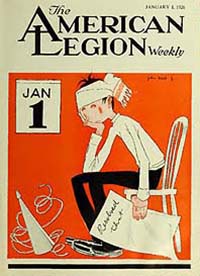
(American Legion Weekly, 1921)

This piece reminds me of what my son’s history teacher so wisely passed on to them one day in sixth grade: History can be found anywhere. How right she was, and in this case, a seldom remembered but perhaps widely practiced method of escorting German prisoners to the rear was rendered by a cartoonist in a 1921 magazine advertisement for a firm that manufactured men’s accessories [underwear]:

Remember that big attack? You couldn’t spare a whole squad to escort your prisoners back to the cages; you needed every man in front. You got around the difficulty by cutting off the Boches’ trousers. That made them helpless. They couldn’t run and they couldn’t fight. You parked the skipper’s dog robber on their flank with a warped rifle and ran’em back.


Click here to read an article about the American POW experience during the Korean War.

Franz Joseph: Geezer Emperor
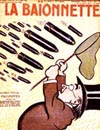
(La Baionnette, 1915)

There was once a time when magazine editors would not endeavor to encourage their cartoonists to pursue punchlines that were insensitive to the aged members of the world community, but that was a long time ago; in the attached WW I cartoon, a French satirical artist indulged his pettiness – daring the Politically Correct generations yet un-born to label him an ageist.

Had Germany Really Deployed Women Soldiers?
(The Stars and Stripes, 1919)

This paragraph was lifted from a longer article regarding the battle-savvy Native Americans of World War One and it supports the claims made in 1918 by a number of anonymous allied POW’s who reported seeing female soldiers in German machine gun crews toward the close of the war. The article appeared after the Armistice and this was a time when The Stars and Stripes editors were most likely to abstain from printing patriotic hooey.


If you would like to read another article about women combatants in W.W. II, click here.

Advertisement

Use shortcode [oma_ad position="summary_top"] (or other position) in your theme or widgets to display OMA Promotions here.

Scroll to Top