







World War One

Find old World War 1 articles here. Find information on uniforms, women, gas warfare, prisoners of war and more.

‘The Pleasures of Gas Warfare”
(Literary Digest, 1937)

Gas, even in its most virulent form, is the most rational as well as the most humane weapon ever employed on the battlefield. It is also – and this should certainly be of interest to the advocates of strict neutrality – the only weapon in the arsenal of Mars which can truly be called defensive.

W.E.B. Du Boise and the Documents of U.S. Army Prejudice
(The Crises, 1919

This historic article first appeared in a 1919 issue of The Crisis and served to document the official discrimination against African-Americans who served both in the ranks and as officers in the American Army during the First World War. The article includes the communications from high-ranking American officers to the French military authorities, conveying their suggestions as to how America’s black Doughboys were to be treated.

In the War’s Aftermath Came Spiritual Disillusion
(Current Opinion Magazine, 1919)

At the thirty-fifth annual Church Congress of the Protestant Episcopal Church (1919), clergy members seemed to agree that Christian leaders were needlessly complicitstyle=border:none concerning their support for the First World War and were guilty of substituting Christian principles for patriotism:


Christianity has betrayed itself body and soul.


If you would like to read about the spirit of disillusion that permeated post-war literature, click here.

Advertisement

Use shortcode [oma_ad position="summary_top"] (or other position) in your theme or widgets to display OMA Promotions here.

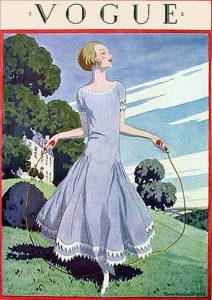
Victory and Paris Fashion
(Vogue Magazine, 1919)

The Paris Victory Parade celebrating the end of the 1914 – 1918 war was a long awaited and much anticipated fashion event and Mme. Parisienne was not going to miss it for all the crepe de Chin in China. This VOGUE correspondent contrasted the Paris that existed a short time earlier, the gray, deserted Paris with the Paris of the 1919 Victory Parade and notes how eager the natives were to recreate that mirthful, light-hearted Paris of 1913 that they all remembered so well. There is a great sense of joie de vivre throughout the article, but it very rapidly becomes a laundry list concerning who-wore-what-where.

German Submarines in American Waters
(Coronet Magazine, 1941)

This article is composed of a couple of paragraphs recalling the damages caused to American shipping as a result of the U-Boat menace on the East Coast of the United States during the First World War. Written at a time when the U.S. was once again having to deal with the same threat, this time by Admiral Karl Dönitz (1891 – 1980), the journalist wished that Henry J. James, the author of German Subs In Yankee Waters
be properly credited for having devised many of the more successful countermeasures.

Nietzsche and World War One
(Sewanee Review, 1920)

In this 1920 article the theologian George Burman Foster (1858 – 1918), examined the writings of the German philosopher Friedrich Nietzsche (1844 – 1900) and surmised how that philosopher might have understood the First World War, with all of it’s scientific and industrial power.

War constitutes one of of those dangerous ‘experiments’ undertaken by the wise man to further the progress of life, to test the value of an idea, of life. Hence, war is beneficial, good in itself; and thus Nietzsche predicts without dismay or regret that Europe is not far from entering into a period of great wars when nations will fight with one another for the mastery of the world.


Click here to read about the Nazi interpretation of Nietzsche.

Advertisement

Use shortcode [oma_ad position="summary_top"] (or other position) in your theme or widgets to display OMA Promotions here.

With the Germans on the Somme
(The Cambridge Magazine, 1916)

Throughout much of World War I, the German-American war correspondent Karl Von Wiegand (1874 – 1961) reported on the goings-on within the Kaiser’s Army for an American new syndicate. As luck would have it, he happened to be in a front line German trench when the British Army launched their enormous attack on July 1, 1916. Here is one of his earlier dispatches from the German side:


We stood awe-stricken. Mankind, like Frankenstein, was being devoured by the monster it had created.

Father Francis Duffy of the Fighting 69th
(The Bookman, 1920)

Father Francis P. Duffy (1874 – 1932) was the well-loved regimental chaplain for the illustrious, old New York infantry regiment known as the Fighting 69th.


Next time you find yourself walking near Times Square in New York City, you’ll see a statue erected in his memory situated behind a statue of the popular songster who composed Over There – George M. Cohan (1878 – 1942). These memorials will be found at Broadway and 7th Avenue (between 46th & 47th streets). Both men knew the neighborhood well – to Cohan it was known as the Theater District while Duffy knew it as Hell’s Kitchen, and it was his parish.


The Bookman reviewed Duffy’s memoirstyle=border:none as a book which carries A.E.F. readers back to lousy, old French barns, to chilly, soupy Argonne mud and, at last, to a wintry Rhineland….


You can can read more about Father Duffy’s war here…


Click here to read articles about W.W. I poetry.

Advertisement

Use shortcode [oma_ad position="summary_top"] (or other position) in your theme or widgets to display OMA Promotions here.

John Maynard Keynes on the Versailles Treaty
(Current Opinion, 1922)

A magazine review of John Maynard Keynes book, A Revision of the Treaty (1922). The reviewer wrote that it lacks the prophetic fire of it’s author’s earlier book, The Economic Consequences of the Peace, but continues the argument of that book:

Mr. Keynes claims that almost everyone now has come around to his point of view. We practically all recognize, he says, the over-severity of the reparation clauses written into the Versailles Treaty.

The Ongoing French Occupation of Germany
(Literary Digest, 1928)

The attached article, written in 1928, reported on how heartily sick the Germans were at having to serve as hosts for three occupying armies as a result of a Versailles Treaty clause that mandated the Allied military occupation until 1935. The Foreign Minister of Germany, Dr Gustav Stresemann, made several eloquent pleas to the diplomatic community insisting that there was no need for the continuing encampments before he began submitting his bitter editorials to assorted European magazines, which are discussed herein:

Friendship between France and Germany is impossible as long as Allied troops remain in the occupation area of the Rhineland…

Advertisement

Use shortcode [oma_ad position="summary_top"] (or other position) in your theme or widgets to display OMA Promotions here.

Calling Out the Kaiser, et al…
(”Our Times”, 1936)

[On January 16, 1920] the Peace Conference at Paris summoned Holland to yield the ex-Kaiser of Germany for trial… In its reply, issued January 23, Holland refused.


The conferees also demanded that Germany hand over some 850 German citizens to stand trial for numerous infractions; needless to say, nothing came of the request.

Chateau-Thierry: Setting the Record Straight
(The Literary Digest, 1919)

Rumor has it that when the U.S. Army’s senior staff officers had learned of the victory that the U.S. Marines had achieved at the Bois de Belleau in the summer of 1918, one of them had remarked, Those head-line hunting bastards! When reading this next piece you will immediately get a sense that the army was fed-up with the folks at home believing that the same Marines were responsible for the Army’s success at Chateau-Thierry. The war was already over by the time this piece appeared, making it clear to all that Chateau-Thierry was a feather in the cap for the Army, and no one else.

‘The Truth About Chateau-Thiery”
(Home Sector, 1919)

The veterans magazine that published the attached column, THE HOME SECTOR, was edited by Harold Ross, who, just a few months earlier, had held that same post at THE STARS and STRIPES; the article was written by Alexander Woollcott – previously a journalist with that same paper. I’m sure that this was quite common in 1919, but it would seem that these two men wanted to be forthright with their readers and set straight an issue that they wrote about when they were in the employment of Uncle Sam: the Doughboys who were victorious at Chateau-Thiery and Belleau Wood did not save Paris. Just as German historians have insisted for many years, those German divisions were simply not headed for Paris.

Advertisement

Use shortcode [oma_ad position="summary_top"] (or other position) in your theme or widgets to display OMA Promotions here.

Who Were the Young Turks?
(Literary Digest, 1908)

This 1908 magazine article serves to define the Young Turk movement and present a brief history of those reformers who sought to modernize the government of Turkey and introduce a constitutional form of government that would benefit not only the Turks but also the people who reside within the dominions of the Ottoman Empire:

The program of the Young Turks includes individual liberty to all Ottomans; this liberty is to be inviolable excepting by process of law; the press is to be free, Ottomans may form commercial, industrial, or agricultural associations, so long as no law is infringed. All are to be equal before the law.

‘The Doughboys”
(The New Red Cross Magazine, 1919)

What we enjoyed about this piece by the Muckraking Ida Tarbell (1857 – 1944) was that it was written some six months after the heavy handed George Creel had ceased influencing Yankee magazine editors into printing pro-American blather, and so we tend to feel that her praise of the American Doughboys was quite sincere – and praise she does! Up hill and down dale, the Doughboys can do no wrong in her eyes.
This essay appeared in print around the same time the French had decided that all the Doughboys were just a bunch of racist hurrah-boys and were becoming increasingly sick of them. The Yanks might have squared their debt with the Marquis de Lafayette, but the recently returned Poilus were not above taking an occasional swipe at Ida Tarbell’s Doughboys…

Click here to read some statistical data about the American Doughboys of the First World War.

1919: Franco-American Relationship Begin to Cool
(The North American Review, 1919)

During the closing months of the American presence in France, one element can be found in the majority of the letters written to loved ones at home:

The French aren’t treating us as nice.

In the war’s aftermath, writer Alexander Woollcott (1887 – 1943) attempted to explain the situation to his readers; what follows were his observations.

Advertisement

Use shortcode [oma_ad position="summary_top"] (or other position) in your theme or widgets to display OMA Promotions here.

Scroll to Top