



Home Front

Read About Life on the WW II Home Front. Learn What was Going on in 1940s America from these Free WW2 Magazine Articles.

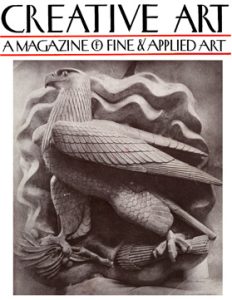
War Memorials Don’t Have to be Ugly
(Pageant Magazine, 1944)

Robert Moses (1888 – 1981) was an American urban planner who worked as the New York City Parks Commissioner between 1934 and 1960. During the Second World War his phone was ringing off the hook:


“All over the country plans are being hatched for war memorials. Demands upon public officials for space in parks and public places are daily becoming more insistent. [But] if truth be told, most gestures of patriotism are pathetic, third-rate, inadequate [and] ugly…”

Yes, We Know There’s a War On
(Liberty Magazine, 1942)

This is an interesting editorial that pretty much implies that the U.S. Congress reigning in 1942 thought the American people were just as dumb as Congress does today. Although the Selective Service had reached into almost every household in the country and taken every able-bodied male, Congress behaved as if these households only cared about gas and sugar rationing:


“Don’t Think that We the People, can’t take anything you have to hand out. And don’t get it into your minds that we don’t know there is a war on… He won’t be home for dinner [again] tonight. And your worry about our rationing cards would be funny if it weren’t so pitiful.”

Advertisement

Use shortcode [oma_ad position="summary_top"] (or other position) in your theme or widgets to display OMA Promotions here.

Home Front Teen Slang
(Yank Magazine, 1945)

A 1945 Yank Magazine article concerning American teen culture on the W.W. II home front in which the journalist/anthropologist paid particular attention to the teen-age slang of the day.

Some of today’s teenagers —pleasantly not many — talk the strange new language of sling swing. In this bright lexicon of the good citizens of tomorrow, a girl with sex appeal is an able Grable or a ready Hedy. A pretty girl is whistle bait. A boy whose mug and muscles appeal to the girls is a mellow man, a hunk of heart break or a glad lad.


To read about one of the fashion legacies of W.W. II, click here…


Click here to learn how the Beatniks spoke.
Click here if you would like to read a glossary of WAC slang terms.

•Suggested Reading• Flappers 2 Rappers: American Youth Slangstyle=border:none

Under-Age Workers Step-Up
(PM Tabloid, 1942)

The National Youth Administration (NYA) was established in 1935 as one of FDR’s many alphabet agencies created to alleviate the sting of the Great Depression; it was tasked with providing work and education for young Americans between the ages of 16 through 25. By the time World War II kicked -in, many in Congress felt it was time to do away with the organization, but as this article spells out, NYA members could now be put to work in the defense plants.


Click here to read about the travails of young adults during the Great Depression.

Influenza Returns
(Newsweek Magazine, 1944)

During the final year of the First World War, the Influenza Pandemic absolutely ravaged the American home front – it made a return visit to the W.W. II home front during the winter of 1943 – 44, but not to the same degree.


Click here to read about the 1918 – 1920 outbreak of influenza in the United States.

Advertisement

Use shortcode [oma_ad position="summary_top"] (or other position) in your theme or widgets to display OMA Promotions here.

Home Front Philadelphia
(Yank Magazine, 1944)

You can boil down nearly all the changes that have taken place in Philadelphia since Pearl Harbor to one word: prosperity.

In 1940 the average factory worker in Philadelphia was making $27 a week and the city’s total factory pay roll was 393 millions. In 1943 Philadelphia’s factory workers averaged $48 a week and the total factory payroll was one and a quarter billions…The Philadelphia social life, too, has taken a terrific shot in the arm…

Read about Wartime San Francisco.

Click here to read about wartime Washington, D.C..

The American Home Front Finds Faith Again
(Click Magazine, 1942)

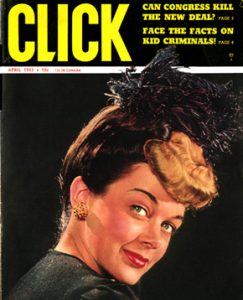
By the time this article appeared on the newsstands at the close of 1942, the American people were fully committed to a war on two fronts that quite often was not generating the kinds of headlines they would have preferred to read. Certainly, there was the naval victory at Midway, but the butcher’s bill was high at Pearl Harbor and North Africa and after a thirteen year lull in church attendance, America was once again returning to the church:

Tin Cans Go to War
(Click Magazine, 1945)

This article is accompanied by nineteen pictures illustrating the various ways tin cans are put to use by the American military during W.W.II, and it was printed to show the necessity of full civilian participation along the home front. In order to guarantee that this message would get out to everyone, magazine editors would have been provided with these photographs and an assortment of facts by a government agency called the Office of War Information.

Advertisement

Use shortcode [oma_ad position="summary_top"] (or other position) in your theme or widgets to display OMA Promotions here.

Meat Rationing Lead To Alternatives
(Click Magazine, 1944)

As a result of the rationing of beef some people along the W.W. II home front turned to whale meat as a substitute for beef:

If you walk into a Seattle, Washington butcher shop and ask for a steak, you might be offered a whale steak. No ration points will be required, and the flavor will be somewhere between that of veal and beef. You can prepare your steak just as you would a sirloin, or you can have it ground into whaleburger.


When the U.S. was fighting the First World War, twenty years earlier, it was found that the oil extracted from whales proved useful in the production of explosives.

The Comic Book Industry: Tweleve Years Old in 1945
(Yank Magazine, 1945)

This is an article about the 1940s comic book industry and the roll it played during W.W. II.


The writer doesn’t spell it out for us, but by-and-by it dawned on us that among all the various firsts the World War Two generation had claim to, they were also the first generation to read comic books. Although this article concentrates on the wartime exploits of such forties comic book characters as Plastic Man and Blackhawk, it should be remembered that the primary American comic book heroes that we remember today were no slackers during the course of the war; Superman smashed the Siegfried Line prior to arresting Hitler as he luxuriated in his mountain retreat; Batman selflessly labored in the fields of counterintelligence while Captain America signed-up as a buck private.


Click here to read an article about the predecessor to the American comic book: the Dime Novel.

If you would like to read a W.W. II story concerning 1940s comic strips and the failed plot to assassinate General Eisenhower, click here.

Absolute, Total Morons on the Home Front
(Collier’s Magazine, 1943)

If you’re one of those types who tend to feel that Americans aren’t as smart as they used to be, this is the article for you: attached is a collection of quotes generated by eight home front dullards who were asked the question:

Do you know what you are fighting?

They all understood that their nation had just finished it’s second year fighting something called Fascism but were hard-pressed to put a thoughtful definition to the term:

A Kansas cattle raiser defined Fascism as ‘…the belief in a big industrial enterprise. Anyone who thinks that way is Fascist-minded.

Additionally, it is fun to see the pictures of all the assorted noobs who made such ridiculous statements.

Advertisement

Use shortcode [oma_ad position="summary_top"] (or other position) in your theme or widgets to display OMA Promotions here.

Art on the Home Front
(Rob Wagner’s Script Magazine, 1942)

The United States had only been committed to the Second World War for twenty weeks when the American artist Rockwell Kent (1882 – 1971) felt compelled to write about the unique roll artist are called upon to play within a democracy at war:

The art of a democracy must be, like democracy itself, of and by and for the people. It must and will reflect the public mood and public interest…Awareness of America, of its infinitely varied beauties and of its sometimes sordid ugliness; awareness of the life of America, of its fulfillments and its failures; awareness, if you like, of God, the landscape architect supreme – and political failure: of the promise of America and of its problems, art has been, or has aimed to be, a revelation. It is for the right to solve these problems our way that we are now at war.

Here Comes Denim
(Collier’s Magazine, 1942)

Nine months into the war the American fashion industry awoke to discover that one of the most sought after cottons being purchased domestically was denim.


Denim was first seen in 1853, worn by the men who panned for gold in California. When faced with hard labor, this sturdy twill had proven its worth again and again, and when the American home front recognized that there was a great deal of work to be done in the fields and factories if the war was to be won, they slipped on jeans and denim coveralls and saw the job through.


Who on Sixth Avenue could have known back then that denim would be the main-stay in American sportswear for decades to come?


A far more thorough history of blue jeans can be read here.

Air-Raid Wardens on the Home Front
(ClicK Magazine, 1942)

The Congressional Declaration of War was a mere five months old when this photo-essay appeared that documented the earliest days of the American Civil Defense efforts during the Second World War. At this point in the war, the Marines were still three months away from landing on Guadalcanal and the Army wouldn’t be arriving in North Africa for another six months – but the neighborhood volunteers of the Civil Defense seemed to be prepared.

Advertisement

Use shortcode [oma_ad position="summary_top"] (or other position) in your theme or widgets to display OMA Promotions here.

‘Man on the Street Solidly Approves of War Declaration”
(St. Louis Star-Times, 1941)

This report appeared in the evening edition of the St. Louis Star-Times on December 8, 1941 and it serves as an eyewitness account as to how the St. Louisans reacted both during and after listening to the President’s declaration of war broadcast before Congress:

In downtown restaurants and taverns, people paused to listen to the dramatic broadcast from Washington. Work was at a standstill for those minutes in many office buildings and stores. Pedestrians crowded around newsboys to obtain the latest ‘extras’ and along the streets groups could be seen collected about radio-equipped automobiles.

Advertisement

Use shortcode [oma_ad position="summary_top"] (or other position) in your theme or widgets to display OMA Promotions here.

Scroll to Top