













African-American History

Learn about African American history with these old magazine articles. Find information on Black Civil Rights violations in the 1920s.

The Lynchings of 1934
(Literary Digest, 1935)

Four paragraphs tallying up the number of lynchings that took place throughout the course of 1934. The study was compiled by the Department of Records and Research of the Tuskegee Institute, which also compared the amount to the number of lynchings that took place during the previous four years.

Fifteen people, all Negroes, were lynched during 1934…Mississippi led in the number of lynchings, six; Florida and Louisiana came next with two each; and one each was recorded for Alabama, Georgia, Kentucky, Tennessee, and Texas.

Klan Methods and Customs
(Literary Digest, 1922)

This article reported on the alarming growth and surprising appeal that the KKK was attaining in 1922. The unnamed journalist described numerous incidences that clearly reflected the Klan’s open contempt for law throughout the country- concluding that the Klan was beyond redemption. The article revealed that the newspaper editors who lived and worked in those regions where the Klan was most active had greater contempt for them than we otherwise might have been lead to believe.

The Modern Klan
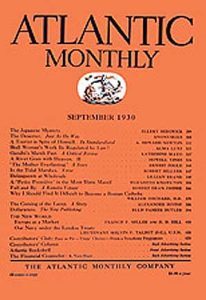
(Atlantic Monthly, 1922)

An Atlantic Monthly article by LeRoy Percy (1860– 1929), a well-off planter who had successfully fought the spread of the KKK into Washington County, Mississippi. This article explains how the Klan operated in 1922. Their wide-spread appeal is also discussed.

One of the strangest aberrations in American life since the war is the growth of the Ku Klux Klan. In the North that organization, when considered at all, has been thought of as a colossal buffoonery, a matter unworthy of the time or thought of intelligent folk; and indeed for the average American, with his common sense and his appreciation for the ridiculous, any other attitude of numbers would seem unlikely…The Klan excludes from membership Negroes, Jews, Catholics and foreign-born, whether citizens or not. In its own phrase, it is the only Gentile White Protestant American-born organization in the world. It is secret… When asked if he is a member, the custom is for a good Klansman to evade, more rarely to reply in the negative, but in any event not to avow his membership.


Click here to learn about the origins of the term Jim Crow.

Advertisement

Use shortcode [oma_ad position="summary_top"] (or other position) in your theme or widgets to display OMA Promotions here.

The Fight Against Lynching
(Current Opinion, 1919)

Figures were presented at the National Lynching Conference showing that in the last thirty years 3,224 persons have been killed by lynching, 2,834 of them in Southern states which once were slave-holding.

Kansan Governor Henry J. Allen Takes On the KKK
(The Outlook, 1922)

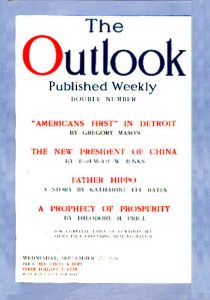
An article from The Outlook reported on the enormous amount of discomfort that the Ku Klux Klan was generating among Catholics in 1922 Kansas. During a New York interview, Kansas Governor Henry J. Allen (1868 – 1950) remarked about the piles of letters his office received imploring that the state take action and how he, too, had been threatened by the organization.

Kansas is engaged in trying out the Ku Klux Klan through an action in the State Supreme Court to restrain it’s secret activities.

Weird Rumors About the Klan…
(The Outlook, 1922)

Teddy Roosevelt’s (1858 – 1919) magazine The Outlook, was often quite critical of the Ku Klux Klan, yet in this brief notice the editors seemed surprisingly Milquetoast in their reporting of the organization’s growth and assorted activities. The article passively noted bizarre rumors that stood in contrast to the Klan’s history:

There have been some queer developments in the Ku Klux Klan. Thus in Georgia it has been alleged that Negroes have been asked to join…

Advertisement

Use shortcode [oma_ad position="summary_top"] (or other position) in your theme or widgets to display OMA Promotions here.

Anti-Lynching Law Debated in Congress
(Congressional Digest, 1922)

Reproduced here are the two pages from the Congressional Digest of 1922 which are composed of both the outline of the proposed legislation as well as the debate of the Dyer Anti-Lynching Bill.


The bill, which was introduced by Representative Leonidas C. Dyer (1871 – 1957)of Missouri, was intended to make lynching a felony that would have resulted in a short prison term and a $5,000.00 fine for all guilty participants. The proposed legislation passed the House of Representatives but not the Senate. Congressional debates concerning anti-lynching would be a topic for many years to come, however, the arguments presented against passage of this bill by the Southern Representatives make an interesting read.

The Lynchings of 1916
(Literary Digest, 1917)

An end of the year round-up of the 1916 lynchings concentrating on the state of Georgia as the lynching champion for the second year in a row (Louisiana, Mississippi and Missouri were all tied for the 1914 title).

The 1914 Lynchings
(Harper’s Weekly, 1915)

A short, uncredited article written in response to a report by Booker T. Washington (1856-1915) concerning a series of lynchings in 1914. There is a minute breakdown, by state, showing where each of the murders took place.

Advertisement

Use shortcode [oma_ad position="summary_top"] (or other position) in your theme or widgets to display OMA Promotions here.

1933: A Lynchless Year?
(Literary Digest, 1933)

This article was published during the opening days of 1933 and reported on the deep spirit of optimism that was enjoyed by the Association of Southern Women for the Prevention of Lynching, and their executive director, Mrs. Jessi Daniel Ames (1883 – 1972). This group of Southerners were hoping that, through their efforts and those of other like-minded Southern organizations, 1933 would be a year without a single lynching:

If Mississippi can have a lynchless year, a lynchless South is a possible and reasonable goal…


The reporter dryly noted that a few days after the above remark was recorded, a lynching was committed – one of the twenty-eight that took place throughout the course of 1933.

American Lynchings on French Soil
(NY Times, 1921)

(The article can be read here)


This article from 1921 reported on a disturbing series of lynchings that took place between the years 1917 through 1919 by U.S. Army personnel serving in France during the First World War. The journalist quotes witness after witness who appeared before a Senate Committee regarding the lynchings they had seen:

Altogether…I saw ten Negroes and two white men hanged at Is-Sur-Tille. Twenty-eight other members of my command also witnessed these hangings and if necessary, I can produce them.

It was alleged that the murders were committed under the authority of American officers who willingly acted outside the law.

If you would like to read more about African-American service during W.W. I you may click here.

Advertisement

Use shortcode [oma_ad position="summary_top"] (or other position) in your theme or widgets to display OMA Promotions here.

The Klan as a National Problem
(The Literary Digest, 1922)

A two page article reporting on the growth of the KKK throughout the United States in the early Twenties, it’s general rise in popularity and the resolve of elected officials at both the state and Federal levels to contain the Invisible Empire.


Interesting comments can be read by a reformed Klansman named H.P. Fry, who authored a cautionary memoir titled, The Modern Ku Klux Klanstyle=border:none.

Protestant Churches Condemn the KKK
(The Literary Digest, 1922)

A couple of years after the membership lists of the Ku Klux Klan had swelled to record levels, and just seven years after a chic Hollywood film director made a movie that ennobled their crimes,the Administrative Committee of the Federal Council of Churches of Christ in America issued a statement which served to distance the Protestant churches from that hate-filled organization.


From Amazon: Gospel According to the Klan: The KKK’s Appeal to Protestant America, 1915-1930style=border:none

Advertisement

Use shortcode [oma_ad position="summary_top"] (or other position) in your theme or widgets to display OMA Promotions here.

The KKK in Federal Court
(The Literary Digest, 1928)

Attached is a two-page article about that day in 1928 when the KKK stood before Judge W.H.S. Thomson in a Federal Court in Pittsburgh:

A Daniel has come to judgment, in the opinion of many a newspaper writer, when a Federal judge in a formal opinion read the bench delivers a denunciation of the Ku Klux Klan in terms as strong as any of the private enemies of that organization have ever used. Federal Judge W.H.S. Thomson, in concluding that complicated KKK trial, remarked that the Klan was an ‘unlawful organization’ coming into court ‘with filthy hands after open and flagrant violation’ of the law…


CLICK HERE to read about African-Americans during the Great Depression.

The Klan Influence Within the Protestant Churches
(Literary Digest, 1922)

The zeal of the Ku Klux Klan to ‘support the Church’ has been displayed by many signs, and intimations multiply, we are told, that certain Protestant ministers are in its confidence and would seem on occasion to be directing it’s activities. But to some ministers the Klan’s mark of approval appears to be embarrassing, a favor which they would much prefer to do without. Scarcely a Sunday passes without the publication of the news that a Klan has visited a church in a body, simply to signify approval, or to remain decorously through the service.

Lofty Words Printed on Behalf of the Klan
(The Literary Digest, 1923)

A collection of remarks made by Klansmen in their own defense as well as a smattering of similar statements made by newspaper editors and various other high-profiled swells of the day:

This editor has repeatedly affirmed privately and publicly that he is not a member of the Ku Klux or any other secret organization. But when it comes to secret societies, he sees no difference absolutely between the Ku Klux and many others, the Knights of Columbus, for instance…


Click here to learn about the origins of the term Jim Crow.

Advertisement

Use shortcode [oma_ad position="summary_top"] (or other position) in your theme or widgets to display OMA Promotions here.

Scroll to Top