Author name: editor

Stockings Go to War (Office of War Information, 1943)
1943, Fashion (WWII), The Office of War Information

Stockings Go to War
(Office of War Information, 1943)

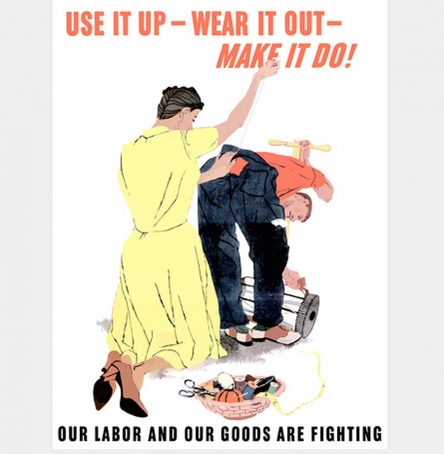
The attached article from 1943 appeared in a number of publications throughout the nation in order to impart to the women (and perhaps a handful of the men) how urgent was the need for their used silk stockings.


More about silk on the W.W. II home front can be read here…


Click here to read about the woman who dictated many of the fabric restriction rules on the home front.

American Sportswear 1940s | WW2 Fashion Wool 1945
1945, Collier's Magazine, Fashion (WWII)

1940’s Sportswear for Men
(Collier’s Magazine, 1945)

Halfway through 1944 American magazines began their individual count-downs until the war’s end; running with articles about the post-war world, the end of rationing, the demobilized military and the guaranteed boom that would come in the menswear industry. The attached fashion editorial appeared early in 1945 promotes the versatility of gabardine wool, it’s earliest appearance in the Middle ages, it’s use in uniforms and it’s newest application in sportswear.


The article is illustrated with five terrific color photographs.

Color Trends in Men's Suiting 1935 - 1950 (Men's Wear Magazine, 1950)
1950, Fashion (WWII), Men's Wear Magazine

Color Trends in Men’s Suiting 1935 – 1950
(Men’s Wear Magazine, 1950)

Although there is black-out during the war years, the attached charts will give you a sense of the preferred suiting colors both before the war and upon it’s immediate conclusion. The pointy-headed soothsayers who attempt to predict which colors men will buy were very surprised to find that in the aftermath of World War II, American men were quite eager to buy browns and khaki-colored suiting after all.

Advertisement

Use shortcode [oma_ad position="summary_top"] (or other position) in your theme or widgets to display OMA Promotions here.

Were Churchill and Stalin Hipsters? (Click Magazine, 1942)
1942, Click Magazine, Fashion (WWII)

Were Churchill and Stalin Hipsters?
(Click Magazine, 1942)

Illustrated with pictures of Winston Churchill’s weird zipper suit and Joseph Stalin’s all purpose costume, 1940s fashion critic Elizabeth Hawes (1903 – 1971) taunts the Great-American-Male and challenges him to respond in kind by wearing copies of these comfortable threads:

Today’s business clothes were worked out by the winners of the Industrial Revolution, whose descendants are the big tycoons of our day…Aspirants to leadership and success normally copy the clothes of existent leaders. Isn’t it about time the most of you changed your suits?

Elizabeth Hawes wrote more on the topic of W.W. II fashions…

The Hostess Gown Made a Splash on the Home Front (Click Magazine, 1944)
1944, Click Magazine, Fashion (WWII)

The Hostess Gown Made a Splash on the Home Front
(Click Magazine, 1944)

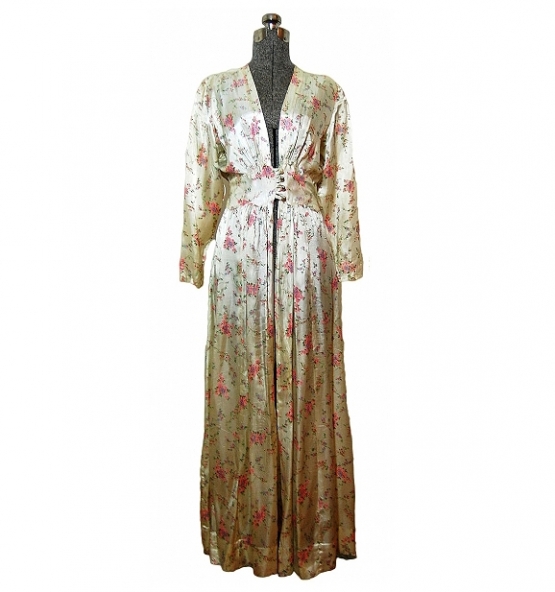
There can be no doubt that the fashion-craving lasses of the Thirties and Forties had a tough time of it! Coming of age during the the Great Depression, they spent too much time window-shopping as a result of the all too widespread economic deprivations that were the order of the day – only to be greeted on the other end by the fabric rationing that accompanied the Second World War. They had some good news in the form of a swanky garment that was called Hostess Gowns which were seen as ultra-feminine and tailored in the finer fabrics of the day:

Top-notch fashion stores are finding a new wartime boom in luxury hostess gowns and pajamas; new styles for home reflect the latest dress fashion trends. Ruffles, waistline draping, beads, sequins and marabou add luxury; a number of dressy models might also be taken for dinner gowns…
White Trash Hairstyle | Hairstyles From World War II
1943, Fashion (WWII)

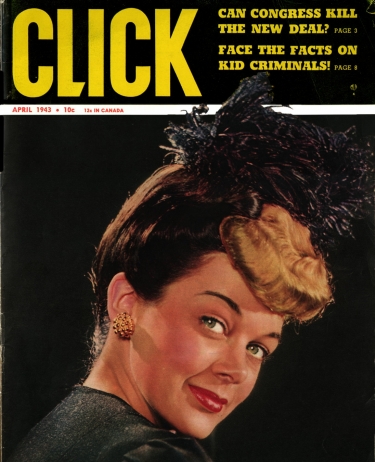
The Pin-On Hairdo: White Trash Triumph
(Click Mahazine, 1943)

In light of the fact that we are patriots, we like to think that these hairdos were not as wide-spread on the home front as the journalist implies.


Michel, of the Helena Rubinstein salons, has been fingered as the one responsible for the two-tone pin-On hairdo, a look that was entirely reliant upon the false hair industry in order to achieve the preferred look. Three color images are provided as well as six how-to images.


During the Second World War, hair dye was not simply used by women; click here to read about the men who needed it.


Click here to read a 1961 article about Jacqueline Kennedy’s influence on American fashion.

Advertisement

Use shortcode [oma_ad position="summary_top"] (or other position) in your theme or widgets to display OMA Promotions here.

When Fashion and Uniforms Meet...(Click Magazine, 1942)
1942, Click Magazine, Fashion (WWII)

When Fashion and Uniforms Meet…(Click Magazine, 1942)

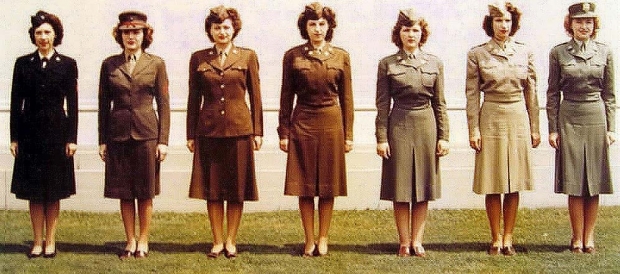
When the general appearance of women’s uniforms prescribed for voluntary war work by various charitable organizations were deemed unfashionable, uncomfortable or simply embarrassing, the well-known fashion stylist and costume designer Irene (Irene Lentz, 1900 – 1962) stepped up to the plate designing an all-purpose green wool suit, topped-off by a beret:

The noted Hollywood stylist, Irene, performed a real service for defense when she designed her all-around defense suit. Of sturdy gabardine, worn with long cotton service socks and plastic shoes, it is nevertheless as attractive as any civilian suit, and more practical than most. In this outfit, women war workers will not feel self-conscious and ill at ease.

Women, Fashion and Uniforms on the Home Front (Rob Wagner's Script Magazine, 1942)
1942, Fashion (WWII), Rob Wagner's Script Magazine

Women, Fashion and Uniforms on the Home Front
(Rob Wagner’s Script Magazine, 1942)

Two short, gossipy paragraphs from a Hollywood literary magazine printed early in the American home front experience concerning women war-workers, fabric rationing and the long-standing debate between ready-made uniforms vs custom-made uniforms:

Feminine uniforms are causing great dismay. Women of small means complain that while they would like custom-made uniforms, they can’t afford them. Nevertheless, designers are doing a capacity business, turning out ultra-chic numbers for those in the money…

Click here to read an article about women’s uniforms during W.W. I.

W.W. II Button Restrictions and Button Decorations (Click Magazine, 1943)
1943, Click Magazine, Fashion (WWII)

W.W. II Button Restrictions and Button Decorations
(Click Magazine, 1943)

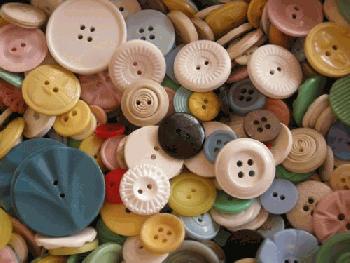
A well-illustrated article from the home front fashion-filled pages of Click Magazine that served to document the contradictory days when wartime button-rationing coincided with a wide-spread yen for decorating with buttons:

In a frantic bid for individuality, fad-loving women are rediscovering the decorative button. Buttons are no longer just a practical devices for holding clothes together. They pep-up simplified silhouettes and restyle dated fashions.

Advertisement

Use shortcode [oma_ad position="summary_top"] (or other position) in your theme or widgets to display OMA Promotions here.

WW2 Fabric Conservation Laws | US Government Fabric Restriction L-85
1943, Click Magazine, Fashion (WWII)

That Slim Wartime Silhouette
(Click Magazine, 1943)

Five fashion photographs and a few words on the government-approved look for the autumn of 1943. The wartime fashion news for 1943 was apparel order L-85 that had been issued by the War Production Board in order to conserve material for victory.


To read another article about 1940s fashions and the hardships of fabric rationing, click here. Click here to read about the fashion silhouette of the early Fifties.

Advertisement

Use shortcode [oma_ad position="summary_top"] (or other position) in your theme or widgets to display OMA Promotions here.

Fashion Symbolism in Wartime Attire (Yank Magazine, 1945)
1945, Fashion (WWII), Yank Magazine

Fashion Symbolism in Wartime Attire
(Yank Magazine, 1945)

This was an unusual article for Yank to run with but it is a wonderful read nonetheless. The column concerns fashion as a reliable barometer of societal direction and starts out with a quote from Basil Liddell-Hart (1895 – 1970) on this issue. The writer then goes to the author and all-around fashion philosopher, Elizabeth Hawes (1903 – 1971) who proceeded to speak thoughtfully on the topic of fashion in wartime. Hawes remarked that the clothing of the leaders can be read as an indicator of forthcoming events.


CLICK HERE to read about the beautiful Blonde Battalions who spied for the Nazis…

Paris Fashion Liberated (Tricolor Magazine, 1944)
1944, Fashion (WWII), Tricolor Magazine

Paris Fashion Liberated
(Tricolor Magazine, 1944)

New York fashion journalist Gertrude Bailey wasted no time in applying for her overseas press pass upon hearing the news that the Germans had been driven from the banks of the Seine in August of ’44. Although the fashion column she filed largely anticipated the glorious return of Paris chic, mention was also made of what Paris fashion was like during the German occupation – sitting ringside at one of the runways, Bailey found that

One found significance in the appearance of green as a color, and noted that the reason it had been absent for four years was because it was the color of the German uniform, which no Frenchwoman would wear until France was free.

Advertisement

Use shortcode [oma_ad position="summary_top"] (or other position) in your theme or widgets to display OMA Promotions here.

Winning the War with Women (Harper's Monthly, 1917)
1917, Harper's Monthly, Women (WWI)

Winning the War with Women
(Harper’s Monthly, 1917)

Ida Tarbell (1857 – 1944), one of the greats of American journalism, wrote this article about the policy changes that were evolving in Washington and recognized that the mobilization of women in the cause of defeating Germany was a solid step in the direction of victory:

One of the many innovations of the National Council of Defense is an entirely original attempt to use the women power of the country.

Tarbell insightfully pointed out that up until that moment men and women had very little experience working together side by side.


Read a 1918 article about the women’s city.

Advertisement

Use shortcode [oma_ad position="summary_top"] (or other position) in your theme or widgets to display OMA Promotions here.

Scroll to Top