Author name: editor

Edward VIII: the Soldier King (Literary Digest, 1936)
1936, Duke of Windsor, The Literary Digest

Edward VIII: the Soldier King
(Literary Digest, 1936)

Ten days after a would-be assassin had leveled a gun at him in London, King Edward VIII was scheduled to return to the Western Front, where, as a gangling boyish staff captain, he narrowly missed death from a shell that wrecked his car and killed his chauffeur.

Few in Britain knew, at the time, of his repeated pleas to be allowed to forget his rank, lead the men over the top and, if fate so willed it, die for king and country.

A White Woman Looks at the Negro and the Scourge of Racism (Pageant Magazine, 1947)
1947, African-American History, Pageant Magazine

A White Woman Looks at the Negro and the Scourge of Racism
(Pageant Magazine, 1947)

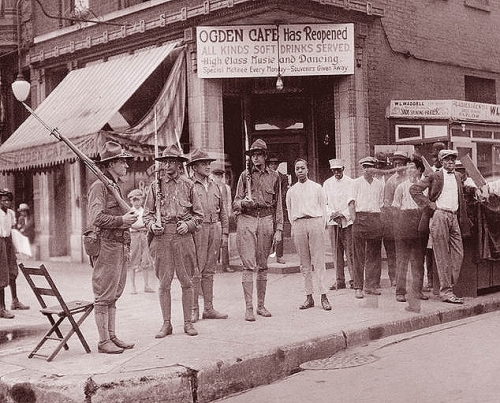
Writer Margaret Halsey (1910 – 1997) was a patriotic lass who did her bit for Uncle Sam by managing a soldier’s canteen in New York City during the Second World War – you should know that throughout the course of that war there were thousands of canteens throughout America where Allied soldiers, sailors airmen and Marines could enjoy a free meal and have a dance or two with the local girls. Similar to most other canteens in the country, her doors were open to all servicemen regardless of color and as a result, the same policy had to be followed by the local girls who came to dance: they, too, could not discriminate.


Her observations in this integrated environment led to believe that a national policy of racial assimilation will not be as difficult as many people at the time tended to believe.

Willie Mays (Quick Magazine, 1954)
1954, African-American History, Quick Magazine

Willie Mays
(Quick Magazine, 1954)

Illustrated with nine pictures, this article briefly tells the story of baseball legend Willie Mays (b. 1931) and the Summer of 1954 when sportswriters credited him alone for having raised the athletic standards of his team, The New York Giants (the team won the World Series that year):

A 23-year-old Alabaman with a laugh as explosive as his bat, Willie has electrified N.Y. Giants fans as no man has done since Mel Ott (1909 – 1958)… Statistics don’t begin to give a real picture of Willie’s value. He adds drama to baseball in a way that defies fiction.

Advertisement

Use shortcode [oma_ad position="summary_top"] (or other position) in your theme or widgets to display OMA Promotions here.

Primary Source Article About Bert Williams | Bert Williams in The Literary Digest March 25 1922
1922, African-American History, The Literary Digest

Comedian Bert Williams: R.I.P.
(Literary Digest, 1922)

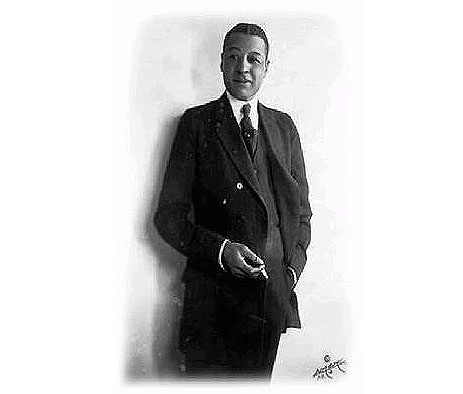
The African-American comedian Bert Williams (1874 – 1922) was a funny fellow who ascended to great heights in his life; he performed in the great theaters of Europe and was adored by many of the foreign potentates of his time. Yet despite all his international glory, he never received acceptance in his own country. Like many African-Americans at the time, Williams simply came to accept the myopic views of race as it was understood by the majority of his countrymen, and learned to do without the appreciation he so craved. Bert Williams died in 1922. One of his more memorable lines:

Being a Negro is not a bad thing, it’s just terribly inconvenient.
American Southerners who were racists in the 1920s
1927, African-American History, Pamphlet Produced by the National Park Service

Just Another Classified Ad from Dixie…
(The Nation, 1927)

The attached file is a digital facsimile of a classified ad that was once posted in a Georgia newspaper long after the Emancipation Proclamation was passed into law. The editors at THE NATION saw fit to title the notice as an interesting little advertisement when they reproduced it six months later on their pages. Yet, for the Southerners who set the type-face, applied the ink, delivered the paper and subscribed, the ad was typical of so many other classifieds that had appeared during the past one hundred and fifty years, and it was not, as the Yankees put it:

…the request of someone who never heard of the Fourteenth and Fifteenth Amendments to the Constitution of the United States.

Advertisement

Use shortcode [oma_ad position="summary_top"] (or other position) in your theme or widgets to display OMA Promotions here.

Bogus Science and the Intelligence of African-Americans (Current Opinion, 1921)
1921, African-American History, Current Opinion Magazine

Bogus Science and the Intelligence of African-Americans
(Current Opinion, 1921)

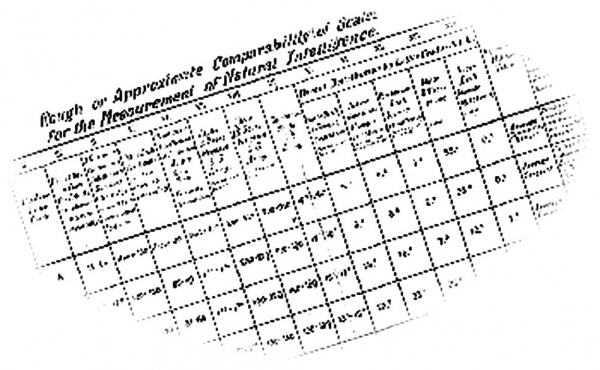
As many of the readers in the OldMagazineArticles.com audience have figured out, the purpose of this site is to allow the past to represent itself — warts and all, and few articles make manifest this policy better than this 1921 article which reported on the efforts of an appropriately forgotten scientist from the University of Virginia, Dr. George Oscar Ferguson. Ferguson was the author of a project that somehow measured the intelligence of African Americans and White Americans and concluded that his:

psychological study of the Negro indicates that he will never be the mental equal of the white race.

New York Exhibit for Le Corbusier (Art Digest, 1946)
1946, Modern Art, The Art Digest

New York Exhibit for Le Corbusier
(Art Digest, 1946)

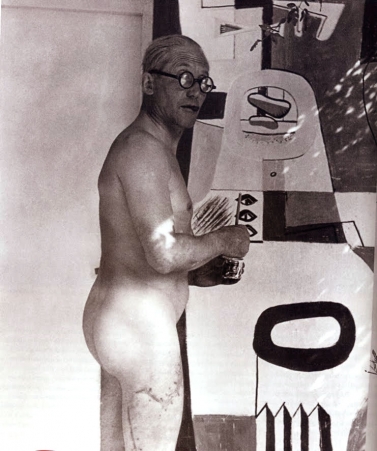
A brief art review from 1946 announcing an exhibition of paintings, drawings, photographs, architectural plans and models by the modern architect Le Corbusier (né Charles-Édouard Jeanneret-Gris, 1887 – 1965) at the Mezzanine Gallery in Rockefeller Center.

Along with Ozenfant, Le Corbusier invented Purism. The earliest painting in the collection, and the only one of that period (1920), which is familiar to art audiences as part of the permanent collection of the Museum of Modern Art.

Advertisement

Use shortcode [oma_ad position="summary_top"] (or other position) in your theme or widgets to display OMA Promotions here.

Operation Varsity: The Last Parachute Drop of the War (Collier's Magazine, 1945)
1945, Collier's Magazine, Paratroopers

Operation Varsity: The Last Parachute Drop of the War
(Collier’s Magazine, 1945)

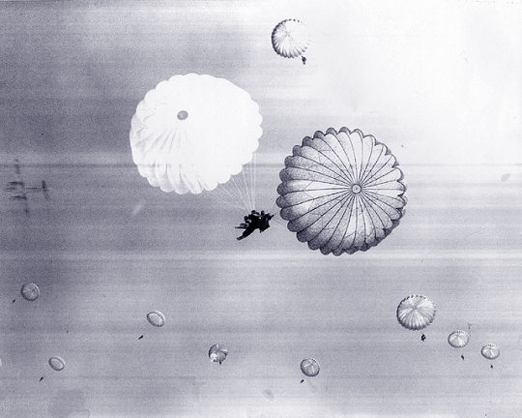
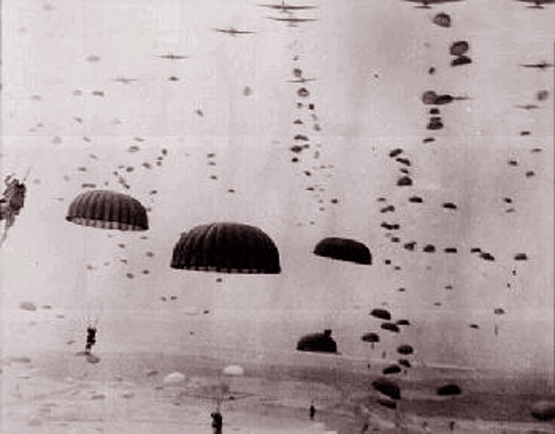
The seasoned war correspondent explained in the attached article as to why Operation Market Garden was such a disaster (and the censors let him) and why the next ambitious Allied parachute assault, Operation Varsity, would be different. Reminiscing about all that he saw of the famed parachute jump beyond the Rhine prior to being forced to turn-tail and bail out over English-occupied Belgium, he observed:

…the C-46s come in and apparently walk into a wall of flak. I could not see the flak, but one plane after another went down. All our attention was on our own ship. It could blow up in mid-air at any moment. From the pilot’s compartment came streams of stinging smoke.

US Army General James Gavin in WW II | Who Was General James Gavin
1945, Paratroopers, Yank Magazine

The Jumping General: James Gavin of the 82nd Airborne
(Yank Magazine, 1945)

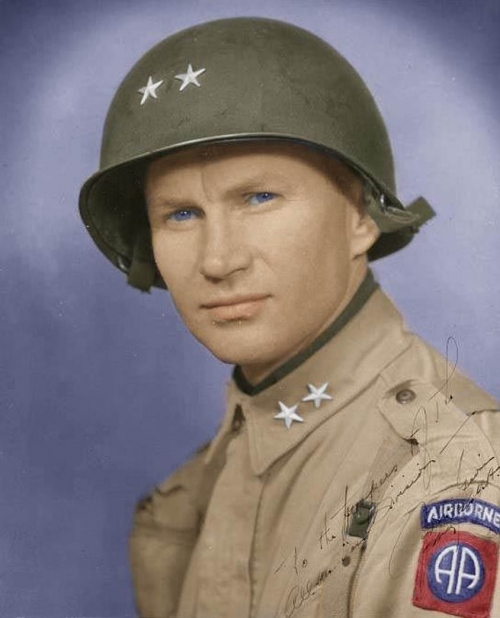
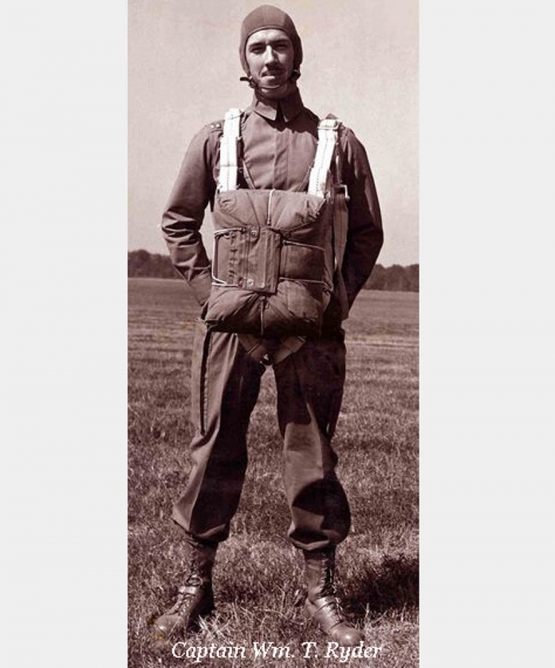
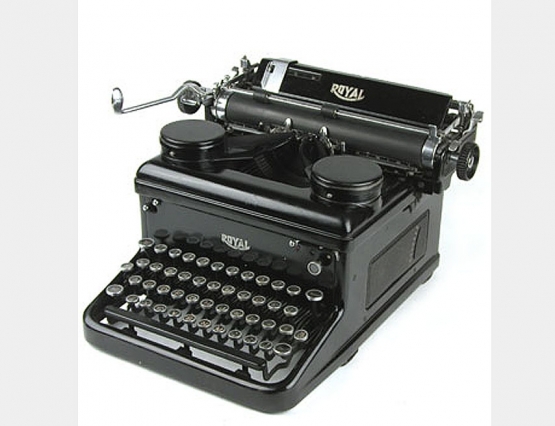
In the fall of 1978 former TIME MAGAZINE war correspondent Bill Walton remarked privately about how wildly inappropriate it was to cast the pretty-boy actor Ryan O’Neal in the roll as General James M. Gavin (1907 – 1990) for the epic war film, A Bridge Too Far. Having dropped into Normandy in 1944 with a typewriter strapped to his chest, Walton witnessed first-hand the grit and combat leadership skills that made Gavin so remarkable. The attached YANK article tells the tale of Gavin’s teen-age enlistment, his meteoric rise up the chain of command and his early advocacy for a U.S. Army parachute infantry divisions.


Another article contrasting the Germans and the Japanese can be read here…


Is your name Anderson?

Advertisement

Use shortcode [oma_ad position="summary_top"] (or other position) in your theme or widgets to display OMA Promotions here.

82nd Airborne in Sicily 1943
1943, Collier's Magazine, Paratroopers

The 82nd Airborne in Sicily
(Collier’s Magazine, 1943)

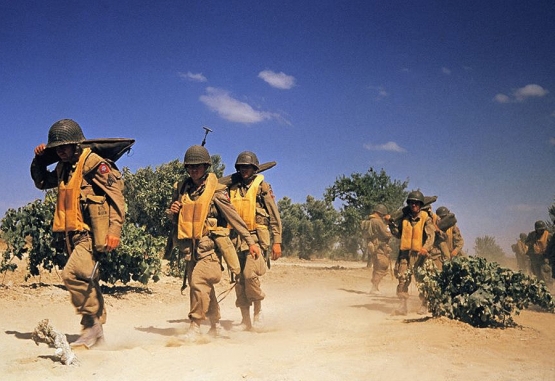
An article from the Fall of 1943 that reported on the second campaign fought by the men of the 82nd Airborne Division, the invasion of Sicily:

These air-carried forces were will be in a position to assist seaborne invaders not only by harassing the rear of the foe’s first lines, but by standing in the way of his attempts to bring up his reserves…These men were also to show that an airborne force can assail and capture and enemy’s strategic strong points, can man his bridges and his highways, can dominate his high-banked rivers and fight off his counterattacks.

advertising in the early 20th Century | advertising in the early 20th centuryanti-Advertising editorial
1914, Advertising, Vanity Fair Magazine

Mocking Ad Practices in the Early 20th Century
(Vanity Fair Magazine, 1914)

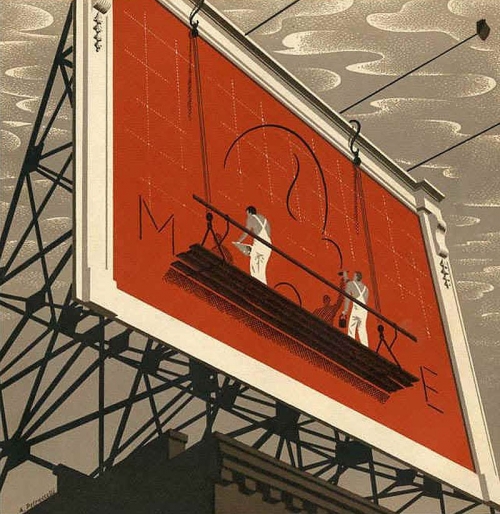
In the attached Vanity Fair article, James Montgomery Flagg (1877 – 1960) had a good laugh at the hand that fed him: the New York advertising establishment.

Better remembered in our own time as the creator of the iconic I Want You for the U.S. Army poster (1917), Flagg was a prolific artist and one of the highest paid magazine and advertising illustrators of his day. As the era of mass-media advertising developed, Flagg didn’t just have a good seat on the fifty-yard line; he was a player on the field and he saw his work reproduced in all sorts of unlikely venues.

Advertisement

Use shortcode [oma_ad position="summary_top"] (or other position) in your theme or widgets to display OMA Promotions here.

Advertising in the Thirties | 1930s Advertising History
1932, Advertising, Pathfinder Magazine

Ad Man: Heal Thyself…
(Pathfinder Magazine, 1932)

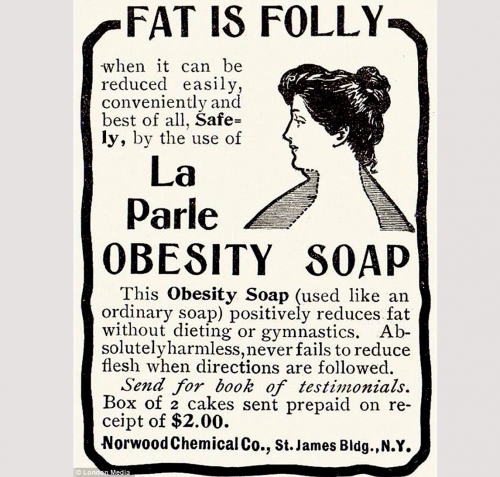
After the Wall Street Crash of 1929 it was generally recognized by the red-meat-eaters on Madison Avenue that the rules of the ad game had been re-written. There were far fewer dollars around than there were during the good ol’ Twenties, and what little cash remained seldom changed addresses with the same devil-may-care sense of abandon that it used to. Yet as bleak as the commercial landscape was in 1932, those hardy corner-office boys, those executives with the gray flannel ulcers remembered that they were in the optimism business and if there was a way to turn it around, they would find it.

Adjectives in Advertising | Writing Ad Copy | Adjectives in Ad Copy
1939, Advertising, Pathfinder Magazine

The Wonderful World of Adjectives
(Pathfinder Magazine, 1939)

To grammarians, a verb is the strongest part of speech, but not to radio advertisers. In a survey of 15 national radio programs, the entertainment weekly VARIETY has found that adjectives receive the most voice emphasis and the most repetition. On one program, 28 adjectives were spoken in 15 minutes.


Click here to read about how the mass-marketing techniques of the W.W. I era was used to promote KKK membership…

Advertisement

Use shortcode [oma_ad position="summary_top"] (or other position) in your theme or widgets to display OMA Promotions here.

Scroll to Top