Prohibition in England?
(The Pathfinder Magazine, 1920)
Read more …

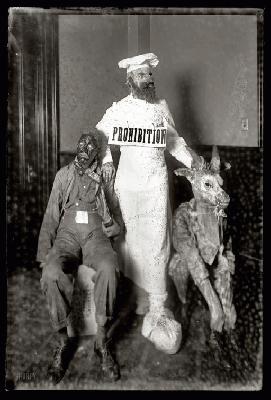
To be sure, there were complications with the prohibition of alcohol in the United States. While American clergy debated with government concerning the issue of sacraments involving wine, one enterprising restaurateur took advantage of the fact that the law, as it was originally written, only involved alcoholic beverages and decided to offer an inebriate in the form of a jelly sandwich.
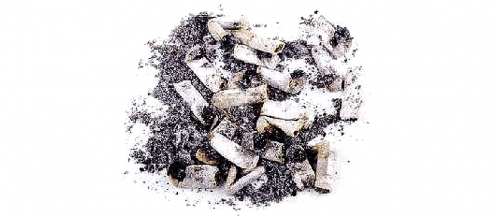
Tobacco is not food. It is a drug. A healthy human being can get along without it. One who has never used it is better off, his health has a surer foundation and his life expectancy is greater than in the case of one who is a habitual user.
The cautionary paragraph posted above was written in the early Twenties, and this article points out that the health advocates of the that era were not delusional or ill-informed in matters involving tobacco and health care. Tobacco’s ability to harm was understood so well that an effort was afoot in the U.S. Congress to make the weed illegal. Needless to say, that effort did not get very far.
In the 1950s, some people questioned whether cigarettes were truly dangerous – click here to read about it…
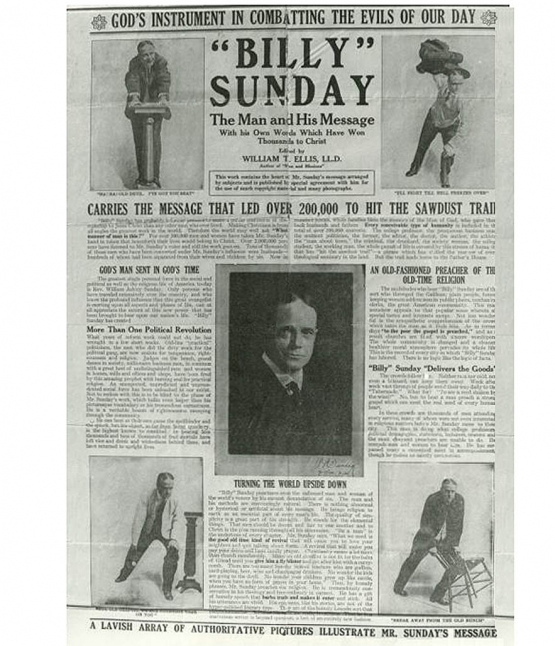
I 1913 Presbyterian preacher Billy Sunday (1862 – 1935) was, without a doubt, one of the most visible advocates for the successful implementation of any federal legislation that would outlaw liquor across America. When it became clear to many that Prohibition was causing far more problems than it solved, he continued to strongly support the legislation, and after its repeal in 1933 the Preacher called for its reinstatement.
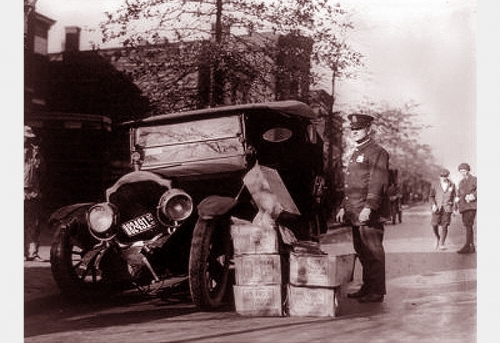
The Dry forces in Washington, who vigorously patted themselves on the back for having been able to get the Eighteenth Amendment through Congress in December of 1917, wanted the law to take effect sooner than the amendment had mandated. Shortly after the signing of the Armistice, they rallied their members on the Hill and launched a piece of legislation through Congress called the Emergency Agricultural Appropriations Bill:
President Wilson signs the Emergency Agricultural Appropriations Bill, whose rider provides for national prohibition from July 1 next until the American Army is demobilized.
By the time this short notice was seen on page one of THE STARS and STRIPES during the Spring of 1918, the political momentum was clearly on the side of the Prohibition advocates and the voters of many states had elected to go dry long before the Congress had decided to amend the Constitution. The 1918 election in New York between Wets and Drys was a close one and the eyes of the nation were watching. The headline read:
PROHIBITION RACE NOW NECK AND NECK: TWENTY NEW YORK CITIES DRY AND NINETEEN WET…
The deciding and unknown factor was the women of New York, who were permitted to vote in municipal elections.
For some unexplained reason, H.L. Mencken (1880 – 1956) wrote this essay under the pseudonym Major Owen Hatteras. The one page article is written in typical Menkenese and catalogs example after example of how prohibition is creating a worse society, not a better one; citizens of all stripes who would otherwise be judged as honest souls, are instead committing illegal acts and there seemed to be no end in sight to such behavior.
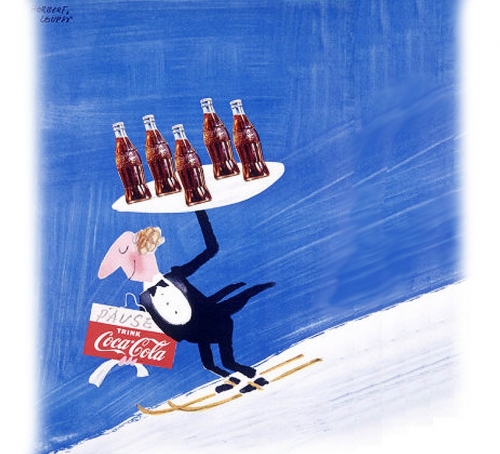
On the same day that it was announced that the state of Georgia was going to prohibit alcohol a full year and a half prior to the Congressional measure, a bill died in the state legislature that would have prohibited all alcohol substitutes that had caffeine, as well (Georgia, you’ll recall is the home of the Coca-Cola Company):
In an effort to force the bone-dry majority of the House to the greatest extreme, Representative Stark of Jackson, Friday offered an amendment which would have barred all substitutes for liquor, all patent medicines, and soft drinks containing caffeine.
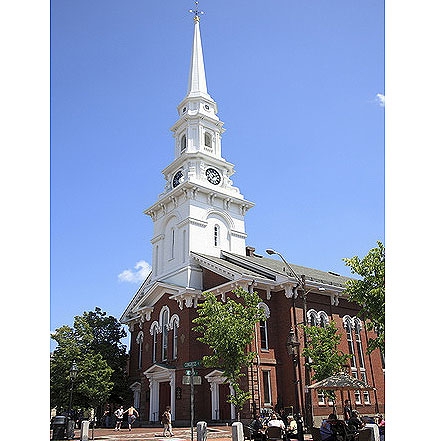
Seeing that much of the momentum to prohibit the national sale, distribution and consumption of wine and spirits originated with a hardy chunk of the observant Christian community, the Reverend John Cole McKim decided to weigh in on the topic. McKim tended to believe that:
Christ, being divine and consequently infallible, could not have erred. Since it is well known that Christ used wine Himself and gave it to others…
He further opined:
But to vote what one regards as a natural right shall be declared forever illegal, is cowardly, un-American, and un-Christian.
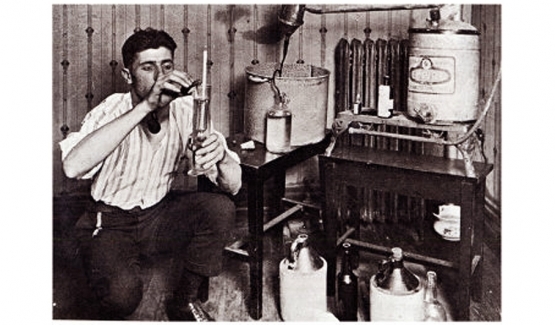
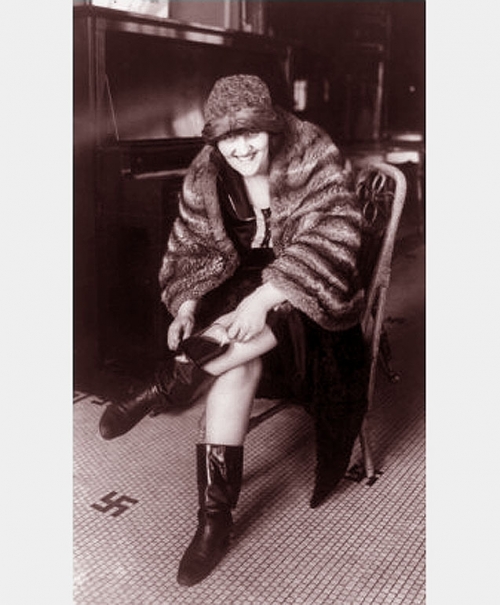
A 1922 magazine article concerning the dangers of black market liquor in the United States during the Prohibition period (1919 – 1933):
When you drink bootleg the chances are better than nine out of ten that you are drinking rank poison.
This is not the statement issued either by Prohibitionists to discourage drinking, or by a Anti-Prohibitionist to show what Prohibition has brought us to. It is the conclusion of a large newspaper service, which had it’s men in various parts of the country buy the ‘ordinary mine-run of bootleg liquor’, and then had the samples analyzed to get an idea of what a man’s chances are of getting poisonous booze.
Click here to read about President Woodrow Wilson and his wish to re-write the post-war Prohibition restrictions.
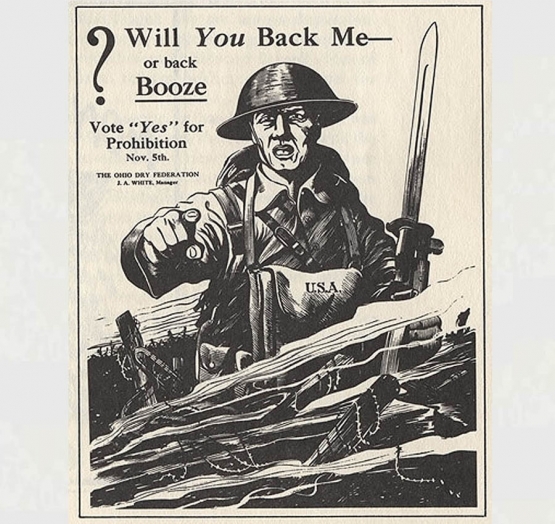
Since the earliest days of World War I, the European combatant nations made some adjustments in regard to the sale of alcohol and the hours in which pubs could operate. When the U.S. entered the war in April of 1917, Congress decided that they had better do the same – but they were far more harsh on the topic – closing bars entirely and outlawing all wines and spirits – except for their use in religious sacraments. In the attached article journalist gathered data from various newspapers that were located in states that were already dry in order to study how the experiment was proceeding.
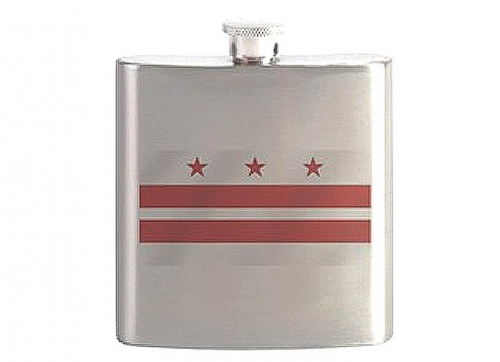
In 1917 Washington, D.C. had no mayor, no city council and no say as to the goings on in Congress – the city was lorded over by the President and a Congressional commission. It was set up that way by the founders – and that is how Prohibition came to Washington, D.C. two years earlier than the rest of the nation: with the flick of his wrist, President Wilson signed the Sheppard Bill, legislation that declared that after November 1, 1918 all alcohol would be prohibited in the District of Columbia.
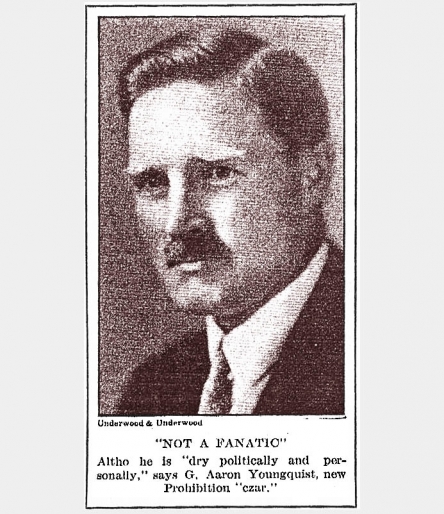
Making his bow to the nation with the praise of the Anti-Saloon League and of Andrew J. Volstead, father of the Prohibition law, ringing in his years, Mr. Youngquist (1885 – 1959) was quick to announce that
“I am dry politically and personally, but I am not a fanatic on the subject.”

One decade into Prohibition, the editors of THE LITERARY DIGEST polled numerous states in an effort to understand the law’s standing within the nation.
A reminiscence by screen writer, artist and all-around literary misfit Rob Wagner (1872 – 1942) as he recalled the bad old days of 1918, when he was hoodwinked into believing that the widespread prohibition of alcohol would help achieve an Allied victory in World War I. When the war ended and time passed, he noticed how the Noble Experiment was evolving into something quite different, and how it was altering not only his friends and neighbors, but American culture as a whole.
Before Prohibition, the average business or professional man, never dreamed of drinking spirits during the working day…Now, however, a full grown man with the sparkle in his eye of a naughty sophomore, will meet you on Spring Street at eleven in the morning, slap you on the back, and ask you to duck up to his office where he will uncork his forbidden treasure…
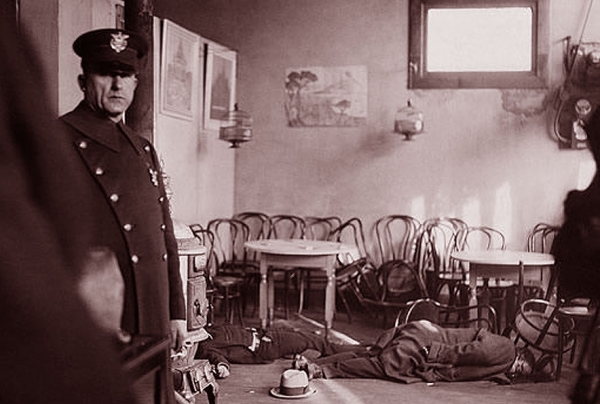
During the Jazz Age, there were a number of opinion pieces published concerning the general feeling of malaise and disillusionment that was experienced throughout most of the Western nations. In this article, written by a well known Protestant theologian of the time, it is stated that a new day has come to America – one that shows itself with a blatant disrespect for law and order.
Our most obvious lawlessness is the breaking of the prohibition laws… The shame of the present situation is that the law is not being chiefly outraged by poor people; it is mainly the men of means, prestige and influence, who ought to know better. Obviously there has been a breakdown of authority in the state and the rise of a rampant and selfish individualism.
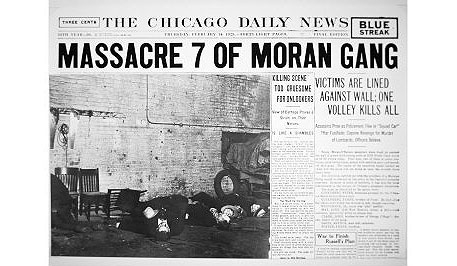
Written some eighteen years after the event, here is a reminiscence of the worst day in Prohibition history: the St. Valentine’s Day Massacre.
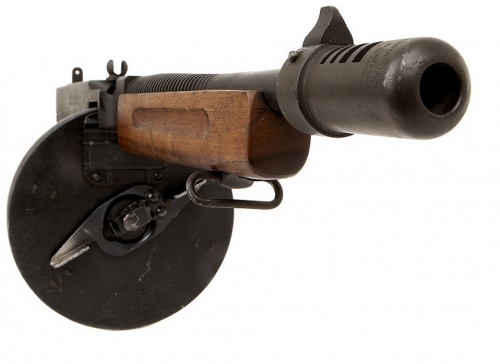
This is an informative read that was written during the closing months of the Noble Experiment by one of New York’s most admired crime reporters, Joseph Driscoll. The article is composed of numerous profiles of mob bosses both famous and forgotten from numerous cities throughout the nation.
[These] personality sketches constitute a roll-call, a memorial service for the men of direct action, the gentleman of the rackets, who prospered under prohibition and who (we hope) may not be with us much longer, certainly not in the same old style and the same old stand…
An Al Capone article can be read here…