Author name: editor

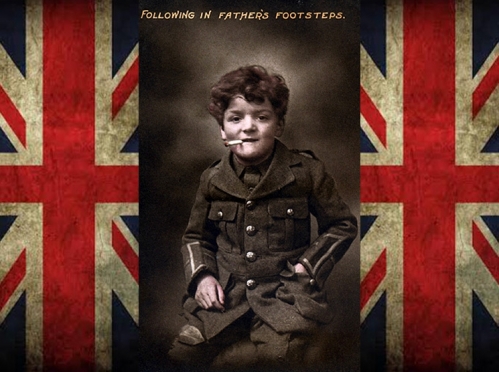
London Society, 1915 (Vanity Fair, 1915)
1915, Manners and Society, Vanity Fair Magazine

London Society, 1915
(Vanity Fair, 1915)

Five months into the general unpleasantness going on across the Channel had transformed London into a very different city, and sadly, it was the leisured classes that had to shoulder most of the burden:

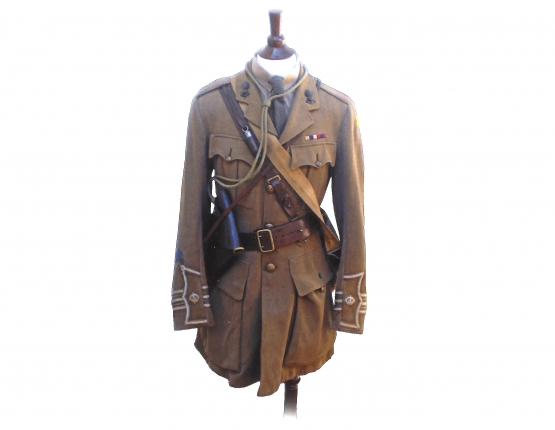
London is well worth living in these troubled days if only for its contrasts…The gloom of the streets, the sinister play of the searchlights, the abnormal hour at which the theatres open and and the public houses close, the fact that half the male population is in khaki and the other half would like to be, that Society is wearing Noah’s Ark clothes and that to buy a new hat is a crime, that there are no dances, no dinners, no suppers, no premieres, no shooting, no no posing, no frivolity, nor idling, it’s rather quickening, you know. But the searchlights have absolutely killed all practical romance.

Lt. Colonel Fremantle at Gettysburg (W.C. Storrick, 1951)
1951, Gettysburg History, W.C. Storrick

Lt. Colonel Fremantle at Gettysburg
(W.C. Storrick, 1951)

Lt. Colonel Frementle (1835 – 1901), a member of the Coldstream Guards, was a guest of the Army of Northern Virginia during the Gettysburg campaign. After the Battle of Gettysburg, he returned to England and published Three months in the Southern Statesstyle=border:none. The following is a vivid extract, describing a part of the battle from the Southern lines:

The position into which the enemy had been driven was evidently a strong one. His right appeared to rest on a cemetery, on the top of a high ridge to the right of Gettysburg, as we looked at it.

General Hill now came up and told me he had been very unwell all day, and in fact he looks very delicate. He said he had had two of his divisions engaged, and had driven the enemy four miles into his present position, capturing a great many prisoners, some cannon, and some colors; he said, however, that the Yankees had fought with a determination unusual to them.

The Career of Lilian Gish (Rob Wagner's Script Magazine, 1942)
1942, Rob Wagner's Script Magazine, Silent Movie History

The Career of Lilian Gish
(Rob Wagner’s Script Magazine, 1942)

Attached is a decidedly pro Lilian Gish (1893 – 1993) article concerning the silent film actresses‘ meteoric rise under the direction of D.W. Griffith, her mediocrity when paired with other directors and her much appreciated march on Broadway.

Lilian Gish is the damozel of Arthurian legend, tendered in terms of the Pre-Raphaelite Brotherhood. Her heroines perpetually hover in filtered half-lights, linger in attitudes of romantical despair. They forever drift farther from reality than the dream, and no matter how humble their actual origins, the actress invariably weaves them of the dusk-blues, the dawn-golds of medieval tapestries.

Click here if you would like to read an article in which Lillian Gish recalls her part in Birth of a Nation.

Click here to read articles about Marilyn Monroe.

Advertisement

Use shortcode [oma_ad position="summary_top"] (or other position) in your theme or widgets to display OMA Promotions here.

1938, Music History, Stage Magazine

Sweet Words for Maestro Toscanini
(Stage Magazine, 1938)

Arturo Toscaninistyle=border:none
(1867 – 1957) is believed to have been the greatest conductor of the Twentieth Century. He was bestowed with a ‘Palm Award’ by the well-meaning swells at the now defunct Stage Magazine during the summer of 1938. This article appeared during a time when a Palm Award, granted by such a crew was a reliable form of social currency and would actually serve the highly favored recipients in such a grand manner as to allow them brief respites at dining tables found at such watering holes as New York’s Stork Club. Nowadays, one Palm Award and one dollar and fifty cents will afford you a ride on the Los Angeles City subway system (one way).
The attached article explains why Maestro Toscanini had met all requirements for this award.

Fashion (WWI)

Masculine Shopping
(Vanity Fair Magazine, 1916)

1916 was a poor year if you happened to be a German sailor off the coast of Denmark; it was a simply awful year if you were in the infantry on the Somme or near Verdun; but if you were an American fellow enjoying his nation’s neutrality and you happened at some point to have been shopping for the the perfect riding suit on Madison Avenue, then OldMagazineArticles.com is quite certain that 1916 was a great year for you! Attached, you will find a wonderful article about the 1916 offerings for the horseback riding man.

If you would like to read another article about men’s equestrian attire, please click here.

Advertisement

Use shortcode [oma_ad position="summary_top"] (or other position) in your theme or widgets to display OMA Promotions here.

A Mosaic of Marilyn Monroe (Coronet Magazine, 1961)
1961, Coronet Magazine, Marilyn Monroe

A Mosaic of Marilyn Monroe
(Coronet Magazine, 1961)

The editors of CORONET MAGAZINE approached the five male luminaries who were working alongside Marilyn Monroe during the making of The Misfits and asked each of them to comment on the Monroe character riddle as he alone had come to view it. These men, John Huston, Eli Wallach, Clark Gable, Montgomery Clift and her (soon to be estranged) husband, Arthur Miller, who had written the script, did indeed have unique insights as to who the actress was and what made her tick.

World War One

The Battle of Belleau Wood in Retropspect
(Literary Digest, 1927)

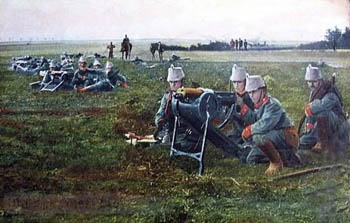
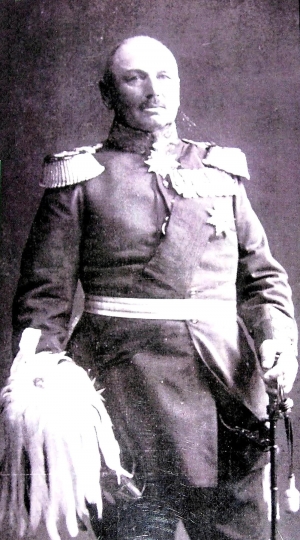
Nine years after he commanded the U.S. Fourth Corps during World War One, Major General Joseph T. Dickman (1857 – 1928) reconsidered the necessity of fighting for that ground in his memoir, The Great Crusadestyle=border:none, and concluded that:

Belleau Wood was a glorious, but an unnecessary sacrifice…It was magnificent fighting, but not modern war.

The battle was fought by the U.S. Marines attached to the Second Division, which was under the command of General Dickman. If you would like to read a small piece regarding the war record of the U.S. Fourth Corps in France, click here.

Advertisement

Use shortcode [oma_ad position="summary_top"] (or other position) in your theme or widgets to display OMA Promotions here.

Men's Clothing for the Spring of 1916 (Strauss Theater Magazine, 1916)
1916, Men's Fashion, Strauss Theater Magazine

Men’s Clothing for the Spring of 1916
(Strauss Theater Magazine, 1916)

Twelvemonth ago, the war had sobered ‘le monde ou l’on s’amuse’ like an icy douche. Europe rang with the clump of tramping feet. Forked lightening seemed to lurk in the sky. In club cars of limited trains and smoke rooms of trans-Atlantic liners heads were put together and the air was as tense as a fiddle string… Fashion tipsters, with long ears and short sight, said that the world would put on black, and style was knocked in the head, and look for the deluge, and so on ‘ad nauseum’.

World War II in the Jungles of Burma (Yank Magazine, 1944)
1944, World War Two, Yank Magazine

World War II in the Jungles of Burma
(Yank Magazine, 1944)

Written by correspondent Dave Richardson (1916 – 2005) behind Japanese lines in Northern Burma, this article was characterized as odds and ends from a battered diary of a footsore YANK correspondent after his first 500 miles of marching and Jap-hunting with Merrill’s Marauders.


One of the most highly decorated war correspondents of World War II, Richardson is remembered as the fearless reporter who tramped across 1,000 miles of Asian jungle in order to document the U.S. Army’s four-month campaign against entrenched Japanese forces – armed only with a camera, a typewriter and an M-1 carbine.

Advertisement

Use shortcode [oma_ad position="summary_top"] (or other position) in your theme or widgets to display OMA Promotions here.

The Pankhursts (Life Magazine, 1912)
1912, Life Magazine, Women's Suffrage

The Pankhursts
(Life Magazine, 1912)

In the digital age, we are able to recognize civil disobedience and call it by name, but this was certainly not the case for this Old Boy writing in 1912; he read about the criminal past-times of Mrs. Pankhurst (Emmeline Pankhurst, 1850 – 1928) and her two daughters (Christobel Pankhurst, 1880 – 1960; Estelle Sylvia Pankhurst, 1882 – 1960), and thought that no good could possibly come of such rabble-rousing.

Advertisement

Use shortcode [oma_ad position="summary_top"] (or other position) in your theme or widgets to display OMA Promotions here.

1916, Fashion, Strauss Magazine

New York Fashions for Spring
(Strauss Magazine Theatre Program, 1916)

Before it was called Playbill it was called the Strauss Magazine Theatre Program and Cora Moore was their fashion critic. During the early spring of 1916 Mrs. Moore took a serious look at the fashion parade on Fifth Avenue and recognized that much of it had been seen before. She offered no thoughts as to why so much from the past was being borrowed but she liked it just fine nonetheless.

New York's Contributions to English (Holiday, 1949)
1949, Holiday Magazine, Old New York History

New York’s Contributions to English
(Holiday, 1949)

New York City’s contributions to the American language go considerably further than the pronunciation of ‘avenyeh’ for avenue or ‘erl’ for lubricant. Peter Stuyvesant’s village has made rich entries into our spoken and written tongue. A handful, culled from Dr. Mitford M. Matthew’s A Dictionary of Americanismsstyle=border:none
follows.

Click here to read more articles about American English.

Advertisement

Use shortcode [oma_ad position="summary_top"] (or other position) in your theme or widgets to display OMA Promotions here.

Scroll to Top