Author name: editor

The Tailoring System for U.S. Officers (The Stars and Stripes, 1918)
1918, The Stars and Stripes, U.S. Army Uniforms of World War One

The Tailoring System for U.S. Officers
(The Stars and Stripes, 1918)

This U.S. Army uniform regulation announced in the September 13th, 1918 issue of THE STARS and STRIPES helped to put British, French (and later German) tailors to work on the uniforms of U.S. officers:

According to this plan, each Quartermaster depot will have a tailoring system through which the officer can buy his cloth and then be fitted and outfitted on the spot. At each depot, civilian labor will be contracted and the officer need pay for only his share of the labor cost.

1918, The Stars and Stripes, U.S. Army Uniforms of World War One

The New Thing for 1919: Water-Proof Footwear and Long Trousers
(The Stars and Stripes, 1918)

Around the middle of 1918, the American Quartermasters began to think that their supply depots should actually be stocked with uniform items that were capable of providing some degree of warmth and comfort in the French winters, and so they dreamed-up the uniform elements described herein. For those who have some knowledge of American WW I uniforms it will be easy to recognize upon reading this article that most of these items were never made (except for the long pants).

Advertisement

Use shortcode [oma_ad position="summary_top"] (or other position) in your theme or widgets to display OMA Promotions here.

1918, The Stars and Stripes, U.S. Army Uniforms of World War One

A Puttee Advertisement
(Stars and Stripes, 1918)

The canvas leggings worn by the A.E.F. (as ordered in the American Army Uniform Regulations of 1912) were simply dandy for duties on the dry prairies of the United States, but soon proved impractical in the damp and rainy climate of France and Belgium. Shortly after their arrival in France the U.S. Army replaced their leggings with the wool puttees worn by their European Allies. In May of 1919 they were adopted for use by the entire Army.

Advertisement

Use shortcode [oma_ad position="summary_top"] (or other position) in your theme or widgets to display OMA Promotions here.

Indian Moccasins Authorized (The Stars and Stripes, 1919)
1919, The Stars and Stripes, U.S. Army Uniforms of World War One

Indian Moccasins Authorized
(The Stars and Stripes, 1919)

It is little remembered in our day that the Native Americans who served in the American Expeditionary Forces along the Western Front were permitted to wear moccasins in place of the regulation Pershing boot. Ethnic pandering is not a term that should come to mind; this was a high complement paid by their commanding officers for a well-respected prowess in battle. The following is a small portion from a larger article which is posted on The Native American page of this website; the entire article can be read following the link that reads A Talent for Sniping.

Advertisement

Use shortcode [oma_ad position="summary_top"] (or other position) in your theme or widgets to display OMA Promotions here.

American Officer's Musette Bag (Advertisement, 1917)
1917, Magazine Advertisement, U.S. Army Uniforms of World War One

American Officer’s Musette Bag
(Advertisement, 1917)

The attached magazine illustration is from an ad for a commercially produced musette bag for American officers during World War One.


American Army officers, like the men in their ranks, had no particular need to ever bother with a musette (we have learned that a musette is a small French wind instrument, not unlike a bag-pipe). The bag pictured here was intended for personal effects that would be needed while on the march: stationery,toiletries, housewives).

Due to the French prowess involving all matters military during the Eighteenth and Nineteenth Centuries, the English language is lousey with French military terms, many of which are very much in use today.

WW I American Helmet History | Doughboy Helmet of WW 1 Info | History of AEF Helmet
1918, The Stars and Stripes, U.S. Army Uniforms of World War One

The Doughboy Helmet: the Press Release
(Stars and Stripes, 1918)

Unlike those Poilu who rushed manfully to the recruiting stations in 1914 expecting some sartorial glory in the form of a shiny cavalry breast plate or stylish bright red pantaloons, only to find that the constraints of modern warfare would only provide him with a filthy rat-infested trench and a poor-man’s concept of a camouflage uniform (light-blue wool); the American Doughboy at least had some time to figure out that he would not be as nicely turned out as his uncle was during the Spanish-American War.

This odd notice was printed on the front page of The Stars and Stripes while most of the A.E.F. was still in training. The word was out by this time that the Campaign Hats they were issued back home were out -and so to counter the gripes, the army printed this balderdash to put a ‘nice spin’ on the tin potstyle=border:none.

It’s not a helmetstyle=border:none — it’s a Steel Stetson!

To read more about the old campaign hats of the A.E.F. click here.

1949, Pathfinder Magazine, Spies

The Soviets at the U.N.
(Pathfinder Magazine, 1949)

In 1949 there still existed such hope and optimism for the future of the United Nations as a force for good in the world – and a profound disappointment can clearly be sensed in this writer’s voice as you read this column that reported as to how the Soviets were manipulating the organization to benefit their espionage efforts.


CLICK HERE to read about the beautiful Blonde Battalions who spied for the Nazis…


Click here to read about the blackmail and extortion tactics that American Communists used in Hollywood during the Great Depression…

Advertisement

Use shortcode [oma_ad position="summary_top"] (or other position) in your theme or widgets to display OMA Promotions here.

Politburo USSR Under Stalin | Supreme Soviet Under Stalin
1949, Pathfinder Magazine, Soviet History

‘Russia Has a Congress”
(Pathfinder Magazine, 1949)

Many Americans do not realize that Soviet Russia has an elected congress. As its powers are set forth in the present Russian constitution, this congress has the appearance of being both representative and democratic… ‘The Supreme Soviet’ is somewhat similar to that of our national legislature. It has two chambers, like our house and senate. The author points out that regardless of the appearances, we all know that there is a catch somewhere’.


Click here to read about the blackmail and extortion tactics that American Communists used in Hollywood during the Great Depression…

The World Wide Military Expansion (The Literary Digest, 1935)
1935, Recent Articles, The Literary Digest

The World Wide Military Expansion
(The Literary Digest, 1935)

A 1935 magazine article which presented a table of statistics regarding the the European military expansion and then concluded by stating:

It seems fair to offer the opinion that a major war is likely within the next ten years because the pressure of rising armament expenditure promises to be so great as to develop the explosion that bound to come.

In 1940 former W.W. I Prime Minister David Lloyd George wrote an editorial in which he condemned the leaders of Europe for procrastinating rather than dealing with Hitler when Germany was still weak.
Click here
to read it.

The KKK in Federal Court (The Literary Digest, 1928)
1928, Ku Klux Klan, Recent Articles, The Literary Digest

The KKK in Federal Court
(The Literary Digest, 1928)

Attached is a two-page article about that day in 1928 when the KKK stood before Judge W.H.S. Thomson in a Federal Court in Pittsburgh:

A Daniel has come to judgment, in the opinion of many a newspaper writer, when a Federal judge in a formal opinion read the bench delivers a denunciation of the Ku Klux Klan in terms as strong as any of the private enemies of that organization have ever used. Federal Judge W.H.S. Thomson, in concluding that complicated KKK trial, remarked that the Klan was an ‘unlawful organization’ coming into court ‘with filthy hands after open and flagrant violation’ of the law…


CLICK HERE to read about African-Americans during the Great Depression.

Advertisement

Use shortcode [oma_ad position="summary_top"] (or other position) in your theme or widgets to display OMA Promotions here.

One of the First Reviews of 'Sons and Lovers' (Vanity Fair, 1913)
1913, Twentieth Century Writers, Vanity Fair Magazine

One of the First Reviews of ‘Sons and Lovers’
(Vanity Fair, 1913)

Later in the century there would be many ink-slingers to gush over the talents of D.H. Lawrence (1885 – 1930); but in 1913, the writer would simply have to bide his time and suffer the reviews that were printed in the society pages.

It emphatically is not a book for the ‘young person’, and it is certainly a book that will make the older conservative wince a bit…nevertheless it is a study that was worth doing, and D.H. Lawrence has done it well. He has dealt with very real things in a way that leaves a distinctness of impression unequaled by nine books out of ten one picks up nowadays.

The Deserters from the U.S. Army (See Magazine, 1948)
1948, Recent Articles, See Magazine, World War Two

The Deserters from the U.S. Army
(See Magazine, 1948)

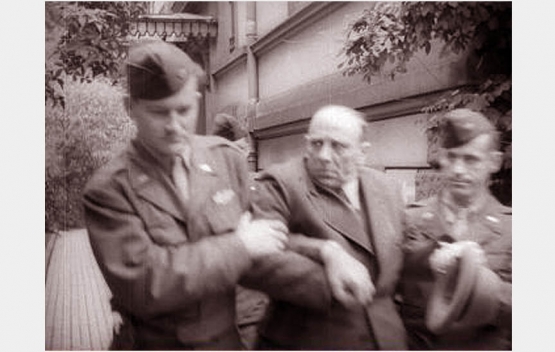
Illustrated with seven photographs, article was written some three years after the close of the war and reported on the efforts of the Allied Armies and local police authorities globally to track-down some 10,000 deserters from the U.S. Army. In the mid-fifties the Department of the Army had estimated that the total number of deserters from all branches of the American military added up to 21,000, but in 1948 the army was happy just to find these 10,000 men: the numeric equivalent of an entire division.


The article is composed of short, choppy paragraphs that present for the reader some of the more interesting stories of World War II desertion. A good read.

Advertisement

Use shortcode [oma_ad position="summary_top"] (or other position) in your theme or widgets to display OMA Promotions here.

Scroll to Top