






World War One

Find old World War 1 articles here. Find information on uniforms, women, gas warfare, prisoners of war and more.

Winston Churchill Recalled the U-Boat Problem
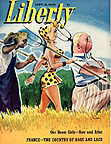
(Liberty Magazine, 1941)

Former Lord of the Admiralty (1911 – 1915), Winston Churchill (1874 – 1965) wrote the attached article sometime after the First World war and recalled the tremendous difficulties faced by the Royal Navy when this new form of warfare came to the fore:


“There followed the fourth prime feature of the war — the grand U-boat attack on the Allied shipping and the food ships and store ships which kept Great Britain alive. Here again we were exposed to a mortal risk. Not merely defeat but subjugation and final ruin confronted by our country.”

How the AEF Intelligence Service Did It
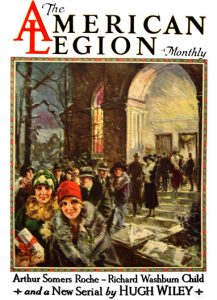
(American Legion Monthly, 1939)

A fascinating read. Written twenty-one years after the war, journalist Thomas M. Johnson, who had covered the A.E.F. for The New York Sun, revealed all the tricks employed by the U.S Army Intelligence Service to get the most information out of every German prisoner they could get their hands on – and none of them involved breaking bones or shedding blood.


More about W.W. I prisoners of war can be read here

General Helmuth von Moltke
(N.Y. Times Book Review, 1923)

“If ever there was a German who foresaw nothing but defeat and punishment for his native land, even in the days when the great majority of his fellow-countrymen were mad with anticipation of victory and world domination, it was Helmuth von Moltke (1848 – 1916).”


Click here to read a 1922 review of the Kaiser’s war memoir.

Advertisement

Use shortcode [oma_ad position="summary_top"] (or other position) in your theme or widgets to display OMA Promotions here.

”Never Again”
(American Legion Magazine, 1939)

In the attached article, an American journalist ruminated about the U.S. experience in W.W. I on the eve of W.W. II. All told, he didn’t think intervention was a good idea but was grateful America learned its lesson.


“Suffice it here to record the unquestioned fact that American determination which was enthusiastic at the outset became more and more grim as reality replaced imagination.”

”Never Again”
(American Legion Magazine, 1939)

In the attached article, an American journalist ruminated about the U.S. experience in W.W. I on the eve of W.W. II. All told, he didn’t think intervention was a good idea but was grateful America learned its lesson.


“Suffice it here to record the unquestioned fact that American determination which was enthusiastic at the outset became more and more grim as reality replaced imagination.”

General Charles Summerall
(American Legion Magazine, 1939)

Looking back twenty-one years at the W.W. I commands of General Charles Summerall (1867 – 1955), historian Fletcher Pratt pointed out that it was the general’s unique understanding of artillery that served as the key to his success in battle.

Advertisement

Use shortcode [oma_ad position="summary_top"] (or other position) in your theme or widgets to display OMA Promotions here.

Tommy’s Alphabet
(The B.E.F. Times, 1917)

The front-line Tommy of the First World War, like Fritz, Jock, Sammy and Les Poilu, had a good deal of time on his hands between terrors. Some wrote letters, some made trench art, some slept – and the ones we’re concentrating on were the ones who made this handy alphabetic guide that explained their world:


Z is for ZERO, the time we go over,

Most of us wish we were way back
in Dover
Making munitions and living in clover
And far, far away from the trenches”

”Daughters of Valor”
(American Legion Monthly, 1939)

Here is an interesting history of the U.S. Army Nurse Corps during the First World War. The author, Robert Ginsburgh, delves into how many nurses served, how many were killed, how they were recruited and trained, where they served in Europe, and the decorations they earned.

T.E. Lawrence: On Allenby’s Right
(Liberty Magazine, 1936)

“General Storrs said, ‘I want you to meet Colonel Lawrence, the uncrowned king of Arabia.'”

“Now it all came back to me!
This was the man Todd Gilney had spoken of – the man who had fostered the Arab revolt against Turkish rule. He was the leader who had singlehandedly welded a hundred warring desert tribes into a compact fighting force which now protected Allenby’s right wing.”

Advertisement

Use shortcode [oma_ad position="summary_top"] (or other position) in your theme or widgets to display OMA Promotions here.

T.E. Lawrence: On Allenby’s Right
(Liberty Magazine, 1936)

“General Storrs said, ‘I want you to meet Colonel Lawrence, the uncrowned king of Arabia.'”

“Now it all came back to me!
This was the man Todd Gilney had spoken of – the man who had fostered the Arab revolt against Turkish rule. He was the leader who had singlehandedly welded a hundred warring desert tribes into a compact fighting force which now protected Allenby’s right wing.”

T.E. Lawrence: On Allenby’s Right
(Liberty Magazine, 1936)

“General Storrs said, ‘I want you to meet Colonel Lawrence, the uncrowned king of Arabia.'”

“Now it all came back to me!
This was the man Todd Gilney had spoken of – the man who had fostered the Arab revolt against Turkish rule. He was the leader who had singlehandedly welded a hundred warring desert tribes into a compact fighting force which now protected Allenby’s right wing.”

Amerikanskies
(American Legion Magazine, 1939)

This article is one that has reoccurred throughout the Twentieth Century and into the Twenty-First. It recalls the good will that has existed between the American soldier and the children in the countries that hosted them or the lands they occupied. The American Doughboys in W.W I France were very sympathetic with the numerous orphans that were created in that war and contributed heavily to their charities. Their comrades serving in Siberia were charmed by the boys and girls of that land and quickly became fast friends. The attached article was written by a former officer posted to the Siberian Expedition, and in this column, he put pen to paper and recounted the happy friendships he witnessed between the Amerikanskies and the children of Siberia.

Advertisement

Use shortcode [oma_ad position="summary_top"] (or other position) in your theme or widgets to display OMA Promotions here.

W.W. II and the Absent Poets
(Pageant Magazine, 1944)

Attached is an interesting article by the noted poet and poetry anthologist, Louis Untermeyer (1885 – 1977). He praised the soldier poets of the First World War and expressed his bafflement concerning the absolute dirth of competent rhyme-slingers in the Second World War:


“Why then, it has been asked again and again, is the poetry of this war so thin, so emotionally anemic, so unrepresentative of the fierce struggle in which the world is engaged? Why has no poet, not even a single poem, emerged to stir the heart and burn into the mind?”

How the ‘Stars & Stripes’ Operated
(The Stars and Stripes, 1919)

Written during the closing days of the paper’s existence, the reporting journalist could not emphasize enough how lousy the paper was with enlisted men serving in the most important positions. You will come away with a good amount of knowledge concerning the manner in which The Stars and Stripes crew addressed their daily duties and still made it to the presses on time. Surprising is the high number of experienced newspapermen who wrote for the paper during the paper’s short existence.

Sinai And Palestine: Allenby’s Victory
(Liberty Magazine, 1936)

Attached are two articles by American journalist Lowell Thomas (1892 – 1981) regarding all that he witnessed while reporting on General Edmund Allenby’s campaign against Johnny Turk in the Sinai and Palestine Theater during the First World War. This reminiscence was written many years after the war in an effort to make up for the fact that “after eighteen years, no clear-cut account of Allenby’s campaign has been set down.”


Click here to read about Lawrence of Arabia…

Advertisement

Use shortcode [oma_ad position="summary_top"] (or other position) in your theme or widgets to display OMA Promotions here.

”OOOPS – Sorry”
(Time Magazine, 1923)

Try as they may, the silver-tongued diplomats who rebuked Germany so mercilessly at Versailles in 1919 never could get an apology out of the Kaiser, or Hindenburg or Ludendorff. They just had to sit tight and wait – because in 1923 Michael Cardinal von Faulhaber (1869 – 1952), [alas] speaking in an unofficial capacity as a German, apologized for the whole monkey show: Lusitania, Belgium, etc. Everything comes to those who wait.

A French Response to the Kaiser Memoir
(Time Magazine, 1923)

Kaiser Wilhelm’s recollections of his part in the First World War (reviewed above) was released in the Winter of 1922. Former French president Rene Viviani (1863 – 1925; leadership, 13 June 1914 – 29 October 1915) quickly responded with his own book that appeared the following spring – it was titled As We See It:


“M. Viviani’s book is a direct answer to that puerile and invidious work known as the ex-Kaiser’s War Memoirs. It is impossible to escape from the logic of Viviani’s scathing denunciation of the ex-Kaiser’s tacit inculpation in the events which preceded the world-wide cataclysm.”

Trying to Demilitarize the Ruhr Valley
(Time Magazine, 1923)

It was easy for the French and Belgians to send their Armies into Germany’s Ruhr Valley in February of 1923 – not so easy getting them out. Attached are two news articles that reported on the assorted European officials who were applying all their brainpower to the problem.

Advertisement

Use shortcode [oma_ad position="summary_top"] (or other position) in your theme or widgets to display OMA Promotions here.

Scroll to Top